

Why Your AC Not Cooling Properly Is More Common Than You Think

AC not cooling properly is one of the most frustrating problems a homeowner can face, especially during a sweltering Pittsburgh summer. The good news: most causes are well-known and many can be fixed quickly.
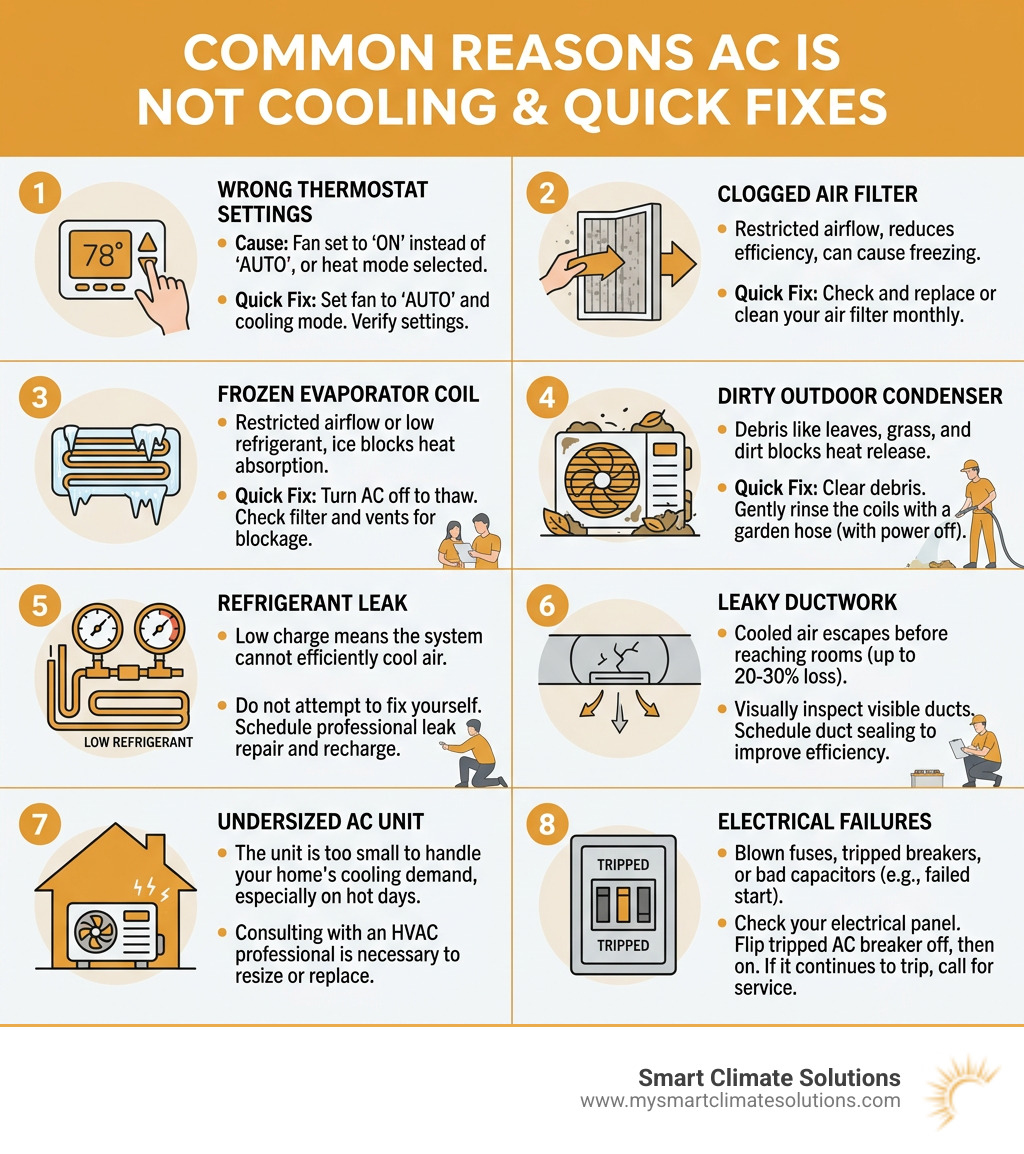
Here are the most common reasons your AC is running but not cooling your home:
- Wrong thermostat settings - fan set to "on" instead of "auto," or mode set to "heat"
- Clogged air filter - restricts airflow and can cause the system to shut down or freeze up
- Frozen evaporator coil - ice buildup blocks heat absorption, causing warm air output
- Dirty or blocked outdoor condenser unit - reduces the system's ability to release heat
- Refrigerant leak - the system cannot cool without the right refrigerant charge
- Leaky ductwork - up to 20-30% of cooled air can escape before reaching your rooms
- Undersized AC unit - a unit too small for your home will struggle on hot days
- Electrical failures - bad capacitors or compressor issues can stop cooling entirely
Most of these issues have clear warning signs. And knowing what to look for can save you time, money, and a lot of sweat.
I am Bill Scott, General Manager of Smart Climate Solutions and an HVAC professional with over 20 years of experience diagnosing and fixing ac not cooling properly problems across Pittsburgh and Southwestern PA. In this guide, I will walk you through every major cause and what you can do about it.
Immediate DIY Checks for an AC Not Cooling Properly
When your home starts feeling like a sauna, your first instinct might be to panic and call for emergency service. While we are always here for you in Pittsburgh or Washington, PA, sometimes the fix is as simple as a flipped switch. Before you assume the worst, there are a few basic components to check.
First, verify that the unit is actually receiving power. It sounds simple, but we have seen many service calls resolved just by flipping a circuit breaker. Check your main electrical panel for any tripped breakers labeled "AC" or "HVAC." If the breaker has moved to the middle position, flip it all the way to "off" and then back to "on."
Next, look for the outdoor disconnect switch. This is usually a small metal box mounted on the side of your house near the condenser unit. Ensure the "pull-out" fuse or switch is in the "on" position. Sometimes, these can be bumped or accidentally turned off during yard work.
If you have performed these basic power checks and the system still refuses to blow cold air, you can find more info about ac not cooling to help narrow down the possibilities.

Thermostat Calibration and Batteries
The thermostat is the brain of your HVAC system. If the brain is confused, the body won't work. We often find that an ac not cooling properly issue is actually a simple settings error.
- Check the Mode: Ensure the thermostat is set to "Cool." It is surprisingly easy for a family member to accidentally switch it to "Heat" or "Off" while dusting or adjusting the temperature.
- Check the Fan Setting: This is a big one. If your fan is set to "On," the blower motor will run 24/7, even when the AC isn't actually cooling the air. This results in room-temperature air blowing through your vents between cooling cycles, making the house feel humid and warm. Always set your fan to "Auto."
- Temperature Differential: Set your thermostat at least 5 degrees below the current room temperature. This should trigger the outdoor compressor to kick on. If you hear the indoor fan but the outdoor unit stays silent, there may be a communication issue.
- Replace the Batteries: If your thermostat has a digital display that is blank or flickering, it likely needs new batteries. Most modern thermostats use AA or AAA batteries. Even if the screen is on, weak batteries can sometimes prevent the thermostat from sending a strong enough signal to the control board.
Air Filter Maintenance: Why Your New AC Not Cooling Properly
If you ask any HVAC technician in South Hills or Steubenville what the number one cause of system failure is, they will tell you: a dirty air filter. A clogged filter is the primary reason for an ac not cooling properly.
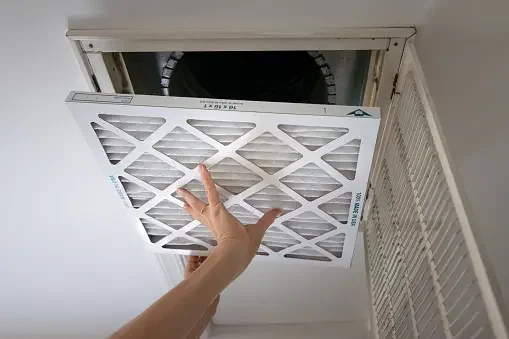
When a filter is covered in dust, pet hair, and dander, it restricts the volume of air flowing over the evaporator coil. Without enough air to "work with," the coil gets too cold and eventually freezes into a block of ice. Once that happens, no air can pass through at all.
We recommend checking your filter every 30 days. If you hold it up to a light and cannot see through it, it is time for a change. Be careful with high MERV (Minimum Efficiency Reporting Value) ratings. While a MERV 13 filter catches more particles, it also creates more resistance. If your system was not designed for a high-restriction filter, it can actually cause the same cooling problems as a dirty filter. For most standard residential systems in the Pittsburgh area, a MERV 8 to MERV 11 filter provides a good balance of filtration and airflow.
If your system is running but you feel warm air, you can read more info about hvac blowing warm air on cool to understand how airflow restrictions impact your comfort.
Airflow and Ductwork Obstructions
Even if your AC unit is working perfectly, the cool air has to actually reach your living spaces. Obstructions in your ductwork or at the vents can lead to "hot spots" in your home.
Check every room in your house to ensure the supply vents (the ones air comes out of) are open. A common myth is that closing vents in unused rooms saves money. In reality, this increases pressure in the ductwork and can lead to leaks or blower motor strain. You should also ensure that furniture, curtains, or area rugs are not blocking the return air grilles. Your AC needs to "breathe" by pulling warm air in just as much as it needs to push cool air out.
According to research on common AC cooling failures, blocked vents are a leading cause of uneven cooling. If you have a room that is consistently 5 degrees warmer than the rest of the house, check the airflow at the register first.
Identifying Leaky Ductwork
Did you know that in a typical home, about 20 to 30 percent of the air that should be cooling your home ends up escaping through duct leaks? This is especially common in older homes in areas like Burgettstown or St. Clairsville.
If your ducts have holes, loose connections, or poor seals, that expensive cold air is being pumped into your attic, crawlspace, or behind your walls instead of into your bedroom. Signs of leaky ducts include:
- High utility bills during the summer months.
- Rooms that are difficult to cool despite the AC running constantly.
- Excessive dust in the house (duct leaks can pull in dusty attic air).
- Visible gaps or disconnected sections in exposed ductwork.
Sealing these leaks with mastic sealant or foil-backed tape (not standard "duct tape," which actually dries out and fails) can significantly improve your system's efficiency. For a deeper dive into airflow issues, check out this more info about hvac not cooling guide.
Frozen Evaporator Coils
A frozen evaporator coil is a classic sign of an ac not cooling properly. The evaporator coil is located inside your indoor unit (the furnace or air handler). Its job is to absorb heat and humidity from your home's air.
When airflow is restricted (due to a dirty filter or blocked vents) or when refrigerant levels are low, the coil's temperature drops below freezing. The condensation on the coil then turns to ice.
How to tell if your coil is frozen:
- You see frost or ice on the copper refrigerant lines leading into the indoor unit.
- The AC is running, but very little air is coming out of the vents.
- You notice water pooling around the base of your furnace (from the melting ice).
How to fix it:If you suspect a frozen coil, turn the AC off at the thermostat immediately. Running it while frozen can damage the compressor, which is a very expensive repair. Switch the fan setting to "On" to help circulate warm air and melt the ice. This process can take several hours. Once thawed, replace your filter and try running the system again. If it freezes up a second time, you likely have a refrigerant leak and need to call a professional.
Mechanical and System Failures
Sometimes the problem is deeper than a filter or a setting. Your AC is a complex machine with several moving parts that can wear out over time, especially during the peak of a Pittsburgh heatwave.
One of the most common mechanical failures is a bad capacitor. Think of the capacitor as a large battery that gives the motor a "kickstart" to get running. If the capacitor fails, the outdoor fan or the compressor won't start, even if the indoor unit is blowing air. You might hear a humming sound coming from the outdoor unit, but the fan blades aren't spinning.
Another major component is the compressor itself. As the "heart" of the system, it circulates refrigerant. If it fails due to age or electrical issues, the system will not be able to cool the air. Following a guide to maintaining your air conditioner can help you spot these mechanical issues before they lead to a total breakdown.
Cleaning the Outdoor Condenser Unit
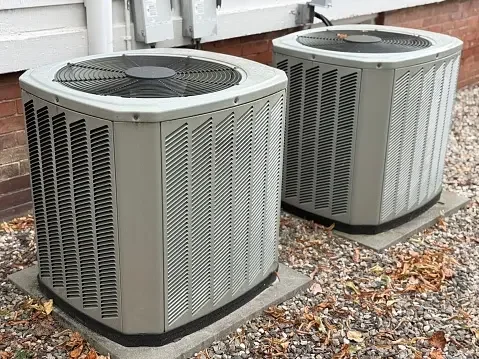
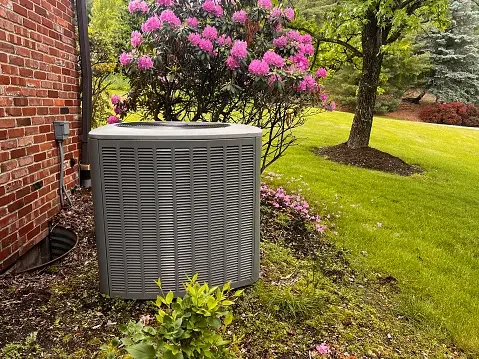
Your outdoor unit (the condenser) is responsible for releasing the heat collected from inside your home. If the aluminum fins on the unit are clogged with dirt, grass clippings, cottonwood seeds, or "pittsburgh soot," the heat has nowhere to go. This causes the system to work harder and longer, leading to an ac not cooling properly situation.
You can safely clean the outdoor unit yourself:
- Turn off the power at the outdoor disconnect or the breaker.
- Remove any large debris like leaves or twigs by hand.
- Use a garden hose with a gentle spray (never use a pressure washer, as it will flatten the delicate aluminum fins) to rinse the coils from the outside.
- Ensure there is at least two feet of clear space around the entire unit for proper airflow.
If the fan is spinning but you aren't getting cold air, you might find more info about lg ac not cooling but fan is running helpful for troubleshooting specific brand behaviors.
Signs of a Refrigerant Leak: Why Your AC Not Cooling Properly
Refrigerant is the lifeblood of your cooling system. A common misconception is that AC units "use up" refrigerant like a car uses gas. In a perfect world, an AC system is a closed loop and should never need more refrigerant. If your levels are low, it means you have a leak.
Signs of a refrigerant leak include:
- A hissing or bubbling sound near the indoor or outdoor unit.
- Ice buildup on the evaporator coil or the outdoor "line set."
- The AC runs all day but the air coming out of the vents is only slightly cool.
- A sudden, unexplained spike in your electricity bill.
If you suspect a leak, do not attempt to "top it off" yourself. Handling refrigerant requires EPA certification and specialized tools to find and repair the leak. Furthermore, older systems using R-22 (Freon) are being phased out, making repairs more complex and expensive. For those with a brand-new system experiencing issues, check more info about new air conditioner not cooling to see if an installation error or manufacturing defect might be the cause.
Refrigerant and Sizing Issues
Sometimes, the reason for your ac not cooling properly isn't a broken part, but a system that was never right for the house to begin with. Air conditioners are sized in "tons" or BTUh (British Thermal Units per hour). One ton of cooling equals 12,000 BTUh.
If a unit is too small (undersized), it will run constantly but never reach the set temperature on a hot day. If it is too large (oversized), it will "short cycle," turning on and off rapidly. This prevents the system from properly dehumidifying the air, leaving your home feeling cold but clammy.
| Symptom | Undersized Unit | Oversized Unit |
|---|---|---|
| Run Time | Runs constantly without stopping | Turns on and off every few minutes |
| Indoor Humidity | Usually low (because it runs so much) | Very high and uncomfortable |
| Temperature | Never reaches the thermostat setting | Reaches setting but feels "sticky" |
| Energy Bills | Extremely high due to constant operation | High due to frequent motor start-ups |
Pittsburgh Summer Heat Load
In the Pittsburgh and Weirton areas, we don't just deal with heat; we deal with intense humidity. Your AC has two jobs: lowering the temperature (sensible heat) and removing moisture (latent load).
A properly functioning AC unit should drop the temperature of the air it pulls in by 17 to 20 degrees. For example, if the air entering your return vent is 75 degrees, the air coming out of the supply vent should be around 55 to 58 degrees. During extreme heat waves where outdoor temperatures hit 95+ degrees, even a perfect system might struggle to keep the house at 68 degrees. Most systems are designed to maintain a 20-degree difference between the outside and inside temperatures.
Professional Sizing Assessments
If you are constantly struggling with an ac not cooling properly, it might be time for a professional sizing assessment. At Smart Climate Solutions, we do not just guess based on square footage. We use a "Manual J" calculation. This takes into account:
- The square footage of your home.
- The quality and amount of insulation in your attic and walls.
- The number and efficiency of your windows.
- The orientation of your house (which side gets the afternoon sun).
This ensures that when we install or repair a system, it is perfectly matched to your home's unique needs. Professional diagnostics ensure that your system is running at peak efficiency without the guesswork.
When to Call a Professional HVAC Technician
While we love empowering homeowners to handle basic maintenance, some issues are simply too dangerous or complex for a DIY fix. You should call a professional if:
- You smell burning: This indicates an electrical fault or a motor burning out. Turn off the power immediately.
- The compressor won't start: If you hear a loud clicking or humming but the outdoor unit won't kick on, you likely have a bad capacitor or a seized compressor.
- You suspect a refrigerant leak: As mentioned, this requires EPA-certified handling.
- The system keeps tripping the breaker: This is a sign of a high amp draw, which could mean a failing motor or a short circuit.
Safety and Warranty Concerns
Attempting complex repairs yourself can actually cost you more in the long run. Most manufacturer warranties require that repairs be performed by a licensed technician. If you attempt to replace a compressor or recharge refrigerant yourself, you may void the warranty on your expensive equipment.
At Smart Climate Solutions, our technicians have the specialized tools and over 20 years of experience to diagnose the root cause of your ac not cooling properly quickly. We offer 24/7 emergency support because we know that AC failures do not always happen during business hours. Whether you are in Pittsburgh, PA or Steubenville, OH, we are ready to restore your comfort safely.
Frequently Asked Questions about AC Cooling
Why is my AC running but the house is still hot?
This is usually caused by a dirty air filter, a frozen evaporator coil, or a dirty outdoor condenser. If the air coming out of the vents is room temperature, the compressor might not be running due to a failed capacitor.
How often should I change my air filter in Pittsburgh?
We recommend checking your filter every month. In the Pittsburgh area, where we have seasonal pollen and older homes that produce more dust, you should typically replace a standard 1-inch pleated filter every 60 to 90 days. If you have pets, every 30 days is better.
Can a dirty outdoor unit stop my AC from cooling?
Absolutely. If the outdoor coils are covered in dirt, the system cannot release the heat it gathered from inside your home. This causes the system to overheat and lose its cooling capacity entirely.
Conclusion
Dealing with an ac not cooling properly is never fun, but by following this guide, you can identify many of the common culprits yourself. From checking your thermostat batteries to hosing off your outdoor unit, a little bit of DIY effort can go a long way.
However, if your troubleshooting leads to a frozen coil, a suspected leak, or a mechanical failure, do not sweat it out alone. Smart Climate Solutions is here to help homeowners in Pittsburgh, South Hills, Washington, and beyond. Our certified technicians are experts in providing fast, reliable service to get your home back to the cool oasis it should be.
Preventative maintenance is the best way to avoid these headaches. Schedule an annual tune-up to ensure your system is charged, clean, and ready for the summer heat. For more info about professional HVAC services, give us a call today. We have over 20 years of experience ensuring your comfort is our top priority!

.png)
