Adding a Humidifier to Your Furnace: Where to Start
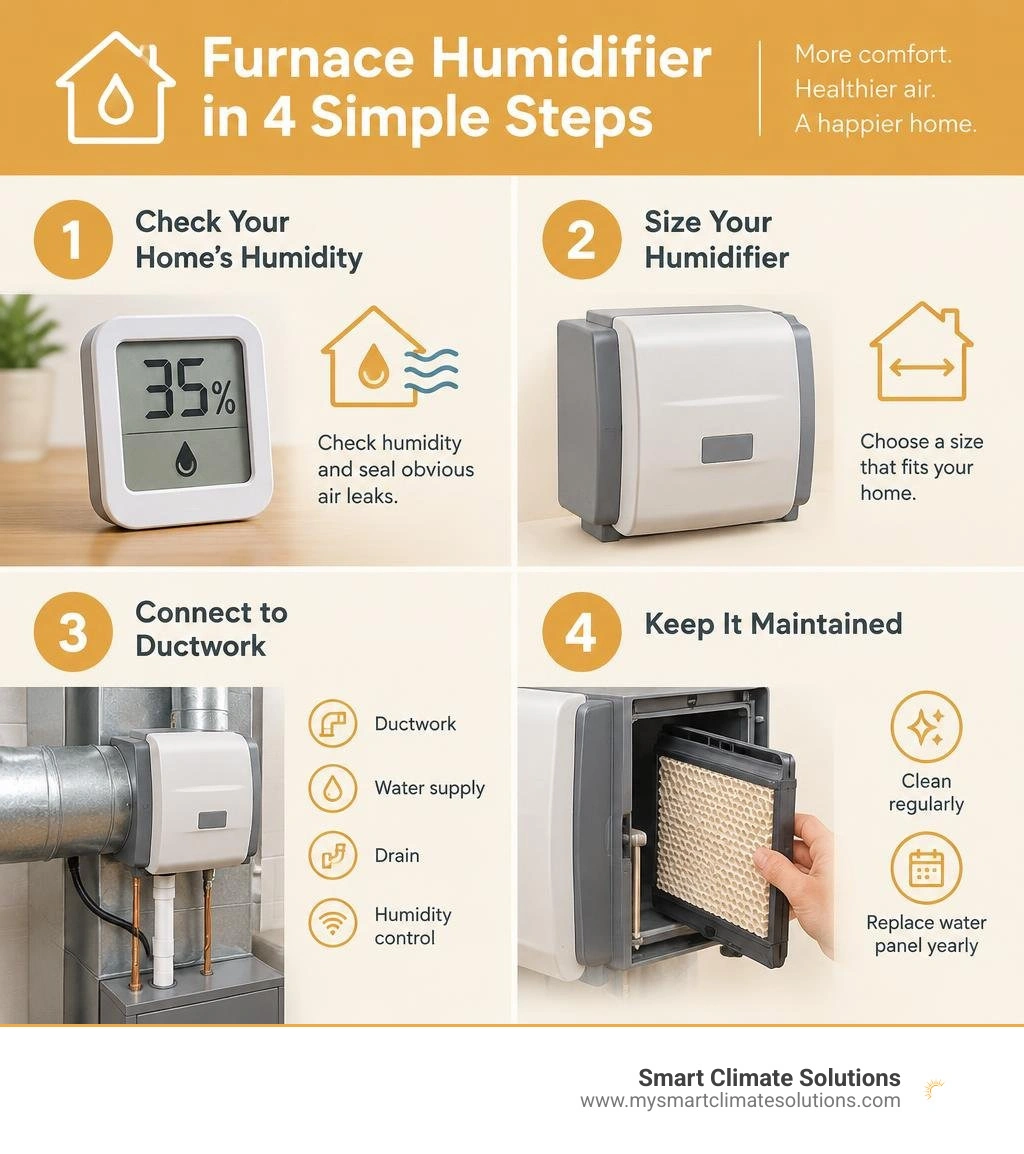
Start by checking your home's winter humidity and sealing obvious air leaks. If the air is still too dry, choose a humidifier sized for your home. An HVAC technician can connect it to the ductwork, water supply, drain, and humidity control. Aim for 30% to 50% indoor humidity, but lower the setting if you see window condensation during freezing weather.
A furnace humidifier can ease dry-air discomfort and reduce static throughout a Pittsburgh-area home. It also needs regular cleaning and a yearly water panel change to help prevent leaks and mineral buildup.
I'm Bill Scott, general manager of Smart Climate Solutions, with over 20 years of HVAC experience in Pittsburgh and Southwestern Pennsylvania. My experience with adding a humidifier to furnace systems has shown me why proper sizing, installation, and upkeep all matter.
How Furnace Humidifiers Work and Why Your Home Needs One
When winter arrives across Southwestern Pennsylvania, cold outdoor air holds very little moisture. Once that chilly air enters your house and passes through your heating system, warming it up drops the indoor relative humidity dramatically. In unhumidified homes throughout Pittsburgh, indoor humidity can plunge to 15% or into the low 20% range. That is drier than many arid desert landscapes.
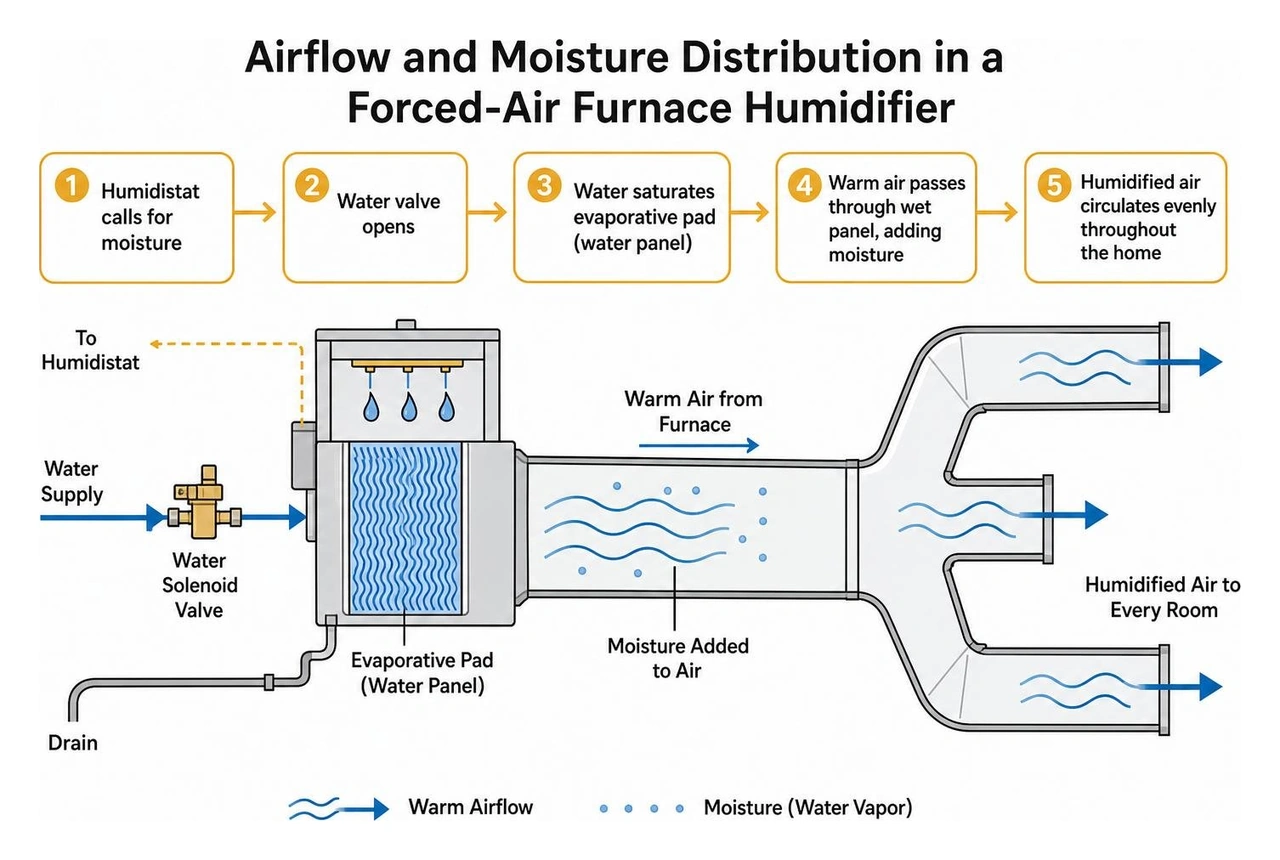
A central furnace humidifier solves this problem by introducing water vapor directly into your central ductwork. Understanding the basic anatomy of a furnace humidifier helps you see how simple yet effective these systems are.
When your humidistat calls for moisture, an electric water solenoid valve opens, allowing a controlled trickle of water to saturate an internal evaporative pad (often called a water panel). Warm air moving through your furnace supply plenum or return duct passes across this wet panel, evaporating water into vapor. The furnace blower fan then circulates this balanced, humidified air evenly into every finished room in your house.
Health and Comfort Benefits of Proper Humidity
Keeping your home within the recommended 30% to 50% relative humidity range delivers immediate health benefits. Dry winter air pulls moisture from your body, leading to chapped lips, dry skin, irritated sinuses, and scratchy throats.
Proper moisture levels soothe nasal passages and support your body's natural defense against airborne bugs. You will also notice a rapid drop in static electricity shocks when touching doorknobs or folding laundry. Balanced moisture is one of the most effective indoor air quality upgrades you can make for your family.
Humid air also holds heat better. When air has adequate moisture, it feels noticeably warmer against your skin, which may allow you to dial your thermostat back a degree or two without sacrificing comfort.
Protecting Woodwork, Flooring, and Electronics
Your health is not the only thing suffering when indoor air dries out. Natural wood expands and contracts based on moisture levels. Prolonged winter dryness pulls water from hardwood flooring, causing boards to shrink, separate, and creak. Crown molding, wood trim, cabinetry, and wooden furniture can crack or split at the joints.
If you have musical instruments like acoustic guitars or pianos in places like Bethel Park or Canonsburg, dry air can detune them or warp soundboards. Furthermore, excessive static electricity poses an invisible risk to sensitive home office electronics and entertainment systems. Adding steady humidity protects your valuable structural finishes and electronics all winter long.
Comparing Whole-House Humidifier Types
Not all humidifiers add moisture to your ductwork in the exact same manner. Depending on your home's layout, utility room dimensions, and heating equipment, different units offer distinct advantages. When pairing accessories with a new furnace and heating system installation, we typically evaluate three primary models: bypass, fan-powered, and steam.
| Humidifier Type | Equipment Cost Range | Typical Daily Capacity | Water Efficiency | Best Fit For |
|---|---|---|---|---|
| Bypass | $100 - $300 | 12 - 17 Gallons Per Day | Moderate (requires continuous drain flow) | Budget-conscious homes with ample duct space |
| Fan-Powered | $300 - $600 | 18 Gallons Per Day | Good (internal fan boosts evaporation) | Homes with tight utility rooms or heat pumps |
| Steam | $800 - $1,200+ | Up to 34 Gallons Per Day | Highest (converts almost all water to vapor) | Large square footage, drafty homes, or low-temp systems |
Bypass Humidifiers
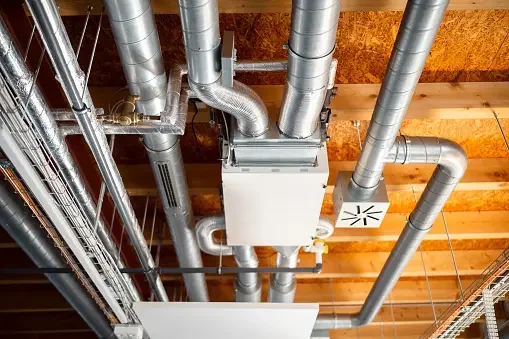
Bypass models are the most common and budget-friendly units available. They mount directly on either the warm air supply plenum or the cold air return duct. A 6-inch round bypass duct connects the unit to the opposite plenum.
These systems rely on the furnace blower to create a pressure difference between the supply and return sides. This pressure differential pushes heated supply air across the evaporative panel and returns it to the furnace cycle. Bypass units include a manual seasonal damper that you open in the fall and close in the spring so your air conditioner does not lose cooled air through the bypass loop.
Fan-Powered Humidifiers
Fan-powered units do not require a separate bypass duct. Instead, they feature an internal, quiet electric fan that pulls warm air straight from the supply plenum, forces it through the water panel, and pushes it directly into your supply airstream.
Because they generate their own airflow across the pad, fan-powered humidifiers produce up to 18 gallons of moisture per day. They take up less overall footprint, making them ideal for compact basement setups in South Hills or utility closets in Carnegie where duct spacing is tight.
Steam Humidifiers
Steam humidifiers represent the premium tier of whole-home moisture control. Rather than relying on the warmth of furnace air to evaporate water from a pad, a steam humidifier uses an internal electric canister to boil water and inject pure steam directly into the supply duct.
Steam units operate independently of the furnace heating burner. If your home calls for humidity, the unit can activate the furnace fan and deliver moisture on demand. Delivering up to 34 gallons of moisture per day, steam models easily handle large homes in Washington or Burgettstown with high ceilings and expansive floor plans.
Sizing and Cost Considerations

Choosing the correct capacity ensures your system delivers comfortable humidity without overworking itself or running continuously.
Sizing Considerations Before Adding a Humidifier to Your Furnace
Humidifiers are rated in Gallons Per Day (GPD). Sizing depends heavily on your home's total conditioned square footage, ceiling heights, and how tightly your building envelope is sealed.
- Tightly Sealed Homes (New Construction): A well-insulated, tightly constructed 1,500 sq. ft. home typically needs only 6 to 8 GPD. A 3,000 sq. ft. modern home generally requires around 10 to 12 GPD.
- Drafty Vintage Homes: Older brick and frame homes common in Southwestern Pennsylvania allow more dry outdoor air to infiltrate. A drafty 1,500 sq. ft. home can demand 10 to 12 GPD, while a 3,000 sq. ft. older home often needs 12 to 17+ GPD.
Before buying equipment, check for obvious drafts around windows and doors. Air sealing keeps natural moisture inside, allowing a smaller humidifier to do a better job.
Estimated Costs of Adding a Humidifier to Furnace Units
The overall cost of adding a whole-house humidifier typically ranges from $400 to $1,000 for standard evaporative systems, while advanced steam models can range from $1,200 to $2,200 installed.
- Equipment: Bypass units cost between $100 and $300, fan-powered models run from $300 to $600, and steam canisters range from $800 to $1,000+.
- Labor: Professional installation labor generally costs between $200 and $500, with more complex electrical and plumbing runs averaging between $395 and $734.
- Ongoing Maintenance: Annual replacement water pads cost around $15 to $30.
Because humidified air feels warmer, homeowners often save on heating fuel by keeping their thermostats at lower temperatures, helping offset annual operational costs.
Step-by-Step Process for Adding a Humidifier to Furnace Ductwork
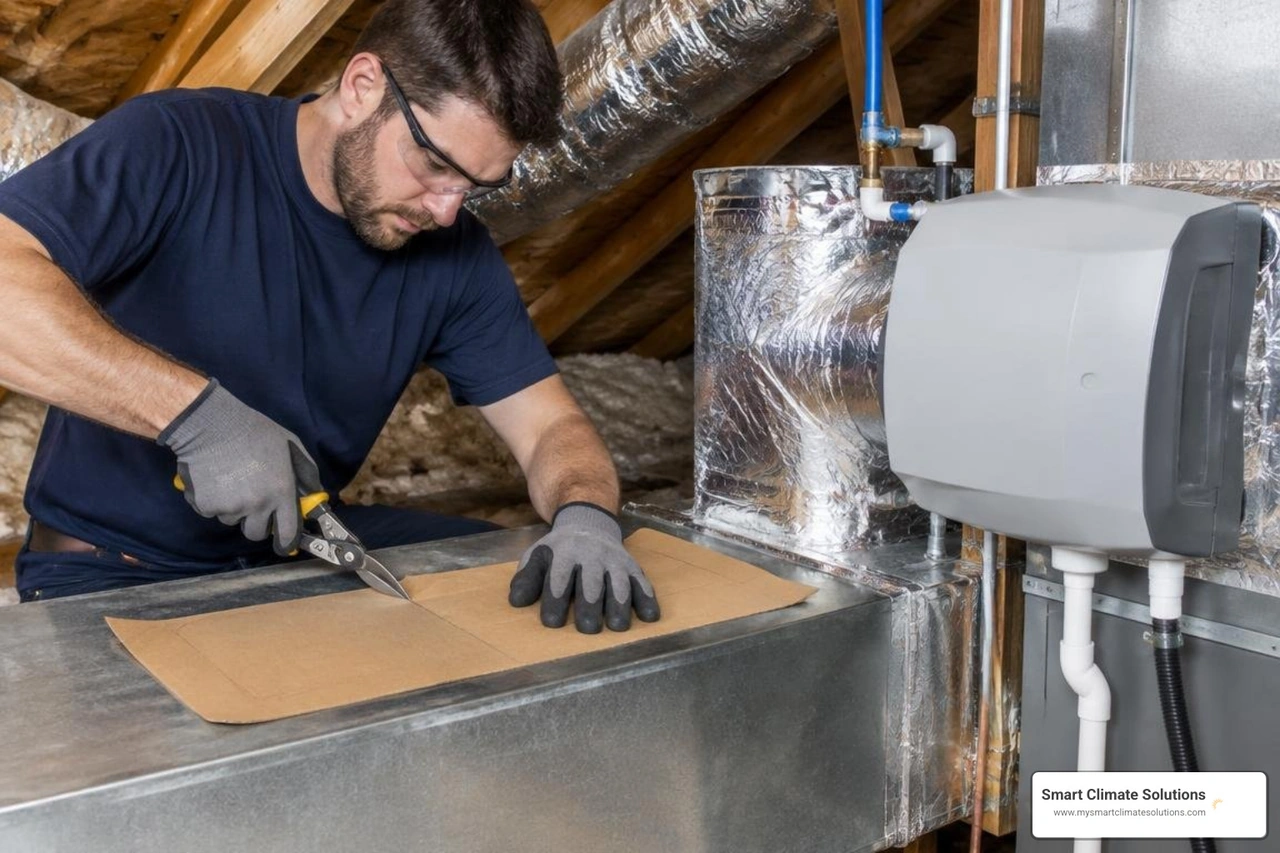
Proper installation requires cutting into your furnace ductwork, tapping into a domestic water line, running a dedicated drain, and wiring low-voltage controls.
Essential Tools, Safety, and Duct Preparation
Safety comes first on every installation. Always shut off electrical power to the furnace at the service panel and switch off the emergency disconnect switch. Turn off the gas supply valve before working around furnace cabinets.
Professional installations rely on specialized tools:
- Manufacturer metal template and permanent marker
- Drill with sheet metal bits and aviation tin snips (left, right, and straight cut)
- Level and tape measure
- Foil-backed mastic tape (never standard cloth duct tape)
- Screwdriver set and 1/4-inch hex head self-tapping sheet metal screws
The technician tapes the template to the selected duct location, ensuring it stays level and clear of internal air conditioning evaporator coils. Starter holes are drilled in the corners, and tin snips cleanly cut the rectangular opening. Clean sheet metal preparation ensures proper airflow and supports long-term durability when performing HVAC ductwork installation services. Reviewing manufacturer humidifier installation guidelines ensures code compliance and proper clearances from cooling coils.
Mounting, Water Line Plumbing, and Humidistat Wiring
Once the plenum opening is cut, the mounting frame is secured with self-tapping screws and sealed around its perimeter with foil tape to eliminate air leaks. For bypass models, a matching round collar is cut into the opposite plenum, and a 6-inch bypass pipe with a damper is connected.
Plumbing involves tapping into a cold or hot water line using a solid brass T-fitting or ball valve. A 1/4-inch copper or braided line runs to the unit's solenoid valve. A 1/2-inch flexible drain line is connected to the bottom trough. This drain must maintain a minimum downward slope of 1/8-inch per foot of horizontal run to allow gravity drainage and prevent standing water leaks.
The humidistat control is then mounted on the cold air return duct at least 6 inches upstream from the humidifier or bypass intake for accurate sensing. Low-voltage 18-gauge thermostat wiring connects the humidistat to the furnace control board's 24V HUM terminal or an external transformer. This wiring ensures the solenoid valve only opens when the furnace blower is running.
DIY Installation vs. Hiring a Professional
While handy homeowners can purchase DIY kits, furnace humidifier installation involves risks:
- Sheet Metal Hazards: Jagged metal edges can cause severe injuries, and an incorrect cut can ruin an expensive duct plenum.
- Water Leaks: A poorly secured supply line or an improperly sloped drain line can leak water directly into your furnace cabinet or onto your basement floor.
- Electrical Damage: Incorrect low-voltage wiring can short out your furnace circuit board or transformer.
Hiring a certified technician protects equipment warranties and guarantees clean, leak-free operation. If you ever encounter operational issues down the road, relying on HVAC service and repair professionals gives you total peace of mind.
Humidifier Maintenance and Preventing Moisture Problems
A furnace humidifier is a flow-through appliance that requires minimal but essential seasonal maintenance to run efficiently and prevent water damage.
Water Panel Replacement and Cleaning Schedule
Over months of heating, evaporating water leaves behind dissolved mineral scale (calcium and magnesium). This buildup gradually hardens, clogging airflow and reducing moisture output.
- Annual Pad Replacement: Replace your evaporative water panel once per heating season (typically every autumn). If your municipal water in Wheeling or Weirton has high mineral hardness, inspect and replace the pad twice per season.
- Scale Cleaning: Inspect the distribution trough and housing annually. Soak plastic parts in white vinegar to dissolve crusty mineral deposits.
- Drain Check: Pour a cup of water into the bottom drain pan to confirm the line flows freely to the floor drain or condensate pump without backing up.
A great time to handle this upkeep is during your scheduled furnace tune-up, when an HVAC pro can check water pressure, test solenoid operation, and inspect wiring.
Ideal Winter Settings and Preventing Mold Growth
Setting your humidistat too high during deep freezes can cause moisture to condense on cold windowpanes and inside exterior wall cavities, encouraging mold growth. Adjust your indoor humidity target downward as outside temperatures drop:
- Outdoor temperatures above +20 degrees F: Set humidistat to 35%
- Outdoor temperatures between +10 degrees F and +20 degrees F: Set humidistat to 30%
- Outdoor temperatures between 0 degrees F and +10 degrees F: Set humidistat to 25%
- Outdoor temperatures below 0 degrees F: Set humidistat to 20%
Modern digital humidistats feature outdoor temperature sensors that adjust these setpoints automatically, protecting your home from window sweat and duct condensation.
Frequently Asked Questions About Furnace Humidifiers
Can you add a humidifier to any existing furnace?
Yes, a whole-house humidifier can be added to nearly any forced-air heating system, including standard gas furnaces, oil furnaces, electric air handlers, and dual-fuel heat pumps. The only requirement is adequate physical space on the supply or return ductwork to mount the housing, connect the bypass pipe (if applicable), and access a nearby water supply and drain.
What is the ideal indoor humidity setting when outdoor temperatures drop below freezing?
When outside temperatures fall below freezing, keep indoor humidity between 25% and 35%. While 45% feels great in mild weather, high indoor moisture will condense into frost or water droplets on cold window glass and uninsulated exterior surfaces when it is 10 degrees F outside. If you notice fogging or condensation forming on window edges, lower your humidistat by 5% increments until it clears.
How often should the humidifier water pad be replaced?
The evaporative pad should be replaced at least once per year at the beginning of the winter heating season. Homes with very hard well water or high daily heating demand may need a replacement every three to four months during peak winter operation.
Conclusion
Dry indoor air can turn winter into an uncomfortable season of static shocks, scratchy throats, and shrinking wood floors. Adding a whole-house humidifier to your forced-air heating system delivers consistent, balanced moisture across every room while protecting your furnishings and improving energy efficiency.
Whether you need a bypass model, a compact fan-powered unit, or high-capacity steam humidification, our certified technicians at Smart Climate Solutions bring over 20 years of local experience across Pittsburgh, Steubenville, and St. Clairsville. To keep your home warm and comfortable all season, explore our HVAC installation services today and let us tailor the right indoor air solution for your home.