

Why Your Business Needs the Right Commercial Heating System

A Commercial heating system is a specialized HVAC solution designed to maintain comfortable temperatures in business environments like offices, warehouses, retail spaces, and industrial facilities. These systems differ from residential heating in scale, complexity, and performance requirements.
Quick Overview of Commercial Heating Systems:
- Forced Air Systems - Use furnaces or rooftop units to distribute heated air through ductwork
- Hydronic Systems - Circulate hot water or steam through boilers to radiators or baseboard heaters
- Radiant Systems - Emit infrared heat to warm objects and surfaces directly
- Heat Pumps - Transfer heat from outside air or ground sources for highly efficient heating and cooling
Your heating system does more than keep your building warm. It directly impacts employee productivity, customer comfort, and your bottom line through energy costs. Space heating alone accounts for approximately 25% of all commercial building energy consumption annually.
Choosing the wrong system - or neglecting an outdated one - can lead to skyrocketing utility bills, frequent breakdowns, and uncomfortable working conditions. Many businesses in the Pittsburgh area struggle with aging equipment that wastes energy and fails during the coldest months when reliability matters most.
The good news? Modern commercial heating technology offers remarkable efficiency improvements. Heat pumps can achieve 300-400% efficiency, while condensing boilers reach up to 98% efficiency. These advances translate directly into lower operating costs and improved comfort.
I'm Bill Scott, and I've spent over 20 years helping Pittsburgh-area businesses select, install, and maintain commercial heating systems that deliver reliable comfort and maximum efficiency. Whether you're upgrading an existing system or planning a new installation, understanding your options is the first step toward making a smart investment.
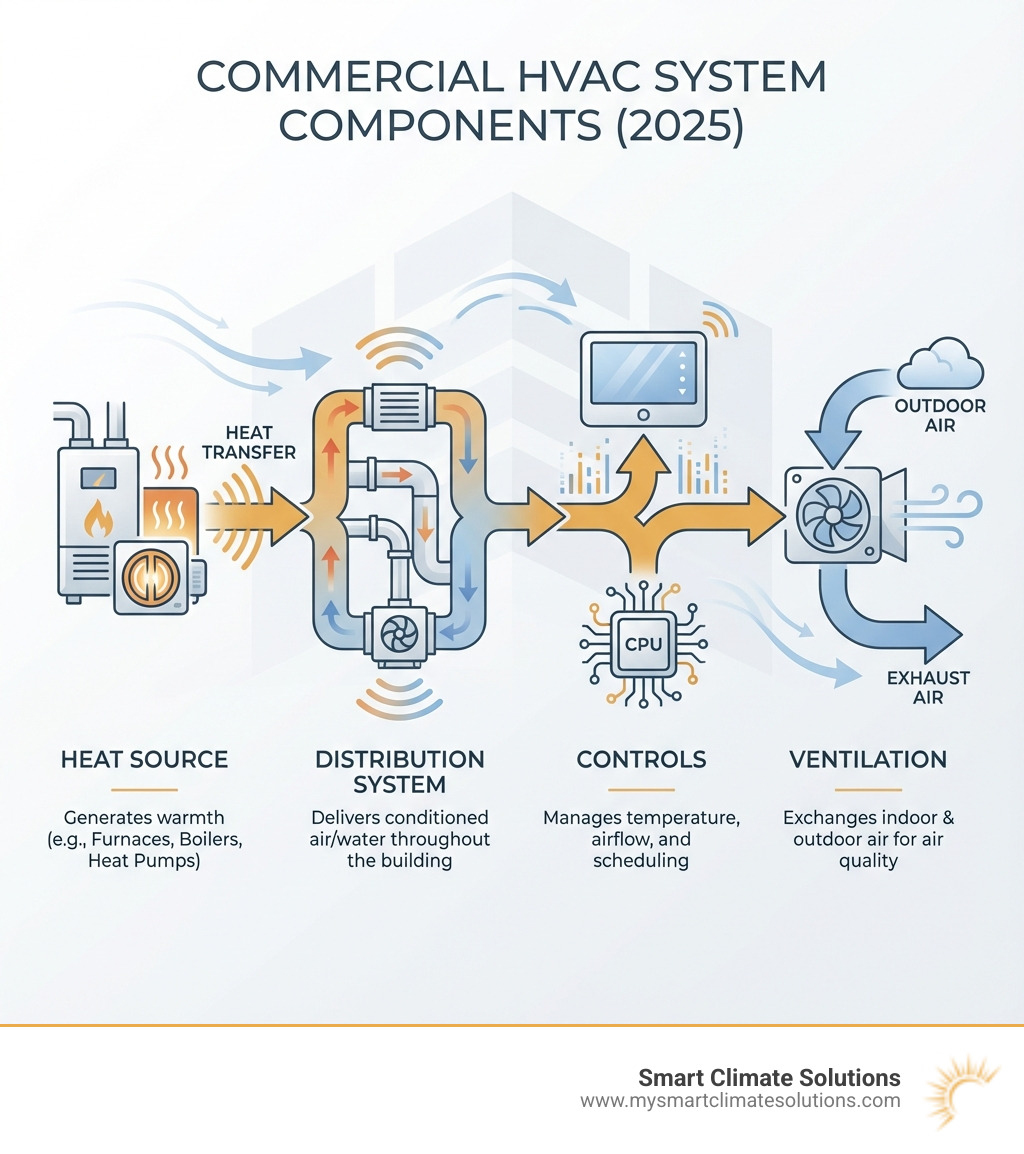
Exploring the Primary Types of Commercial Heating Systems
There's no one-size-fits-all solution when it comes to commercial heating. This section details the most common heating solutions for businesses, outlining how they operate and their ideal applications.
Forced Air Systems (Furnaces & Rooftop Units)
Forced air systems are perhaps the most common type of Commercial heating system in the U.S., especially for commercial applications.How it works: These systems operate by pulling air into a vent, heating it (typically via a furnace using natural gas, electricity, or oil, or a rooftop unit), and then pushing that warm air back out into the building through a network of ductwork. A powerful blower system circulates the conditioned air to maintain constant temperatures.Air distribution: Air is distributed evenly through supply and return vents throughout the space.Ductwork: An extensive system of ducts is required to carry the heated air. For more information, explore our guide on commercial ductwork installation.Pros:
- Quick heating: Forced air systems can heat spaces rapidly.
- Integrates with AC: They often share ductwork with central air conditioning, offering a combined heating and cooling solution.
- Good for offices, retail, restaurants: Ideal for spaces requiring consistent, controlled temperatures.Cons:
- Air quality concerns: Can circulate dust and allergens if not properly maintained.
- Duct losses: Heat can be lost through leaky or uninsulated ductwork, reducing efficiency.
- Can dry out air: May lead to lower humidity levels in heated spaces.
- Noise: The blower operation can be noticeable.Best for: Offices, retail spaces, restaurants, and other commercial buildings that require rapid and consistent temperature control.
Hydronic Systems (Boilers)
Hydronic systems, primarily boilers, offer a different approach to commercial heating.How it works: Commercial boilers are pressurized systems that use combusting fuel (natural gas, oil, or LPG) or electricity to generate heat. The boiler heats water (or creates steam) which is then circulated through pipework to radiators, baseboard heaters, or radiant floor systems throughout the property.Water or steam: Heat is transferred via hot water or steam, providing a gentle, even warmth.Radiators: These units release the heat into the room.Pros:
- Consistent, even heat: Provides a very comfortable and steady warmth without forced air currents.
- Quiet operation: Boilers operate very quietly compared to forced air systems.
- Long lifespan: Boilers are known for their durability and can last a long time with proper maintenance.
- No air filters needed: Doesn't circulate dust or dry out the air as much as forced air.
- Efficient for large buildings: Gas boilers are particularly energy-efficient for warming large spaces.Cons:
- Slower response time: Takes longer to heat up a space initially.
- Higher initial cost: Can have a higher upfront installation cost, especially if no existing system is in place.
- Can be harder to install: More complex installation if there isn't an existing system.Best for: Large buildings, schools, hospitals, and facilities where consistent, quiet, and even heating is paramount.Statistic: Condensing boilers, a modern type of boiler, can achieve up to 98% efficiency (SEDBUK A-rated), making them a very energy-efficient choice.
Radiant Heating Systems
Radiant heating offers a unique and often very comfortable heating experience.How it works: Instead of heating the air, radiant heating systems use infrared radiation to directly warm objects and surfaces in a room. This includes people, floors, walls, and furniture. This method is similar to how the sun warms you, even on a cold day. Systems can include radiant panels, tubes embedded in floors (hydronic radiant floors), or overhead plaque heaters.Infrared radiation: Direct transfer of heat energy.Heats objects directly: This leads to a sense of warmth at lower ambient air temperatures.Pros:
- Silent: Operates without noisy fans or blowers.
- No drafts: Eliminates cold spots and air currents common with forced air.
- Great for high ceilings: Since heat rises, forced air can be inefficient in tall spaces. Radiant heat warms objects and surfaces directly, making it highly effective in drafty buildings with high ceilings and many windows, like many warehouses and distribution centers we serve in the Pittsburgh, Washington, PA, or Steubenville, OH areas.
- Energy-efficient: Avoids duct losses and heat stratification.Cons:
- Slower to heat space: Takes time for surfaces to heat up and radiate warmth.
- Can be affected by carpeting: Thick carpeting can reduce the effectiveness of radiant floor heating.Best for: Warehouses, auto shops, gymnasiums, manufacturing plants, and other large, open spaces where even, draft-free heat is desired.Statistic: Unit heaters, often a form of radiant or space heating, account for nearly 18% of primary space heating energy use for commercial buildings, specifically in warehouses and distribution centers.
Heat Pump Systems
Heat pumps are a versatile and increasingly popular Commercial heating system known for their efficiency.How it works: Unlike furnaces or boilers that generate heat, heat pumps transfer existing thermal energy from one place to another. In heating mode, they extract heat from the outside air, ground, or water, concentrate it, and release it inside the building. In cooling mode, this process reverses, effectively acting as an air conditioner.Heat transfer: Moves heat rather than generating it.Reversible cycle for cooling: Provides both heating and cooling from a single system. For a deeper dive into the mechanics, see How heat pumps work.Pros:
- Extremely high efficiency: They deliver more energy than they consume.
- Dual function: Provides both heating and cooling, eliminating the need for separate systems.
- Lower operating costs: Can significantly reduce energy bills, especially when replacing older, less efficient systems.
- Environmentally friendly: Reduces carbon emissions compared to fossil fuel systems.
- Beneficial electrification: By upgrading to an efficient electric HVAC system, a business can move towards beneficial electrification, or the transition of electric systems in a way that reduces overall emissions and energy costs.Cons:
- Reduced performance in deep cold: In extremely low temperatures, their efficiency can decrease, and they may need supplemental heat.
- May need backup heat: In colder climates like Pittsburgh and the surrounding areas, a supplemental heat source (like an electric resistance heater or a small furnace) may be necessary.
- Higher upfront cost: Initial installation can be more expensive than traditional systems.Best for: Moderate climates, eco-conscious businesses, and any commercial property looking for highly efficient heating and cooling from a single system.Statistic: Heat pumps can achieve efficiencies of up to 300% - 400%, delivering three to four units of heat output for every unit of electricity consumed.
Key Factors in Choosing the Right Commercial Heating System
Making the right choice involves more than just the price tag. Here are the critical factors to evaluate for your Pittsburgh-area business.
Building Characteristics: Size, Layout, and Insulation
The unique physical attributes of your commercial space in areas like South Hills, Burgettstown, or Weirton, WV, heavily influence the optimal heating solution.
- Heat load calculation: This determines the amount of heat needed to keep your building warm, factoring in everything from square footage to window efficiency.
- Building size: Larger buildings often benefit from zoned systems or more powerful central units.
- Open-plan vs. multi-room layouts: Open spaces might suit radiant or air rotation systems, while multi-room offices could benefit from zoned forced air or hydronic systems.
- Ceiling height and heat stratification: In buildings with high ceilings, heat naturally rises, leaving lower areas cold. Destratification systems or radiant heating can combat this issue, ensuring even temperature distribution.
- Window and door placement: Areas with many windows or frequently opened doors will experience greater heat loss, impacting system choice.
- Impact of insulation on heating demand: Good insulation can reduce heating demand by up to 30%, making smaller, more efficient systems viable.
Operational Needs and Usage Patterns
Your business's daily operations are just as important as the building itself.
- Occupancy schedules: Is your building occupied 24/7, or only during business hours? Do different areas have different schedules? This impacts zoning and control strategies.
- Zoning requirements for different areas: Different parts of your commercial space (e.g., office, warehouse, retail floor, server room) may have distinct temperature requirements. Zoned heating allows for independent control, saving energy by only heating occupied or necessary areas.
- Distinguishing between commercial and industrial heating needs: Commercial heating typically focuses on occupant comfort, while industrial heating might also include process heating (for manufacturing, drying, etc.) or frost protection for machinery.
- Process heating vs. comfort heating: Some businesses need heating for specific industrial processes, which may require higher temperatures or specialized equipment.
- For specific solutions custom to different commercial or even residential settings, check out our guide on HVAC solutions for residential apartments.
Your Budget and the Total Cost of Ownership
While initial installation costs are important, we always advise our clients in Steubenville, OH, and St. Clairsville, OH, to consider the total cost of ownership (TCO).
- Upfront installation costs: This is the initial capital investment for the equipment and installation.
- Long-term fuel and electricity costs: These are ongoing expenses that can vary significantly based on system efficiency and fuel type.
- Maintenance and repair expenses: Regular maintenance is crucial to prevent costly breakdowns. We recommend considering a commercial HVAC maintenance plan to budget for these.
- Expected system lifespan: A system that costs more upfront but lasts longer and is more efficient may be a better long-term investment.
- Return on investment (ROI): How quickly will the energy savings and reduced maintenance costs pay back the initial investment?
- For insights into the costs associated with initial setup, you might find our information on furnace and heating system installation helpful.
Maximizing Efficiency and Open uping Cost Savings
Modern heating systems offer incredible opportunities to reduce energy consumption and operational costs.
The Benefits of Upgrading Your Commercial Heating System
Upgrading an outdated Commercial heating system is one of the smartest investments a business can make.

- Lower utility bills: High-efficiency systems consume significantly less energy, leading to substantial savings.
- Improved employee and customer comfort: Modern systems provide more consistent and controllable heating, eliminating cold spots and enhancing the overall environment.
- Reduced carbon footprint: Newer systems are often more environmentally friendly, helping your business meet sustainability goals.
- Increased property value: An updated, efficient HVAC system is an attractive feature for potential buyers or tenants.
- Fewer breakdowns and emergency repairs: New equipment is more reliable, reducing the need for costly and disruptive emergency service calls.
- Qualify for incentives: Upgrading to efficient electric HVAC systems can qualify businesses for incentives and rebates, potentially covering a significant portion of installation costs.
- To learn more about how efficiency translates to savings, check out our guide on high-efficiency heating and air conditioning.
Emerging Technologies and Trends in Commercial Heating
The HVAC industry is constantly evolving, offering innovative solutions for businesses.
- Smart thermostats: Programmable and internet-connected thermostats allow for precise temperature control, remote management, and energy usage tracking.
- Building automation systems (BAS): Integrate all building systems (HVAC, lighting, security) for centralized control and optimization.
- Variable Refrigerant Flow (VRF): These systems use heat pump technology to offer highly efficient heating and cooling. A key benefit is their ability to simultaneously heat and cool different parts of a building, using waste heat from one area to warm another.
- Beneficial electrification: This is the transition to electric systems in a way that reduces overall emissions and energy costs. The Department of Energy provides comprehensive Guidance on Electrification for Large Commercial Buildings.
- High Temperature Heating and Ventilation (HTHV): HTHV systems, like those found in industrial settings, use 100% outside air for heating and ventilation, offering superior indoor air quality and significant energy savings (20-70%) in large commercial and industrial spaces. They can also provide destratification.
Practical Tips for Immediate Energy Savings
While a new system is a big investment, there are immediate steps you can take to save energy with your current Commercial heating system.
- Programmable thermostat settings: Set temperatures lower during unoccupied hours or in less-used zones.
- Regular filter changes: Dirty filters restrict airflow, making your system work harder and consume more energy. Change them monthly or as recommended.
- Sealing ductwork leaks: Leaky ducts can waste a significant amount of heated air. Professional sealing can improve efficiency.
- Upgrading insulation: Improving your building's insulation reduces heat loss, lessening the burden on your heating system.
- Scheduling professional tune-ups: Annual maintenance ensures your system runs at peak efficiency.
- For more detailed advice on cutting down energy waste, explore our energy saving HVAC tips.
The Crucial Role of Professional HVAC Technicians
From selection to service, a certified technician is your most valuable asset in managing your commercial heating system.
Proper System Selection and Sizing
Choosing the right Commercial heating system is a complex decision that requires expert analysis.
- Dangers of oversized systems (short-cycling): An oversized system will heat a space too quickly, then shut off, only to turn on again shortly after. This "short-cycling" wastes energy, causes temperature fluctuations, and puts undue wear and tear on components.
- Dangers of undersized systems (constant running): An undersized system will struggle to heat your building adequately, running almost constantly, straining the equipment, and ultimately failing to maintain comfortable temperatures.
- Matching technology to your specific application: Our team assesses your building's heat load, operational needs, and budget to recommend the most suitable technology, whether it's a furnace, boiler, radiant system, or heat pump.
- Local expertise: With over 20 years of experience serving businesses across Pittsburgh, South Hills, Burgettstown, Washington PA, Steubenville OH, St. Clairsville OH, and Weirton WV, we understand the unique climate challenges and building types in our service areas. For comprehensive local services, see our HVAC in Pittsburgh guide.
Professional Installation and Code Compliance
A well-chosen system is only as good as its installation.
- Adherence to local building codes: Our certified technicians are intimately familiar with all local regulations and codes in Pennsylvania, Ohio, and West Virginia, ensuring your installation is safe and compliant.
- Ensuring system safety: Proper installation prevents hazards like carbon monoxide leaks (with gas systems) or electrical issues (with electric systems).
- Proper system commissioning: This involves fine-tuning the system after installation to ensure it operates at its optimal efficiency and performance from day one.
- Maximizing performance from day one: Professional installation ensures your system delivers the promised efficiency and comfort from the moment it's turned on.
- For specific local services, our team in HVAC in Weirton, WV is ready to help.
Ongoing Maintenance and Support
Even the best Commercial heating system needs regular care.
- Preventing costly breakdowns: Routine maintenance catches small issues before they become major, expensive repairs.
- Extending equipment lifespan: A well-maintained system will last longer, maximizing your investment.
- Maintaining peak efficiency: Regular tune-ups ensure your system continues to operate at its highest efficiency, keeping energy costs down.
- The value of a maintenance plan: We offer custom commercial HVAC maintenance plans that provide scheduled inspections and priority service, giving you peace of mind.
- 24/7 emergency service: When a heating emergency strikes in the dead of winter, our 24/7 emergency support ensures your business isn't left in the cold.
Conclusion: Partnering for a Warmer, More Efficient Business
Choosing the right Commercial heating system is a critical investment in your business's comfort, productivity, and financial health. By understanding the different types of systems, evaluating your building's unique needs, and prioritizing energy efficiency, you can ensure a warm and welcoming environment for years to come. For expert guidance custom to the Greater Pittsburgh area, the team at Smart Climate Solutions has the experience to design and install the perfect system for your business.
Ready to upgrade your business's comfort and efficiency?

.png)
