

What's the Real Price of Cool Comfort?

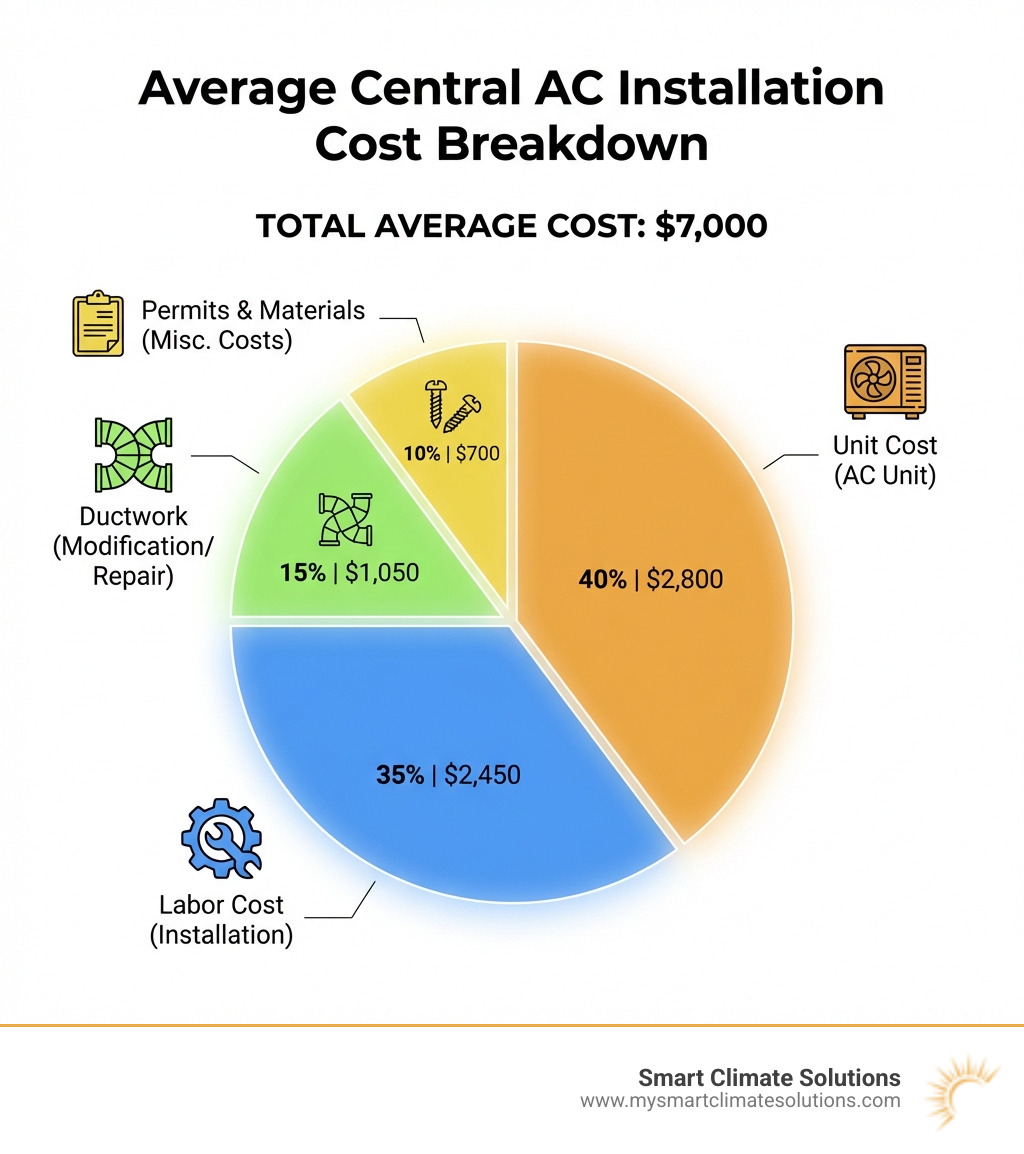
How much does a central air conditioner unit cost? The total cost for installing a new central air conditioner typically ranges from $5,000 to $12,000, with most homeowners paying around $7,000 for a complete system including installation.
Here's what you need to know upfront:
- Unit Only: $1,900 to $5,500 (depending on size and brand)
- Installation Labor: $1,500 to $3,500
- New Ductwork (if needed): $3,000 to $5,000+
- Permits & Materials: $300 to $800
- Total Installed Cost: $5,000 to $16,000 (varies by home size, efficiency, and complexity)
The price you pay depends on several key factors: the size of your home, the efficiency rating you choose, whether you need new ductwork, and the complexity of the installation. Higher-efficiency systems cost more upfront but save you money on energy bills over time.
When your AC stops working on the hottest day of summer, the last thing you want is sticker shock. Understanding these costs helps you budget properly and make informed decisions about your home comfort investment.
I'm Bill Scott, general manager of Smart Climate Solutions, and over my 20+ years in the HVAC industry serving Pittsburgh and Southwestern PA, I've helped thousands of homeowners steer the question of how much does a central air conditioner unit cost. The answer is never one-size-fits-all, but with the right information, you can find a solution that fits both your home and your budget.
Key Factors That Determine Your Central AC Installation Cost
When considering a new central air conditioning system, many elements come into play that directly influence the final price tag. Understanding these factors is crucial for any homeowner in the Pittsburgh, PA, or surrounding Ohio and West Virginia areas. These factors determine not just the initial outlay, but also the long-term operating costs and the overall comfort of your home.

Unit Size (Tonnage) and SEER Rating: Balancing Power and Efficiency
One of the most critical decisions when installing a new central AC unit is determining its size, measured in "tons." A ton in HVAC terms refers to the amount of heat an AC unit can remove from your home in one hour, with one ton equaling 12,000 BTUs (British Thermal Units). For example, a 3-ton unit can move 36,000 BTUs.
For a typical 2000 sq ft home, you'll generally need an AC unit between 2.5 and 3.5 tons. However, simply going by square footage isn't enough. An HVAC contractor should always perform a Manual J load calculation to determine the precise cooling needs of your home. This calculation considers factors like your home's climate zone, insulation quality, window efficiency, and even the number of occupants.
An improperly sized unit - whether too large or too small - can lead to inefficiencies, discomfort, and higher energy bills. An oversized unit, for instance, will short-cycle, leading to poor humidity control, uneven cooling, and increased wear and tear.
The Seasonal Energy Efficiency Ratio (SEER) or its newer standard, SEER2, is another major cost influencer. This rating indicates how efficiently an air conditioner converts electricity into cooling. Higher SEER2 ratings mean greater energy efficiency, which translates to lower monthly energy bills.
While a higher SEER2 unit may cost $1,000 to $2,000 more upfront (for units with SEER 18-22 compared to lower ratings), the long-term energy savings can quickly offset this initial investment. For example, in our service areas like Steubenville, OH, a SEER2 rating of at least 13.4 is recommended for any new central AC unit installed. We always recommend checking your local Energy Star Guide for specific state rules and regulations. Investing in a Most Efficient Home Air Conditioner can be a smart move for homeowners focused on long-term value.
System Type and Advanced Features
The type of central air conditioning system you choose significantly impacts the cost. The two main types are split systems and packaged systems.
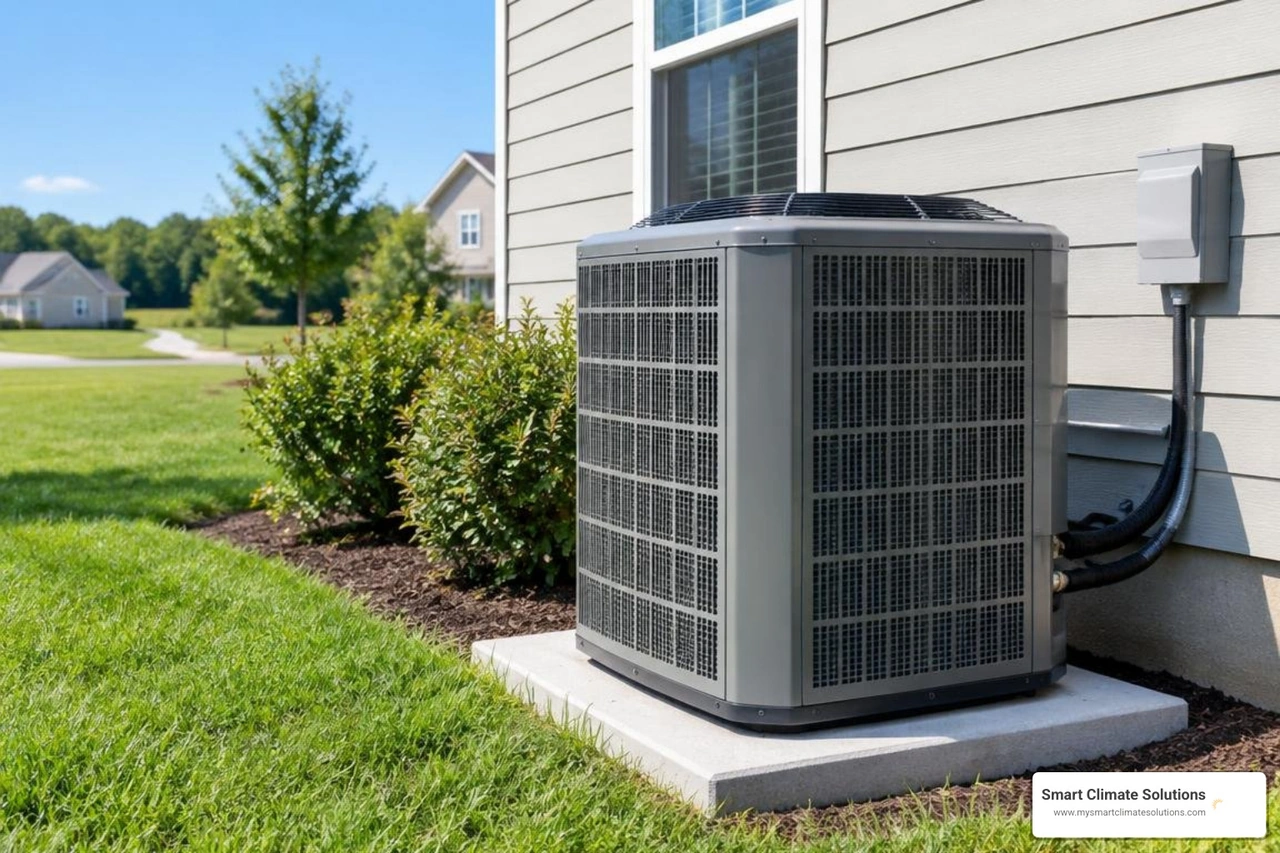
- Split Systems: These are the most common residential central AC setup. They consist of an outdoor unit (condenser and compressor) and an indoor unit (evaporator coil and air handler, often integrated with your furnace). The unit itself typically costs between $1,900 and $4,200.
- Packaged Systems: In a packaged system, all components - compressor, condenser, and evaporator - are housed in a single outdoor unit. These are often used in homes without basements or attics, or where indoor space is limited. Packaged units generally cost between $2,300 and $5,500 for the unit alone.
Beyond the basic system type, modern central AC units offer a range of advanced features that improve comfort and efficiency, but also increase the price. These include:
- Variable-Capacity or Variable-Speed Compressors: Unlike single-stage (100% on/off) or two-stage (100% or ~70% on) units, variable-capacity systems can continuously adjust their output to precisely match your home's cooling needs. This leads to superior comfort, better humidity control, and higher energy efficiency, but comes at a higher price point.
- Humidity Control: Features that specifically target humidity reduction can allow you to feel comfortable at slightly higher indoor temperatures, saving energy.
- Noise Reduction: Premium units often incorporate advanced designs and insulation to operate more quietly, a desirable feature for many homeowners.
- Communicating Systems: These systems allow different components (AC, furnace, thermostat) to "talk" to each other, optimizing performance and efficiency.
- Smart Thermostats: While sometimes an add-on, integrating a smart thermostat can maximize the efficiency and convenience of your new AC system.
As we discuss in our Air Conditioning Systems Guide 2025, these "bells and whistles" can add to the upfront cost, but they also contribute to a more comfortable home and potentially greater long-term savings.
Your Home's Condition: Ductwork, Wiring, and Complexity
The existing infrastructure of your home plays a massive role in the total installation cost.
- Existing Ductwork: If your home already has a well-maintained, properly sized ductwork system, you'll save significantly, potentially avoiding $3,000 to $5,000 or more in new duct installation costs. However, if your existing ductwork is old, leaky, undersized, or damaged, repairs or replacement will be necessary. This can add substantial costs to the project, as improperly functioning ducts will severely hinder the efficiency of even the best new AC unit. For homes without existing ductwork, the cost of Central Air Install Cost With No Existing Ductwork can be a major budget consideration, adding $3,000 to $5,000 or more to the overall project. You can learn more about these costs in our Ductwork Installation Cost guide.
- Home Layout and Complexity: Multi-story homes, houses with complex architectural designs, or those with difficult-to-access areas (like tight attics or crawl spaces) can increase labor costs by $1,000 or more. The more challenging the installation, the more time and specialized equipment our certified technicians will need.
- Electrical Work: A new, more powerful, or higher-efficiency AC unit might require electrical upgrades. This could include installing a dedicated circuit, upgrading your electrical panel, or running new high-voltage wiring. Electrical adjustments, including those for new smart thermostats, can add between $100 and $600 to the total cost.
- Condensate Drainage: Air conditioners remove moisture from the air, producing condensate. If your home's existing drainage system is inadequate or obstructed, a condensate pump (around $370) or new drainage lines might be required.
- Permits: Most municipalities in our service areas, including Pittsburgh, PA, and surrounding regions, require building or mechanical permits for central AC installation. These permits ensure the work meets local codes and safety standards. Your HVAC contractor typically secures these on your behalf, with costs ranging from $300 to $800, which are usually included in your overall quote.
How Much Does a Central Air Conditioner Unit Cost? A Price Breakdown
Now that we've covered the influencing factors, let's look at some concrete numbers. These are averages, and your specific quote will depend on the unique aspects of your home and chosen system.

How much does a central air conditioner unit cost for a 2000 sq ft home?
For homeowners in our service areas like Pittsburgh, PA, and the Ohio Valley, the cost to install a central air conditioner in a 2000 sq ft home typically falls within the national average range of $5,000 to $12,000. Most of our customers find themselves spending around $7,000 for a complete, professionally installed system.
This cost includes the central AC unit itself, the labor for installation, and any necessary materials. If new ductwork is required, this average will increase substantially.
Labor costs are a significant portion of the total price and can vary by region. In areas with a higher cost of living, labor might range from $3,000 to $5,000+. In regions with a lower cost of living, it could be $1,500 to $2,500.
Given our presence across Southwestern PA, Eastern OH, and Northern WV, we see some variation, but our pricing remains competitive and transparent. We're proud to offer expert HVAC installation services to our communities, ensuring you get the best value for your investment. For a more detailed breakdown, check out our Central AC Installation Cost article.
How much does a central air conditioner unit cost by performance tier?
Just like cars, central AC units come in different tiers, each offering varying levels of performance, efficiency, and features. This greatly influences how much a central air conditioner unit costs.
| Performance Tier | Key Features | Typical SEER/SEER2 Rating | Total Installed Cost Range |
|---|---|---|---|
| Entry-Level | Single-stage, basic comfort | 14-16 SEER/13.4-15 SEER2 | $5,500 - $8,800 |
| Mid-Range | Two-stage, improved humidity control, quieter | 16-18 SEER/15-17 SEER2 | $6,700 - $9,400 |
| High-End | Variable-speed, advanced controls, quietest | 18-26 SEER/17-24 SEER2 | $8,300 - $16,000+ |
- Entry-Level Systems: These are typically single-stage units that operate at 100% capacity whenever they're on. They meet minimum efficiency standards (e.g., 14 SEER or 13.4 SEER2 in our region) and provide reliable cooling. They are the most budget-friendly option, ideal for homeowners looking for straightforward cooling without extra features.
- Mid-Range Systems: These units often feature two-stage compressors, allowing them to run at a lower capacity (around 70%) during milder weather. This provides more consistent temperatures, better humidity control, and quieter operation than entry-level models. They offer a great balance of upfront cost and long-term energy savings.
- High-End Systems: These are the top performers, featuring variable-speed or variable-capacity compressors, the highest SEER/SEER2 ratings, and advanced features like communicating technology, superior humidity control, and ultra-quiet operation. While the initial investment is higher, these systems offer the best comfort, lowest operating costs, and often qualify for more rebates. For more on maximizing efficiency, see our guide on High Efficiency Heating and Air Conditioning.
Central Air vs. Other Cooling Options: What to Consider
While our focus is on central air, it's worth briefly comparing it to other cooling solutions to understand its value proposition and how it affects how much a central air conditioner unit costs relative to alternatives.
- Window Units / Portable Units: These are the least expensive upfront ($139-$650 per unit) and are suitable for cooling single rooms or small areas. However, they are noisy, inefficient for whole-home cooling, and lack sophisticated air filtration or humidity control.
- Ductless Mini-Splits: These systems offer zoned cooling and heating without ductwork. They are more efficient than window units and can be a good option for additions, converted spaces, or homes where ductwork installation is impractical. Installed costs typically range from $2,000 to $10,500, depending on the number of indoor units.
- Geothermal Systems: These are the most energy-efficient cooling and heating systems, using the stable temperature of the earth. However, they have a significantly higher upfront cost, ranging from $12,000 to $45,000 installed, due to the ground loop installation. Despite the high initial investment, they offer the lowest operating costs and significant environmental benefits.
Central air conditioning provides whole-home cooling, improved indoor air quality through filtration, and superior humidity reduction, making it the most comprehensive and comfortable solution for most homes. We dig deeper into various options in our Most Efficient Way to Heat and Cool a Home guide.
Saving Money on Your New Central Air Conditioner
Investing in a new central air conditioner is a significant decision, but it's also a smart investment in your home's comfort and value. While the upfront cost is a consideration, there are ways to manage expenses and ensure you're getting the best long-term value.
Finding Rebates, Tax Credits, and Financing
Understanding available financial incentives can significantly reduce the net cost of a central air conditioner unit.
- Federal Tax Credits: The federal government offers tax credits for installing energy-efficient central AC systems. You can currently claim 30 percent of your project cost - up to $600 - for a central air conditioning system installed by December 31, 2032. Visit the Energy Star website for full details and eligibility requirements.
- Utility Rebates: Many local energy providers offer rebates for homeowners who install high-efficiency HVAC equipment. These programs vary, so we always recommend checking with your local utility company for current offerings. For example, in Ohio, you might find specific incentives for higher SEER2 units. You can often find information on these programs directly on your utility's website.
- Manufacturer Rebates: HVAC manufacturers often provide seasonal promotions or rebates on specific models. Your HVAC contractor will be aware of these and can help you take advantage of them.
- Financing Options: To make the upfront cost more manageable, various financing options are available:
- HVAC-specific Financing Programs: Many dealers, including us, offer financing plans custom for HVAC installations.
- Home Equity Loans or Lines of Credit (HELOCs): These allow you to borrow against your home's equity, often with favorable interest rates.
- Personal Loans: While typically having higher interest rates, personal loans can provide quick access to funds.
- Energy Efficient Mortgages (EEMs): These specialized mortgages allow you to finance energy-saving home improvements as part of your mortgage.
Exploring these options can significantly ease the financial burden. Our guide on Energy Efficient Air Conditioning Systems provides more insights into long-term savings.
Strategic Timing and Long-Term Value
The timing of your central AC installation can sometimes affect the price. Installing your unit during the "off-season," typically spring or fall, when HVAC contractors are less busy, might lead to better deals or more flexible scheduling. Summer (peak cooling season) and winter (peak heating season) often see higher demand and potentially less room for negotiation.
Beyond the initial cost, a new central AC unit offers significant long-term value:
- Increased Home Resale Value: Installing central air conditioning is a highly desirable home improvement that can increase your home's resale value. Homes with central AC often sell faster and at higher prices, making it a sound investment, especially if you plan to sell in the future.
- System Lifespan: A well-maintained central air conditioning system typically lasts 15 to 20 years. This long lifespan means you'll enjoy many years of comfortable, efficient cooling.
- Importance of Regular Maintenance: To ensure your unit reaches its full lifespan and operates efficiently, regular AC Maintenance is crucial. Annual tune-ups can prevent costly breakdowns, maintain efficiency, and extend the life of your system.
Frequently Asked Questions About Central AC Costs
We often get asked similar questions from homeowners in Pittsburgh, Washington, and other communities we serve. Here are some of the most common ones regarding how much a central air conditioner unit costs and related concerns.
Do I need to replace my furnace when I replace my AC?
Not necessarily, but it's often highly recommended for optimal performance and efficiency, especially if your furnace is also old. Here's why:
- System Matching: Modern AC units, particularly mid-range and high-end models with higher SEER2 ratings, are designed to work seamlessly with compatible indoor units (furnaces or air handlers). Mismatched systems can lead to what we call "bottlenecking," where the older component prevents the newer, more efficient component from performing at its best. This means you might not get the full energy efficiency benefits of your new AC.
- Blower Motor Compatibility: Many newer, high-efficiency AC units, especially variable-speed models, require a compatible variable-speed blower motor in the furnace or air handler to deliver their full potential in terms of efficiency and comfort.
- Efficiency Gains: Replacing both units at once ensures that your entire HVAC system is optimized for maximum efficiency, which translates to greater energy savings.
- Warranty: Some manufacturers may void parts of their warranty if new AC units are installed with old, incompatible indoor units.
While replacing both increases the upfront Residential HVAC Installation Cost, it often leads to better long-term performance, lower operating costs, and fewer headaches down the road.
How long does a typical central air system last?
A typical central air conditioning system, when properly installed and regularly maintained, has an average lifespan of 15 to 20 years. However, this is an average, and several factors can influence how long your specific unit lasts:
- Maintenance: Regular Preventive Maintenance Schedule for Air Conditioner is the single most important factor in extending your AC's life. Annual tune-ups help identify and address minor issues before they become major problems, ensure optimal performance, and reduce wear and tear. Our clients who opt for Are HVAC Maintenance Plans Worth It often see their systems last well beyond the average.
- Usage: Units in hotter climates or those that run almost continuously will naturally experience more wear.
- Installation Quality: Professional, precise installation is critical. A poorly installed unit will struggle from day one and likely fail prematurely.
- Unit Quality: Higher-end units, built with more durable components, often last longer.
Signs that your system might be nearing the end of its life include frequent breakdowns, rising energy bills despite normal usage, uneven cooling, or strange noises.
Can I save money by installing a central air conditioner myself?
While a DIY approach might seem like a way to save on the cost of a central air conditioner unit, we strongly advise against it for central air conditioning systems. Here's why:
- Voided Warranties: Most manufacturers require central AC units to be installed by licensed and certified HVAC professionals for the warranty to be valid. DIY installation will almost certainly void your warranty, leaving you responsible for any future repairs.
- Inefficient Operation: Central AC installation is complex, involving electrical work, refrigerant lines, and ductwork sealing. Improper installation can lead to leaks, poor airflow, incorrect refrigerant levels, and an improperly sized system, all of which drastically reduce efficiency, increase energy bills, and compromise comfort.
- Safety Hazards: Working with high-voltage electricity and pressurized refrigerants can be dangerous. Incorrect wiring can pose fire hazards, and mishandling refrigerants can be harmful to you and the environment.
- EPA Certification: Handling refrigerants requires Section 608 Certified Technician Near Me certification from the EPA. It's illegal for uncertified individuals to buy, handle, or release refrigerants into the atmosphere.
- Permit Requirements: As mentioned earlier, most local authorities require permits for central AC installation. A professional contractor handles this process, ensuring compliance.
In the long run, professional installation by certified experts like us ensures safety, efficiency, optimal performance, and warranty protection, ultimately saving you money and headaches.
Get a Precise Central AC Installation Quote for Your Pittsburgh Home
Understanding how much a central air conditioner unit costs is the first step, but getting a precise quote custom to your unique home is the most important next move. Every home in Pittsburgh, South Hills, Burgettstown, Washington, Steubenville, St. Clairsville, and Weirton has its own specific cooling needs, existing infrastructure, and homeowner preferences. A reputable HVAC contractor will never give you a firm quote over the phone without first performing an on-site evaluation.
We pride ourselves on providing transparent, accurate estimates based on a thorough assessment of your home. Our certified technicians will conduct a Manual J load calculation, inspect your existing ductwork and electrical systems, discuss your comfort goals and budget, and present you with options that make sense for you.
With over 20 years of experience serving our local communities, we are committed to fast, reliable service and ensuring your complete satisfaction. Don't let the summer heat catch you off guard. Take the guesswork out of your central AC investment.
Contact us for a professional HVAC installation quote today, and let us help you achieve perfect cool comfort in your home!

.png)
