

Central Air Conditioning Installation Costs: 2026 Average Breakdown
When evaluating central air conditioning installation costs in 2026, baseline pricing generally spans between $3,000 and $15,000 depending on the overall scope of the project. For a standard split-system replacement in a mid-sized single-family home, many homeowners see total costs land near the national median of $7,500.
The total price splits primarily into equipment costs (outdoor condenser unit, indoor evaporator coil, air handler, or compatible furnace match) and professional installation labor. Typical equipment runs between $2,000 and $6,000, while labor, shop overhead, specialized installation materials, and local code compliance account for $3,000 to $6,500. Choosing high-tier equipment or requiring major structural and duct modifications drives the complete invoice higher. Reviewing updated 2026 AC installation price data helps contextualize these standard price ranges across different project scopes.
| Home Size (Sq Ft) | Cooling Capacity (Tons) | Average Installed Cost Range |
|---|---|---|
| 1,000 - 1,200 | 1.5 - 2.0 Tons | $3,500 - $6,000 |
| 1,200 - 1,800 | 2.5 - 3.0 Tons | $5,000 - $8,500 |
| 1,800 - 2,400 | 3.0 - 3.5 Tons | $6,500 - $11,000 |
| 2,400 - 3,000+ | 4.0 - 5.0 Tons | $8,500 - $14,000+ |
How Home Size and Sizing Affect Pricing
A primary driver of overall central air conditioning installation costs is system cooling capacity, which is measured in tons. One ton of cooling capacity equals 12,000 BTUs (British Thermal Units) of heat removal per hour. Generally, every 400 to 600 square feet of living space requires roughly one ton of cooling, though local climate conditions, window exposure, insulation quality, ceiling heights, and attic seal thoroughness directly shift this ratio.
Contractors must never base system sizing on square footage alone. A professional HVAC team performs a detailed ACCA Manual J load calculation to determine the exact thermal demands of your home. Sizing equipment properly prevents short-cycling, where an oversized unit cools air too quickly without properly removing humidity. Short-cycling causes premature compressor wear and leaves indoor air feeling muggy. Conversely, an undersized unit runs continuously on hot summer days, spiking monthly power bills while failing to keep living areas consistently comfortable.
Factors That Impact Central Air Conditioning Installation Costs
Multiple variable expenses influence the final written quote for a new central air unit:
- Equipment Brand Tiers: Entry-level equipment provides reliable baseline performance, while premium brands command higher prices due to advanced sound dampening, integrated smart features, and multi-stage compressors.
- SEER2 Rating: Higher seasonal efficiency ratings increase the upfront purchase price but significantly drop monthly energy consumption during peak summer cooling months.
- Incentives and Tax Credits: State energy efficiency initiatives, federal tax incentives, and local utility rebates can offset initial installation costs for high-efficiency cooling systems.
- Financing Options: Spreading costs across flexible monthly payment plans makes modern variable-speed cooling more accessible without sacrificing efficiency goals.
Understanding your overall central AC replacement cost requires balancing these upfront hardware investments against long-term utility bill savings.
System Upgrades, Ductwork, and Key Price Drivers
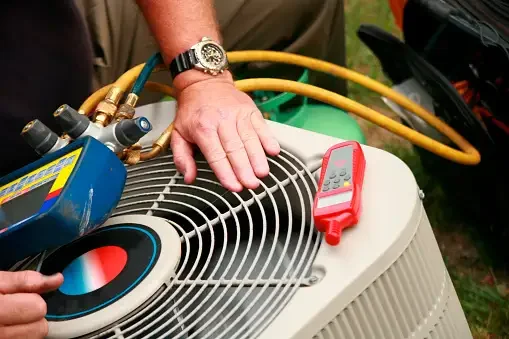
Installing a central air conditioning unit requires more than sliding a box into place. Connecting refrigerant lines, verifying indoor airflow, checking electrical circuits, adjusting static pressure, and integrating controls heavily dictate final project expenses.
How Ductwork Condition Changes Central Air Conditioning Installation Costs
Air ducts act as the circulatory system of central cooling. If existing sheet metal or flexible ducting is crushed, disconnected, undersized, or leaking, up to 30 percent of conditioned air bleeds out into unconditioned attics, basements, or crawlspaces.
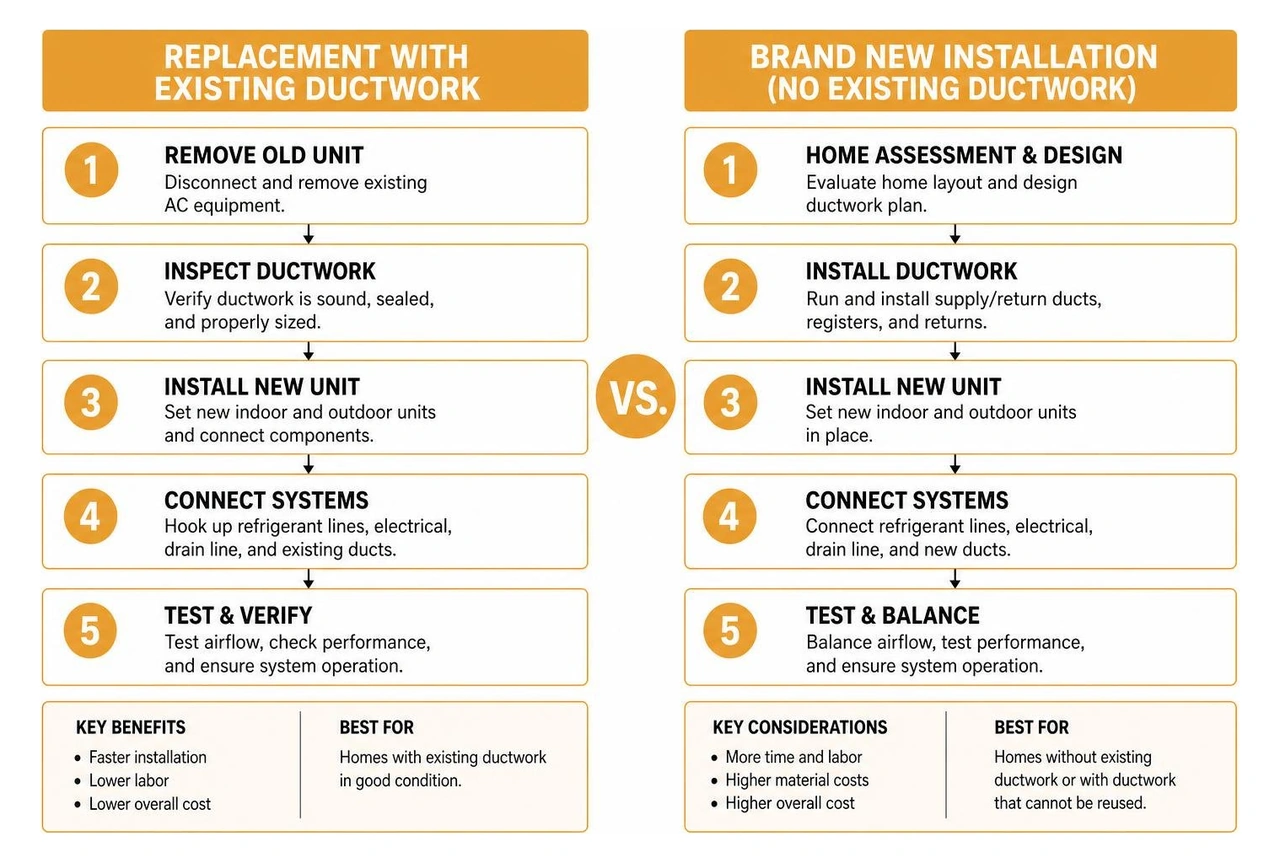
Sealing, insulating, or repairing existing ductwork usually adds $500 to $2,000 to an installation bill. If a home completely lacks ductwork, such as historic properties originally heated by steam radiators or hydronic baseboards, installing brand-new ductwork costs $3,000 to $8,000 or more depending on home layout, story count, and wall accessibility. Reviewing the overall central air install cost with no existing ductwork demonstrates why non-ducted retrofits require careful structural planning and expert labor.
Existing System Replacement vs New Installation
Replacing an existing central AC system is faster and less expensive than a start-from-scratch installation. When existing ductwork remains structurally sound and sized correctly for modern airflow requirements, installers leverage the existing infrastructure.
Replacing an old unit allows technicians to connect to existing electrical runs, drain lines, and duct connections, keeping basic project pricing between $3,500 and $9,000. Evaluating the baseline central air install cost with existing ductwork helps homeowners recognize where significant labor savings occur during straightforward system swap-outs.
SEER2 Efficiency Ratings and Long-Term Savings
Efficiency standards for cooling equipment are governed by SEER2 (Seasonal Energy Efficiency Ratio 2) ratings, which account for real-world blower motor resistance and duct static pressure. Minimum federal guidelines mandate regional baseline ratings between 13.4 and 14.3 SEER2 depending on geographical zone:
- Standard Efficiency (13.4 - 15.2 SEER2): Lowest upfront investment; features single-stage compressors suitable for moderate summer cooling needs and budget-conscious homeowners.
- Mid-Tier Efficiency (16.0 - 18.0 SEER2): Ideal sweet spot for balancing initial cost and ongoing utility performance; features two-stage cooling for better humidity control and quieter operation.
- High Efficiency (18.5+ SEER2): Highest upfront investment; utilizes variable-speed inverter compressors that automatically dial capacity up or down to keep indoor temperatures precise while minimizing power consumption.
Higher SEER2 units lower seasonal power bills significantly, helping recapture initial equipment costs over years of dependable summer performance.
Additional Expenses, Labor Rates, and Alternative Cooling Options
Beyond equipment and basic ductwork, secondary factors shift central air conditioning installation costs. Local trade wages, regional climate demands, municipal permit rules, and electrical system layouts all influence the final job total.
Regional Labor Rates, Permits, and Electrical Upgrades
Labor costs make up approximately 40 to 60 percent of a final installation estimate. Hourly trade rates vary based on local cost of living, regional climate extremes, and installer licensing requirements.
- Permits and Inspections: Local municipalities usually require building, mechanical, or electrical permits, which typically run $50 to $450 depending on local government fee structures.
- Electrical Upgrades: Modern central air conditioners require dedicated 240V circuit breakers, safety disconnect boxes, and properly rated wiring. If your home main electrical panel lacks adequate space or amperage, upgrading to a 200-amp panel adds $1,500 to $3,000.
- Seasonal Demand: Installing central air during peak summer heat waves often carries full-price rates due to high contractor demand. Scheduling installations during spring or fall shoulder seasons can net 5 to 15 percent labor savings.
Central AC vs Ductless Mini-Split Systems
For homes without existing ductwork, comparing central air against ductless mini-splits provides clear financial and practical perspectives. A central AC retrofit requiring complete ductwork construction often reaches $8,000 to $15,000 or more due to extensive carpentry and drywall work.
By comparison, multi-zone ductless mini-split systems range between $4,000 and $10,500 installed. Mini-splits avoid major wall reconstruction by running small refrigerant lines directly to individual indoor air handlers. Exploring flexible ductless mini-split options allows homeowners to assess localized room temperature control against traditional ducted systems.
Frequently Asked Questions
Before hiring an HVAC contractor, asking targeted questions protects your budget and guarantees quality craftsmanship:
- Will you perform a formal ACCA Manual J load calculation to size the cooling system?
- Are electrical permits, line set flushes or replacements, and old equipment disposal fees included in this written estimate?
- What specific equipment and labor warranties come with this new central air system?
- Does this unit qualify for local utility, state, or federal energy efficiency rebates?
What is the best time of year to install central air conditioning?
The best times to install central air are during the spring (March through May) and fall (September through November) shoulder seasons. Contractors experience lighter emergency service call schedules during these moderate temperature windows, offering flexible scheduling, off-season promotional discounts, and faster installation timelines.
How long does a central AC installation take?
A straightforward system replacement using existing, functional ductwork typically takes 4 to 8 hours (a single work day). If your project requires extensive ductwork repairs, electrical panel upgrades, or brand-new ductwork routing throughout the home, installation timelines stretch to 2 to 4 business days.
Should I repair or replace my existing central AC unit?
A reliable guideline is the $5,000 rule: multiply the age of your system in years by the estimated repair cost. If the total exceeds $5,000, replacement makes better long-term financial sense. For example, a $700 repair on a 10-year-old system equals $7,000, indicating replacement is the wiser investment over sinking money into aging hardware. Additionally, older units relying on phased-out R-22 refrigerant should be replaced due to skyrocketing refrigerant recharge expenses and declining system efficiency.
Conclusion and Smart Next Steps
Understanding central air conditioning installation costs empowers you to make confident decisions for your home comfort and energy efficiency. Always gather multiple written bids from licensed, insured contractors that detail complete equipment specifications, sizing calculations, labor warranties, and permit fees.
At Smart Climate Solutions, we deliver fast, reliable HVAC installations with certified technicians and over 20 years of experience keeping families comfortable across Pittsburgh, South Hills, Burgettstown, Washington, Steubenville, St. Clairsville, and Weirton. Whether you need a standard split-system replacement or a complex retrofit, our local team brings certified expertise and dependable cooling performance to every job. To explore customized cooling options for your home, schedule a free estimate through our expert HVAC installation services today.



.png)
