Red Light Flashing on Your Heater? Start Here
A flashing red light may be a normal status signal or a fault code. The meaning depends on your heater's make, model, and flash pattern.
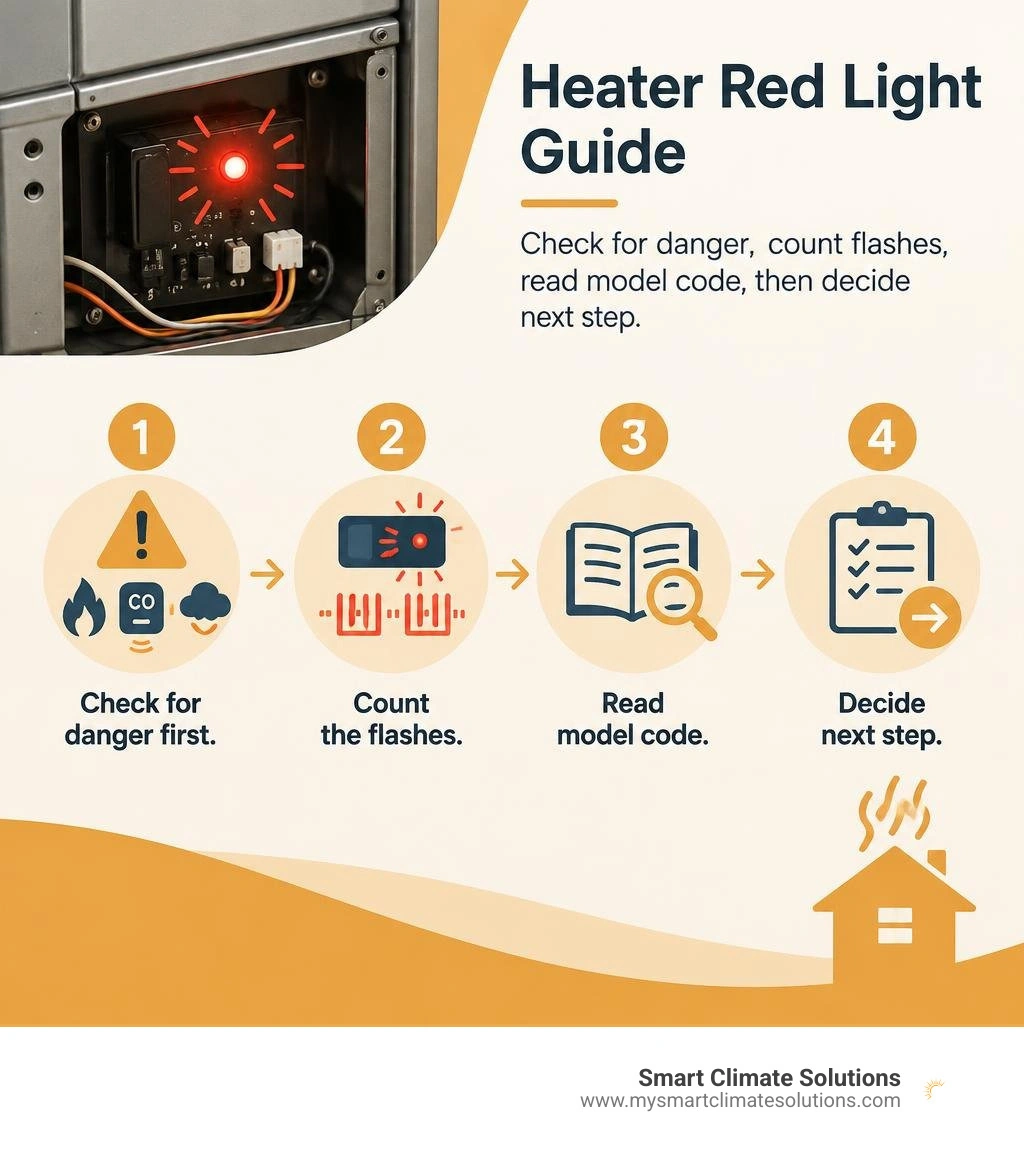
- Check for danger first. If you smell gas, hear a CO alarm, or see smoke, leave the home and call emergency services or your gas utility from outside.
- Record the pattern. Count the flashes between pauses before you turn anything off or reset the heater.
- Check the manual. Match the pattern to the code chart for your exact model. If it signals a fault, turn the heater off and check for obvious blocked airflow. Do not keep resetting a fault that returns.
I'm Bill Scott, general manager of Smart Climate Solutions, with over 20 years of HVAC experience in the Pittsburgh area. I've helped homeowners investigate problems like a red light flashing on heater control boards, starting with the code and a safe first check.
Why You See a Red Light Flashing on Heater Systems
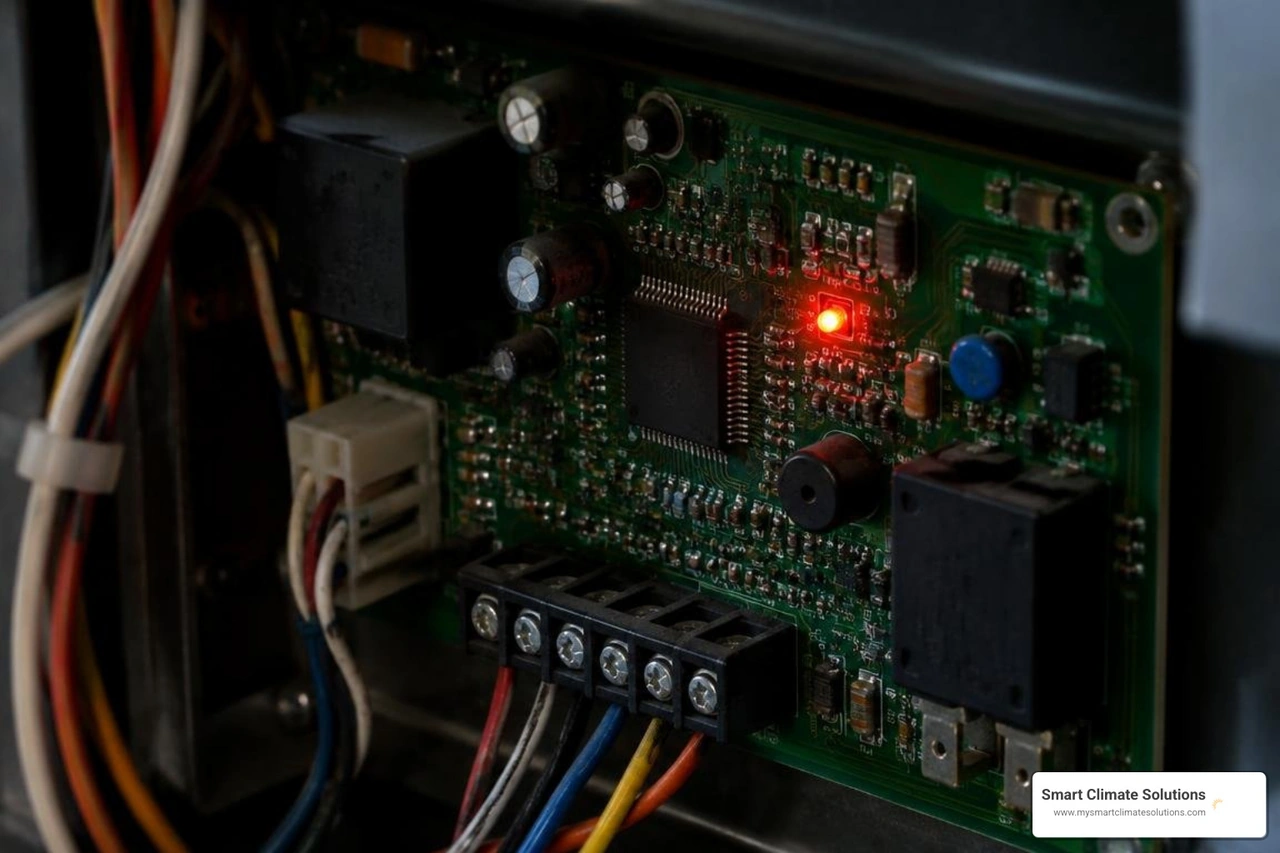
When you see an illuminated LED on your heating equipment, your system is communicating with you. Modern central furnaces, boilers, water heaters, and heat pumps rely on integrated circuit boards to oversee operation. These electronic controllers constantly monitor safety switches, fuel valves, draft blowers, and temperature thresholds.
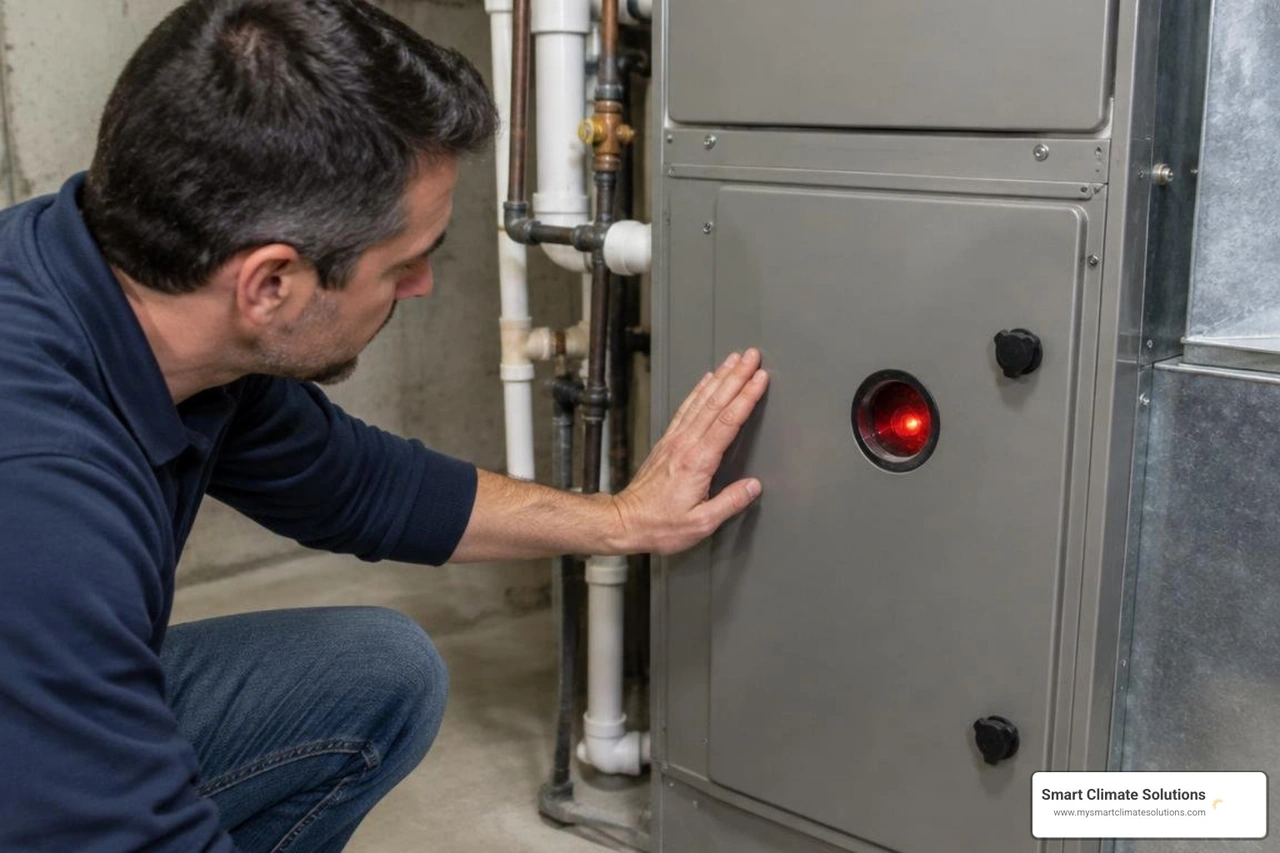
Why do manufacturers choose red? In physics, visible red light operates at long wavelengths (roughly 625 to 740 nanometers), making it instantly recognizable even through dark sight glasses or dim basements. When an internal component fails to respond as programmed, the control board halts ignition or stops fuel delivery, triggering a visual code using its onboard red LED.
Heating systems encounter issues that trigger diagnostic alerts for several core reasons:
- Safety switch trips: Limit switches detect overheating, while pressure switches monitor proper flue venting.
- Ignition or flame detection failures: The control board tries to light burners, but flame sensors detect no fire.
- Electrical issues: Low-voltage transformers, reversed line polarity, or ground faults trigger electronic warnings.
- Airflow restrictions: Heavy layers of dust starve burners and blowers of fresh air.
Normal Heartbeat vs Critical Error Codes
Not every blink signals an emergency. In fact, many manufacturers program a steady, slow red pulse to indicate that the system has power and is resting comfortably in standby mode. We like to call this the heater's heartbeat.
Understanding the difference between an operational pulse and a lockout code protects you from unnecessary stress:
- Slow, steady pulse (every 2 to 3 seconds): Indicates normal operation, standby mode, or active call for heat with zero faults present.
- Coded bursts (2 to 7 blinks, followed by a pause): Represents a specific numerical error code tied to a mechanical or electrical component.
- Rapid continuous blinking (no pauses): Often warns of reversed line voltage polarity, missing system ground, or a hard electronic lockout.
- Solid red (no blinking): Typically indicates a locked internal control board, blown circuit fuse, or triggered safety relay.
| Flash Pattern | Likely Meaning | Typical Cause | Required Action |
|---|---|---|---|
| 1 Slow Flash (Heartbeat) | Normal standby | System idling or heating normally | None required; system is operating as intended |
| 2 Red Flashes | Pressure switch or low voltage | Vent blockage, draft motor issue, or weak thermopile | Check external vent termination; inspect air filters |
| 3 Red Flashes | Ignition lockout | Dirty flame sensor, closed gas valve, or spark failure | Check main gas supply valve; clean flame sensor |
| 4 Red Flashes | High-temperature limit trip | Overheating heat exchanger or restricted blower airflow | Replace dirty air filter; open closed supply vents |
| 5 Red Flashes | Flame rollout switch trip | Draft failure or cracked heat exchanger | Turn off system immediately; schedule professional inspection |
| Rapid Flashing | Polarity / ground fault | Reversed wiring or bad neutral connection | Check main electrical panel and wiring connections |
Immediate Safety Steps to Take
If your heater displays an active fault code or shuts down during freezing winter weather, prioritize household safety before trying to troubleshoot components.
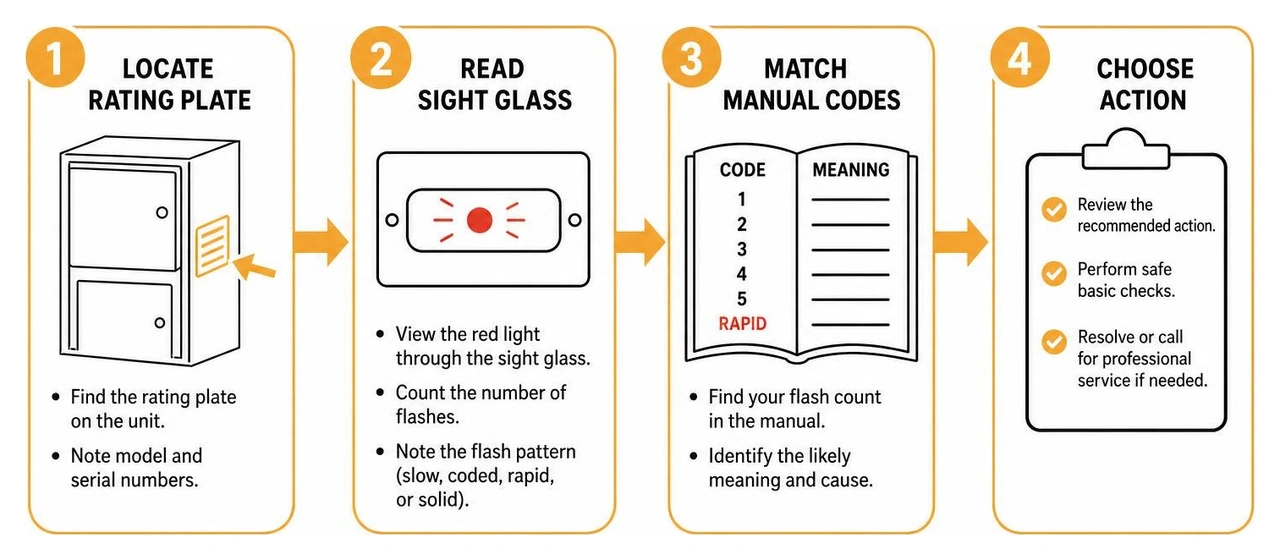
- Observe and record: Do not cut power immediately. Look through the observation window or sight glass and count the exact flash count across two full cycles. Write it down on your phone or notepad.
- Perform an environmental check: Sniff around the unit for rotten egg odors (natural gas) or burning plastic. Check your home's digital carbon monoxide detectors.
- Shut down safely: If you smell gas, hear metal screeching, or notice intense burning smells, immediately set your thermostat to OFF and switch the system power switch to the OFF position.
- Clear exterior exhaust vents: Walk outside and inspect the PVC or metal intake and exhaust terminals. Ensure snow, leaves, ice, or animal nests are not choking the flue pipe.
- Inspect interior vents: Make sure living room, basement, and bedroom air return grilles are unobstructed by furniture, heavy drapes, or rugs.
If these preliminary checks reveal an unlit burner or dead blower when your furnace stopped working, taking these initial precautions protects both your equipment and your household.
How to Diagnose Heating Equipment Faults by Model
Diagnostic flash patterns are not entirely universal. While many major brands adopt similar conventions, each equipment maker creates dedicated code profiles for their specific hardware configurations.
Diagnosing a Red Light Flashing on Heater by System Type
Diagnostic indicators serve slightly different roles depending on the style of heating system installed in your living space:
- Central Gas Furnaces: The red LED sits on the main integrated furnace control (IFC) board inside the blower compartment. Flashes typically denote limit trips, pressure switch faults, or flame sensing errors when the furnace is not heating.
- Heat Pumps and Boilers: Electronic boards on heat pumps and hydronic boilers use flashing diagnostic lights to signal defrost cycle issues, high pressure lockouts, or water temperature sensor faults.
- Gas Water Heaters: Modern gas control valves feature an external LED. A single slow blink every three seconds shows normal status. Rapid multi-blink codes indicate thermopile voltage drop below 300 millivolts, sensor faults, or flammable vapor sensor lockouts.
- Digital Thermostats: Wall thermostats feature indicator lights that communicate system status or communication errors between your heater and control interface. You can learn more about general wall control errors by reviewing our guide on thermostat diagnostic indicators.
Identifying Model Numbers and Diagnostic Charts
Before searching for solutions online or opening an operating manual, locate the rating plate on your appliance. On central heating equipment, this metal or foil data sticker is typically mounted inside the burner access door, on the upper vestibule panel, or along the interior cabinet wall.
Take a clear photo of the rating plate with your phone. Ensure you capture:
- Complete model number (including minor series letters or numbers at the end)
- Serial number
- Electrical ratings and fuel input ratings (BTU/hr)
Once you have your model number, check the backside of the removable furnace or water heater door panel. Most equipment manufacturers paste a comprehensive diagnostic legend directly on the sheet metal to decipher status signals accurately.
Step-by-Step Troubleshooting and Safe Reset Procedures
When you have documented the error code and confirmed no immediate hazards exist, you can work through safe, structured troubleshooting steps.
How to Troubleshoot a Red Light Flashing on Heater Safely
Follow this step-by-step diagnostic workflow to address standard equipment warnings:
- Inspect and Replace the Air Filter: A clogged, dirty filter is responsible for over half of all residential furnace lockouts. Restricted return airflow causes heat to build rapidly inside the heat exchanger, triggering the high-limit switch (often producing a 4-flash code). Slide the old filter out and insert a fresh, properly sized pleated filter.
- Examine Vent Terminations: Head outside and inspect the PVC intake and exhaust pipes. In cold weather, moisture in exhaust gases can freeze, creating ice dams that block flue gases and trip pressure switches (often producing a 2-flash or 3-flash code). Clear away all snow, ice, leaves, and debris.
- Verify the Fuel Supply: Check that your gas shutoff valve handle sits parallel to the yellow flexible pipe. If your system uses a standing pilot and you find that your furnace pilot light goes out, follow the manufacturer relighting instructions on the cabinet label.
- Execute a Standard Soft Reset:
- Turn the thermostat mode switch to the OFF position.
- Locate the dedicated power switch on the side of the furnace cabinet (or toggle the HVAC circuit breaker in your electrical panel).
- Leave power switched off for a full 3 to 5 minutes to discharge residual capacitance on the control board.
- Restore electrical power and return the thermostat to HEAT mode, setting the target temperature 3 degrees above room temperature.
- Watch the Ignition Cycle: Observe the sequence through the sight glass. The draft inducer motor should spin up first, followed by the hot surface igniter glowing bright orange, gas valve clicking open, burner ignition, and finally the main blower fan activating.
When to Attempt DIY Fixes vs Calling a Pro
Knowing when to step back is critical for personal safety and equipment longevity. Here is how to determine whether an issue is safe for a homeowner or requires a certified HVAC technician:
Safe DIY Tasks:
- Swapping standard 1-inch to 4-inch pleated air filters
- Clearing snow, brush, and spider webs from exterior PVC vent pipes
- Resetting a tripped GFCI button on a wall-mounted thermostat
- Cycling electrical breakers once after checking basic airflow
- Clearing floor registers and return grilles of rugs or furniture
Professional-Only Repairs:
- Flame Sensor Service & Replacement: If the burners ignite for 3 to 4 seconds and immediately shut off, the flame sensor rod may be coated in microscopic oxidation. Cleaning or testing microamp current demands precise electrical tools.
- Gas Valve and Manifold Adjustments: Any issue involving manifold gas pressure, burner orifice cleaning, or electronic gas valve solenoids requires licensed equipment.
- Limit Switch & Rollout Tripping: If limit switches trip repeatedly after filter replacement, you may be dealing with a cracked heat exchanger or failing blower motor capacitor.
- Electrical Control Board Replacement: Handling line-voltage relays, wiring harnesses, and transformer wiring must be done by certified professionals.
For an exhaustive breakdown of diagnostic thresholds and system lifespan considerations, review our heater repair guide for 2026. When internal switches trip repeatedly, schedule certified HVAC service and repair to fix the root cause before winter storms hit.
Risks of Ignoring Flashing Diagnostic Lights
It is tempting to simply toggle a breaker switch every morning to clear a heating lockout. However, control board safety lockouts exist specifically to protect your property and family from catastrophic equipment failures.
Bypassing or ignoring recurring diagnostic codes introduces significant hazards:
- Carbon Monoxide Leaks: When heaters cycle repeatedly under high-limit stress, metal heat exchangers expand and contract beyond designed tolerances. Over time, this thermal stress causes micro-fissures and cracks in the metal, allowing lethal, odorless carbon monoxide gas to mix into the supply air blowing into your bedrooms.
- Burner Flame Rollout: A blocked flue or cracked exchanger forces burner flames to seek oxygen by rolling outward toward the front vestibule panel. This can melt wiring harnesses and create an immediate house fire hazard.
- Complete System Breakdown: Forcing a blower motor or compressor to operate with a failing capacitor or jammed draft assembly will quickly destroy the component, turning a minor $150 repair into a multi-thousand-dollar replacement.
Frequently Asked Questions About Heater Diagnostic Lights
Is a blinking red light on my heater always dangerous?
No. A slow, steady flash (often called a heartbeat) is commonly used by manufacturers to indicate normal standby operation and healthy control board power. However, rapid flashing or repeated numerical blink sequences indicate an active safety lockout or component malfunction that requires investigation.
How do I reset my heater after clearing an error code?
To perform a proper reset, turn your thermostat to the OFF position, switch off the power switch located on the heater cabinet (or flip the system's breaker in your main electrical panel), and wait 3 to 5 minutes. Restore power and set the thermostat back to HEAT mode. If the underlying fault has been resolved, the control board will resume normal heating.
Why did the flashing red light return after a reset?
Resetting the power switch simply clears the temporary electronic memory on the control board. If the underlying physical issue, such as a clogged filter, restricted vent pipe, dirty flame sensor, or failing pressure switch, is not corrected, the board will detect the exact same error during its pre-ignition safety check and re-enter lockout mode.
Conclusion
Understanding what diagnostic signals mean takes the guesswork out of home heating maintenance. Modern control boards use these visual alerts to prevent equipment damage and keep your living space safe. Whenever you encounter unexpected blink sequences, record the flash count, perform essential airflow checks, and avoid repetitive power resets that could mask deeper mechanical faults.
If your system continues to show error codes after standard filter and airflow checks, our team at Smart Climate Solutions is here to help. Serving homeowners throughout Pittsburgh, PA, Bethel Park, Canonsburg, Washington, and surrounding communities across Western Pennsylvania, Eastern Ohio, and the Northern Panhandle of West Virginia, our certified technicians provide fast, dependable heating diagnostic and repair services around the clock. Explore our dedicated furnace red light troubleshooting guide or contact our local team today to ensure your home stays warm, efficient, and safe all season long.