Why a Furnace Tune Up in Pittsburgh Is Something You Should Not Skip This Fall
If you are looking for a furnace tune up in Pittsburgh, here is what you need to know right away:
Quick Answer: Furnace Tune Up in Pittsburgh
| Question | Answer |
|---|---|
| Best time to schedule | Early fall (September - October) |
| How often | Once a year |
| Average cost range | $80 - $150 (basic to comprehensive) |
| Who should do it | A licensed, local HVAC technician |
| Biggest risk of skipping | Carbon monoxide leaks, winter breakdowns, voided warranty |
Pittsburgh winters are no joke. January lows regularly drop below 20 degrees Fahrenheit, and your furnace goes from sitting idle all summer to running around the clock almost overnight. That kind of demand exposes every weak point in a neglected system.
Home heating already accounts for roughly 29% of your total utility bill. When a furnace is dirty, worn, or out of adjustment, that number climbs even higher. Worse, an unmaintained gas furnace can develop cracks or leaks that put your family at risk from carbon monoxide - a colorless, odorless gas that sends more than 100,000 Americans to the emergency room every year.
The good news is that a single annual tune-up catches most of these problems before they become expensive emergencies - or dangerous ones.
I'm Bill Scott, General Manager of Smart Climate Solutions and an HVAC professional with over 20 years of experience helping Pittsburgh-area homeowners stay warm and safe. I have seen what skipping a furnace tune up in Pittsburgh can cost - in repair bills, in energy waste, and sometimes in safety. In the guide below, I will walk you through everything you need to know to make the right call this season.

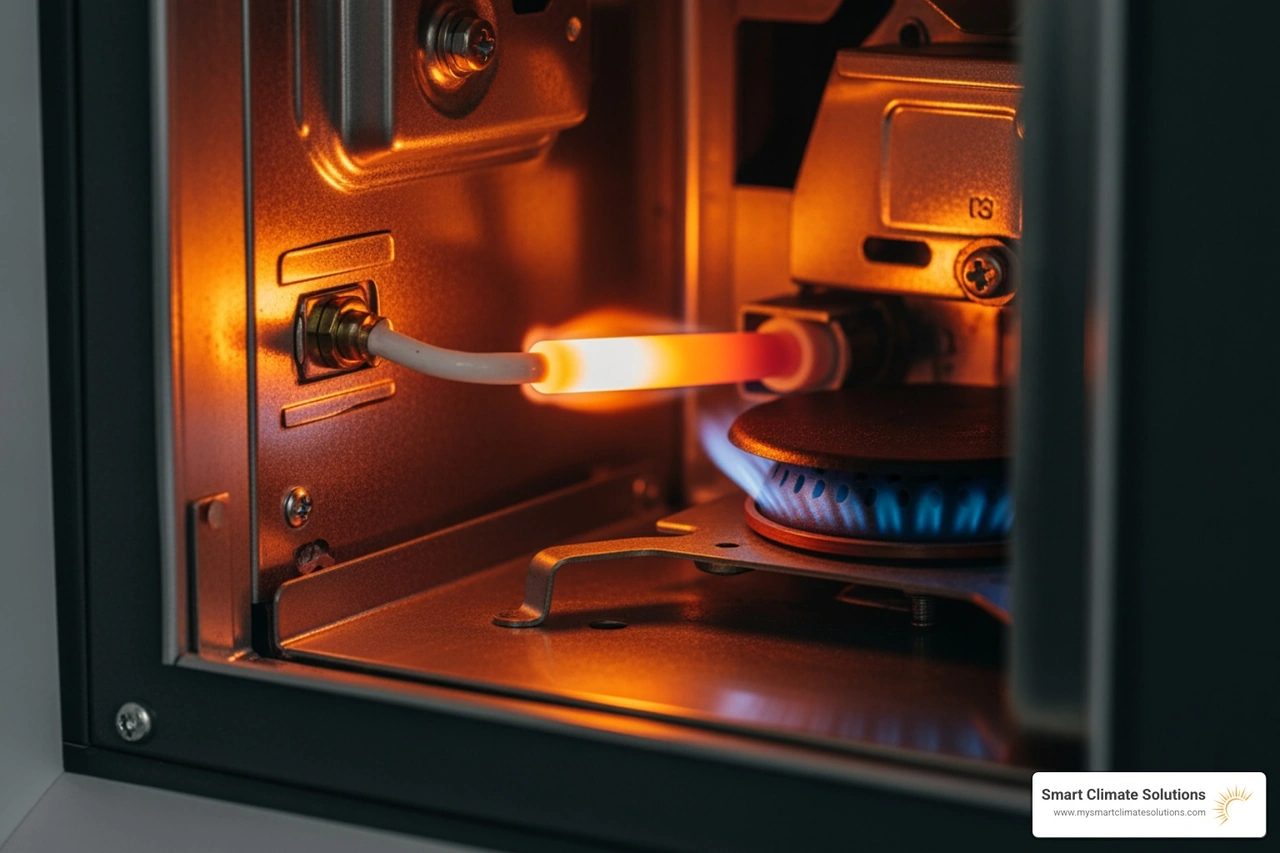
Furnace tune up Pittsburgh terms made easy:
What a Furnace Tune Up Pittsburgh Service Really Means
A furnace tune-up is preventive maintenance for your heating system. Think of it like an annual physical for the equipment that keeps your house livable in January.
A proper furnace tune up Pittsburgh service is not just a quick glance at the thermostat and a sticker on the unit. It should include inspection, cleaning, safety testing, airflow checks, and performance adjustments for gas or electric furnaces. The goal is simple: make sure your system starts properly, heats efficiently, cycles normally, and operates safely before winter settles in.
In Western Pennsylvania, that matters a lot. Once the cold arrives, furnaces often run daily and sometimes nearly nonstop. Small issues that seemed harmless in October can become no-heat emergencies by December.

What a tune-up includes vs a repair call
A tune-up is about prevention. A repair call is about fixing a problem that has already shown up.
A tune-up usually includes:
- Cleaning burners or key internal components
- Checking the flame sensor or ignition system
- Inspecting the heat exchanger
- Replacing or checking the air filter
- Tightening electrical connections
- Verifying thermostat operation
- Testing airflow and temperature rise
- Confirming safety controls work correctly
- Looking for hidden wear before it becomes a breakdown
A repair call usually happens because something is already wrong, such as:
- No heat
- Repeated shutdowns
- Loud banging or grinding
- A flashing error code
- A bad igniter, blower motor, or control board
In other words, a tune-up is cheaper than a surprise. For a deeper overview, see our Furnace Tune Up resource.
Why Pittsburgh homeowners should book before the first freeze
The best time to schedule is before you need heat every day. Early fall gives you a few major advantages:
- Better appointment availability before the seasonal rush
- More comfortable service conditions while outdoor temperatures are still mild
- Time to fix any issues discovered during the inspection
- Less chance of waking up on the first freezing morning saying, "Well, that is not a comforting noise"
There is also a comfort factor during service. A furnace usually has to be off while we inspect and test it. That is much easier in September or October than during a bitter cold snap.
When to Schedule a Furnace Tune Up in Pittsburgh and How Often
For most homes in Pittsburgh, South Hills, Burgettstown, Washington, Steubenville, St. Clairsville, and Weirton, the right schedule is once a year, ideally in early fall before regular heating use starts.
Annual maintenance is the standard recommendation because it helps with:
- Reliability during winter
- Energy efficiency
- Manufacturer warranty compliance
- System longevity
- Cleaner indoor air
- Fewer emergency repairs

Best month for furnace tune up Pittsburgh appointments
September and October are usually the sweet spot.
Early November can still work, but that is when many homeowners realize cold weather is here and suddenly everyone wants service at once. If you wait until the first real cold blast, you may face tighter scheduling and a greater chance that a small issue turns into a no-heat call.
If your household includes older adults, infants, anyone with medical concerns, or a work-from-home setup, scheduling early is even smarter. Heat outages are inconvenient for everyone, but they are especially disruptive when your home has to stay comfortable all day.
How often Pittsburgh homeowners need maintenance
Once a year is the baseline, but some homes benefit from extra attention.
You may want closer monitoring if:
- Your furnace is older
- You have pets that increase filter loading
- Your home is dusty or under renovation
- The system runs heavily for long stretches
- You have noticed uneven heating or short cycling
Homeowners should also keep up with filter changes between tune-ups. A common rule of thumb is:
- 1 to 2 inch filters: check monthly and usually replace about every 3 months
- 5 to 6 inch media filters: often every 9 to 12 months, depending on use and indoor conditions
Keeping service records is also a good idea, especially for warranty purposes. If you want ongoing reminders and seasonal support, our Heating Maintenance Plans page explains how that works.
Professional Furnace Tune-Up Checklist: What Technicians Should Inspect
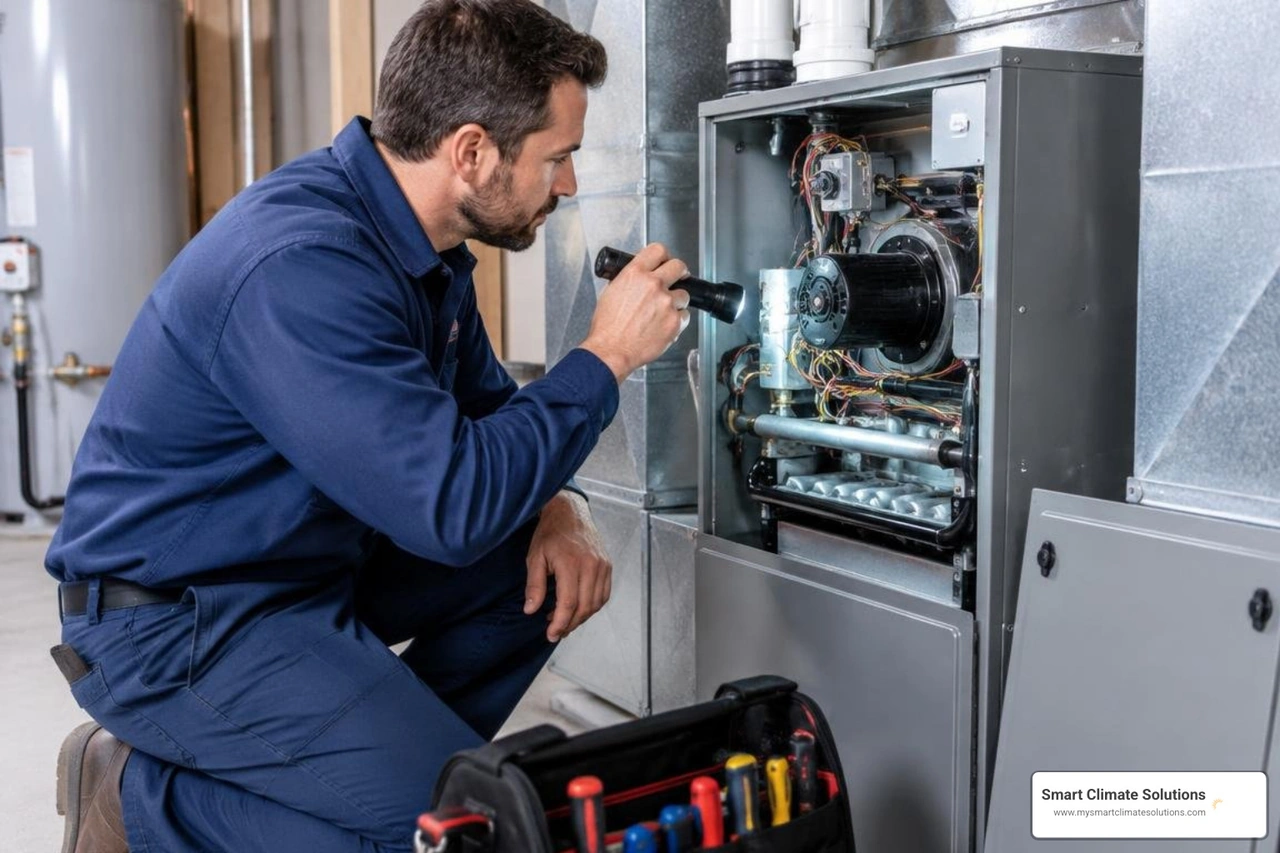
A professional tune-up should be thorough, not rushed. Different furnace types have different service steps, but a solid checklist often includes the following:
- Inspect heat exchanger for cracks or corrosion
- Check burners and clean as needed
- Clean and test flame sensor
- Inspect ignition system
- Check gas pressure where applicable
- Verify venting and exhaust operation
- Test carbon monoxide safety conditions
- Inspect blower motor and wheel
- Measure airflow and temperature rise
- Replace or inspect air filter
- Check thermostat calibration and operation
- Tighten electrical connections
- Inspect wiring for wear or damage
- Test safety controls and limit switches
- Check condensate drain on high-efficiency furnaces
- Verify startup and shutdown sequence
- Note unusual wear on belts, bearings, or motors where applicable
- Document findings and recommend repairs if needed
Safety checks that matter most in gas furnaces
For gas furnaces, safety is the headline.
One of the biggest concerns is a cracked heat exchanger. That can allow combustion gases, including carbon monoxide, to enter the living space. Carbon monoxide is dangerous because you cannot see or smell it, and exposure can become serious quickly.
A good tune-up should include close attention to:
- Heat exchanger condition
- Burner flame quality
- Ignition reliability
- Venting and exhaust path
- Gas line or gas connection concerns
- Safety shutoff controls
CO safety is not theoretical. More than 100,000 Americans go to the emergency room each year because of carbon monoxide exposure, and hundreds die annually. That is one reason we always recommend annual professional maintenance and working CO detectors in the home. You can also review basic carbon monoxide safety guidance from the Centers for Disease Control and Prevention.
Efficiency and performance tests that lower heating costs
A tune-up is not just about avoiding danger. It is also about stopping your furnace from wasting energy.
Technicians should verify:
- Proper airflow across the system
- Normal cycling without overheating or short cycling
- Clean blower components
- Reasonable temperature rise
- Thermostat accuracy
- No obvious restrictions from dirty filters or blocked vents
These steps matter because space heating accounts for nearly 27% of energy use in Pennsylvania homes, and a neglected system has to work harder to produce the same comfort. The U.S. Department of Energy also notes homeowners may save up to 30% on energy bills by maintaining and upgrading equipment and improving the home envelope with air sealing and insulation.
If you want to learn more about what a full inspection should cover, visit our Heating System Check guide.
Signs Your Furnace Needs Service Before Winter Gets Worse
Sometimes a furnace is overdue for maintenance even if it still runs. It is asking for help in its own dramatic little way.
Common signs include:
- Uneven heating from room to room
- Weak airflow from vents
- Strange noises at startup or during operation
- A burning smell or dusty odor when first turned on
- Frequent cycling on and off
- Higher utility bills without a clear reason
- Cold spots in the home
- Thermostat not matching actual comfort
- More dust or poorer indoor air quality
Warning signs that point to overdue maintenance
These issues often suggest the system needs a tune-up rather than a major repair:
- Dirty or clogged air filter
- Dust buildup around supply vents
- Delayed ignition
- Noisy startup
- Inconsistent heat output
- Dry indoor air during heating season
- Minor soot marks near the furnace
- Furnace runs longer than it used to
Here is a simple comparison:
| Likely tune-up issue | More likely repair issue |
|---|---|
| Dirty filter | Furnace will not turn on |
| Uneven airflow | Repeated shutdowns |
| Slightly higher bills | Loud banging or metal noises |
| Dusty smell at startup | Strong gas odor |
| Minor short cycling | Flashing fault code |
| Rooms heating unevenly | No heat at all |
Signs you may need repair instead of just maintenance
Call for professional service promptly if you notice:
- No heat
- Furnace not starting
- Frequent tripping or shutdowns
- Strong gas smell
- Loud banging, screeching, or grinding
- Persistent error codes
- Very weak airflow with poor heating
- Soot, scorch marks, or signs of overheating
In those cases, a tune-up alone may not solve the problem. These guides can help you decide what to do next:
Costs, Savings, and the Risks of Skipping a Tune-Up
For many homeowners, the first question is cost. Fair enough.
In the Pittsburgh area, a basic to comprehensive furnace tune-up often falls in the $80 to $150 range, depending on system type, service depth, and whether you are part of a maintenance plan. Some plans may also include discounts, reminders, or priority scheduling.
What a furnace tune-up typically costs in the Pittsburgh area
Typical pricing factors include:
- Gas vs. electric furnace
- Standard vs. high-efficiency equipment
- Age and condition of the system
- Depth of the checklist performed
- Whether filter replacement is included
- Membership or maintenance plan pricing
- Any repairs discovered during the visit
The key value point is this: a tune-up is usually far less expensive than emergency service or replacing major parts. Research on local repair costs shows common furnace repairs can add up quickly, especially for motors or ignition-related parts.
Why routine maintenance pays off
Routine maintenance saves money in several ways:
- Lower energy use from cleaner, better-adjusted operation
- Reduced risk of expensive breakdowns
- Longer equipment life
- Better chance of keeping warranty coverage intact
- Improved comfort and more even heating
The numbers support it:
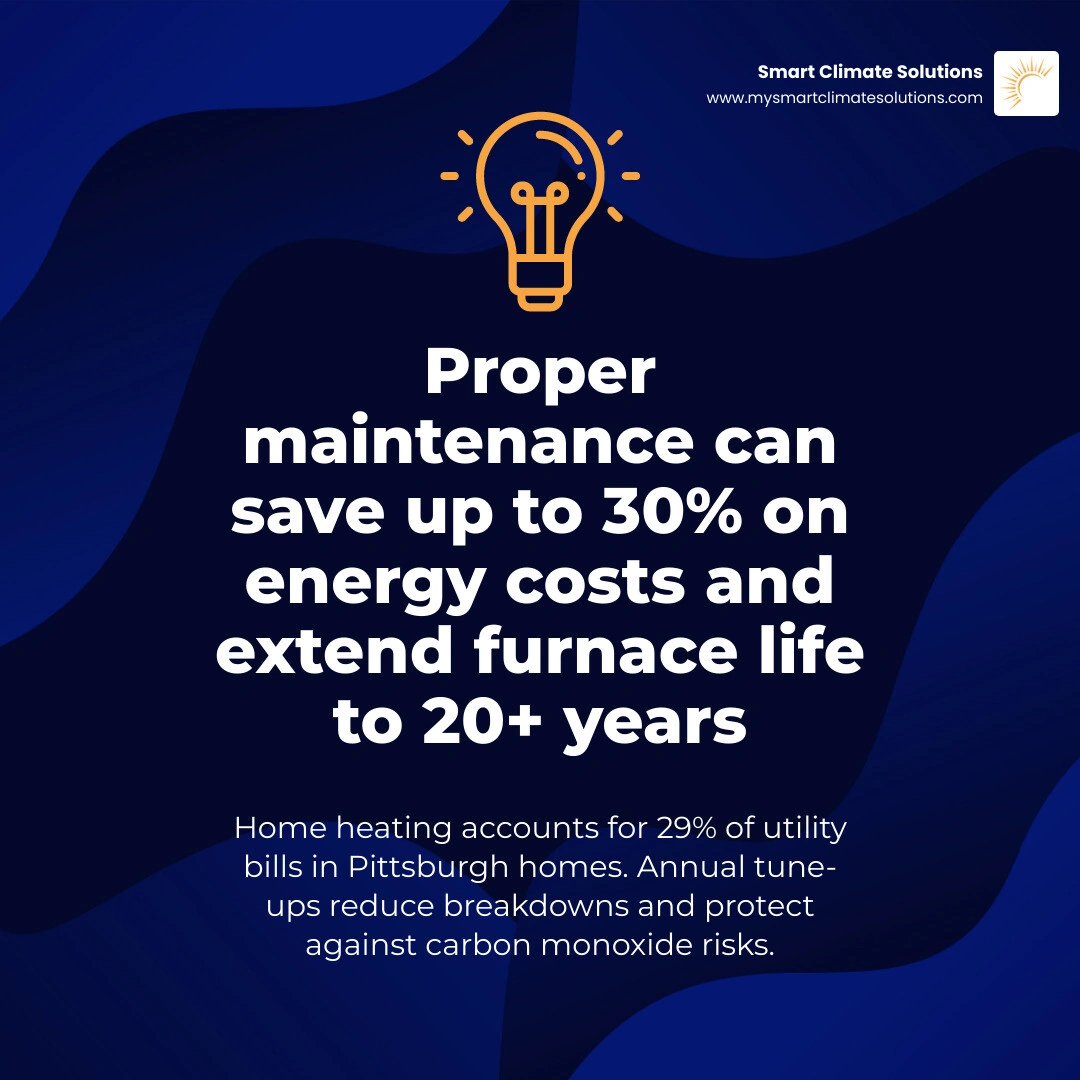
- Home heating can make up about 29% of your utility bill
- Proper maintenance and efficiency improvements can save up to 30% on energy costs
- Space heating makes up nearly 27% of energy use in Pennsylvania
- A natural gas furnace can last 20 years or more with routine maintenance
- An electric furnace can last close to 30 years with routine maintenance
That is why annual service is usually one of the highest-value HVAC expenses a homeowner can make. For more detail, read our Heating System Tune Up Complete Guide.
The real dangers of skipping annual service
Skipping maintenance increases the odds of:
- Carbon monoxide exposure
- Mid-winter breakdowns
- Higher utility bills
- Premature system wear
- Fire or electrical hazards
- Voided manufacturer warranty
- Emergency repair costs when demand is highest
The carbon monoxide issue deserves special attention. Cracked heat exchangers and combustion problems are among the most serious safety concerns in gas furnaces. If those issues go unnoticed, the consequences can be severe.
And from a practical standpoint, systems that have not been serviced in years are far more likely to fail when they are finally asked to run hard. Furnaces have a talent for quitting at the least convenient moment.
DIY Furnace Care vs Professional Service and How to Choose the Right Company
There are some helpful maintenance tasks homeowners can handle. There are also tasks that should absolutely stay in professional hands.
Safe DIY tasks homeowners can do between tune-ups
Homeowners can usually handle these basic tasks safely:
- Replace or check the furnace filter regularly
- Make sure the thermostat is set to heat
- Replace thermostat batteries at the start of the season
- Keep supply and return vents unblocked
- Clear clutter around the furnace
- Check the breaker if the system is not responding
- Make sure CO detector batteries are fresh
- For condensing furnaces, watch for obvious drain issues if you know where the line is
These small tasks help, but they do not replace annual service.
What should always be left to a professional
The following work requires training, tools, and safety procedures:
- Combustion analysis
- Carbon monoxide testing
- Gas pressure adjustment
- Heat exchanger inspection
- Electrical testing and wiring diagnostics
- Flame sensor servicing
- Ignition troubleshooting
- Venting analysis
- Safety control testing
- Internal cleaning of key components
Modern furnaces are not great DIY projects. Gas combustion, high-voltage parts, and control boards are not forgiving if handled incorrectly.
How to choose a reliable furnace tune-up company in Pittsburgh
When comparing providers, look for:
- Licensed or certified technicians
- Clear, upfront pricing
- Local experience with Pittsburgh-area winters
- Written maintenance checklist
- Good communication and punctuality
- Respect for your home and clean work habits
- Emergency support if a problem is found
- Maintenance plan options if you want recurring service
It also helps to choose a company that understands the heating demands of homes across Pittsburgh, South Hills, Burgettstown, Washington, Steubenville, St. Clairsville, and Weirton. A provider with strong local experience is more likely to spot common cold-weather issues, explain findings clearly, and recommend practical next steps without pressure.
At Smart Climate Solutions, we focus on fast, reliable service with certified technicians, 24/7 emergency support, and more than 20 years of HVAC experience across our service area.
Frequently Asked Questions About Furnace Tune Up Pittsburgh
Is a furnace tune-up worth it if my heat seems to work fine?
Yes. A furnace can still produce heat while operating inefficiently or unsafely. Hidden wear, dirty components, airflow problems, and early ignition issues often show up before a full breakdown does. A tune-up gives you a chance to catch those problems before winter puts the system under stress.
For related repair guidance, see our Furnace Repair Pittsburgh Guide.
Can a tune-up help lower my heating bill in Pittsburgh?
Usually, yes. A clean filter, proper airflow, calibrated thermostat, cleaned burners or sensors, and a properly operating blower all help the system heat the home with less wasted energy. Your exact savings depend on your furnace condition and the home itself, but tune-ups are one of the easiest ways to reduce unnecessary heating costs.
You can also explore our Heating Repair Pittsburgh PA Guide for more efficiency and repair insights.
What if my furnace is old - should I maintain it or replace it?
If the unit is older but still safe and reasonably reliable, maintenance is still worth doing. A tune-up can help us assess condition, efficiency, and repair needs so you can plan ahead instead of reacting during a cold snap.
Replacement may make more sense if:
- Repairs are becoming frequent
- Heating performance is poor
- Energy bills are rising sharply
- Safety concerns are present
- The furnace is nearing or beyond expected service life
Our Pittsburgh Furnace Repair guide can help you weigh repair versus replacement.
Conclusion
A yearly furnace tune-up is one of the simplest ways to protect your comfort, safety, and budget before winter hits Pittsburgh. It helps catch wear early, reduces the risk of breakdowns, improves efficiency, and gives you confidence that your system is ready for real cold weather.
If you want dependable help from a local team, Smart Climate Solutions is here with certified technicians, responsive service, and 24/7 emergency support when needed.
Explore our full HVAC services or learn more from our Furnace Repair Experts page. If your heating system is due, now is the time to schedule your furnace tune up Pittsburgh appointment before winter starts making the decisions for you.