

Introduction: Decoding Your Furnace's Warning Signal
A furnace red light is your heating system's way of telling you something is wrong. Here is what you need to know right away:
Quick Answer: What Does a Furnace Red Light Mean?
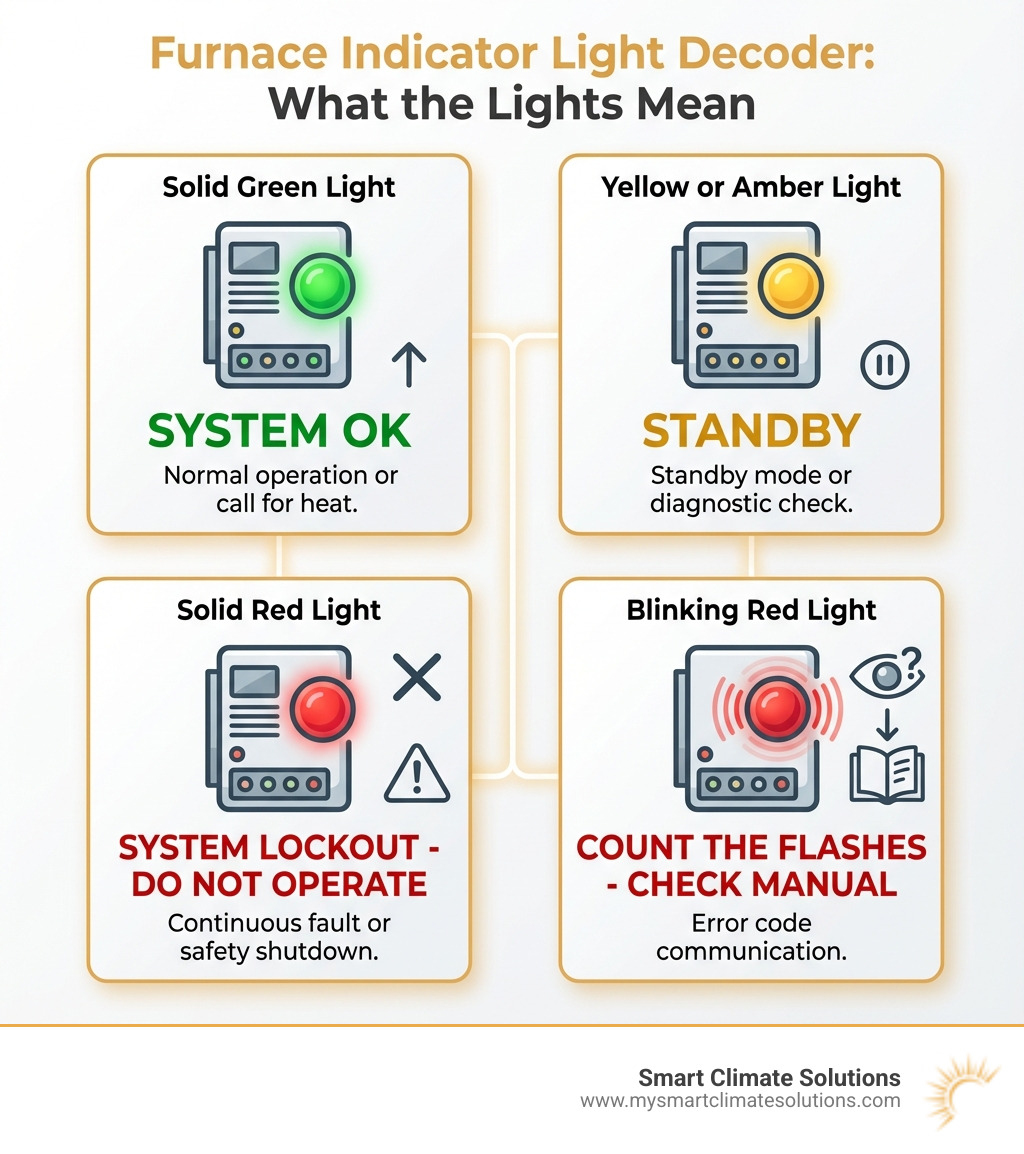
- Solid Red Light: Your furnace has detected a fault and shut down for safety. Common causes include ignition failure, flame sensor problems, or airflow restrictions.
- Blinking Red Light: Your furnace is communicating a specific error code. The number of blinks corresponds to a particular problem (like 3 blinks = pressure switch issue, 5 blinks = gas valve fault).
- No Light at All: Your furnace has no power. Check your circuit breaker and furnace power switch.
- Green Light: Your system is operating normally or in standby mode.
Safety First: If you smell gas, leave your home immediately and call your gas utility or 911 from a safe location. Do not attempt to troubleshoot.
When you notice that red light glowing or flashing on your furnace's control board, it is natural to feel concerned, especially during a cold Pittsburgh winter. Modern furnaces use these LED indicators as a diagnostic language, similar to Morse code, to help you and HVAC technicians identify exactly what has gone wrong.
A furnace red light typically means your system has entered a safety lockout after detecting a problem. This is actually a good thing. It means your furnace's safety features are protecting you and your home from potentially dangerous conditions like gas leaks, carbon monoxide buildup, or overheating.
The good news is that many furnace red light issues can be resolved with simple troubleshooting steps you can do yourself, like replacing a dirty air filter or resetting the system. Other problems, like a failed control board or gas valve issue, require professional diagnosis and repair.
I am Bill Scott, general manager of Smart Climate Solutions. Over my 15 years in the HVAC industry serving Pittsburgh and Southwestern PA, I have diagnosed thousands of furnace red light problems for homeowners throughout the region. In this guide, I will walk you through exactly what your furnace is trying to tell you and what steps to take next.
Simple guide to furnace red light:
- furnace stopped working
- emergency furnace repair
- 24/7 furnace repair
Understanding the Language of Furnace Lights: Solid vs. Blinking
Modern furnaces are sophisticated equipment, and their control boards act as the brains of the system. These control boards constantly monitor various sensors and safety devices to ensure everything is operating within normal, safe parameters. When a parameter falls outside these ranges, the board sets a fault and communicates it through LED indicators. This built-in diagnostic system helps us understand your furnace's health at a glance.

What a Solid Red Light on a Furnace Means
When you see a solid red light on your furnace, it is typically a clear sign that the system has detected a significant fault and has initiated a safety shutdown, also known as a lockout. This is not just a minor hiccup. It means your furnace has halted operation to prevent potential damage or unsafe conditions.
A solid red light indicates a continuous fault condition, which could stem from several serious issues, such as a complete ignition failure, a major flame sensor problem, or a control board malfunction. The furnace's control system has determined it cannot operate safely, so it has shut itself down.
If your furnace is displaying a solid red light, it is generally not safe to operate it until the underlying cause is identified and resolved. This is why it is also a good idea to understand what to do if your furnace stopped working entirely.
What a Blinking Furnace Red Light Indicates
Unlike a solid red light that signals an immediate, continuous fault, a blinking red light on your furnace is its way of communicating a specific error code. Think of it like Morse code; the pattern of flashes and pauses corresponds to a particular problem, making it easier for us to diagnose the issue. Furnace manufacturers design these blinking patterns to facilitate troubleshooting, helping both homeowners and technicians pinpoint what has gone wrong.
The number of flashes, the speed of the blinks, and the duration of pauses all contribute to a unique code that points to a specific malfunction. For instance, three quick blinks followed by a pause might indicate a pressure switch issue, while five blinks could signal a gas valve fault.
By observing these flash patterns, we can often identify the problem before even opening the unit. This diagnostic system is helpful for understanding the specific needs of your furnace, rather than just knowing there is a problem in general.
What About Other Colors? (Green and Yellow/Amber)
While a furnace red light usually signifies trouble, other colored lights on your furnace's control board can provide valuable information about its operational status.
- Green Light: A green light typically indicates that your furnace is operating normally. A slow green light blinking might mean there is no current call for heat, while a faster, continuous green light blinking indicates the furnace is in an active heating mode. If you see a steady green light, it is often good news: your system is in working condition and experiencing no errors.
- Yellow/Amber Light: An amber or yellow light usually signifies a standby mode or a normal diagnostic check. This means the furnace is powered on and ready to receive a call for heat, but it is not actively heating at that moment. It can also indicate a normal diagnostic sequence the furnace is running through.
Understanding these different light signals is the first step in decoding your furnace's messages and knowing when to simply observe and when to take action.
Common Causes Behind a Furnace Red Light
A furnace red light, whether solid or blinking, is a symptom, not the problem itself. It is the furnace's way of alerting us to an underlying issue that needs attention. Many of these issues involve airflow, ignition, or venting. Here are the most common culprits we see in homes across Pittsburgh, Burgettstown, and Steubenville.

Airflow and Overheating Problems
One of the most frequent reasons for a furnace red light is restricted airflow leading to overheating. Your furnace needs to breathe, and if it cannot, it will get too hot and shut down as a safety measure.
- Clogged Air Filter: A dirty, clogged furnace filter is a prime offender. It restricts the flow of air, causing the furnace to work harder, heat up excessively, and eventually trip its high-limit switch. This often leads to a furnace red light. We recommend changing your standard filters every 30 to 90 days, or more often if you have pets or allergies.
- Blocked Air Vents: Similarly, blocked return or supply air vents in your home can impede airflow. Make sure all registers are open and not obstructed by furniture, rugs, or drapes.
- High Limit Switch Trip: This is a critical safety device designed to monitor your furnace's internal temperature. If the temperature gets too high, the high limit switch will trip, shutting down the furnace to prevent damage or fire. This often results in a furnace red light.
- Restricted Airflow: Beyond filters and vents, issues like undersized ductwork or even a dirty heat exchanger can restrict airflow and cause overheating.
- Blower Motor Malfunction: The blower motor is responsible for circulating air throughout your home. If it is malfunctioning or failing, it will not move enough air, leading to overheating and a furnace red light. If you suspect a blower motor issue, you might need a furnace blower motor replacement.
Ignition and Flame Sensor Failures
For a furnace to produce heat, it needs to ignite the fuel safely and consistently. Problems in this process are common causes for a furnace red light.
- Ignition Failure: If your furnace attempts to ignite but fails multiple times, it will likely go into a lockout mode and display a furnace red light. This could be due to a faulty ignitor (which creates the spark or heat to light the gas), insufficient gas supply, or issues with the gas valve. Modern furnaces have several safety sensors that monitor operation, and if one reports an unsafe condition, the furnace controller shuts off fuel and power to prevent unsafe operation, leading to a lockout. You can learn more about furnace lockout conditions from HVAC training resources.
- Dirty Flame Sensor: The flame sensor is a small, rod-like device that detects the presence of a flame after ignition. It is a safety mechanism; if it does not sense a flame, it tells the furnace to shut off the gas valve to prevent raw gas from accumulating. Over time, soot and carbon buildup can coat the flame sensor, preventing it from detecting the flame properly. This often results in the furnace attempting to ignite, failing to sense a flame, shutting down, and eventually displaying a furnace red light.
- Faulty Ignitor: A cracked or worn-out ignitor will not be able to generate enough heat or spark to light the gas, leading to repeated ignition failures and a lockout.
- Gas Valve Issue: If the gas valve is not opening properly or is not receiving enough gas pressure, the furnace will not be able to ignite, triggering a furnace red light. Gas pressure must be maintained at a specific level for proper operation and safety.
Venting and Pressure Switch Issues
Your furnace, especially a gas forced-air furnace, needs to vent combustion gases outside your home. Safety devices like the pressure switch help ensure this happens correctly.
- Pressure Switch Fault: A furnace pressure switch is a safety device located near the draft inducer motor of a gas forced-air furnace. It monitors the airflow through the venting system. If it does not detect proper airflow (meaning exhaust gases are not being vented correctly), it will prevent the furnace from operating and often trigger a furnace red light. Problems with pressure switches can indicate a clogged or blocked vent.
- Blocked Exhaust Vent: Snow, ice, bird nests, or other debris can obstruct the exhaust vent pipe, preventing combustion gases from escaping. This will cause the pressure switch to fault and lead to a furnace red light.
- Clogged Condensate Drain: High-efficiency furnaces produce condensate (water) that needs to drain away. If the condensate line becomes clogged, water can back up, triggering a safety switch (often related to the pressure switch) and causing a furnace red light.
- Inducer Motor Failure: The inducer motor pulls combustion gases from the heat exchanger and pushes them out through the exhaust vent. If this motor fails, the pressure switch will not detect proper airflow, leading to a lockout.
Your First Response: Safety and DIY Troubleshooting
When your furnace displays a red light, it is normal to feel some urgency, especially when it is cold outside. However, the first priority is always safety. Before you attempt any troubleshooting, it is important to take basic safety precautions. Once those are addressed, there are several steps you can take that often resolve the issue.
Immediate Safety Precautions
Your safety, and the safety of your family and home in Pittsburgh, Washington, or Weirton, is paramount.
- Check for Gas Odor: The first thing you should do is check if you smell natural gas. If you detect even a faint odor of gas, do not touch anything electrical, do not attempt to troubleshoot the furnace, and leave the building immediately. Once you are in a safe location, call your gas utility company or 911.
- Turn Off Power: Before performing any troubleshooting steps involving the furnace itself, turn off the power. Locate the service switch on or near the furnace (it often looks like a light switch) and flip it to the OFF position. As an added precaution, you should also turn off the corresponding circuit breaker in your electrical panel. This helps prevent electrical shock and further damage to the system.
- Do Not Operate: A furnace red light generally means the control system has halted operation for safety. Do not try to run the furnace until the cause is identified and resolved. Never bypass safety switches or reset the furnace repeatedly without diagnosing the cause. Repeated lockouts can indicate a dangerous condition.
A Homeowner's Troubleshooting Checklist
Once safety precautions are in place, you can proceed with some basic checks that often resolve minor furnace red light issues.
- Check the Thermostat: Make sure your thermostat is set to Heat and the temperature setting is higher than the current room temperature, signaling a demand for heat. Check that batteries are fresh if it is a battery-powered model, and look for any loose wiring.
- Inspect the Air Filter: A dirty or clogged air filter is a very common cause of furnace issues, including overheating. Turn off the furnace, remove the filter, and inspect it. If it is dirty, replace it with a clean one.
- Check the Circuit Breaker: Go to your home's electrical panel and look for a tripped breaker labeled Furnace or HVAC. If a breaker is tripped (usually in the middle position), flip it completely off, then firmly back to the ON position.
- Reset the Furnace: Many furnaces have a reset button, often located on the blower compartment door. You can try pressing this button once. You can also power cycle the furnace by turning off the power at the service switch or circuit breaker for 30 to 60 seconds, then turning it back on. A reset sometimes clears minor, temporary faults.
- Ensure Vents Are Unblocked: Make sure all supply and return air vents throughout your home are open and not blocked by furniture, curtains, or other items. Restricted airflow can cause your furnace to overheat.
- Inspect Condensate Line (High-Efficiency Furnaces): If you have a high-efficiency furnace, check the condensate drain line (a PVC pipe) for clogs. Clear any blockages you find. Make sure the condensate pump (if present) is operating correctly.
When a Simple Reset Is Not the Answer
While a quick reset can sometimes clear a temporary fault and get your furnace running again, it is important not to rely on it as a permanent solution. If a furnace red light persists after a single reset, or if the furnace repeatedly goes into lockout mode, it is a strong indication of a real, underlying fault that needs inspection.
Repeatedly pressing the reset button without addressing the root cause can be dangerous. It can hide a serious problem, potentially leading to carbon monoxide leaks, fire hazards, or further damage to your furnace. If your furnace continues to shut off after basic troubleshooting, it is time to call in the experts. For persistent issues, especially those requiring immediate attention, our team at Smart Climate Solutions offers emergency furnace repair complete guide services to help keep your home in St. Clairsville, Washington, or anywhere in our service area warm and safe.
When to Call a Professional for Your Furnace Red Light Issue
While some furnace red light issues can be resolved with basic DIY troubleshooting, many require the expertise of a certified HVAC technician. Knowing when to call Smart Climate Solutions can save you time, prevent further damage, and most importantly, protect your safety.
Signs You Need an Expert HVAC Technician
If you have gone through the basic troubleshooting steps and your furnace red light is still on, or if you encounter any of the following, it is time to call a professional:
- Gas Smell: As mentioned, any gas odor means immediate evacuation and a call to your gas utility or 911.
- Persistent Error Codes: If the furnace red light continues to blink with a specific code after you have tried resetting and basic checks, it indicates a problem that likely requires specialized diagnosis.
- Internal Component Failure: Issues with components like the control board, gas valve, ignitor, or heat exchanger are complex and require expert knowledge and tools to diagnose and repair safely.
- Electrical Problems: Beyond a tripped breaker, any suspected electrical issues (like loose wiring inside the unit or voltage problems) should be handled by a professional due to the risk of electrical shock.
- Water Leaks: If you notice water pooling around your furnace, especially if it is not a high-efficiency model, it could indicate a serious problem that needs attention.
- Uncomfortable with the Repair: Even if you think you have identified the problem, if you are not completely comfortable performing the repair, it is always best to call a professional. Working with gas lines, high voltage, and complex furnace components carries significant safety risks.
For any of these signs, do not hesitate to reach out to our team. We provide 24/7 furnace repair services across the Pittsburgh area to help ensure you are never left in the cold.
Understanding Furnace Error Codes
Modern furnaces are designed to communicate problems through specific error codes, often displayed as blinking patterns of the furnace red light or, in some advanced models, on a digital display. This system is invaluable for technicians.
- Finding the Code Chart: Most furnaces have a diagnostic code chart pasted on the inside of the access panel (usually the blower compartment door). This chart will translate the blinking pattern into a specific problem.
- Reading Flash Patterns: Pay close attention to the number of flashes and any pauses in between. For example, a code might be 3 flashes, pause, 3 flashes for a specific issue. Some systems use single-digit codes (repeating dot patterns) while others use double-digit codes (combinations of dots and dashes).
- Brand-Specific Codes: Each furnace manufacturer has its own unique set of codes. A two-blink code on one brand of furnace might mean something completely different on another. Always consult your specific furnace's manual or the label on the unit for an accurate interpretation.
When you call us for service, providing the specific blinking pattern or error code you observed can help our certified technicians diagnose the issue more quickly and efficiently.
The Importance of Preventive Maintenance
The best way to avoid the headache of a furnace red light is through regular preventive maintenance. Think of it like regular oil changes for your car: it keeps everything running smoothly and helps prevent costly breakdowns.
- Avoiding Faults: Annual furnace tune-ups help identify and address minor issues before they turn into major problems that trigger a furnace red light. Technicians can clean components like the flame sensor, check gas pressure, inspect wiring, and make sure all safety devices are functioning correctly.
- System Efficiency: A well-maintained furnace operates more efficiently, saving you money on energy bills and extending its lifespan.
- Longevity: Regular maintenance, including a thorough furnace tune up, can extend the life of your furnace, delaying the need for costly replacements. We offer comprehensive HVAC preventive maintenance plans designed to keep your heating system in top condition year-round, helping ensure reliable warmth for your Pittsburgh home.
Frequently Asked Questions about Furnace Red Lights
Homeowners across the greater Pittsburgh area often have similar questions when they see a furnace red light. Here are answers to some of the most common concerns.
Is it safe to run my furnace with a red light on?
No, it is generally not safe to operate your furnace if a red light is illuminated, whether solid or blinking. A furnace red light means the system has detected a fault and has likely entered a safety lockout. This means the furnace has shut down to protect itself and your home from potentially dangerous conditions such as overheating, gas leaks, or carbon monoxide buildup. Trying to force it to run or repeatedly resetting it without addressing the underlying issue can lead to further damage, serious safety hazards, or even void your warranty. The safe course of action is to troubleshoot basic issues yourself if you are comfortable, and if the light persists, call a professional HVAC technician.
How much does it cost to fix a furnace red light problem?
The cost to fix a furnace red light problem varies depending on the underlying cause.
- Inexpensive Fixes: Simple issues like a clogged air filter or a dirty flame sensor are relatively inexpensive to fix, often requiring just a replacement filter or a quick cleaning.
- Moderate Costs: Repairs involving component replacements such as an ignitor, a pressure switch, or a capacitor can range from a few hundred dollars.
- Higher Costs: More complex issues, like a faulty control board, a failing inducer motor, or a major gas valve problem, can cost several hundred to over a thousand dollars, depending on the unit's age, brand, and the complexity of the repair.
For a detailed breakdown of potential costs, you can refer to our guide on the cost to fix furnace issues. We always provide clear pricing and explanations before any work begins.
Can a dirty flame sensor cause a solid red light?
Yes. A dirty flame sensor is a very common cause of a furnace red light (often blinking, but sometimes solid after repeated failed attempts).
The flame sensor's job is to detect whether a flame is present in the combustion chamber after the gas has been ignited. This is a key safety feature. If the sensor is coated with soot or carbon buildup, it will not be able to see the flame, even if the gas has ignited properly. When the furnace's control board does not receive a signal from the flame sensor that a flame is present, it will immediately shut off the gas supply to prevent raw gas from accumulating. After several failed ignition attempts due to the dirty sensor, the control board will typically trigger a safety lockout and display a furnace red light to indicate the malfunction. Cleaning a dirty flame sensor is often a straightforward fix that can resolve this issue.
Conclusion: Keep Your Pittsburgh Home Warm and Safe
Seeing a furnace red light can be unsettling, but remember, it is your furnace's way of communicating a problem and, more importantly, protecting your home and family. By understanding the difference between a solid and blinking red light, recognizing common causes like airflow issues, ignition failures, or venting problems, and knowing when to safely troubleshoot or call for professional help, you can maintain a warm and secure environment.
Safety should always come first, especially if you suspect a gas leak. For minor issues, a few basic DIY checks can often resolve the problem. However, for persistent furnace red light issues, complex internal component failures, or if you are ever in doubt, it is best to rely on the expertise of certified professionals.
For expert diagnosis and reliable HVAC service and repair in Pittsburgh, the South Hills, Burgettstown, Washington, Steubenville, St. Clairsville, and Weirton areas, trust the experienced technicians at Smart Climate Solutions. We are here to help your furnace operate safely and efficiently, keeping your home comfortable all winter long.


.png)
