
What to Look for in Central Heating Installers Near Me
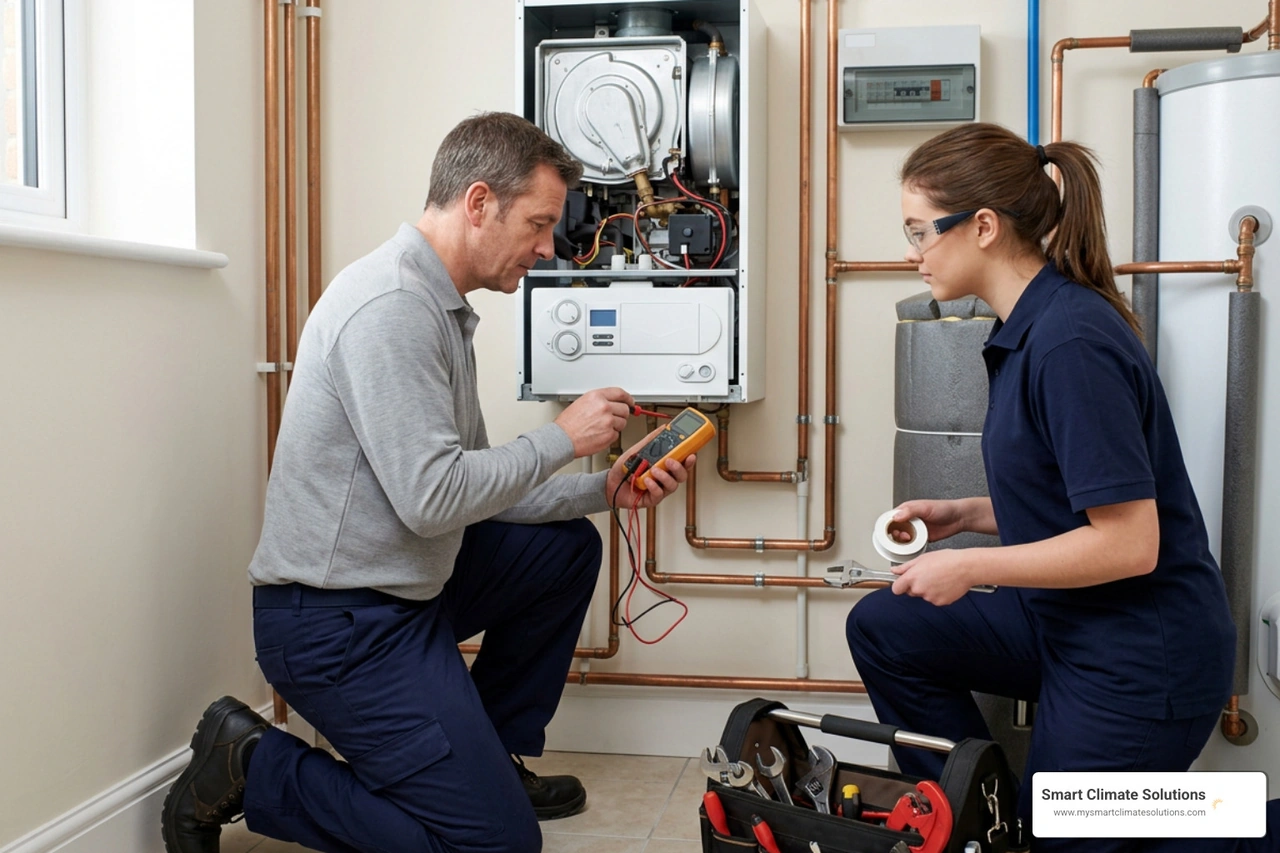
When searching for central heating installers near me, it helps to know what sets exceptional HVAC professionals apart from amateur handymen. A full central heating installation is an investment in your home that directly affects your safety, monthly energy expenses, and daily indoor comfort. Therefore, evaluating a contractor's technical credentials, business history, and standard operating procedures before signing a contract is essential.
Professional central heating contractors must possess appropriate state and local trade licensing. Valid licensing confirms that the contractor understands local building codes, mechanical standards, and safety ordinances. Additionally, verified general liability insurance and workers compensation coverage are vital protections. General liability covers accidental damage to your residence during installation, while workers compensation shields you from personal financial liability if a worker sustains an injury on your property.
Another standard for HVAC excellence is North American Technician Excellence (NATE) certification. NATE testing standards ensure that the technicians working inside your utility room have proven real-world competency in diagnosing, retrofitting, and installing heating equipment.
How to Search for Central Heating Installers Near Me
Finding reliable heating technicians requires a balanced approach using several search methods:
- Local Business Directories: Online platforms like Google Maps and localized directory pages allow you to view active contractors, verified service areas, and customer reviews.
- Customer Reviews and Ratings: Look for contractors who maintain high ratings across dozens of reviews. Pay close attention to how companies handle unexpected challenges or warranty calls.
- Word of Mouth Recommendations: Neighbors, family members, and local friends in Southwestern Pennsylvania or Eastern Ohio can share direct experiences regarding promptness, cleanliness, and price transparency.
- Housing Stock Knowledge: Older residences across Pittsburgh, South Hills, and Washington, PA often feature unique architectural layouts, aging ductwork, or historic cast-iron hydronic setups. Choose local installers who are familiar with retrofitting systems in regional housing stock rather than out-of-town generalists.
Verifying Credentials, Insurance, and Certifications
Never rely solely on verbal assurances when evaluating contractor credentials. Take these active verification steps prior to authorizing work:
- Request License Numbers: Ask for the contractor's state registration and local municipality licensing numbers, then verify them against active regional trade databases.
- Inspect Proof of Insurance: Request a certificate of insurance sent directly from the contractor's insurance provider showing current general liability and workers compensation limits.
- Confirm Manufacturer Training: High-efficiency heating manufacturers host specialized training academies to certify installers. Choosing a contractor with direct factory or academy credentials ensures proper equipment setup and keeps manufacturer warranties fully intact.
- Demand Written Guarantees: A trustworthy company backs its craftsmanship with a written warranty covering labor for at least one full year alongside standard manufacturer parts warranties.
Important Questions to Ask Before Hiring an HVAC Contractor
Screening contractors with detailed questions protects you against hidden expenses and poor system sizing. The cheapest initial bid often becomes the most expensive installation if the unit is improperly installed or inadequately sized for your living space.
Before agreeing to any proposal, review the installer's evaluation method. Quality HVAC professionals calculate heating loads using detailed software rather than guessing based strictly on house square footage. This evaluation factors in window placement, ceiling height, insulation levels, and home orientation.
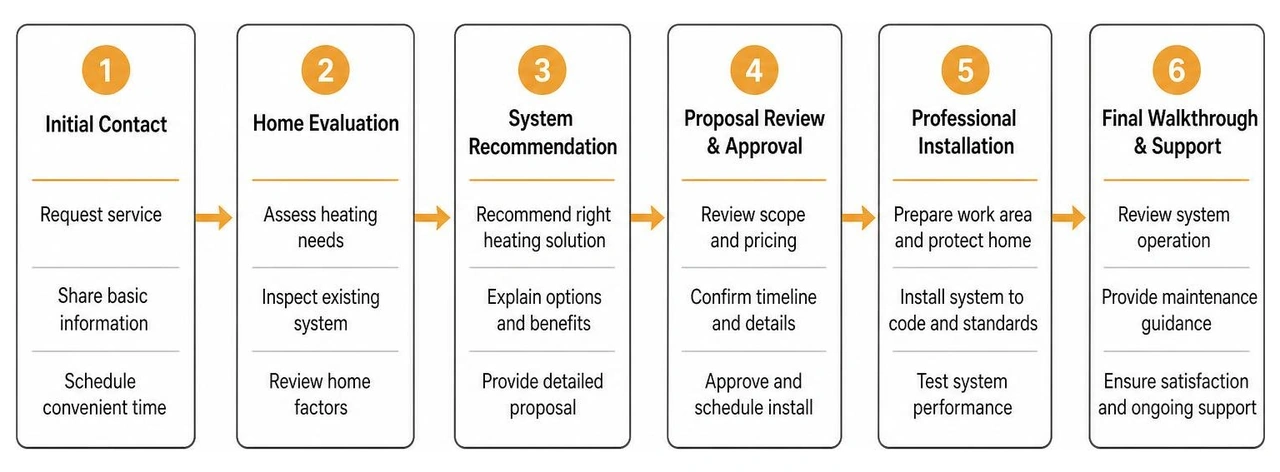
For additional context on professional installation standards, understanding the comprehensive central heating installation process helps ensure your project goes smoothly.
Critical Screening Questions for Heating Installers
When conducting initial interviews with prospective heating contractors, ask the following screening questions:
- Are your technicians direct employees or subcontractors? Direct employees are fully insured, background-checked, and accountable to company standards.
- Will you pull all necessary local building permits? Proper permits ensure the installation will be inspected and compliant with local municipal codes.
- What software or method do you use to calculate heating equipment sizing? Precise heat-load calculations prevent short-cycling, high energy bills, and uneven heating.
- Do you provide explicit, itemized bids in writing? Detailed quotes specify exact equipment model numbers, labor costs, required duct modifications, and cleanup protocols.
- What guarantees exist for workmanship and emergency follow-up service? Ensure the contractor provides direct emergency support if the system encounters performance issues right after setup.
Comparing Detailed Contractor Bids and Warranties
When reviewing competing quotes, make sure you compare equivalent specifications rather than looking only at the total price. A low bid may exclude ductwork modifications, fresh air intake piping, or proper electrical updates that a higher bid includes upfront.
Pay careful attention to equipment warranties. Standard equipment warranties usually cover basic parts for 5 to 10 years, but specialized manufacturer-accredited installers can often offer extended coverage up to 10 or 12 years on select models. Verify whether the quote includes an initial period of free maintenance or system tune-ups during the first year of operation.
Central Heating System Types, Costs, and Rebates
Selecting the right heating system depends on your home's existing infrastructure, fuel sources, and long-term efficiency goals. Modern central heating options primarily include forced-air gas furnaces, high-efficiency heat pumps, and hydronic boiler systems.
| System Type | Primary Fuel Source | Ideal Home Infrastructure | Average Efficiency Range | Typical Lifespan |
|---|---|---|---|---|
| Forced-Air Gas Furnace | Natural Gas / Propane | Existing supply ductwork | 80% to 98% AFUE | 15 to 20 Years |
| Electric Heat Pump | Electricity | Ductwork or ductless air handlers | 8.5 to 12+ HSPF2 / SEER2 16+ | 12 to 15 Years |
| Hydronic Boiler System | Natural Gas / Heating Oil | Radiators or baseboard pipework | 80% to 95% AFUE | 15 to 30 Years |
Comparing Common Central Heating Systems
Forced-air natural gas furnaces remain a top choice across Pittsburgh, PA, South Hills, PA, and surrounding regions due to their rapid heating ability during cold winter months. Modern high-efficiency gas furnaces convert up to 98 percent of fuel directly into usable warmth, reducing winter fuel bills significantly compared to older systems.
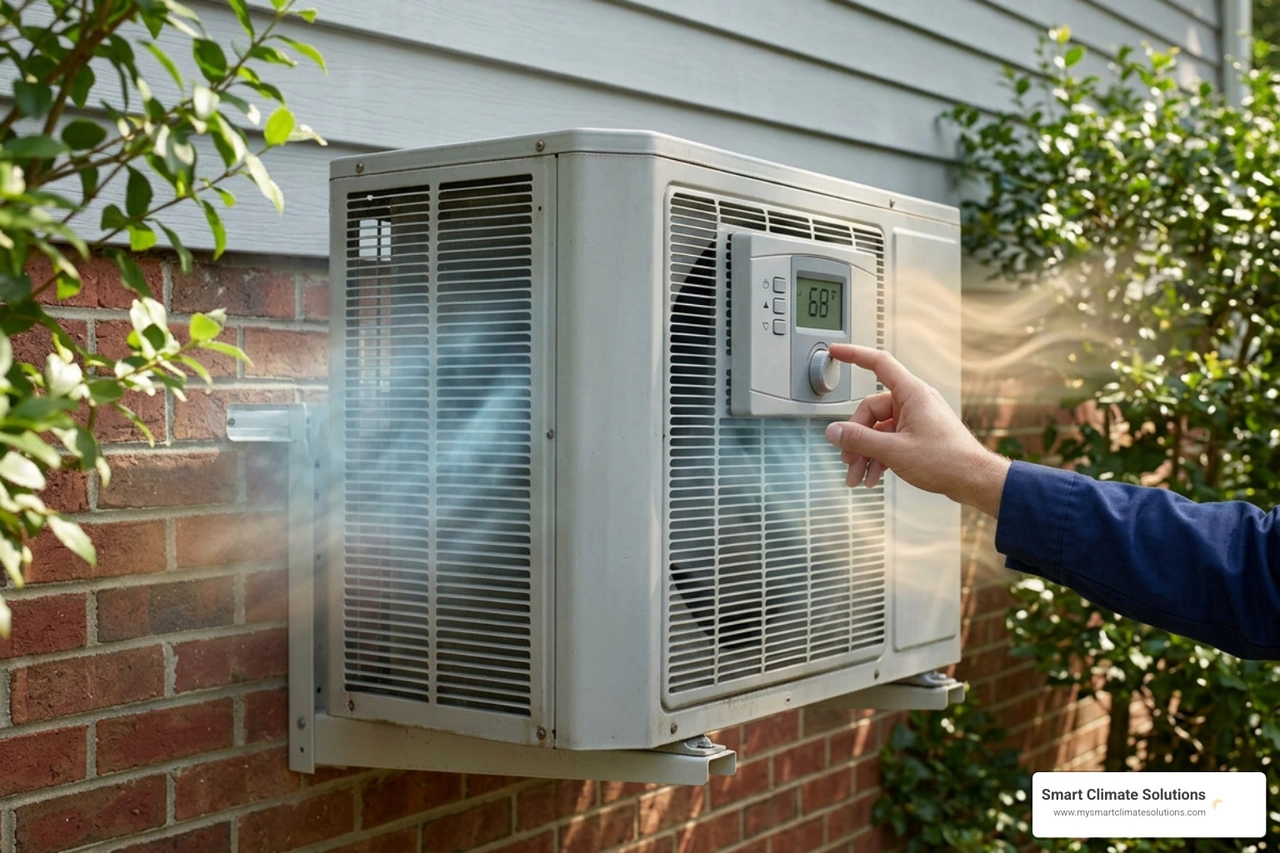
Electric heat pumps have advanced dramatically, offering dual-fuel capabilities that keep homes comfortable year-round by combining an electric heat pump with a backup gas furnace. Heat pumps extract thermal energy from outside air to heat homes efficiently even in sub-freezing temperatures.
Hydronic boiler systems deliver consistent radiant heat through radiators, baseboards, or underfloor tubing. Homeowners upgrading older hydronic systems often seek out modern compact boilers that save floor space while maximizing fuel efficiency.
Average Installation Costs, Rebates, and Incentives
Installing or replacing a complete central heating system involves various cost factors, including unit capacity, fuel line configuration, electrical panel capacity, and ductwork modifications.
- Full Central Heating System Installations: Total costs for a standard 3-bedroom home generally range between $3,000 and $13,000, depending on system complexity and ductwork requirements.
- Standard Furnace or Boiler Units: Individual unit replacements typically fall between $1,500 and $5,000 for equipment and basic installation labor.
- Minor vs. Major Pipe or Duct Repairs: Minor component fixes, such as replacing zone valves or circulating pumps, cost between $100 and $300, while major duct overhauls or line replacements can exceed $500.
To reduce these upfront costs, homeowners can utilize local utility rebates, state energy incentives, and federal energy efficiency tax credits. High-efficiency heat pump systems and qualifying gas furnaces may qualify for Inflation Reduction Act energy efficiency tax credits, lowering net installation expenses by hundreds or thousands of dollars.
Signs Your System Needs Repair versus Replacement
Determining whether to repair an aging heater or invest in a full replacement comes down to reliability, equipment age, and operating efficiency. Continuing to repair an old, inefficient unit often drains household budgets over time without providing long-term comfort.

Recognizing When to Repair or Replace Your System
If a heating repair costs between $100 and $300 for minor component failures like faulty igniters, flame sensors, or limit switches, repairing the system is usually the smart choice. However, if major repairs exceed $500 on a unit over 15 years old, investing those funds toward a modern replacement offers better long-term ROI.
Watch for these warning signs that indicate system replacement is necessary:
- Cold Spots and Uneven Heating: Drafty rooms and inconsistent temperatures signal that your blower or heating core is failing.
- Strange Noises: Squealing, banging, or rattling sounds point to worn motor bearings or cracked heat exchangers.
- Soaring Monthly Utility Bills: A sudden rise in heating costs without usage changes indicates deteriorating system efficiency.
- Frequent Winter Breakdowns: Needing multiple emergency service calls in a single winter is a strong sign that the equipment is nearing the end of its functional life.
Modern high-efficiency systems can cut energy consumption significantly in the first year alone, offsetting monthly financing costs while restoring consistent indoor comfort.
Why Local Experience Matters for Central Heating Installers Near Me
Hiring local heating contractors who understand regional climate conditions offers major advantages. Southwestern Pennsylvania and nearby Eastern Ohio communities experience rapid temperature drops, heavy snowfall, and harsh freezing weather that put extreme demands on residential heating equipment.

Local installers understand regional housing stock, local building code requirements, and municipal permitting processes in communities like Pittsburgh PA, Burgettstown PA, Washington PA, Steubenville OH, St. Clairsville OH, and Weirton WV. More importantly, local contractors offer rapid emergency response times when temperatures drop below freezing, protecting your home from dangerous freezes and burst pipes.
Frequently Asked Questions About Central Heating Installation
How long does a central heating system installation take?
A standard boiler or furnace replacement typically takes 1 to 2 days to complete. If your installation requires complete ductwork replacement, new gas piping, or electrical panel upgrades, the timeline may extend to 3 days depending on job complexity and property size.
How can homeowners lower the cost of a new heating installation?
Homeowners can lower overall installation costs by combining federal energy tax credits, local gas and electric utility rebates, and promotional manufacturer discounts. Choosing high-efficiency A-rated equipment often unlocks higher incentive tiers that reduce the net purchase price while lowering monthly fuel bills over time.
How do I know if my heating outage is an emergency?
A heating outage is an emergency if indoor temperatures drop rapidly during sub-zero outdoor weather, placing household occupants at risk of extreme cold or home plumbing at risk of freezing. Sudden electrical burning odors, active gas smells, or loud metal grinding sounds during system startup are also emergencies that warrant immediate service.
Conclusion
Choosing reliable central heating installers near me is about securing long-term home safety, optimal energy efficiency, and peace of mind when winter weather arrives. By evaluating contractor licensing, verifying NATE certifications, demanding itemized written quotes, and comparing modern system efficiencies, you ensure your investment delivers reliable warmth for years to come.
At Smart Climate Solutions, our certified team brings over 20 years of hands-on experience serving homeowners across Pittsburgh PA, South Hills PA, Burgettstown PA, Washington PA, Steubenville OH, St. Clairsville OH, and Weirton WV. We provide fast, reliable service, transparent pricing, and 24/7 emergency support to keep your family warm through any season. Ready to upgrade your home heating system? Explore Heating Installation Services today or contact us directly to schedule your free consultation!

.png)
