
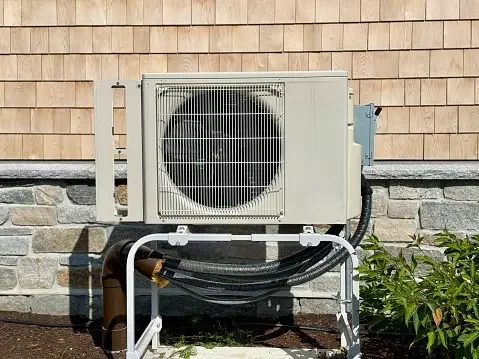
Total Cost of HVAC System by Equipment Type
When budgeting for a replacement, understanding how different equipment types perform and what they cost to install is the first step. The cost of HVAC system replacement depends on equipment type, home layout, efficiency level, and local installation requirements. Modern heating, ventilation, and air conditioning systems come in several configurations designed for different home layouts, fuel supplies, and regional climates.
| HVAC Equipment Type | Typical Efficiency Rating | Average Installed Cost (2026) | Expected Equipment Lifespan |
|---|---|---|---|
| Central AC + Gas Furnace | 14.3-18 SEER2 / 80%-96% AFUE | $10,000 - $20,000 | 15-20 Years (Furnace), 12-15 Years (AC) |
| Standard Ducted Heat Pump | 15-17 SEER2 / 8.5-9.5 HSPF2 | $8,000 - $16,000 | 12-15 Years |
| Cold-Climate Inverter Heat Pump | 18-22+ SEER2 / 10+ HSPF2 | $12,000 - $22,000 | 12-15 Years |
| Ductless Mini-Split (Multi-Zone) | 18-25 SEER2 / 10-12 HSPF2 | $6,000 - $18,000 | 15-20 Years |
| Geothermal Heat Pump | 25-35+ EER / 4.0+ COP | $18,000 - $35,000+ | 20-25 Years (Indoor), 50+ Years (Ground Loop) |
National data shows that prices for heating and cooling equipment have risen by roughly 17.7% over recent years, driven by supply chain shifts, updated testing metrics, and new manufacturing standards. Evaluating each option against your local weather patterns ensures you do not overpay for features you never use or buy undersized machinery that struggles during winter storms.
Central AC and Furnace Matched Systems
A paired central air conditioner and natural gas furnace remains the benchmark setup for homes across the Pittsburgh, PA region and the greater Tri-State area. When estimating your furnace and ac install cost, installing both components simultaneously provides notable benefits. A matched system ensures the indoor evaporator coil, blower motor, and outdoor condenser communicate smoothly, which protects component warranties and maintains optimal airflow across your heat exchanger.
Replacing an aging setup with a matched system usually saves 10% to 15% on total labor compared to purchasing units individually. Homeowners managing single-component projects can explore our guide on central ac replacement cost for standalone condenser and coil estimates.
Heat Pumps and Cold-Climate Units
Air-source heat pumps provide both heating and cooling through a single outdoor condenser and indoor air handler. Modern units utilize variable-speed inverter compressors, modulating output in micro-increments rather than cycling abruptly on and off.
For regions experiencing freezing winter temperatures, cold-climate heat pumps maintain full heating capacity down to sub-zero temperatures without relying on inefficient electric resistance heat strips. Dual-fuel configurations pair an electric heat pump with a natural gas furnace, allowing the system to run on electricity during mild weather and automatically switch to gas when temperatures drop sharply.
Ductless Mini-Splits and Alternative Units
Ductless mini-splits are ideal for historic brick homes, room additions, or properties lacking central ducting. Each indoor air handler connects to an exterior inverter condenser via a narrow refrigerant lineset, delivering independent zone-level temperature management.
If your home currently relies on older fuel configurations, reviewing the cost of replacing oil furnace with natural gas can reveal significant long-term operational savings. Geothermal systems require substantial upfront capital for underground loop excavation, yet they offer exceptional seasonal efficiency and low operational costs.
How Home Size and Layout Impact Installation Pricing
System capacity, measured in tons or British Thermal Units (BTUs), directly influences overall project estimates. One ton of cooling capacity equals 12,000 BTUs per hour. Calculating exact equipment sizing requires more than multiplying square footage by a generic rule of thumb.

Accurate equipment selection protects against improper cycling, excessive humidity, and unnecessary equipment strain. A comprehensive residential hvac installation cost estimate accounts for wall insulation, ceiling heights, window orientation, and regional climate loads.
Evaluating the Cost of HVAC System by Square Footage
The table below outlines typical capacity requirements and complete system replacement costs across standard home sizes using matched, mid-efficiency equipment:
| Home Size (Sq Ft) | Estimated Tonnage Range | Matched AC + Gas Furnace | Air-Source Heat Pump |
|---|---|---|---|
| 1,000 - 1,200 | 1.5 - 2.0 Tons | $8,000 - $12,500 | $7,500 - $13,000 |
| 1,400 - 1,600 | 2.0 - 2.5 Tons | $8,800 - $14,200 | $8,200 - $14,500 |
| 1,800 - 2,000 | 2.5 - 3.0 Tons | $9,500 - $16,000 | $9,000 - $15,500 |
| 2,200 - 2,500 | 3.5 - 4.0 Tons | $11,000 - $18,000 | $10,500 - $17,500 |
| 2,800 - 3,200 | 4.0 - 5.0 Tons | $12,500 - $21,000 | $12,000 - $20,500 |
To prevent sizing errors, professional contractors perform an industry-standard Manual J load calculation. This diagnostic process measures thermal transfer through walls, floors, and attic insulation, ensuring your selected hardware matches your home's thermal footprint.
Ductwork Condition and Whole-Home Airflow Needs
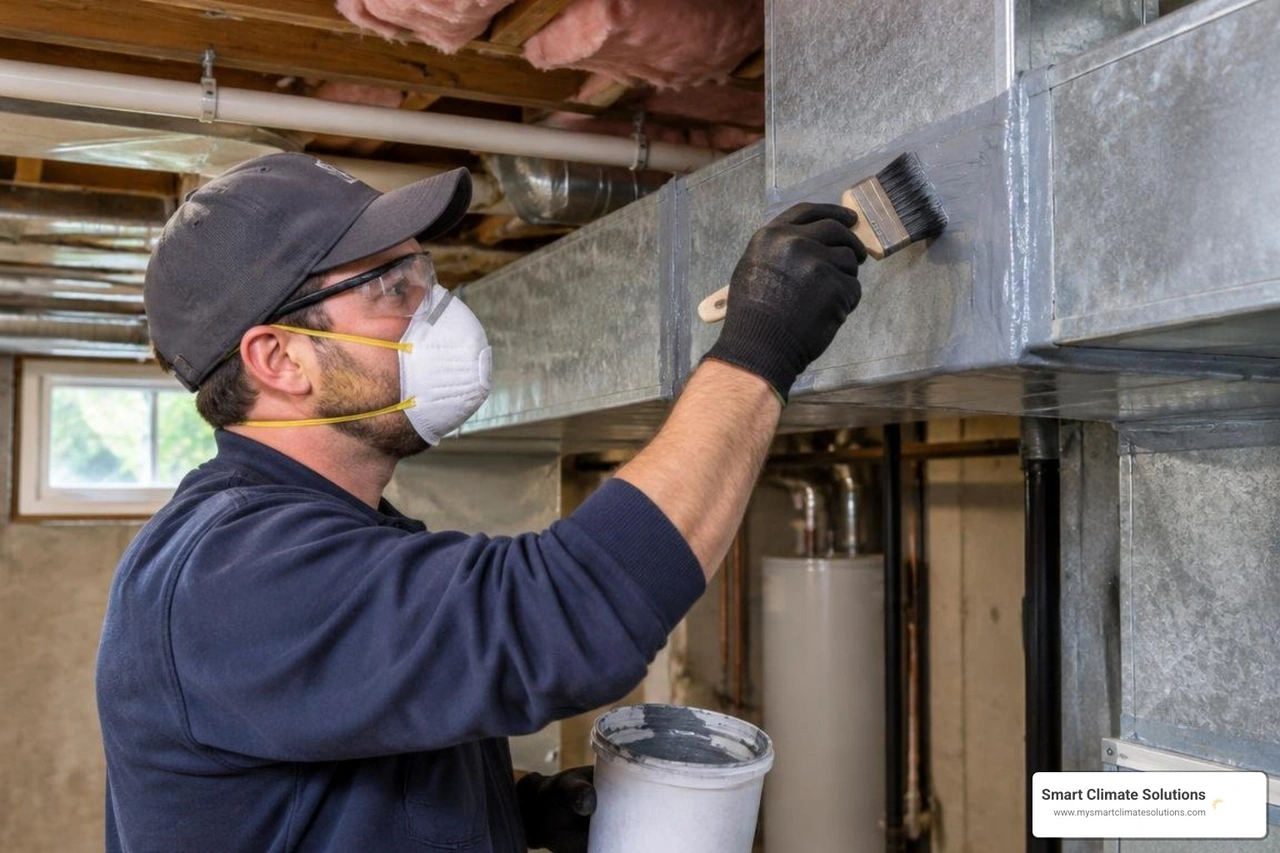
A high-efficiency heating and cooling system cannot perform as rated if connected to restricted or deteriorated ductwork. Leaky supply and return ducts reduce overall delivery efficiency by up to 30%, forcing equipment to operate for longer cycles.
If extensive renovations or brand-new distribution branches are required, whole-home ductwork installation cost can add $5,000 to $15,000 to the total investment. Minor duct modifications, airflow balancing, and mastic sealing generally add between $500 and $3,000, improving comfort across every room.
Component Pricing, Labor Rates, and Hidden Project Expenses
Project quotes reflect far more than just the wholesale price of metal and motors. Complete installations involve complex logistics, certified technical labor, code compliance, and proper disposal of aging equipment.
Labor, Permitting, and Refrigerant Regulations
Skilled technical labor accounts for roughly 35% to 50% of an installation invoice. Our certified technicians complete comprehensive site preparations, secure structural mountings, fabricate custom sheet metal transitions, connect high-voltage circuits, and balance system airflow.
Modern environmental regulations require updated system architectures designed around next-generation A2L low-global-warming refrigerants, such as R-454B and R-32. These refrigerants involve specialized recovery gear, updated manifold sets, and leak-mitigation sensors, which add a modest premium to raw equipment expenses. Municipal building and mechanical permits typically range from $100 to $500 depending on local code guidelines.
Surprise Expenses and Electrical Upgrades
Unexpected field conditions can influence final installation totals. Common additional line items include:
- Main Electrical Service Upgrades: Converting from natural gas heating to a high-capacity electric heat pump may require expanding your main electrical panel from 100 amps to 200 amps ($1,500 - $3,500).
- Refrigerant Line Sets: Replacing deteriorated copper lines hidden behind drywall or running extended linesets adds $300 to $1,200.
- Condensate Drainage and Safety Switches: High-efficiency condensing furnaces produce acidic condensate that requires dedicated PVC lines, neutralizer kits, or secondary pump assemblies ($150 - $450).
- Flue Venting Modifications: Upgrading to a 90%+ AFUE furnace requires dedicated PVC side-wall venting, replacing old metal chimneys ($400 - $1,200).
- Smart Thermostat Integration: Modern multi-stage communicating equipment requires compatible digital thermostats ($150 - $500).
- Equipment Disposal and Environmental Fees: Safe refrigerant evacuation and responsible equipment haul-away range from $100 to $300.
Rebates, Efficiency Tiers, and Smart Replacement Timing
Balancing upfront investment with long-term monthly energy savings requires evaluating seasonal efficiency ratings:
- SEER2 (Seasonal Energy Efficiency Ratio 2): Measures cooling efficiency. Standard base units run between 14.3 and 15.2 SEER2, while high-efficiency variable-speed units exceed 18 to 20 SEER2.
- AFUE (Annual Fuel Utilization Efficiency): Measures furnace gas combustion. Base units start at 80% AFUE, while condensing models convert 95% to 98% of fuel directly into usable heat.
- HSPF2 (Heating Seasonal Performance Factor 2): Measures heat pump seasonal heating output relative to electricity consumed. Efficient cold-climate units achieve ratings of 8.5 to 10+ HSPF2.
Repair vs Replace: Calculating the Cost of HVAC System Longevity
When a breakdown occurs, applying the industry-standard $5,000 Rule helps determine whether to repair or replace:
Multiply the age of your system (in years) by the total estimated repair cost (in dollars). If the resulting number exceeds $5,000, replacing the system is generally the more sensible long-term investment.
For example, spending $900 to repair a 4-year-old furnace equals 3,600, pointing toward a standard repair. Conversely, investing $1,200 into a 14-year-old system equals 16,800, indicating that ongoing component failures will quickly exceed the cost of modern replacement hardware.
Routine tune-ups protect equipment life; budgeting for predictable annual hvac maintenance cost prevents premature compressor failures, keeps heat exchangers clean, and preserves manufacturer warranty terms.
Navigating 2026 Rebates and Tax Credit Changes
Federal incentives changed notably at the end of last year. The popular Section 25C Energy Efficient Home Improvement tax credit expired on December 31, 2025, meaning standard residential central air conditioners and heat pumps no longer qualify for the previous $2,000 federal tax credit. However, Section 25D retains a 30% federal tax credit for residential geothermal heat pump installations through 2032.
Homeowners can still lower their out-of-pocket expenses through other programs:
- State Energy Rebates (HOMES and HEAR): Income-qualified households can access state-administered efficiency rebates that offset up to $8,000 on qualifying heat pump upgrades.
- Local Electric and Gas Utility Rebates: Regional utility providers offer direct equipment rebates ranging from $250 to $1,500 on qualifying high-efficiency furnaces and heat pumps.
- Manufacturer Rebate Promotions: Heating and cooling brands frequently offer seasonal rebates of $500 to $1,800 during shoulder seasons (early spring and early fall).
When interviewing contractors, ask these fundamental questions:
- Do you perform an on-site Manual J load calculation before selecting system capacity?
- Are local municipal permit and inspection fees included in the written proposal?
- What labor warranty do you provide beyond the manufacturer parts coverage?
- Are you certified to handle modern A2L refrigerants like R-454B?
- Does the quote include disposal of existing equipment and cleanup of work areas?
Frequently Asked Questions About HVAC Pricing
How much does a replacement unit cost for a 2,000-square-foot house?
Replacing the heating and cooling system in an average 2,000-square-foot home typically costs between $9,500 and $16,000 for a mid-efficiency matched gas furnace and central AC. If installing a standalone air-source heat pump, expect installed pricing between $9,000 and $15,500, assuming current ductwork remains in sound condition.
Is it cheaper to replace the furnace and AC at the same time?
Yes. Replacing both units together saves between $800 and $1,800 on combined labor, site mobilization, and permitting costs compared to scheduling two separate installations. It also ensures matched airflow dynamics and unified warranty coverage across all components.
How long does a standard HVAC installation take?
A direct, like-for-like system replacement is typically completed within 8 to 14 working hours (one to two business days). Complex projects involving full ductwork replacements, high-voltage service upgrades, or multi-zone ductless installations generally take three to five business days.
Conclusion
Upgrading your home heating and cooling infrastructure is a major financial decision, but working with experienced professionals ensures reliable comfort, improved indoor air quality, and low monthly utility bills for years to come. At Smart Climate Solutions, we bring over 20 years of hands-on technical experience, 24/7 emergency service, and factory-certified technicians to homeowners across Bethel Park, PA, Pittsburgh, PA, Carnegie, PA, Canonsburg, PA, Washington, PA, Burgettstown, PA, and South Hills, PA, as well as our neighboring communities in Wheeling, WV, Weirton, WV, St. Clairsville, OH, and Steubenville, OH.
If you are planning an upgrade, explore our complete breakdown on the average cost to replace 3 ton hvac system or contact our team today to schedule an on-site evaluation and receive an itemized, transparent quote.

.png)
