
AC Turning On and Off but Not Cooling? Start Here
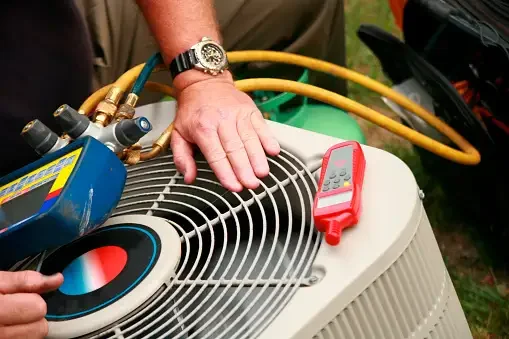
Rapid starts and stops paired with weak cooling usually signal a short-cycling problem. Watch the outdoor condenser for a full cycle, since the indoor blower can keep running after the cooling equipment shuts down. Begin with low-risk maintenance: install a clean filter, open blocked registers and return grilles, and verify that the thermostat is on Cool with the fan set to Auto. Stop operating the system and schedule service if there is ice on the equipment, an electrical burning smell, persistent buzzing, or a breaker that trips again.
Short cycling can make a home feel warm and humid because the equipment does not run long enough to remove heat and moisture. When cooling is weak and the unit keeps shutting down, likely causes range from restricted airflow and frozen coils to refrigerant, thermostat, electrical, or sizing problems. A technician should diagnose those faults instead of relying on repeated restarts.
Bill Scott, general manager of Smart Climate Solutions, brings more than 20 years of HVAC experience serving Pittsburgh and Southwestern Pennsylvania. His team helps homeowners separate simple maintenance issues, such as clogged filters, from faults that require trained service.
What Is AC Short Cycling and Why Does It Stop Cooling?
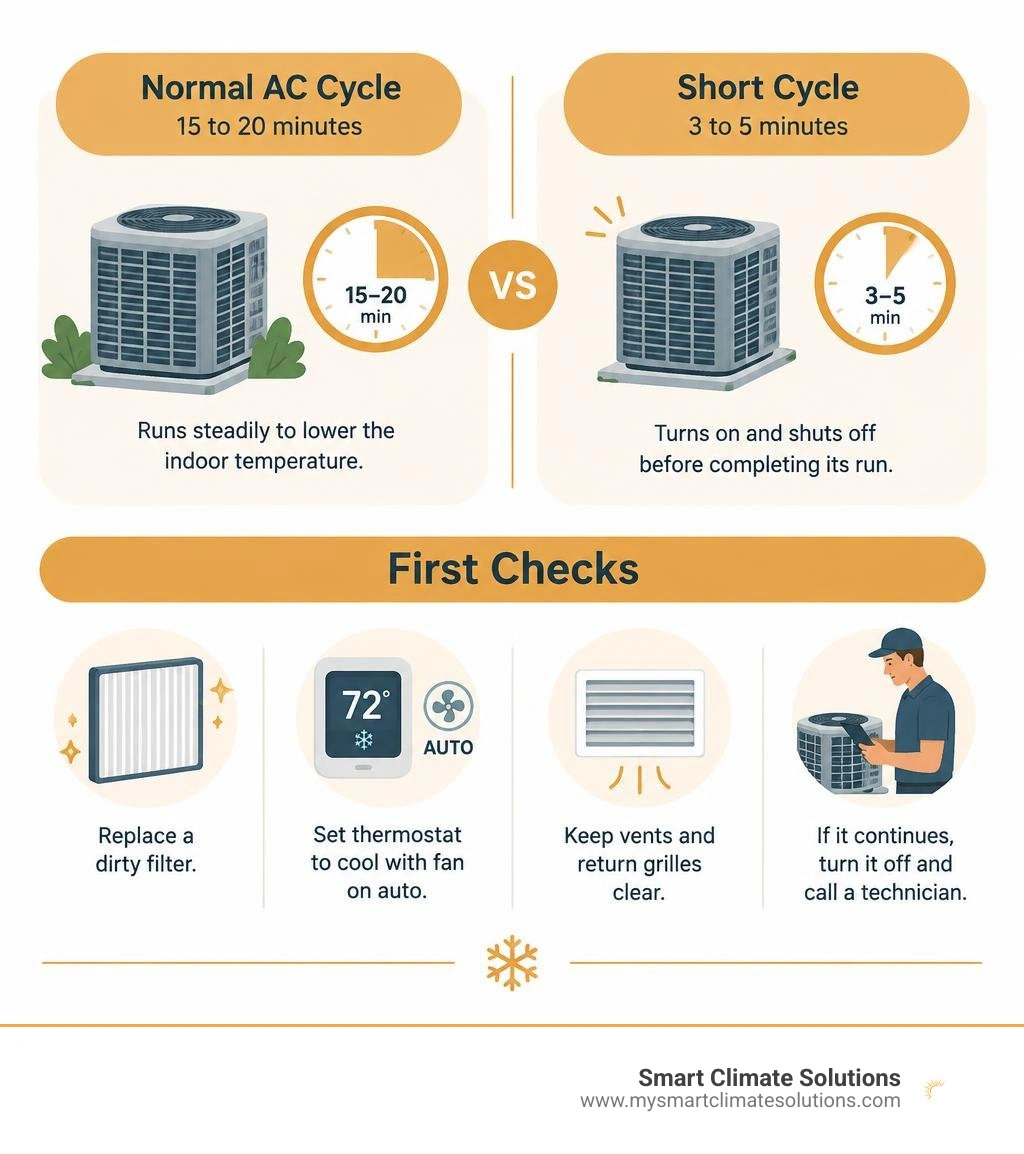
A healthy cooling cycle should run long enough to lower indoor temperature and remove moisture without constantly starting and stopping. On a warm day, many properly sized systems run for roughly 15 to 20 minutes, but the exact duration varies with weather, home insulation, thermostat settings, and equipment capacity.
Short cycling occurs when the air conditioner starts, runs briefly, and shuts down before completing a normal cooling cycle. Repeated short runs prevent steady temperature control and can make indoor air feel clammy even when the vents deliver some cool air.
Every time an air conditioner starts up, it draws a heavy surge of electricity known as inrush current. This starting current can be 5 to 7 times higher than normal running current. When your unit starts dozens of times each day, it consumes massive amounts of power while failing to cool your living spaces. Regularly troubleshooting your air conditioning system helps catch these issues before they turn into complete mechanical breakdowns.
| Operational Factor | Normal AC Operation | Short Cycling Performance |
|---|---|---|
| Cycle Duration | 15 to 20 minutes | 3 to 5 minutes |
| Cycles Per Hour | 2 to 3 starts | 6 to 8+ starts |
| Indoor Humidity | 30% to 50% (Comfortable) | 60%+ (Muggy, sticky) |
| Temperature Balance | Even across all rooms | Uneven hot and cold spots |
| Electrical Stress | Low, steady run amperage | High, repeated inrush current spikes |
How Short Cycles Prevent Cold Air and Dehumidification
Air conditioners perform two crucial jobs: removing heat (sensory cooling) and removing moisture (latent cooling). To pull moisture from your home, warm, humid air must pass over the cold evaporator coil long enough for water vapor to condense into liquid droplets and drain outside.
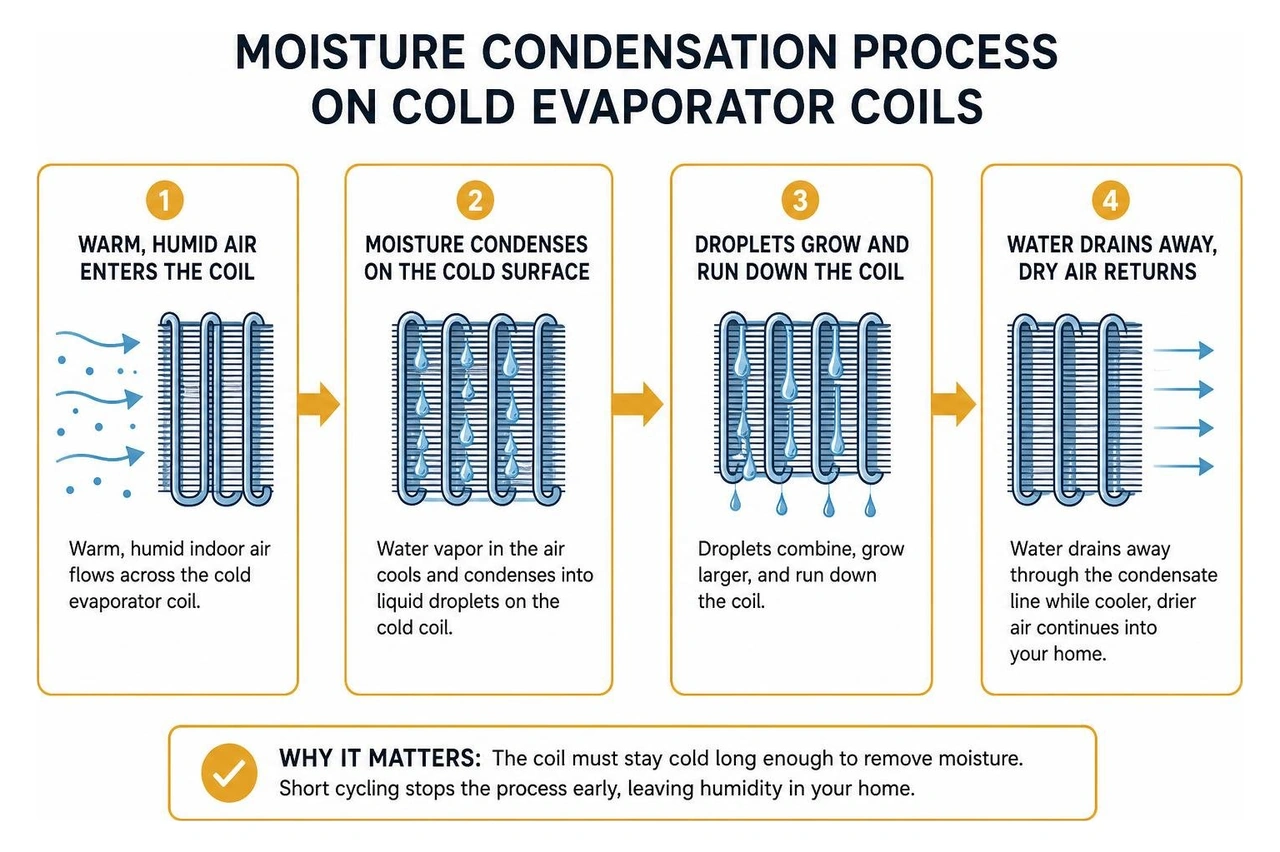
When an air conditioner cuts off after three minutes, the evaporator coil barely gets cold enough to begin condensing water. The system stops before removing meaningful amounts of humidity. Even if the air coming from your vents feels slightly cool, the indoor air remains damp and clammy.
A home at 72 degrees Fahrenheit with high humidity feels significantly warmer and stuffier than a dry home at 75 degrees. Short cycling leaves this moisture trapped inside, preventing genuine comfort.
Why Is Your AC Short Cycling Without Cooling?
When an air conditioner shuts down prematurely, it is rarely making an arbitrary decision. Modern systems have built-in safety control switches designed to cut power when they detect electrical overload, dangerous pressure imbalances, or excessive heat.
For an AC that is not cold and is short cycling, the timing of the shutdown and any related symptoms can point to the likely cause. Ice, weak airflow, a hot outdoor unit, unusual sounds, or a tripped breaker each call for a different response.
Dirty Filters and Airflow Restrictions
The single most common reason for an air conditioner shutting off too early is restricted airflow. When your furnace or air handler filter becomes caked in pet dander, dust, and debris, the blower cannot pull enough warm air across the indoor evaporator coil.

Without warm indoor air passing over it, the refrigerant inside the coil cannot absorb heat. The coil temperature plummets below freezing, causing condensation on the coil to turn into solid ice. Once this freeze-up begins, the system trips its internal limit switches to protect the compressor from liquid slugging, shutting the entire system down.
Replacing a clogged filter can reduce your system's energy consumption by 5% to 15%. When you notice your AC isn't blowing sufficient airflow, swapping that filter is the first and easiest check you can perform.
Low Refrigerant Levels and Frozen Evaporator Coils
Air conditioners operate on a closed loop of chemical refrigerant. The refrigerant does not get used up like gasoline in a car. If your refrigerant levels are low, your system has a leak.
When refrigerant escapes, the pressure inside the system drops. Lower pressure causes the refrigerant to boil at a much lower temperature, which rapidly freezes the evaporator coil into a solid block of ice.
Modern units feature a low-pressure safety switch that detects this drop and shuts off the outdoor compressor to prevent irreversible motor burnout. The compressor cuts off, waits a few minutes for pressure to equalize slightly, and attempts to restart, creating an endless loop of warm air and short runs. If you suspect a leak, review these steps when your AC is not cooling properly to protect your system.
Electrical and Mechanical Failures
Electrical and mechanical failures can cause sudden shutdowns without freezing the coils:
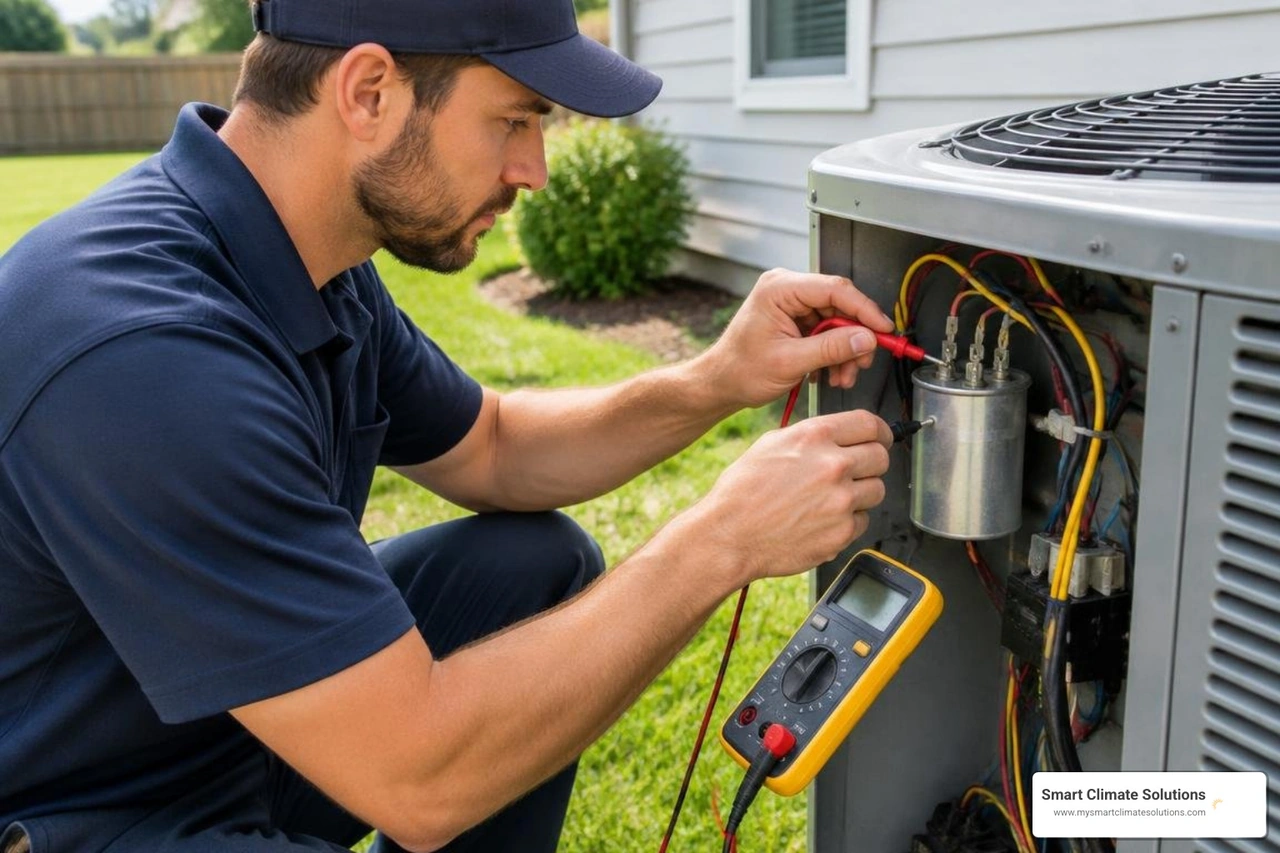
- Failing Dual Run Capacitor: The capacitor provides the electrical boost needed to start and run the compressor and outdoor fan motor. If the capacitor is weak or failing from heat and power surges, the compressor may draw excessive amperage, overheat, and trip its internal thermal overload switch within minutes.
- Pitted Contactor Points: The contactor is an electromechanical switch that sends 240-volt power to your outdoor components. Over time, electrical arcing creates pits and carbon buildup on the contact points, leading to intermittent electrical connections that drop power unexpectedly.
- Faulty Control Board: A malfunctioning indoor or outdoor control board can send erratic voltage signals to the blower motor or compressor relay, cutting cycles short.
- Thermal Compressor Overload: If your compressor is struggling mechanically, it will get extremely hot to the touch and shut itself off to prevent catching fire. If you are dealing with an AC compressor not starting, it is critical to shut off power until an expert can test the windings.
Incorrect Thermostat Placement and Oversized AC Units
Your thermostat acts as the brain of your HVAC system, but it only measures the air in its immediate surroundings:
- Poor Placement: If your thermostat is installed in direct sunlight, near a drafty window, or directly in line with a supply vent, it will misread your home's actual temperature. A blast of cold air hitting the thermostat directly can trick it into satisfying its setpoint in four minutes, shutting off the system while the rest of the house remains warm.
- Cycle Rate Configuration: Some modern digital thermostats have adjustable cycle-per-hour settings. If configured incorrectly, the thermostat may cycle the equipment too frequently. You can refer to this thermostat cycle settings guide to verify standard settings.
- Oversized AC Units: In HVAC, bigger is not better. If an air conditioner is too large for the square footage of your home, it will blast immense amounts of cold air into the living space, satisfy the thermostat in 5 minutes, and shut off. The result is rapid on-off cycling, cold but sticky air, and major temperature swings between rooms.
Step-by-Step DIY Troubleshooting and System Protection
Before scheduling a service visit, there are several safe, simple maintenance steps you can take to rule out basic airflow and power issues.
- Inspect and Replace the Air Filter: Check your 1-inch or 4-inch media filter. If you cannot see light passing through it, install a clean replacement immediately.
- Clear All Supply Vents and Return Grilles: Walk through your home and ensure that rugs, furniture, or curtains are not covering return air grilles or supply registers. Keep at least 80% of interior doors open to ensure balanced airflow.
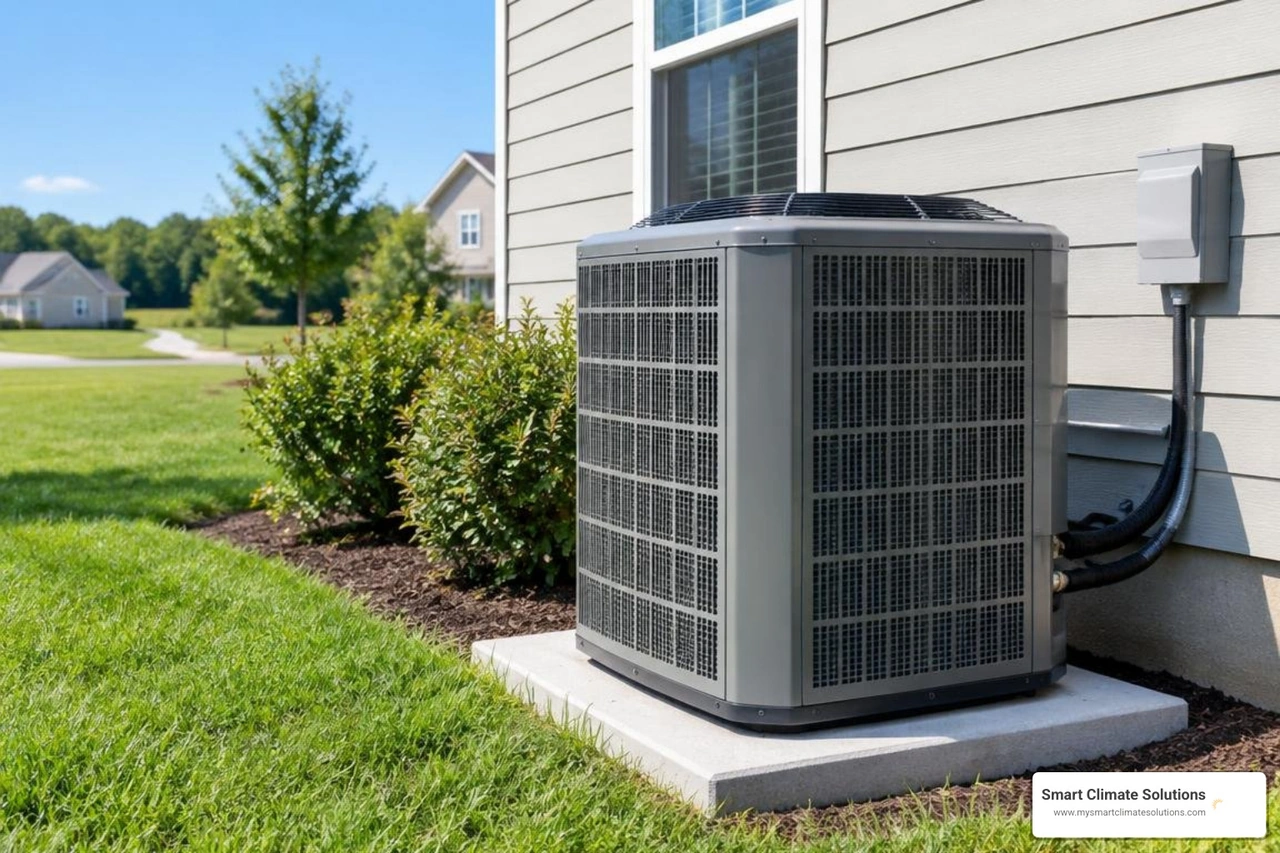
- Inspect the Outdoor Condenser: Turn off the power to your outdoor unit and check for grass clippings, leaves, or dirt clogging the exterior coil fins. Clear away brush or stored items within a two-foot perimeter around the unit.
- Inspect the Condensate Drain Line: Locate your indoor air handler or furnace. If the condensate drain pipe is backed up with algae or sediment, the secondary float switch will trip to prevent water overflow, cutting power to the thermostat or outdoor unit. Clear any visible blockage from the drain line.
- Check Thermostat Settings: Ensure your thermostat has fresh batteries, is set firmly to Cool, and that the fan setting is on Auto rather than On.
- Reset the Circuit Breakers: Go to your electrical panel, switch the dedicated HVAC breakers completely to the Off position, wait 60 seconds, and turn them back on. This resets internal digital safety lockouts.
The Hidden Dangers of Ignoring Rapid Cycling
Ignoring rapid cycling can turn a manageable service issue into compressor damage. The compressor and electrical components face their greatest strain during startup, so frequent restarts accelerate wear.
A system that starts and stops dozens of times in a day places repeated stress on electrical contacts, capacitors, and the compressor. Addressing the underlying fault early can help avoid a larger repair or premature replacement.
Ignoring a simple problem like a clogged filter or a small electrical fault can cause total compressor burnout, leaving you facing a repair bill of several thousand dollars. Understanding the cost of repairing an AC compressor capacitor early can save you from replacing the entire outdoor condenser.
When to Call a Professional for AC Repairs
While homeowners can handle filter changes and vent clearance, high-voltage and closed-loop refrigerant diagnostics require professional training, specialized equipment, and federal certification.
You should turn off your air conditioner and call a professional technician if:
- You Spot Ice on the Equipment: If you see ice forming on the brass service valves, outdoor copper lines, or indoor evaporator coil casing.
- You Hear Buzzing or Clicking Sounds: Loud electrical buzzing from the outdoor unit without the fan spinning indicates a failed capacitor, seized motor, or stuck contactor.
- The Circuit Breaker Keeps Tripping: Repeated breaker trips indicate a direct electrical short or a grounded compressor winding that poses a serious fire hazard.
- Airflow Is Hot While Cycles Are Short: If the outdoor unit runs for three minutes, blows lukewarm air, and shuts off repeatedly.
EPA Section 608 certified technicians use digital manifold gauges to verify subcooling and superheat measurements, test electrical capacitors under load with microfarad multimeters, and isolate complex control board issues.
Our team at Smart Climate Solutions provides expert professional 24 hour AC repair services across Pittsburgh, South Hills, Burgettstown, and Washington, PA, as well as Steubenville and St. Clairsville, OH, and Weirton, WV. We bring over 20 years of hands-on experience to every call.
The best way to prevent unexpected summer breakdowns is by scheduling your annual AC tune up every spring to clean coils, calibrate controls, and check electrical draw before hot weather arrives.
Frequently Asked Questions About Short Cycling ACs
How many times per hour should a normal AC cycle on and off?
A properly sized residential air conditioner commonly cycles a few times per hour during typical summer conditions, with many cycles lasting about 15 to 20 minutes. During extreme heat, it may run longer to maintain the thermostat setting. The key warning sign is not one long run, but repeated shutdowns after only a few minutes.
Can a dirty air filter really cause an AC to turn off after 3 minutes?
Yes. A dirty air filter severely restricts the volume of air returning to your air handler. Without warm air flowing across the evaporator coil, the refrigerant inside cannot absorb heat, causing the coil temperature to drop below 32 degrees Fahrenheit. As the coil freezes over, safety limit switches trip to prevent compressor damage, abruptly terminating the cooling cycle after just a few minutes.
Is it safe to let an air conditioner keep short cycling?
No. Frequent starts and stops add stress to the compressor, capacitor, relays, and wiring while reducing cooling and moisture control. After checking the filter, vents, thermostat setting, and outdoor unit for obvious debris, turn the system off and contact a licensed HVAC professional if the short cycling continues.
Conclusion
An air conditioner that starts and stops every few minutes without cooling your home is signaling that a safety mechanism has tripped. Whether the underlying cause is a clogged air filter, low refrigerant pressure, electrical component wear, or an oversized unit, addressing the issue promptly protects your compressor and restores your comfort.
If you have replaced your air filter and checked your vents but your system continues to turn on and off rapidly, our certified technicians at Smart Climate Solutions are ready to help. We provide prompt diagnostic assessments and 24/7 emergency support throughout Pittsburgh, PA, and the surrounding areas. We can also assist you with resolving new air conditioner not cooling problems to ensure your system runs smoothly and efficiently all season long.

.png)
