
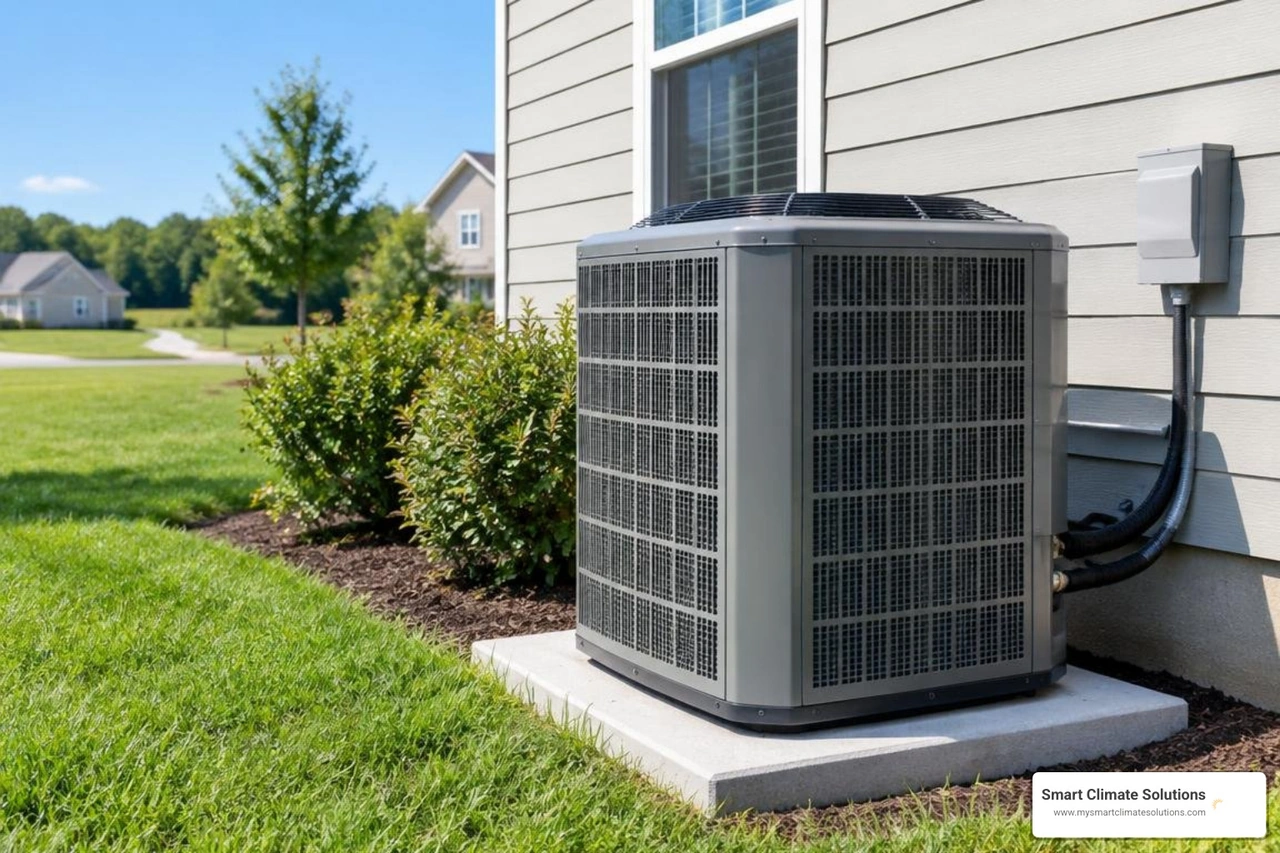
Complete 2 Stage AC Unit Cost Breakdown and Price Factors
A fully installed two-stage AC unit typically costs between $3,500 and $6,500, with the equipment itself making up the largest portion of the expense. Professional labor, local permits, code compliance, and incidental supplies also shape the final invoice.
A standard installation typically includes the outdoor condensing unit, a matching indoor evaporator coil, new refrigerant lines or a line-set flush, a safety float switch, an outdoor disconnect box, and an equipment pad. If your electrical panel needs a dedicated circuit breaker upgrade or if local municipal codes require specialized mechanical permits, those items will be reflected in the quote.
| System Staging Type | Typical Equipment Cost | Typical Labor and Permits | Total Installed Cost Range |
|---|---|---|---|
| Single-Stage AC | $1,500 - $2,800 | $1,000 - $1,700 | $2,500 - $4,500 |
| Two-Stage AC | $2,200 - $4,500 | $1,300 - $2,000 | $3,500 - $6,500 |
| Variable-Speed (Inverter) AC | $4,500 - $8,500 | $1,800 - $3,500 | $6,300 - $12,000+ |
Understanding your baseline central AC installation cost allows you to see how different performance tiers fit into your home improvement budget.
How Sizing and Efficiency Impact 2 Stage AC Unit Cost
The cooling capacity of an air conditioner is measured in tons, where one ton equals 12,000 BTUs of heat removal per hour. Most residential homes require between 2 and 5 tons of cooling. As tonnage increases, the physical size of the compressor, coils, and cabinet grows, raising the equipment price.
Efficiency is another major price driver. Modern cooling systems are rated by SEER2 (Seasonal Energy Efficiency Ratio 2). A system with a 15.2 to 17.2 SEER2 rating requires advanced coil designs and multi-stage electronics, which carry a higher manufacturing cost than baseline 14.3 SEER2 units.
To ensure you do not overpay for equipment you do not need, we perform a thorough Manual J load calculation. This engineering calculation considers your square footage, window placement, insulation levels, and ductwork condition. Ensuring proper airflow and knowing your estimated central air installation cost with existing ductwork prevents you from buying an oversized unit that short-cycles or an undersized unit that runs continuously without cooling properly.
Installation Labor, Ductwork, and Component Expenses
The mechanical complexity of a two-stage system requires skilled installation. Single-stage systems run on basic low-voltage wiring, while two-stage condensers require multi-conductor thermostat wire (often requiring a modern 2-stage compatible thermostat), matched indoor blower settings, and precise refrigerant balancing.
- Labor Hours: Expect 8 to 14 labor hours for a complete two-stage split system replacement, compared to 6 to 12 hours for a single-stage system.
- Thermostat Controls: A two-stage system requires a thermostat capable of sending separate Y1 (first stage) and Y2 (second stage) cooling calls. Upgrading to a compatible digital or smart thermostat typically adds $150 to $450.
- Air Handler Matching: The outdoor unit must pair correctly with an indoor air handler or furnace blower capable of ramping airflow up and down.
- Component Replacement Costs: Advanced equipment uses specialized internal parts. Reviewing an AC unit compressor cost overview shows that two-stage scroll compressors and proprietary control boards carry higher replacement part prices than standard components.
Detailed industry analysis of two-stage HVAC installation costs confirms that while labor is slightly higher due to setup time, the vast majority of the price difference lies in the advanced engineering of the equipment itself.
Two-Stage vs. Single-Stage and Variable-Speed Systems
To understand why prices vary, it helps to look at the mechanics behind each compressor design.
A single-stage air conditioner operates like a basic light switch: it is either 100% on or completely off. Whenever your home warms up, it kicks on at full blast until the thermostat setting is satisfied, then shuts down.
A two-stage air conditioner has two distinct capacity levels. Low stage operates at roughly 65% to 70% of total cooling capacity, which handles everyday cooling needs. High stage kicks in at 100% capacity during extreme heatwaves. The system spends roughly 80% of its operating time quietly humming along in low stage.
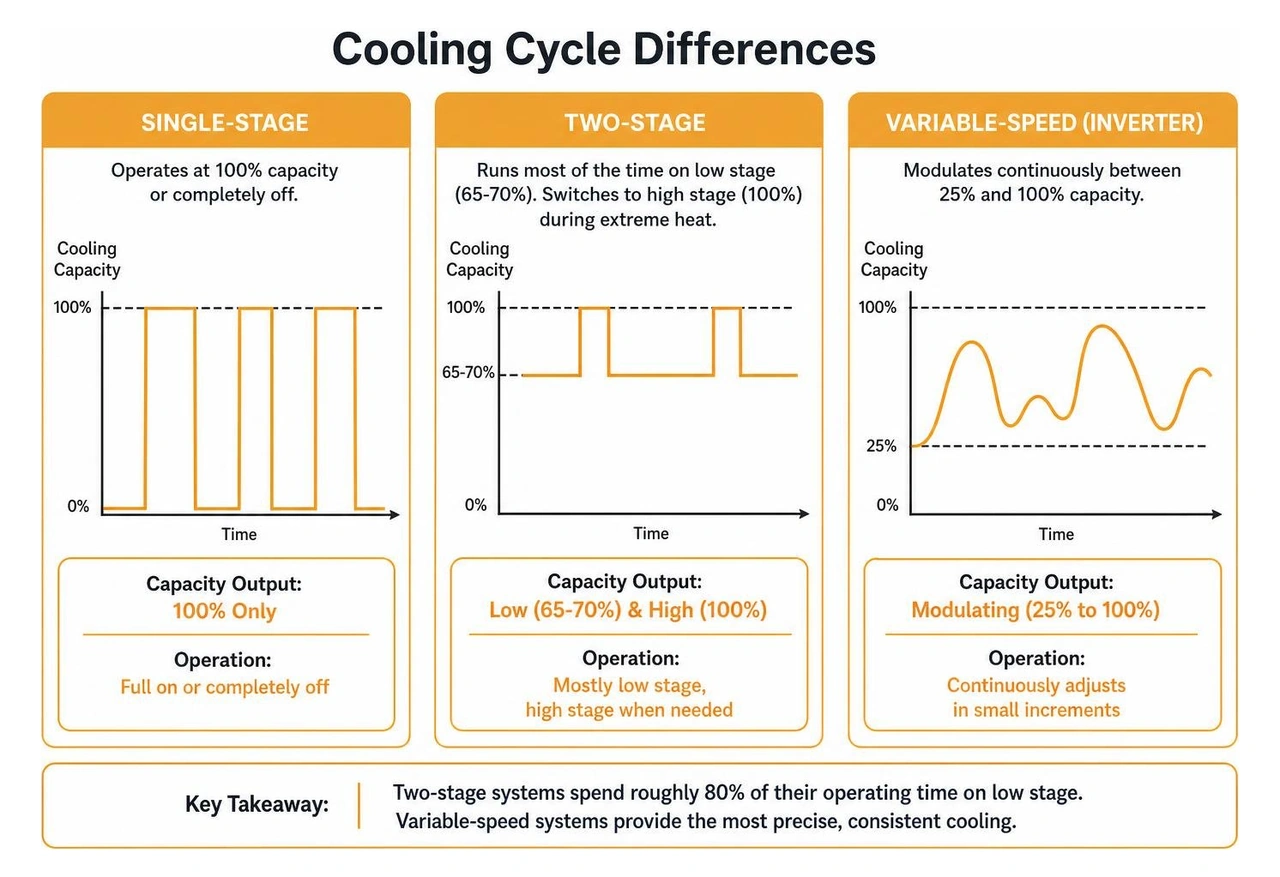
Variable-speed systems, also known as inverter-driven systems, take this concept even further by modulating continuously between 25% and 100% capacity in small increments.
| Feature | Single-Stage | Two-Stage | Variable-Speed (Inverter) |
|---|---|---|---|
| Capacity Output | 100% Only | Low (65-70%) & High (100%) | Modulating (25% to 100%) |
| Upfront Price Range | $2,500 - $4,500 | $3,500 - $6,500 | $6,300 - $12,000+ |
| Typical Lifespan | 15 - 18 Years | 18 - 20 Years | 15 - 19 Years |
| Energy Reduction vs Base | Baseline | 15% - 25% Lower | 25% - 40% Lower |
| Dehumidification Ability | Standard | High (Removes ~2x Moisture) | Maximum (Up to 4x Moisture) |
| Noise Levels | 70 - 75 dB | 60 - 68 dB | 50 - 58 dB |
Detailed data from this Cost Difference Between Single-Stage and Two-Stage AC guide shows why staging technology represents such an appealing middle tier for modern homeowners.
The Middle Ground Between Single-Stage and Inverter Units
Variable-speed inverter systems are remarkable pieces of engineering, but they come with a hefty price tag, often costing $1,500 to $3,000 more than a two-stage unit. Inverters also rely on proprietary communicating electronics, complex inverter boards, and specialized diagnostic software that can make future repairs expensive once the warranty period ends.
Two-stage units represent the practical sweet spot. They capture about 80% to 90% of the comfort and humidity benefits of an inverter system without the extreme upfront price tag or specialized electronic complexity. When exploring central air conditioner unit costs, you will find that two-stage systems offer the most balanced return on investment for standard residential floor plans.
Lifespan and Maintenance Differences Across System Types
One of the greatest hidden benefits of a two-stage AC is component longevity. Single-stage systems experience frequent on-off cycles, known as short-cycling. Starting up is the most stressful event for an electric motor, drawing high electrical amperage and putting mechanical strain on the compressor bearings.
Because a two-stage system runs for longer, gentler cycles at low capacity, it starts and stops far less frequently throughout the day. This reduction in mechanical shock allows two-stage compressors to frequently reach 18 to 20 years of reliable service with routine maintenance, compared to 15 to 18 years for standard single-stage units.
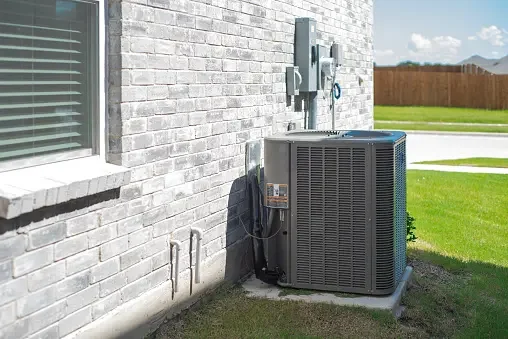
Routine upkeep remains straightforward. You will need seasonal coil cleanings, regular air filter replacements, and annual electrical checks to keep the contactors and capacitors within manufacturer specifications.
Energy Savings, Comfort Benefits, and ROI
The direct financial return of a two-stage air conditioner comes from reduced electrical draw. Electric motors consume significantly less wattage when operating under partial load. Because the system spends roughly 80% of the summer in its lower stage, overall power consumption drops by 15% to 25% compared to standard single-stage equipment.
If you are replacing an older heating and cooling setup at the same time, calculating your combined furnace and AC installation cost can help you maximize equipment rebates and package incentives.
Superior Humidity Control and Indoor Comfort
True indoor comfort involves both air temperature and relative humidity. Cold, clammy air is just as uncomfortable as hot, stuffy air.
When an air conditioner runs, warm indoor air passes over the cold evaporator coil, causing airborne water vapor to condense into liquid water and drain away. Single-stage systems blast cold air quickly, satisfying the thermostat in 10 to 15 minutes before the coil has had sufficient time to extract deep moisture from the air.
A two-stage system runs extended, low-speed cycles. This steady airflow allows the unit to remove approximately twice the moisture per cooling cycle compared to a single-stage system. Lower indoor humidity makes 74 degrees feel like 70 degrees, allowing you to set the thermostat slightly higher without sacrificing comfort. In multi-story homes, these longer run times also eliminate the hot second-floor syndrome by keeping air circulating continuously through your ductwork. Insights from this Two Stage AC Guide on Humidity and Efficiency illustrate how steady airflow prevents room-to-room temperature swings.
Payback Timeline and Long-Term 2 Stage AC Unit Cost Savings
Does the extra $800 to $1,500 investment pay for itself? In most households, yes.
- Annual Utility Savings: A 15% to 25% reduction in cooling energy consumption typically saves homeowners between $300 and $600 per year on electricity.
- Payback Without Rebates: Dividing a $1,200 average price premium by $400 in annual energy savings yields a direct payback timeline of 3 to 4 years (or 5 to 7 years in milder summers).
- Payback With Utility Rebates: Many local power utilities offer cash rebates between $200 and $800 for high-efficiency, multi-stage cooling equipment. When combined with rebates, the payback period frequently drops to 3 to 5 years.
As noted in this Two-Stage vs Single-Stage HVAC Cost comparison, once the equipment pays off its initial price difference, every additional year of operation puts direct energy savings back into your pocket.
When to Choose Two-Stage Cooling Over Single-Stage
While two-stage cooling offers clear performance benefits, it is not necessary for every situation. Here is how to determine which system style best fits your home and budget.
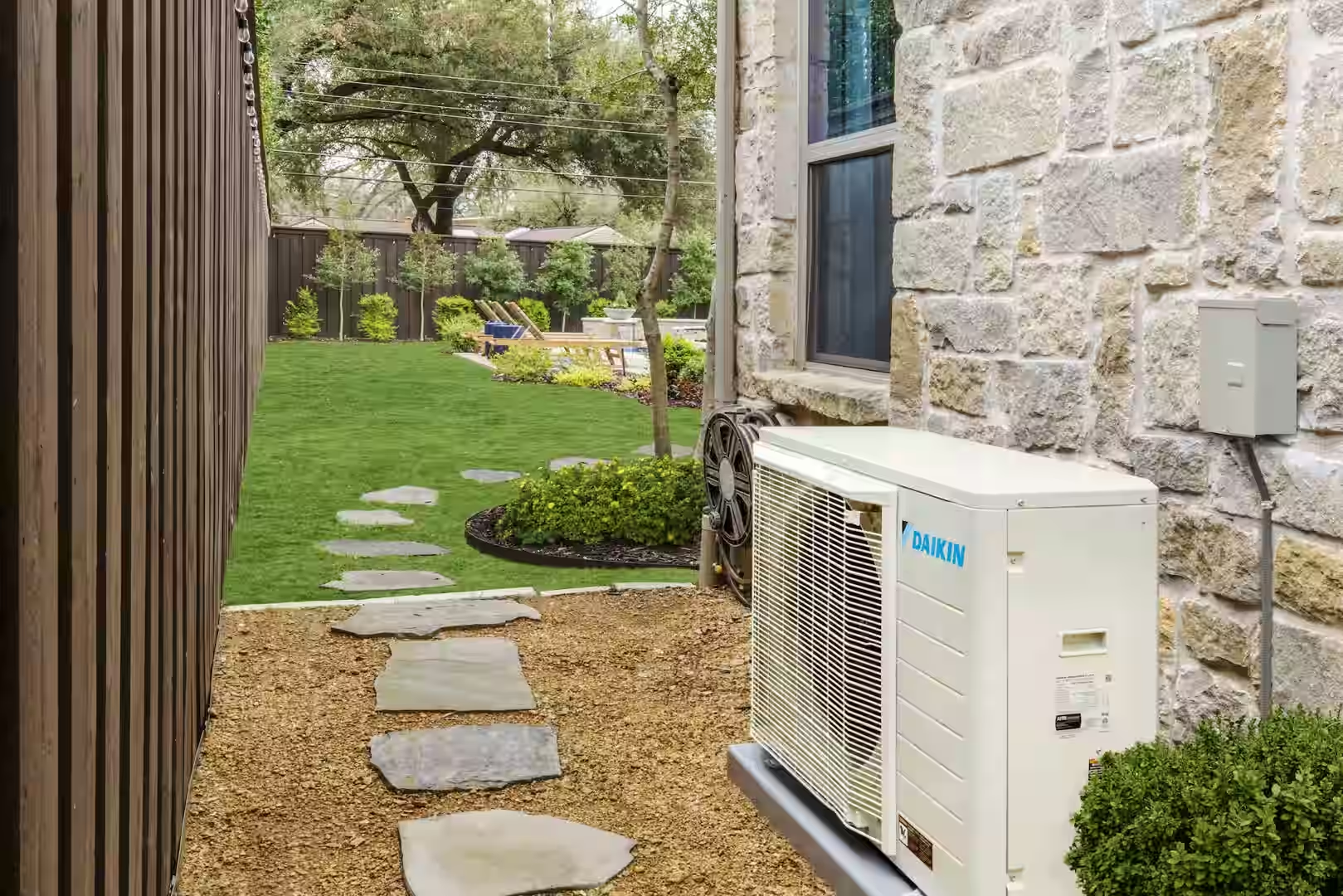
Choose a Two-Stage AC System If:
- You Live in a Humid Climate: Homes in our service area across Western Pennsylvania, Eastern Ohio, and the Northern Panhandle of West Virginia experience muggy summers where moisture removal is essential.
- You Have a Two-Story or Split-Level Layout: Longer run times push conditioned air evenly to upper floors, eliminating hot upstairs bedrooms.
- You Plan to Stay in Your Home Long-Term: Homeowners staying put for more than 4 to 5 years will easily recoup the upfront investment through lower electric bills.
- You Value Quiet Operation: Running at low capacity substantially lowers indoor blower noise and outdoor condenser sound levels.
Stick With a Single-Stage AC System If:
- You Are on a Strict Upfront Budget: If initial purchase price is your primary constraint, a 14.3 to 15.2 SEER2 single-stage unit provides reliable cooling at the lowest initial cost.
- You Are Outfitting a Rental Property or Vacation Home: In secondary properties where the owner does not pay the utility bills and tenants prioritize basic operation, the simplicity of single-stage equipment makes financial sense.
- You Plan to Sell Soon: If you are moving within 1 to 2 years, you likely will not own the home long enough to realize the long-term energy savings.
Frequently Asked Questions About Two-Stage Air Conditioners
How much more does a two-stage AC unit cost compared to single-stage?
On average, a two-stage AC unit costs $800 to $1,500 more than a comparable single-stage unit when fully installed. The price difference reflects the advanced two-stage scroll compressor, internal bypass valves, and multi-stage electronic controls.
What is the average lifespan of a two-stage AC system?
A properly maintained two-stage AC system typically lasts 18 to 20 years. Because the system runs the majority of the time in low stage, it experiences fewer hard starts and stops, reducing mechanical wear on the compressor compared to single-stage units that average 15 to 18 years.
Do two-stage AC units qualify for energy rebates?
Yes. Many electric utility providers and regional efficiency programs offer rebates ranging from $200 to $1,000 for high-efficiency two-stage air conditioners meeting specific SEER2 and EER2 minimums. Check with your local utility provider or your HVAC contractor before installation to confirm available programs.
Conclusion
Upgrading your home's central air conditioner is a major investment in your daily comfort and monthly utility budget. While a two-stage system carries a higher initial price tag, the combination of lower electric bills, extended equipment lifespan, quiet operation, and exceptional humidity removal makes it the most cost-effective choice for long-term homeowners throughout the greater Pittsburgh region.
At Smart Climate Solutions, our certified technicians bring more than 20 years of hands-on expertise to every project. Whether you live in Pittsburgh, the South Hills, Burgettstown, or Washington, PA, or across the state lines in Steubenville, St. Clairsville, OH, or Weirton, WV, we are here to help you select and install the perfect system for your layout. If you are comparing your options, check out our guide on the average cost to replace a 3-ton HVAC system or reach out to our team today to schedule an on-site consultation.

.png)
