
Understanding What You'll Pay for AC Compressor Replacement

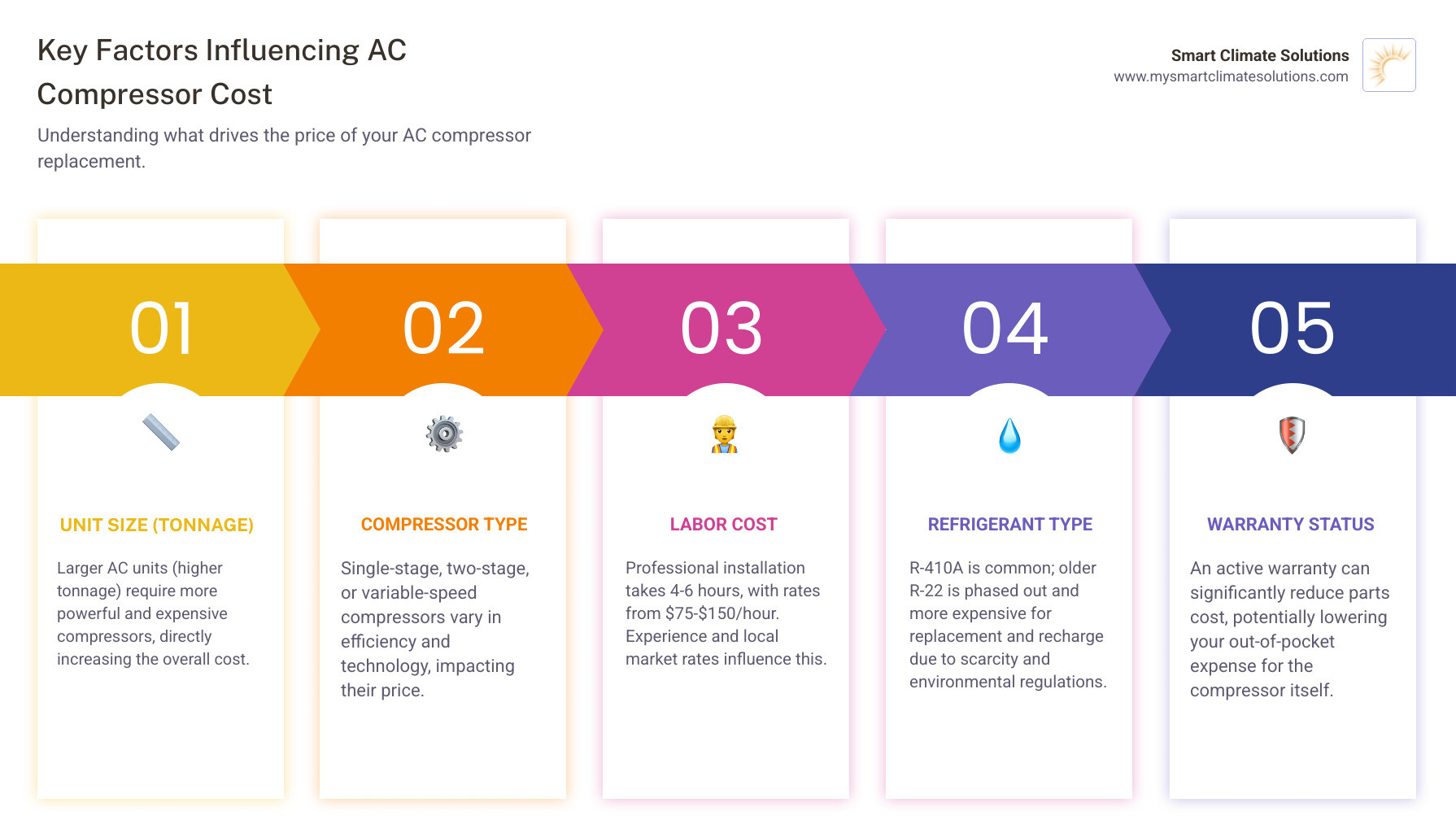
AC unit compressor cost typically ranges from $800 to $2,300, with most homeowners paying around $1,200 for parts and professional installation. Here's what drives that price:
- Parts cost: $400 to $1,500 depending on compressor type and size
- Labor cost: $300 to $900 for 4-6 hours of skilled work
- Refrigerant recharge: $100 to $350 additional
- Warranty status: Can reduce your out-of-pocket cost to $600-$1,200 if covered
Quick cost breakdown by unit size:
- 1.5-2 ton units: $700-$1,400
- 2.5-3 ton units: $900-$2,100
- 3.5-5 ton units: $1,100-$2,600
When your AC stops cooling or makes strange grinding noises, the compressor is often the culprit. It's the heart of your cooling system, and replacing it is one of the most expensive AC repairs you'll face.
The problem? Most homeowners have no idea what a fair price looks like. You might get one quote for $1,000 and another for $2,800 for the exact same job. Without understanding what goes into that number, you're left wondering if you're getting a good deal or getting taken advantage of.
I'm Bill Scott, general manager of Smart Climate Solutions, and I've been helping Pittsburgh homeowners with AC unit compressor cost decisions for over 20 years. I've seen every trick in the book and helped thousands of customers understand exactly what they're paying for.
This guide breaks down everything that affects your compressor replacement cost, from unit size and compressor type to labor rates and refrigerant charges. You'll learn when replacing just the compressor makes sense versus upgrading your whole system, and how to spot red flags in quotes.
Breaking Down the Average AC Unit Compressor Cost

When we talk about the AC unit compressor cost, we're typically looking at a national average of around $1,200, with a broad range from $800 to $2,300. This includes both the cost of the compressor itself and the labor required for professional installation. In our service areas like Pittsburgh, South Hills, Burgettstown, Washington PA, Steubenville OH, and Weirton WV, these figures generally hold true, though local labor rates can influence the final price.
The compressor unit itself can run anywhere from $400 to $1,500, depending on its type, brand, and capacity. The remaining portion of the cost, usually between $300 and $900, covers the professional labor. It's a significant investment, but understanding what you're paying for helps ensure you're getting a fair deal. We believe in transparent pricing, and our certified technicians will always provide a detailed estimate. For more information on AC repairs in our area, you can visit our page on AC Repair Pittsburgh.
How Unit Size (Tonnage) Affects AC Unit Compressor Cost
The size of your AC unit, measured in "tons," directly impacts the AC unit compressor cost. One ton of cooling capacity equals 12,000 BTUs (British Thermal Units). Generally, larger homes require larger AC units with higher tonnage, and consequently, more powerful and expensive compressors. As a rule of thumb, about 200 BTUs are needed to cool each square foot of space.
Here's a breakdown of typical compressor costs by AC unit size:
- 1.5 Tons (18,000 BTUs): $700-$1,300
- 2 Tons (24,000 BTUs): $800-$1,400
- 2.5 Tons (30,000 BTUs): $900-$1,600
- 3 Tons (36,000 BTUs): $1,000-$2,100
- 3.5 Tons (42,000 BTUs): $1,100-$2,200
- 4 Tons (48,000 BTUs): $1,200-$2,100
- 4.5 Tons (54,000 BTUs): $1,300-$2,300
- 5 Tons (60,000 BTUs): $1,800-$2,600
Choosing the correct size is crucial. An oversized unit will "short cycle," meaning it turns on and off too frequently, leading to uneven temperatures, higher humidity, and premature wear on the compressor. An undersized unit will run constantly, struggling to cool your home, driving up energy bills, and accelerating wear and tear. This is why we always recommend a Manual J load calculation to determine the precise cooling needs of your home. If a contractor skips this step, it's a major red flag.
How Compressor Type Impacts Your AC Unit Compressor Cost
Not all compressors are created equal, and the type of compressor in your AC unit significantly influences its replacement cost and efficiency. Here are the most common types:
- Rotary Compressors ($50-$100 for the unit): These are the most budget-friendly and are typically found in smaller residential AC units, like window units or some smaller central systems. They are simple and reliable but less efficient than other types.
- Reciprocating Compressors ($400-$1,000 for the unit): Once very common, these are durable but can be louder and less efficient than newer designs. They are still found in some residential and commercial applications.
- Scroll Compressors ($500-$1,500 for the unit): These are the standard for most modern residential AC systems today. They are known for being quiet, efficient, and reliable, offering a good balance of performance and cost.
- Variable-Speed Compressors ($1,500-$2,800 for the unit): These are the premium option, offering the highest energy efficiency and superior comfort. They can continuously adjust their speed to match your home's cooling needs, which means more consistent temperatures, better humidity control, and energy savings of 30-40% compared to single-stage models. While the upfront AC unit compressor cost is higher, the long-term energy savings can be substantial, especially in our region where cooling needs fluctuate.
Upgrading your compressor type (e.g., from a single-stage to a variable-speed) isn't usually a direct swap; it often requires replacing the entire outdoor unit to ensure system compatibility and optimal performance. For more insights into how different systems can save you money, check out our guide on Energy Efficient Air Conditioning Systems.
Labor, Refrigerant, and Other Cost Factors
Beyond the compressor unit itself, several other factors contribute to the total AC unit compressor cost:
- Labor Costs: This is a significant portion of the expense. HVAC technicians typically charge $75 to $150 per hour, and replacing a central AC compressor usually takes between four and six hours. This translates to a labor cost of $300 to $900. Some companies might offer a flat fee for the job, which can sometimes be more predictable. Factors like difficult accessibility (e.g., a rooftop unit or a cramped crawl space) can increase labor time and thus the cost. For a deeper dive into labor expenses, see our article on Labor Cost to Install AC Compressor.
- Refrigerant: The lifeblood of your AC system! Your compressor circulates refrigerant to absorb heat from your home and release it outside. When a compressor is replaced, the system's refrigerant must be safely recovered, the system vacuumed, and then recharged with new refrigerant.
- Type of Refrigerant: Systems installed after 2010 typically use R-410A, which is readily available. Older systems, however, may use R-22 (often called Freon), which the Environmental Protection Agency (EPA) began phasing out in 2010, with a full stop on production and imports in 2020. This makes R-22 much harder to source and significantly more expensive. Refilling R-22 can cost $600 or more, whereas R-410A refills typically range from $100 to $350. The high cost and scarcity of R-22 often make replacing an entire old R-22 system more economical in the long run. You can learn more about refrigerant phase-outs from the Environmental Protection Agency.
- Warranty Status: This can be your best friend when facing a high AC unit compressor cost. If your compressor is still under the manufacturer's warranty (often 5 to 10 years, some even offer lifetime), you might only pay for labor and refrigerant, reducing your out-of-pocket expense to $600-$1,200. If the warranty has expired, you'll be on the hook for the full cost, typically $1,300-$2,500. Always check your warranty!
- Diagnostic Fees: Before any work begins, a technician will need to diagnose the problem. This diagnostic fee, usually $80-$150, confirms that the compressor is indeed the issue and not another component.
- Additional Parts: Sometimes, other components fail alongside the compressor or need to be replaced to ensure the new compressor functions correctly and maintains its warranty. These can include:
- Capacitors or Filter-Driers: These can add $200-$600 to the bill. Replacing them proactively can prevent future breakdowns.
- Refrigerant Line Set: If there's contamination or a major leak, the lines might need replacement.
Compressor Replacement vs. Full AC Unit Replacement

This is the million-dollar question, or rather, the multi-thousand-dollar question: should you replace just the compressor, or is it time for a whole new AC unit? This decision involves a careful cost-benefit analysis, considering the age of your system, its efficiency, and the overall AC unit compressor cost.
A good rule of thumb often cited in our industry is the "50% rule": if the cost of repairing your AC unit is more than 50% of the cost of a new unit, it's usually more cost-effective to replace the entire system. This is especially true for older units.
Here's a quick comparison to help you weigh your options:
| Factor | When to Replace Just the Compressor
| System Age and Condition | When to Replace the Entire AC Unit | | When to Replace the Entire AC Unit | When to Replace the Entire AC Unit || Age of AC Unit | Under 7 years old | 7-10 years old | Over 10-12 years old |
For more general information about setting up your HVAC system, we encourage you to explore our Central Air Conditioner Installation Cost guide.
When to Replace Just the Compressor
Replacing only the compressor can be a smart move if:
- Your unit is relatively young: If your AC unit is less than 7-10 years old, and the rest of the system (coils, fan motor, etc.) is in good working order, replacing just the compressor can extend its life for several more years.
- It's still under warranty: This is a game-changer! If the compressor is covered by a manufacturer's warranty, you'll save significantly on the part cost, making replacement a much more affordable option.
- It's an isolated failure: A professional diagnosis confirms that only the compressor has failed, with no signs of widespread system issues or contamination.
- Your system uses modern refrigerant: If your unit uses R-410A or another current refrigerant, the cost and availability of refrigerant for the recharge will be reasonable.
For situations where a repair is feasible and cost-effective, you can find more details on our AC Compressor Repair Cost page.
When to Replace the Entire AC Unit
Sometimes, even with a failing compressor, the best long-term solution is to replace the entire AC unit. Consider this option if:
- Your unit is old: If your AC system is over 10-12 years old, it's approaching the end of its typical lifespan (10-15 years). Investing in a new compressor for an aging unit might be throwing good money after bad, as other components are likely to fail soon.
- Frequent breakdowns: Has your AC been a frequent visitor to the repair shop? If it has a history of multiple breakdowns, a new system might save you from future headaches and expenses.
- It uses R-22 refrigerant: As discussed, R-22 is expensive and scarce. If your system still runs on this refrigerant, replacing the entire unit with a modern, R-410A or R-32 system will be more economical to operate and maintain.
- Repair cost is prohibitive: If the AC unit compressor cost plus other necessary repairs exceeds 50% of the price of a new, comparable unit, replacement is generally recommended.
- Desire for higher efficiency: Newer AC units boast significantly higher SEER (Seasonal Energy Efficiency Ratio) ratings, translating into substantial energy savings. If you're looking to reduce your utility bills and improve your home's environmental footprint, a full system upgrade is the way to go. You can even take advantage of federal tax credits like the Energy Efficiency Home Improvement Credit (offering up to 30% back on qualified upgrades) and local utility rebates. For insights into the most efficient options, check out our guide on the Most Efficient Home Air Conditioner.
Signs of a Failing Compressor and How to Save Money
Catching compressor issues early can sometimes prevent further damage or at least help you budget for the inevitable. The average lifespan for an AC compressor is 10-15 years, but factors like heavy usage, poor maintenance, and operating with low refrigerant levels can shorten that. In our service areas around Pittsburgh, where we experience hot summers and cold winters, consistent usage means regular maintenance is key to maximizing your compressor's life. If your AC isn't cooling, it's time to investigate. Our HVAC Not Cooling Guide has more details.
Telltale Signs Your Compressor is Failing
Don't ignore these warning signs that your AC compressor might be on its last legs:
- Loud Noises: Grinding, squealing, banging, or rattling sounds coming from your outdoor unit are often indicators of internal compressor damage.
- Reduced Cooling/Warm Air: If your AC is blowing warm air or simply not cooling your home effectively, the compressor might be struggling to circulate refrigerant. This is a classic sign that something is amiss. For more on this, see our AC Not Cooling article.
- Weak Airflow: While this can point to other issues, reduced airflow can also be a symptom of a compressor not working at full capacity.
- Frequent Circuit Breaker Trips: A struggling compressor draws excessive power, causing your circuit breaker to trip repeatedly. This indicates a serious electrical load issue.
- Refrigerant Leaks: Visible leaks around your outdoor unit, especially oily residue, can signal a breach in the refrigerant lines or even the compressor itself.
- Hard Starting: If your AC unit struggles to kick on, making groaning noises or hesitating before starting, the compressor might be having trouble initiating its cycle.
- Increased Energy Bills: An inefficient or failing compressor has to work harder to cool your home, leading to a noticeable spike in your electricity bills.
How to Save on Replacement Costs
Facing a high AC unit compressor cost can be daunting, but there are ways to soften the financial blow:
- Get Multiple Quotes: Don't settle for the first estimate! We strongly recommend getting at least three detailed quotes from licensed HVAC contractors. Prices can vary by as much as $800 for the same job, so comparing ensures you get a fair deal.
- Schedule Off-Season Service: If your compressor fails during the cooler months (late fall to early spring) in Pittsburgh, you might find contractors less busy and potentially offering discounts. Emergency summer replacements often come with higher price tags.
- Regular Maintenance: This is perhaps the most effective long-term saving strategy. Annual professional AC maintenance can extend your compressor's lifespan, prevent minor issues from becoming major failures, and keep your system running efficiently. Learn more about proactive care with our AC Maintenance guide.
- Check for Rebates and Tax Credits: Before committing to a replacement, research federal tax credits and local utility rebates. The Energy Efficiency Home Improvement Credit can offer up to 30% back on qualified, high-efficiency HVAC upgrades, including new compressors. Your local energy provider in Pennsylvania, Ohio, or West Virginia might also have programs.
- Ask About Financing: Many HVAC companies, including ours, offer financing options, sometimes with 0% interest for an initial period. This can make a large AC unit compressor cost more manageable.
- Always Check Warranty: We can't stress this enough! Knowing your warranty status can save you thousands.
Why DIY Compressor Replacement is Not an Option
We know that a high AC unit compressor cost might tempt some homeowners to consider a DIY replacement. However, for your safety, your wallet, and the environment, we must strongly advise against it. This is not a project for the average homeowner.
- Safety Hazards: AC units contain high-voltage electricity that can be lethal. Working with these systems without proper training can result in severe injury or worse.
- Refrigerant Handling Laws: This is the biggest hurdle. Handling refrigerant requires specialized equipment and an EPA Section 608 certification. It is illegal to release refrigerants into the atmosphere, and improper handling can lead to hefty fines (up to $10,000 or more) from the EPA. You can learn more about the requirements for certification on our Section 608 Certified page.
- Specialized Tools: Replacing a compressor requires a vacuum pump, manifold gauges, recovery machine, brazing equipment, and other specialized tools that are expensive and require training to operate correctly.
- Voiding Warranties: Manufacturers' warranties for new compressors and AC units are almost always contingent on professional installation by a licensed and certified technician. A DIY job will void your warranty, leaving you completely unprotected if anything goes wrong.
- Complexity: Replacing a compressor involves intricate electrical wiring, precise mechanical connections, and the critical process of evacuating and recharging the refrigerant. Even a small mistake can lead to further damage, system inefficiency, or premature failure of the new compressor.
Attempting a DIY compressor replacement is dangerous, illegal, costly in the long run, and simply not worth the risk. Always entrust this complex job to certified HVAC professionals.
Frequently Asked Questions about AC Compressor Costs
How long does an AC compressor typically last?
An AC compressor generally lasts between 10 to 15 years. However, this lifespan can vary significantly based on several factors:
- Usage: How often and you use your AC. In our Pittsburgh and surrounding areas, we have distinct seasons, meaning AC usage is heavy in summer but off in winter, which can be less taxing than in constantly hot climates.
- Maintenance: Regular, professional maintenance is the single most important factor in extending your compressor's life. Neglecting tune-ups can drastically shorten it.
- Installation Quality: A poorly installed system or compressor can fail prematurely, sometimes in just a few years.
- Refrigerant Levels: Low refrigerant levels force the compressor to work harder, leading to overheating and premature wear.
- Electrical Issues: Power surges or faulty electrical components can damage the compressor.
Investing in a comprehensive HVAC Maintenance Plan can help ensure your compressor reaches or even exceeds its expected lifespan.
Is it worth replacing a compressor on a 10-year-old AC unit?
This is a common dilemma, and the answer is usually "it depends."
- Warranty Status: If your 10-year-old unit's compressor is still under warranty, replacing it is often a financially sound decision, as you'll primarily cover labor and refrigerant costs.
- Overall System Condition: If the rest of your 10-year-old system (coils, fan, ductwork) is in excellent condition and hasn't required other major repairs, a compressor replacement could give you several more years of service.
- Efficiency: A 10-year-old unit might not be as energy-efficient as current models. If energy savings are a priority, a full system replacement could offer better long-term value, even if the compressor is under warranty.
- Refrigerant Type: If your 10-year-old unit uses R-22 refrigerant, the high cost of refrigerant alone might make a full replacement more appealing.
We always recommend a professional evaluation. Our technicians can assess the overall health of your 10-year-old system and provide a transparent cost comparison between replacement and repair, helping you make the most informed decision for your home in Pittsburgh, Steubenville, Weirton, or surrounding communities.
What is included in a typical compressor replacement quote?
A comprehensive and fair compressor replacement quote from a reputable HVAC company like Smart Climate Solutions should include:
- The New Compressor Unit: The cost of the specific compressor (type, size, brand) that is compatible with your existing AC system.
- Labor: The technician's time for removing the old compressor and installing the new one. This typically covers 4-6 hours of skilled work.
- Refrigerant Management: This is a crucial and legally mandated step. It includes:
- Refrigerant Recovery: Safely removing and storing the old refrigerant from your system.
- System Evacuation: Using a vacuum pump to remove all moisture and non-condensable gases from the system, which is vital for the new compressor's longevity.
- Refrigerant Recharge: Filling the system with the correct type and amount of new refrigerant according to manufacturer specifications.
- System Testing: Thorough testing to ensure the new compressor is operating correctly, and the entire AC system is functioning optimally.
- Disposal Fees: Proper disposal of the old compressor and any hazardous materials.
- Warranty: Details on the warranty provided for the new compressor part and the labor.
Sometimes, a quote might also include the proactive replacement of associated components like the filter-drier, contactor, or start capacitor, which can prevent future issues and ensure the new compressor's longevity. Always ask for a detailed breakdown of all costs to ensure transparency.
Get an Expert Opinion on Your AC Compressor
Understanding the factors that influence AC unit compressor cost is the first step toward making an informed decision. While the figures can seem daunting, knowing what goes into the price tag empowers you to ask the right questions and ensure you're getting a fair, detailed quote.
At Smart Climate Solutions, we pride ourselves on providing fast, reliable service with certified technicians who have over 20 years of experience. We understand the unique cooling needs of homes in Pittsburgh, South Hills, Burgettstown, Washington PA, Steubenville OH, St. Clairsville OH, and Weirton WV. When your AC compressor fails, you need an expert you can trust to diagnose the problem accurately, explain your options clearly, and provide a transparent, competitive quote.
Don't let a failing AC compressor leave you sweating over the cost. Contact us today for an inspection and a transparent quote. We're here to ensure your home stays cool and comfortable, providing the peace of mind you deserve.
For all your HVAC service and repair needs, visit our dedicated page: More info about HVAC service and repair.

.png)
