
.avif)
Is Upgrading Your Furnace Worth It for Pittsburgh Winters?
A high efficiency furnace install can be one of the smartest investments for Pittsburgh homeowners facing harsh winters and rising energy bills. Here is what you need to know:
Key Benefits of High-Efficiency Furnace Installation:
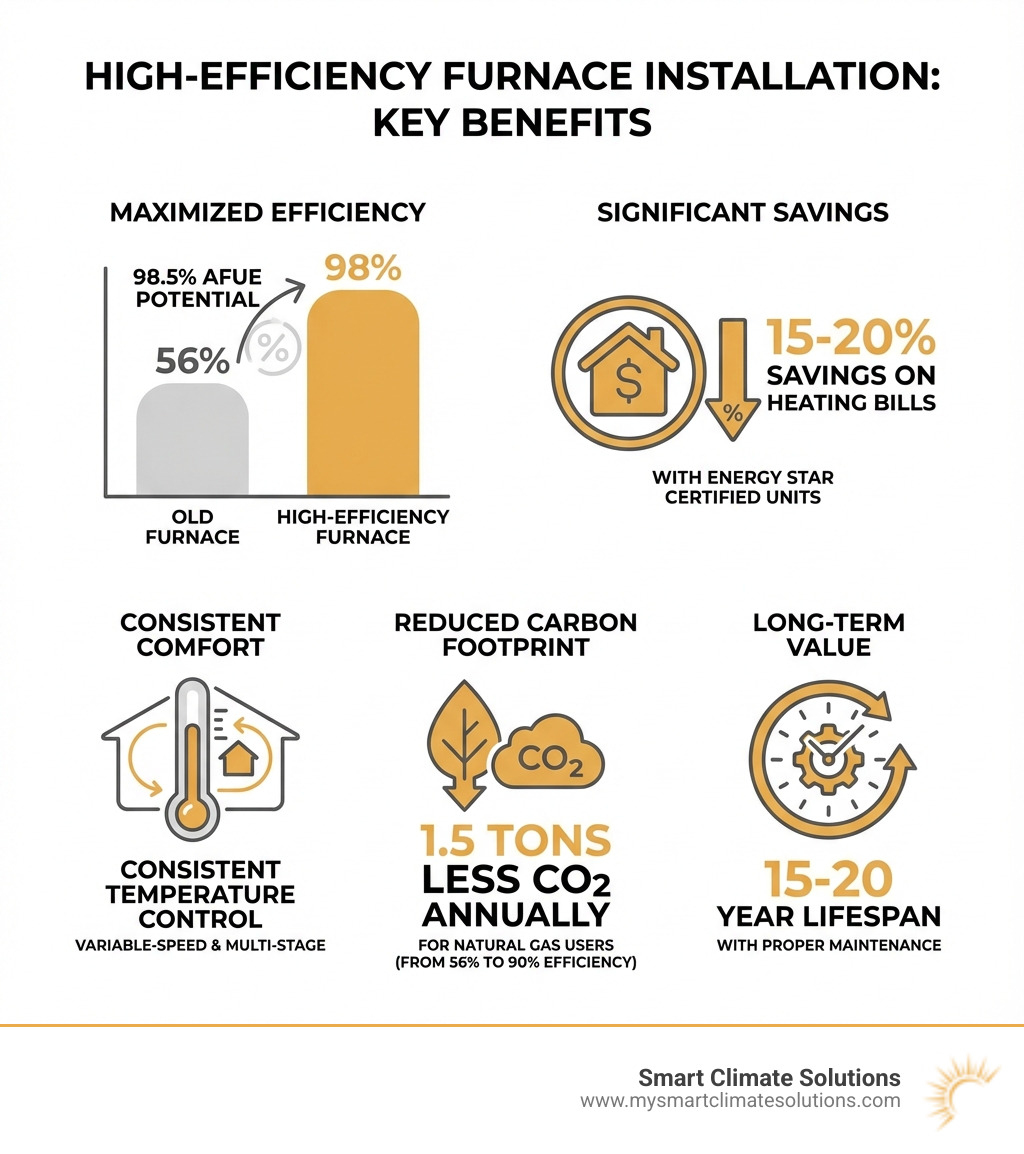
- Energy Savings: Modern furnaces are 90-98.5% efficient (AFUE), while older models are only 56-70% efficient.
- Lower Bills: Save 15-20% on monthly heating costs in the Pittsburgh area with an ENERGY STAR certified furnace.
- Better Comfort: Variable-speed motors provide consistent temperatures and quieter operation.
- Environmental Impact: Upgrading from 56% to 90% efficiency reduces CO2 emissions by 1.5 tons annually.
- Long-Term Value: A properly maintained furnace has an average lifespan of 15-20 years.
Expected Costs:
- Average installation: $4,500-$7,500 in Pennsylvania
- Rural areas may see costs 20-40% higher
- Premium systems can reach $9,000+
When temperatures drop below freezing in Pittsburgh, your furnace works overtime. If your current system is struggling, making strange noises, or driving up your energy bills, it might be time for a high-efficiency upgrade. But is the initial investment worth it? The answer depends on your home's needs, how long you plan to stay, and your existing system's condition.
I'm Bill Scott, general manager of Smart Climate Solutions, and over the past 20 years in the HVAC industry, I've helped thousands of Pittsburgh-area homeowners decide to upgrade to a high efficiency furnace install. Let me walk you through what you need to know to make the right choice for your home.
Understanding Furnace Efficiency: AFUE, Stages, and Types
When discussing furnace efficiency, the main term is AFUE, or Annual Fuel Utilization Efficiency. This rating measures how efficiently a furnace converts fuel into heat over a year. An 80% AFUE furnace converts 80% of its fuel to heat, while 20% is lost as exhaust. Older furnaces in the Pittsburgh area can have AFUE ratings as low as 56%, meaning much of your money is wasted. Modern high-efficiency systems, however, can reach 98.5% AFUE.
High-efficiency furnaces (90%+ AFUE), also called condensing furnaces, use a secondary heat exchanger to capture extra heat from exhaust gases. This process is so effective that water vapor condenses out of the exhaust, which is why these units require a special PVC vent and a condensate drain. Mid-efficiency furnaces (80-90% AFUE) lack this feature and vent hot gases directly outside. We recommend ENERGY STAR certified models, which meet strict EPA efficiency guidelines, and pairing them with a smart thermostat to maximize savings and comfort.
Single-Stage vs. Multi-Stage vs. Variable-Speed Furnaces
Beyond AFUE, a furnace's burner and motor type affect comfort and efficiency.
Single-Stage Furnaces: These basic units operate like a light switch: either all on or all off. This can cause temperature swings and less efficient operation.
Two-Stage (or Multi-Stage) Furnaces: These have a high and low setting. They run longer on the lower, more efficient setting, providing more consistent heat and quieter operation.
Variable-Speed and Modulating Furnaces: The top tier of furnace technology. Variable-speed motors and modulating burners adjust their output in tiny increments to perfectly match your home's heating needs. This results in exceptional temperature consistency, quiet performance, and maximum energy savings.
Types of High-Efficiency Heating Systems
When considering a high efficiency furnace install, it's important to know your options. We can help you learn about different heating systems and find the best fit.
Natural Gas Furnaces: The most common and cost-effective choice for homes with a gas line in the Pittsburgh area, with AFUE ratings up to 98.5%.
Electric Furnaces: Cheaper to install and produce zero direct emissions, but operating costs can be 2-3 times higher than natural gas in our region.
Propane Furnaces: A popular option for rural homes without natural gas access, offering performance similar to natural gas models, though the fuel can be more expensive.
Heat Pumps: These all-in-one systems provide both heating and cooling by transferring heat. They are highly efficient in milder weather but can struggle in freezing temperatures.
Hybrid Systems: This setup combines an electric heat pump with a high-efficiency gas furnace. The system intelligently switches between the two based on outdoor temperatures, giving you the best of both worlds for year-round comfort and efficiency.
The Cost-Benefit Analysis for Pennsylvania Homeowners
Deciding on a high efficiency furnace install means weighing the upfront cost against long-term savings. For homeowners in Pittsburgh, South Hills, and St. Clairsville, OH, this analysis is key.
The primary benefit is lower heating bills. Upgrading to an ENERGY STAR furnace can save 15-20% on monthly heating costs. Over the furnace's lifespan, these savings can amount to thousands of dollars. You also reduce your home's carbon footprint; upgrading from a 56% to a 90% efficient furnace saves 1.5 tons of CO2 annually for natural gas users. A new, efficient furnace also boosts your home's value.
While the highest efficiency models have a higher price tag, the "payback period" is an important factor. The cost difference between a 95% and a 98% AFUE furnace might take many years to recoup in a small, well-insulated home. However, the payback is much faster for larger or poorly insulated homes. Our experts can help calculate your potential savings.
Here's a simplified comparison of estimated 10-year costs:
| Category | Standard Efficiency Furnace (80% AFUE) | High-Efficiency Furnace (95% AFUE) |
|---|---|---|
| Initial Purchase & Install | $4,500 - $6,500 | $5,500 - $8,500 |
| Annual Fuel Cost | $1,500 - $2,500 | $1,200 - $2,000 (20% lower) |
| 10-Year Fuel Cost | $15,000 - $25,000 | $12,000 - $20,000 |
| 10-Year Total Cost (approx.) | $19,500 - $31,500 | $17,500 - $28,500 |
| Potential 10-Year Savings | - | $2,000 - $3,000+ |
Note: These are estimates and vary based on home size, insulation, fuel prices, and usage.
What Is the Average Cost of a High Efficiency Furnace Install?
The average price for a quality high efficiency furnace install in our service areas, including Pittsburgh, PA, and Steubenville, OH, ranges from $4,500 to $7,500. Premium systems can cost $9,000 or more. This price typically includes the equipment, labor, permits, and disposal of your old unit. Homes in rural locations like Burgettstown, PA, might see costs 20-40% higher due to logistics.
Factors Influencing the Cost of a High Efficiency Furnace Install
Several factors affect the final price of your high efficiency furnace install:
- Furnace Size (BTUs): The unit must be correctly sized for your home using a professional heat load calculation. An improperly sized furnace is inefficient and wears out faster.
- AFUE Rating: Higher efficiency ratings mean higher equipment costs.
- Brand and Model: Premium brands and models with more features cost more.
- Ductwork Modifications: If your existing ductwork is undersized or leaky, it may need repairs or modifications, adding to the cost.
- Venting Requirements: High-efficiency furnaces require new PVC venting, which can add to the cost if new penetrations in your home are needed.
- Electrical Upgrades: Modern furnaces may require electrical work to meet power demands.
- Installation Complexity: Moving the furnace or converting from one fuel type to another will increase labor costs.
Government Rebates and Financing Options
We understand the initial cost is a significant investment. Fortunately, programs are often available to help homeowners in Pennsylvania, Ohio, and West Virginia. Federal tax credits, state incentives, and utility rebates can lower the price. We encourage you to find local incentives that may apply. Our team can also help you identify current programs in your area.
Many homeowners choose to finance their new furnace to spread out the cost. While some companies offer rental programs, we advise caution, as they can cost significantly more in the long run without you ever owning the equipment. We believe in transparency and empowering you with ownership.
What to Expect During a Professional High Efficiency Furnace Install
Choosing a professional for your high efficiency furnace install is critical for safety, performance, and protecting your investment. Here is what you can expect when we handle your furnace upgrade:

Step 1: In-Home Consultation and System Sizing
Our process starts with a free in-home consultation. A certified Home Comfort Specialist will visit your home to perform a detailed heat load calculation (ACCA Manual J). This considers your home's square footage, insulation, windows, and more to determine the exact heating capacity (BTUs) you need. We also evaluate your existing ductwork to ensure it can support the new system. Based on these findings, we use ACCA Manual S to correctly size your new furnace and provide a detailed, fixed-price quote with no surprises.
Step 2: The Installation Process
Most standard furnace replacements take 4-8 hours. Our certified technicians begin by safely removing and disposing of your old furnace. The new high-efficiency unit is then carefully positioned and leveled, which is crucial for proper condensate drainage. We then connect all components:
- Ductwork: Ensuring tight, sealed connections to prevent air loss.
- Gas Lines: Making secure, leak-free connections, which requires licensed expertise.
- Electrical: Wiring the furnace to meet all safety codes.
- New PVC Venting: Installing a dedicated two-pipe system to draw in fresh air and safely exhaust gases.
- Condensate Drain Setup: Connecting the furnace to a drain, often with a trap or pump as needed to meet local codes.
Step 3: System Commissioning and Homeowner Education
After installation, we perform system commissioning. This involves a series of tests and adjustments to ensure your new furnace operates at peak efficiency and safety.
Our technicians will:
- Test the System: Run the furnace through its operational cycles.
- Check Gas Pressure: Verify pressure is within manufacturer specifications.
- Verify Airflow: Measure airflow to ensure optimal heat distribution.
- Calibrate the Thermostat: Ensure your thermostat communicates correctly with the furnace.
- Explain Operation and Maintenance: We will walk you through using your new system, show you how to change filters, and provide all warranty information. We will also explain the importance of annual maintenance for preserving efficiency and extending the unit's life.
Key Considerations for Your Furnace Upgrade
A high efficiency furnace install is an opportunity to optimize your entire home's heating system. Here are key considerations for homes in Pittsburgh, Washington, PA, and St. Clairsville, OH.
Key Considerations for a High Efficiency Furnace Install in Existing Homes
Installing a new furnace in an older home presents unique challenges that our experienced technicians are prepared to handle:
- Ductwork Condition: Leaky or undersized ductwork is a common issue. We inspect ducts and seal any leaks with mastic sealant or aluminum tape, as faulty ducts can reduce performance by up to 30%.
- Venting Challenges: High-efficiency furnaces cannot use old chimneys and require a new, dedicated PVC vent system. We ensure this is installed correctly and that any other appliances, like a water heater, are still vented safely.
- Space Constraints: Older utility rooms can be tight. We plan the installation to ensure there is adequate clearance for maintenance and airflow.
- Asbestos Abatement: In very old homes, we sometimes find asbestos around old furnaces or ductwork. If present, we will advise on professional abatement before proceeding.
- Electrical Panel Capacity: Modern furnaces may require more power. We assess your electrical panel to ensure it can support the new system and recommend upgrades if needed.
Lifespan and the Importance of Annual Maintenance
The average life expectancy of a new high-efficiency gas furnace is 15 to 20 years with proper care. Poor installation or lack of maintenance can significantly shorten this lifespan. Look for these signs that it's time for a replacement:
- Age: Your furnace is over 15 years old.
- Frequent Breakdowns: You are constantly calling for repairs.
- Rising Energy Bills: Your furnace is consuming more fuel to do the same job.
- Inconsistent Heating: You have hot and cold spots throughout your home.
- Unusual Noises: Banging, rattling, or squealing can signal mechanical failure.
Annual furnace maintenance is essential. It keeps your system running safely and efficiently, extends its life, and helps identify potential problems before they become expensive emergencies. During a tune-up, we also perform critical safety checks, including testing for carbon monoxide leaks.
Common Installation Challenges and How to Overcome Them
Many new furnaces fail to achieve their rated efficiency due to improper installation, with some losing up to 30% of their performance. A quality installation is just as important as the furnace itself. We overcome common pitfalls by:
- Proper Sizing: Using meticulous ACCA Manual J and S calculations to ensure your furnace is perfectly matched to your home.
- Duct Sealing: Conducting thorough duct inspections and sealing all leaks to ensure heated air gets where it needs to go.
- Correct Venting and Drainage: Adhering strictly to manufacturer and code requirements for PVC venting and condensate drainage to ensure safety and efficiency.
Our commitment to certified technicians, best practices, and comprehensive commissioning ensures your furnace delivers the savings and comfort you expect.
Frequently Asked Questions about High-Efficiency Furnaces
How much can I really save with a high-efficiency furnace?
Homeowners in Pittsburgh and our surrounding service areas can expect to save between 15% and 20% on their monthly heating bills by installing an ENERGY STAR certified high-efficiency furnace. The exact amount you save depends on several factors: the AFUE rating of your old furnace versus your new one, the overall insulation and air sealing of your home, and current local energy costs. For example, replacing an older 56-70% AFUE furnace with a 95% AFUE model will result in more significant savings than upgrading from an 80% AFUE unit. Over the furnace's lifespan, these savings can truly add up.
How long does a furnace installation take?
A straightforward furnace replacement, where the new unit fits into the existing space and requires minimal modifications to ductwork or venting, can typically be completed within 4 to 8 hours. However, more complex high efficiency furnace install projects - such as those requiring extensive ductwork modifications, new PVC venting runs, electrical upgrades, or fuel type conversions - can take up to a full day or even longer, depending on your home's unique characteristics and the project's demands. We always provide an estimated timeline during your initial consultation.
Can I install a furnace myself?
Absolutely not. Furnace installation is not a DIY project and should only be performed by a licensed and certified professional. It involves working with high-voltage electricity, natural gas or propane lines, and complex venting systems. Improper installation can lead to dangerous gas leaks, carbon monoxide poisoning, electrical fires, and serious damage to your home and equipment. Furthermore, professional installation ensures that your furnace is correctly sized, meets all local building codes in Pittsburgh, PA, Washington, PA, or Steubenville, OH, and operates at its peak efficiency, protecting your warranty and your investment.
Get a Professional Furnace Solution for Your Home
Investing in a high efficiency furnace install is a significant decision that offers substantial benefits for your home, your comfort, and your wallet. From lower energy bills and a reduced carbon footprint to more consistent heating and increased home value, the advantages are clear. However, realizing these benefits hinges entirely on a professional, high-quality installation.
At Smart Climate Solutions, we pride ourselves on providing expert HVAC installation, repair, and maintenance services across Pittsburgh, South Hills, Burgettstown, Washington, PA, and Steubenville, St. Clairsville, OH, and Weirton, WV. With over 20 years of experience, our certified technicians are dedicated to ensuring your comfort and satisfaction. We understand the unique heating needs of our local communities and are committed to delivering fast, reliable service, backed by our 24/7 emergency support.
Don't let another Pittsburgh winter catch you off guard with an inefficient or unreliable furnace. Let us help you find the perfect high-efficiency solution for your home.

.png)
