
When Your Furnace Fails, Who Do You Call?
The qualities of a good emergency furnace repair service can mean the difference between a cold night in blankets and a warm, safe home for your family.
When you need emergency furnace repair, look for:
- 24/7 Availability - True emergency service means help any time, day or night
- NATE-Certified Technicians - Proven expertise through industry-recognized certification
- Licensed and Insured - Protection for your home and peace of mind
- Transparent Pricing - Clear, written estimates before work begins
- Rapid Response Times - Local presence with well-stocked vehicles ready to go
- Strong Reputation - Positive reviews and high BBB ratings from real customers
It's a frigid winter night and you wake up to a cold house. Your first thought: the heater isn't working. Companies that offer 24/7 emergency repair services provide peace of mind to customers, knowing they won't have to wait days or even weeks if something goes wrong. But not all emergency services are created equal.
The real emergency isn't just a broken furnace - it's choosing the wrong repair service. A furnace that isn't producing heat could indicate a serious mechanical failure. If your carbon monoxide detector goes off, it signals a dangerous furnace problem like a damaged heat exchanger or blocked vent. These situations demand immediate professional attention from a qualified technician.
The right emergency repair service combines speed with expertise. NATE certification is widely recognized as the top certification in the HVAC industry, indicating advanced training and compliance with industry standards. In fact, NATE-certified technicians have fewer callbacks than those without certification, leading to fewer warranty returns. A licensed and insured HVAC contractor protects homeowners against accidents or damages and ensures compliance with industry standards.
I'm Bill Scott, and as general manager of Smart Climate Solutions with over 15 years in the HVAC industry, I've seen how the qualities of a good emergency furnace repair service can transform a stressful breakdown into a quickly resolved problem. Our team has proudly served thousands of Pittsburgh-area customers with an average response time of just 30 minutes, and I know exactly what separates truly great emergency service from the rest.
Qualities of a good emergency furnace repair service basics:
First Response: Is It a True Furnace Emergency?
When your furnace acts up, the first step is to determine if you're facing a minor hiccup or a full-blown emergency. Not every furnace issue requires an immediate, middle-of-the-night service call, but some problems can quickly escalate into safety hazards. Understanding the difference can save you stress, time, and potentially, money. Our goal is to empower you with the knowledge to make informed decisions about your home's heating system.

This section helps homeowners identify true emergencies, perform basic checks, and understand the immediate risks of certain furnace problems.
Telltale Signs You Need Emergency Help
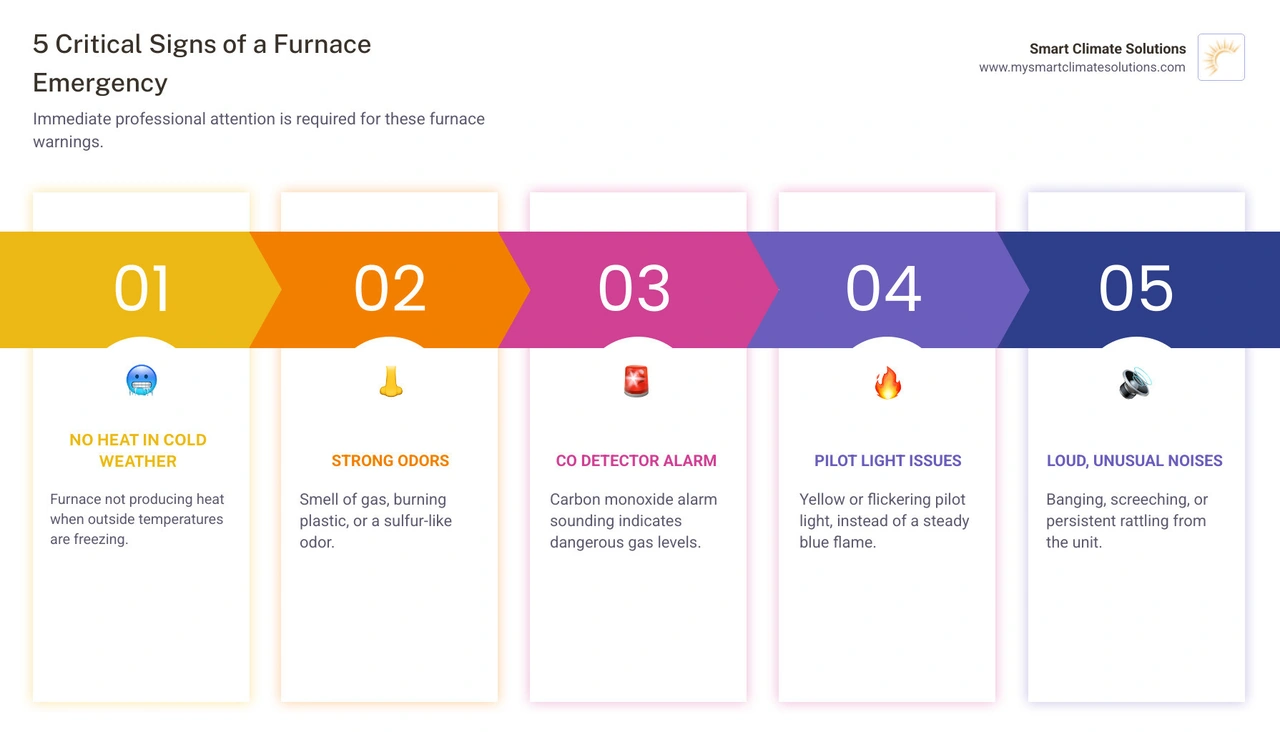
A furnace breakdown, especially during a cold Pittsburgh winter, can be more than just an inconvenience; it can quickly turn into a serious situation. Here are the most common signs that indicate you need to call for emergency furnace repair immediately:
- No Heat During Freezing Temperatures: This is perhaps the most obvious sign. If your furnace isn't producing heat when temperatures drop below freezing, it's not just uncomfortable - it can be dangerous, leading to frozen pipes and unsafe indoor conditions. A furnace that is not producing heat could indicate a serious mechanical failure and may even require furnace replacement.
- Strange Smells (Especially Gas or Burning):
- Gas Odor: If you smell rotten eggs, that's the odorant added to natural gas to alert you to a leak. This is extremely dangerous. Turn off the gas supply, evacuate everyone from the home, and call your gas company and an emergency HVAC service immediately. Do not use light switches or electronics.
- Burning Plastic or Electrical Smells: A persistent burning smell from a furnace could indicate an electrical issue, overheating components, or dust buildup. While a slight burning smell might occur when starting the furnace for the season as dust burns off, a strong, persistent odor of burning plastic or wiring is a serious fire hazard that requires immediate attention.
- Chemical Odors: This could signal combustion gases entering your home from a damaged flue or heat exchanger.
- Loud, Unusual Noises: Your furnace makes some noise during operation, but sudden, loud, or persistent sounds are red flags. Unusual noises like banging, screeching, or rattling may indicate serious mechanical issues that require professional inspection.
- Banging or Popping: Could mean ignition problems or expanding/contracting ductwork.
- Screeching: Often points to a failing motor bearing or a loose fan belt.
- Rattling: Might be a loose panel or internal component.
- Carbon Monoxide Alarm Activation: If your carbon monoxide detector goes off, it indicates a serious furnace problem such as a damaged heat exchanger or a blocked vent, requiring professional repair. Carbon monoxide is an odorless, colorless, and potentially deadly gas. If your CO alarm sounds, leave your home immediately and call for emergency service.
- Yellow Pilot Light: For gas furnaces, the pilot light should be a steady blue flame. A yellow or flickering pilot light can indicate incomplete combustion, which produces carbon monoxide. This is a safety hazard and needs immediate professional attention. A burner being out or an improper flame color are telltale signs.
Simple Troubleshooting Steps to Try First
Before you panic and call for emergency service, there are a few simple troubleshooting steps homeowners can take. These can sometimes resolve minor issues, saving you the cost of an emergency call.
- Check Your Thermostat Settings: Is it set to "heat"? Is the temperature setting higher than the current room temperature? Is the fan set to "AUTO" rather than "ON"? If the fan is always on, it might just be circulating cool air.
- Inspect and Replace the Furnace Filter: A clogged air filter can restrict airflow, causing the furnace to overheat and shut down as a safety measure. If you cannot see light through your filter, it's clogged and needs to be replaced. This is a common culprit for poor heating and can often be resolved by you.
- Verify the Power Supply: Check your circuit breaker panel. A tripped breaker can cut power to your furnace. Reset any tripped breakers by flipping them completely off, then back on. Also, ensure the furnace's power switch (usually a light switch on or near the unit) is in the "ON" position.
- Confirm the Gas Supply Valve is Open (for gas furnaces): For gas furnaces, ensure the gas supply valve (a lever on the gas line near the furnace) is parallel to the pipe, indicating it's open. If it's perpendicular, it's closed.
- Locate and Press the Furnace Reset Button: Many furnaces have a red or yellow reset button on the blower motor housing. Press it once and wait a few minutes. If the furnace doesn't start, do not press it repeatedly, as this can cause further damage.
For more detailed guidance on these steps, refer to our What To Do Before Calling for Emergency Furnace Repair guide. If these steps don't resolve the issue, it's time to call the professionals.
The Dangers of Waiting: Why Some Issues Can't Be Ignored
While some minor furnace issues can wait until regular business hours, others demand immediate attention. Ignoring critical signs can lead to significant safety hazards and more costly repairs down the line.
- Carbon Monoxide Poisoning: As mentioned, a damaged heat exchanger or blocked vent can lead to carbon monoxide leaks. This gas is undetectable by human senses and can cause dizziness, drowsiness, confusion, and even death. If your CO detector sounds, do not wait.
- Fire Risk: Electrical issues, overheating components, or gas leaks can quickly turn into a fire. A burning smell or visible smoke requires immediate action.
- Gas Leak Dangers: Natural gas is highly flammable and explosive. A gas leak is an immediate life-threatening emergency.
- Frozen Pipes: In Pittsburgh's harsh winters, a lack of heat for too long can cause your pipes to freeze and burst, leading to extensive water damage and expensive repairs. This is particularly true if your heating system not working means no heat for an extended period.
When in doubt, it's always safer to err on the side of caution and contact a professional. Your family's safety and your home's integrity are worth it.
The Core Qualities of a Good Emergency Furnace Repair Service
When your furnace decides to take an unexpected vacation, choosing the right emergency repair service is paramount. It's not just about getting heat back; it's about ensuring a safe, efficient, and lasting repair. Here in Pittsburgh, we understand the urgency. Here's what we believe are the essential qualities of a good emergency furnace repair service.
Availability and Rapid Response: The "Emergency" in Emergency Service
The very definition of "emergency" implies a need for immediate action. A truly great emergency furnace repair service understands this and is structured to respond accordingly.
- 24/7/365 Availability: A furnace doesn't care if it's a holiday, late at night, or the weekend. A top-tier service offers 24-hour emergency furnace repair, ensuring that you're never left in the cold. Look for companies that explicitly state their commitment to 24/7 HVAC emergency repair or 24 hour heating and air repair near me.
- Guaranteed Response Times: It's one thing to say you're available, another to actually show up quickly. We pride ourselves on rapid response times, understanding that every minute counts when your home is getting colder. This is a key differentiator for any after hours furnace repair service.
- Local Pittsburgh Presence: A local company understands the unique challenges of our climate and can reach you faster. Being locally based means our technicians are already in the area, reducing travel time significantly. A company with dedicated office space is much more likely to stick around and honor warranties or service contracts, giving you long-term peace of mind.
- Well-Stocked Service Vehicles: A rapid response is only effective if the technician arrives prepared. Our service vehicles are essentially mobile warehouses, stocked with common parts and tools to address a wide range of furnace issues on the spot. This minimizes the need for follow-up visits and gets your heat restored faster.
Verifiable Credentials: Key Qualities of a Good Emergency Furnace Repair Service
You wouldn't trust just anyone with your home's most critical systems, especially in an emergency. Verifying the credentials of an emergency furnace repair service is non-negotiable.

- Licensed and Insured: This is foundational. A licensed HVAC contractor ensures they meet state and local requirements, indicating professional competency. Insurance (liability and workers' compensation) protects you, the homeowner, from financial responsibility if an accident occurs on your property. This is a critical aspect of a residential HVAC service company.
- NATE-Certified Technicians: North American Technician Excellence (NATE) certification is the gold standard in the HVAC industry. It signifies that a technician has demonstrated advanced knowledge and skills through rigorous testing. NATE-certified technicians have fewer callbacks, which means they get the job done right the first time. When you call us, you're getting experts.
- Positive Online Reviews and BBB Rating: Reputation is easily verifiable. A good HVAC company should have an A+ rating from the Better Business Bureau and positive online reviews from previous customers. Check platforms like Google, Yelp, and the BBB for consistent feedback regarding reliability, professionalism, and customer service. We encourage you to read what our Pittsburgh neighbors have to say!
- Years of Experience: While new companies can be good, experience in the field often translates to quicker diagnostics and more effective solutions, especially for complex or unusual furnace problems. Our 15+ years of experience serving the Pittsburgh region means we've seen it all and know how to fix it.
Transparent Communication and Pricing: No Surprises
Emergency repairs can be stressful enough without worrying about hidden fees or pushy sales tactics. A truly great service prioritizes clear communication and transparent pricing.
- Clear Communication from Start to Finish: From your initial call to the completion of the repair, you should understand what's happening. This includes explaining the diagnosis, the proposed solution, and any potential alternatives.
- Upfront Written Estimates and Detailed Quotes: A reputable company will provide a detailed, written estimate before any work begins. This document should clearly outline the cost of parts, labor, and any emergency surcharges. Be wary of companies that provide vague estimates or refuse to put it in writing. Understanding the cost to fix furnace upfront is crucial.
- Explanation of Repair Options: We believe in empowering our customers. A good technician will explain the problem thoroughly and present all viable repair options, along with their pros, cons, and associated costs. They should never pressure you into a decision.
- No High-Pressure Sales: Especially in an emergency, you're vulnerable. A quality service will focus on solving your immediate problem safely and effectively, not on upselling you unnecessary services or equipment.
- Guarantees on Parts and Labor: A commitment to quality means standing behind the work. Ask about warranties on both the parts used and the labor performed. This provides an extra layer of protection and peace of mind.
Your Role in a Smooth and Speedy Repair
Even with the best emergency repair service on speed dial, you, the homeowner, play a crucial role in ensuring a smooth and speedy resolution to your furnace emergency. Knowing what not to do and what information to have ready can significantly expedite the process.
Why DIY Repairs Are a Bad Idea in an Emergency
We get it - when your furnace breaks down, the first instinct might be to try and fix it yourself. You might even find some online tutorials. However, when it comes to emergency furnace repairs, attempting DIY solutions can be incredibly risky and often counterproductive.
- Safety Risks: Furnaces involve complex systems of natural gas or propane, high voltage electricity, and combustion. Without proper training and tools, you risk gas leaks, electrical shocks, fires, or even carbon monoxide exposure. It is always safer to call a heating and cooling professional for furnace issues due to delicate machinery, extreme heat, and electrical components.
- Potential for More Damage: A well-intentioned but incorrect DIY repair can turn a minor issue into a major, more expensive problem. You could inadvertently damage critical components, making the professional repair more complicated and costly.
- Voiding Manufacturer Warranties: Many furnace warranties include clauses that void coverage if unauthorized repairs are attempted. This means if you try to fix it yourself, you might lose out on valuable warranty protection for future issues.
- Lack of Specialized Tools and Knowledge: HVAC technicians use specialized diagnostic tools and have extensive knowledge of various furnace makes and models. You simply can't replicate that expertise with a basic toolkit. For any HVAC repair Pittsburgh PA needs, trust the pros.
Information to Have Ready When You Call
When you contact us for emergency furnace repair, having key information readily available will help us dispatch the right technician with the right parts, getting your heat back on faster.
- Furnace Make and Model: This information is typically found on a sticker or plate on the side of your furnace. Knowing this helps us understand the specific components and potential issues.
- Approximate Age of the Unit: The age of your furnace can give us clues about common wear-and-tear issues or if replacement might be a more cost-effective option than repair. Furnaces typically last an average of 15 to 20 years.
- Specific Symptoms: Be as detailed as possible. Instead of just "it's broken," tell us: "It's making a loud screeching noise," "the pilot light is yellow," "there's a burning smell," or "it won't turn on at all." This helps us narrow down the problem.
- Troubleshooting Steps Already Taken: Let us know what you've already tried (e.g., "I checked the thermostat," "I replaced the filter," "I reset the breaker"). This prevents duplication of effort and gives us a starting point.
- Any Previous Service History: If we've worked on your furnace before, or if you have records of past repairs, sharing this can provide valuable context.
Having this information ready for furnace repair assistance allows us to prepare effectively, ensuring a quicker and more efficient service call.
From Reactive to Proactive: Preventing Future Emergencies
While knowing the qualities of a good emergency furnace repair service is crucial for those urgent situations, the best emergency is often the one you avoid entirely. Proactive maintenance is your furnace's best friend, helping you bypass the stress and expense of unexpected breakdowns.
The Power of Proactive Furnace Maintenance
Think of furnace maintenance like regular oil changes for your car - it keeps everything running smoothly and prevents major issues down the road.
- Annual Tune-Ups: Scheduling yearly furnace maintenance is the single most effective way to prevent emergencies. During an annual tune-up, our certified technicians will inspect, clean, and test all critical components. They can spot potential problems like worn parts, minor leaks, or electrical issues before they escalate into costly failures.
- Regular Filter Changes: This is a simple task you can do yourself every 1-3 months, depending on usage and home conditions. A clogged air filter restricts airflow, forcing your furnace to work harder, reducing efficiency, and potentially leading to overheating and breakdowns.
- Catching Small Problems Early: Many furnace issues start small. A trained eye during routine maintenance can identify a loose connection, a struggling motor, or a dirty flame sensor. Addressing these minor issues promptly prevents them from turning into major, emergency repairs.
- Extending Furnace Lifespan: A well-maintained furnace lasts longer. By keeping it clean and in good working order, you can significantly extend its operational life, delaying the need for an expensive replacement. Furnaces typically last an average of 15 to 20 years, but proper maintenance can help them reach the higher end of that range.
- Improving Energy Efficiency: A clean, well-tuned furnace operates more efficiently, meaning it uses less energy to heat your home. This translates directly into lower utility bills, especially important during our cold Pittsburgh winters.
- Ensuring Safety: Maintenance checks include inspecting for gas leaks, carbon monoxide risks (like a cracked heat exchanger), and electrical hazards. This proactive approach ensures your furnace operates safely, protecting your family. For a comprehensive guide, check out our HVAC service Pittsburgh complete guide.
Investing in regular furnace maintenance is an investment in your home's comfort, safety, and your peace of mind. It's far more cost-effective than dealing with emergency repairs.
Frequently Asked Questions about Emergency Furnace Repair
We understand you might have more questions when facing a furnace emergency. Here are some of the most common inquiries we receive:
What are the essential qualities of a good emergency furnace repair service?
The essential qualities of a good emergency furnace repair service include 24/7 availability, ensuring help is always at hand. They should employ licensed and NATE-certified technicians who possess proven expertise and adhere to industry standards. Transparent pricing with clear, written estimates before work begins is crucial to avoid surprises. A strong local reputation, backed by positive online reviews and a high BBB rating, indicates trustworthiness. Finally, a commitment to rapid response times and having well-stocked service vehicles are vital to minimize your discomfort and restore your heat quickly.
How much more does emergency furnace repair cost?
Emergency services often include additional charges compared to repairs scheduled during regular business hours. These typically account for after-hours, weekend, or holiday rates. A reputable company will be completely transparent about these fees upfront and include them in your detailed, written quote. Always ask for a breakdown of all costs before any work begins. While emergency repairs can be more expensive, the cost is often justified by the immediate restoration of safety and comfort, especially in freezing temperatures. For a deeper dive into costs, consult our Emergency furnace repair complete guide.
What should I do if I smell gas near my furnace?
If you detect a smell like rotten eggs near your furnace, indicating a gas leak, your immediate actions are critical for safety:
- Do not use any electronics, light switches, or anything that could create a spark.
- Immediately evacuate everyone from the house, including pets.
- Once you are a safe distance away from the building, call your gas company's emergency line first, then call for emergency furnace help from a professional HVAC service. Do not re-enter your home until authorities deem it safe.
This is not a situation to delay or try to resolve yourself.
Conclusion: Choosing Your Pittsburgh Furnace Repair Partner
When winter winds howl through Pittsburgh, a reliable furnace isn't just a luxury - it's a necessity. We've explored the critical qualities of a good emergency furnace repair service, emphasizing the importance of rapid availability, verifiable credentials, and transparent communication. These aren't just buzzwords; they are the pillars of a service that truly prioritizes your safety and comfort.
Choosing a partner with these qualities means gaining peace of mind, knowing that when a furnace crisis strikes, you have an expert team ready to respond swiftly and effectively. Our 20+ years of experience serving Pittsburgh, South Hills, Burgettstown, Washington, Steubenville, St. Clairsville, and Weirton stand as a testament to our commitment. We are dedicated to providing fast, reliable service with certified technicians, 24/7 emergency support, and ensuring customer comfort and satisfaction.
Whether you need HVAC repair Pittsburgh for an urgent issue, looking for residential HVAC solutions, or considering replacement and installation for your heating system, our team is here to help.
For expert HVAC service and repair in the Pittsburgh area, contact us today!


.png)
