Replacing Just the Outdoor Condenser vs. the Full HVAC System
A new outside AC unit typically costs $1,200 to $5,000 for the equipment alone, or $1,500 to $6,500 fully installed. In 2026, the national average to replace a central cooling system sits at $5,978, with most homeowners spending between $3,887 and $8,073 for standard installations. If you are comparing a whole-home overhaul versus a single component, understanding the broader cost of a central air conditioner helps put these numbers into context. When swapping out both the indoor air handler and the outdoor condenser, a complete split-system central AC replacement typically ranges from $13,000 to $16,000.
For smaller auxiliary cooling needs, basic window air conditioner installations run $300 to $1,100, while dedicated outdoor mini-split units require $1,200 to $6,500 installed.
Equipment Price vs. Total Installation Breakdown
When reviewing an estimate, your quote divides into two main buckets: equipment purchase and professional labor. The outdoor condenser unit alone costs between $1,200 and $5,000 for standard residential models, though high-end variable-capacity condensers reach $6,000 to $8,000 on their own.
Labor costs generally add $300 to $1,500 for a straightforward outdoor swap, requiring 4 to 8 hours for a two-person crew billing standard technician rates of $75 to $125 per hour. In the greater Pittsburgh area, including communities like Bethel Park, Carnegie, and Canonsburg, regional labor rates stay close to national medians. In contrast, major metropolitan areas on the West Coast or in the Northeast can see labor premiums 10% to 25% higher.
How Much Does a New Outside AC Unit Cost for 1.5 to 5-Ton Systems?
Air conditioning capacity is measured in tons, where one ton equals 12,000 BTUs (British Thermal Units) of heat removal per hour. Residential systems range from 1.5 tons up to 5 tons.
| System Size (Tonnage) | Cooling Capacity (BTUs) | Home Size Range (Sq. Ft.) | Average Unit-Only Cost | Average Total Installed Cost |
|---|---|---|---|---|
| 1.5 Tons | 18,000 BTU | 600 - 1,000 sq ft | $1,000 - $2,200 | $1,500 - $3,500 |
| 2.0 Tons | 24,000 BTU | 1,001 - 1,400 sq ft | $1,200 - $2,800 | $2,000 - $4,200 |
| 2.5 Tons | 30,000 BTU | 1,401 - 1,700 sq ft | $1,500 - $3,200 | $2,400 - $4,800 |
| 3.0 Tons | 36,000 BTU | 1,701 - 2,100 sq ft | $1,800 - $3,800 | $2,800 - $5,500 |
| 3.5 Tons | 42,000 BTU | 2,101 - 2,500 sq ft | $2,100 - $4,200 | $3,200 - $6,000 |
| 4.0 Tons | 48,000 BTU | 2,501 - 3,000 sq ft | $2,400 - $4,700 | $3,600 - $6,500 |
| 5.0 Tons | 60,000 BTU | 3,001 - 4,000+ sq ft | $2,800 - $5,500 | $4,200 - $7,500 |
Specific brand pricing reflects these tiers; for instance, a standalone 2-ton outdoor condenser from a major manufacturer lists at $3,808 for the equipment. Pricing also shifts slightly across our service footprint, from AC installations in Weirton, WV down through cooling work in Carnegie, PA.
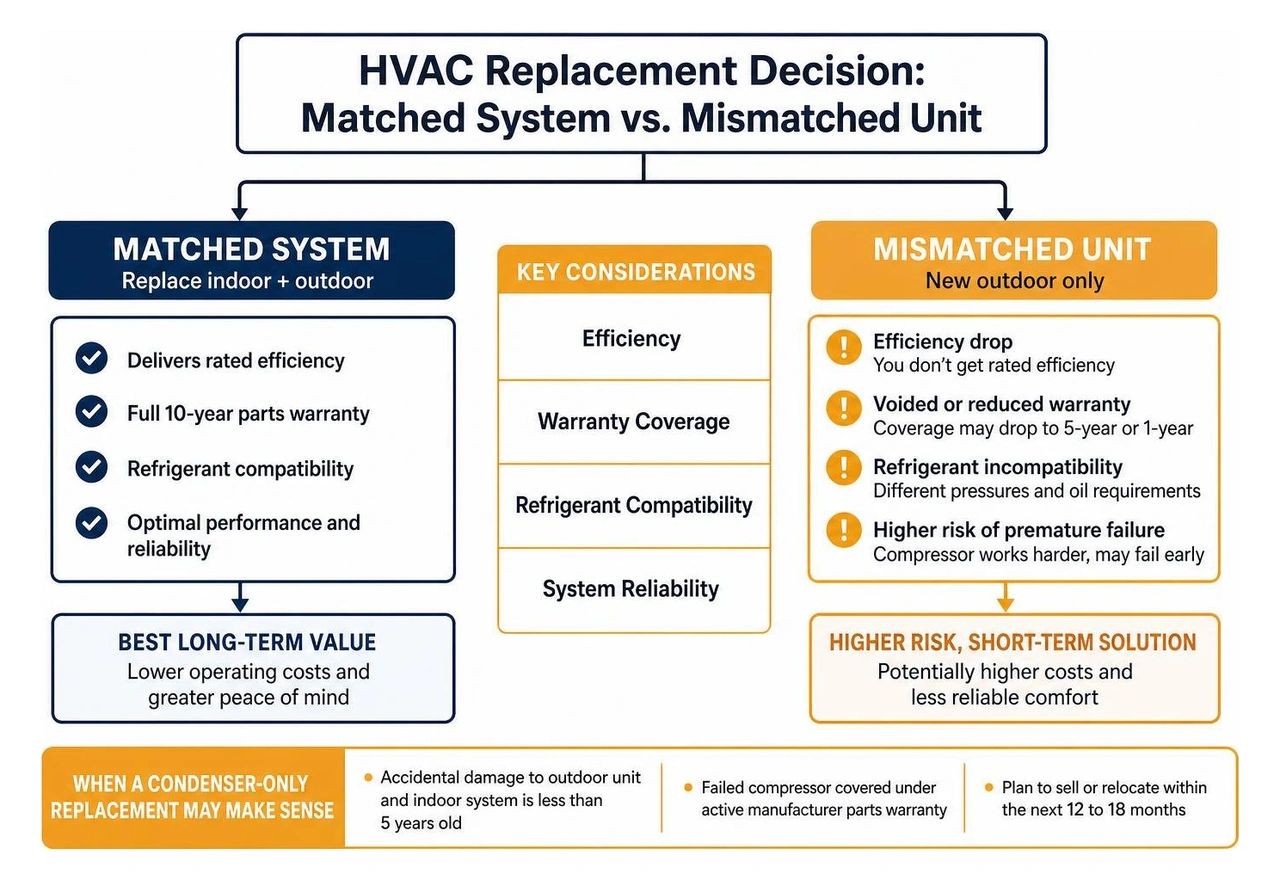
When your outdoor unit stops cooling, you might wonder if you can change the outdoor box while leaving your indoor furnace and evaporator coil in place. While technically possible under specific conditions, a partial replacement comes with trade-offs.
How Much Does a New Outside AC Unit Cost When Replacing Only the Condenser?
Replacing just the outdoor condenser unit typically runs between $1,500 and $6,500, with complex or premium outdoor units landing between $6,000 and $8,000. Homeowners facing an unexpected mid-summer breakdown often explore this route to save money upfront.
A condenser-only replacement makes sense in a few specific scenarios:
- The outdoor unit suffered accidental physical damage (such as a fallen tree limb) while the indoor system is less than 5 years old.
- The unit has a failed compressor that is covered under an active manufacturer parts warranty.
- You plan to sell or relocate from the property within the next 12 to 18 months and need immediate, low-cost cooling restoration.
For broader project planning, homeowners can review outdoor unit price guides to compare system styles before buying.
Technical Risks of Mismatched Indoor and Outdoor Components
Pairing a brand-new outdoor condenser with an aging indoor coil often introduces serious performance issues. Split air conditioners are engineered as matched systems. When the components do not align, several problems arise:
- Efficiency Drop: A high-efficiency 16 SEER2 outdoor condenser paired with a 12-year-old indoor coil will not deliver its rated efficiency. You pay for energy savings you cannot achieve.
- Voided Warranties: Most major HVAC manufacturers require a matched indoor coil to honor their 10-year parts warranty. A mismatch can reduce your coverage to a basic 5-year or 1-year limited warranty.
- Refrigerant Incompatibility: Older systems utilize phased-out R-22 or legacy R-410A refrigerants. Modern units manufactured under current EPA AIM Act standards use next-generation refrigerants like R-454B or R-32, which operate under different pressures and oil requirements.
- Premature Failure: Mismatched metering devices force the new compressor to work harder against incorrect static pressures, which can lead to early motor burnout.
Detailed technical breakdowns on outside AC unit replacement options highlight why whole-system matching delivers more dependable comfort.
Key Pricing Factors: Tonnage, SEER2 Ratings, and Compressor Types
Equipment pricing depends heavily on capacity, efficiency ratings, and the underlying compressor design. Evaluating options like two-stage air conditioner pricing allows you to balance upfront equipment costs against long-term electrical savings.
SEER2 Efficiency Tiers and Long-Term Operating Costs
The Seasonal Energy Efficiency Ratio 2 (SEER2) measures how efficiently a cooling system converts electricity into cold air over a standard season. The Department of Energy mandates a minimum efficiency of 13.4 SEER2 in Northern states (including Pennsylvania, West Virginia, and Ohio) and 14.3 SEER2 in Southern regions.
| Efficiency Level | SEER2 Rating | Equipment Price Range | Estimated Annual Electric Savings vs. 10 SEER |
|---|---|---|---|
| Standard Minimum | 13.4 - 14.3 SEER2 | $1,200 - $2,600 | Baseline (15% - 20% savings) |
| Mid-Efficiency | 15.0 - 16.5 SEER2 | $2,200 - $3,800 | $65 - $110 per year |
| High Efficiency | 17.0 - 19.0 SEER2 | $3,500 - $5,200 | $110 - $160 per year |
| Ultra-High (Inverter) | 20.0+ SEER2 | $4,800 - $8,000+ | $160 - $240+ per year |
Upgrading from an old 10 SEER unit to a modern 15.2 SEER2 platform delivers an immediate 20% to 30% reduction in cooling energy use. Installed options such as a mid-tier 15 SEER2 system package show how balance between cost and efficiency works in practice.
Single-Stage, Two-Stage, and Variable-Speed Compressors
The compressor functions as the heart of your outdoor unit. Its operating design directly impacts equipment pricing and indoor comfort:
- Single-Stage Compressors: These units operate at 100% capacity whenever turned on and shut off once the thermostat is satisfied. They are mechanical, durable, and represent the most budget-friendly upfront option ($1,200 to $2,800 for equipment).
- Two-Stage Compressors: These units run at a low setting (around 65% capacity) for milder days and ramp up to 100% during high heat. They cost $2,000 to $4,200 for equipment and provide improved humidity removal and fewer temperature swings.
- Variable-Speed (Inverter) Compressors: These systems modulate anywhere from 25% to 100% capacity across dozens of speeds. While they cost $3,500 to $6,500+ for equipment, they run quietly (55 to 65 decibels, similar to a dishwasher) and deliver precise temperature regulation.
If you are weighing repairs against a full replacement, reviewing compressor replacement costs can help you decide if rebuilding an old unit is worth the investment.
Extra Installation Expenses to Budget For
A replacement quote includes more than just the condenser box. Preparing the job site and adhering to current building codes can introduce additional line items. For seamless execution, working with professional HVAC installation services ensures all safety, mechanical, and regional code standards are met.
Electrical Upgrades, Mounting Pads, and Permits
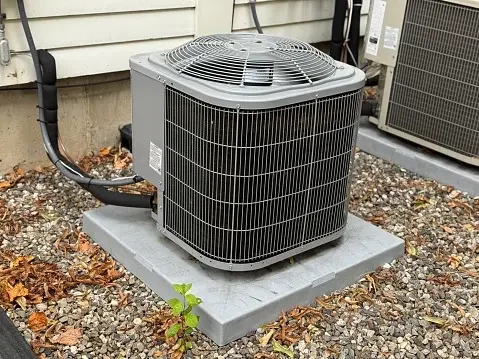
- Electrical Circuit and Disconnect: Outside condensers run on 208/230-volt, single-phase power. If your electrical panel lacks adequate amperage or your outdoor whip and disconnect box show corrosion, an electrical upgrade costs $150 to $500.
- Equipment Mounting Pad: Setting the unit on a composite or poured concrete pad ($75 to $250) prevents ground shifting, vibration noise, and standing water accumulation.
- Municipal Permits and Inspections: Most townships throughout Allegheny, Washington, and surrounding counties require mechanical and electrical permits ($50 to $300) to verify code compliance and preserve property value.
Refrigerant Line Sets and Ductwork Adjustments
- Copper Line Sets: Connecting the outdoor condenser to the indoor coil requires insulated copper piping. If your existing line set is properly sized, free of kinks, and compatible with the new refrigerant, it can be flushed and reused ($100 to $250). Installing a new line set runs $300 to $1,000 depending on total run length and accessibility.
- Old Equipment Recovery and Disposal: Certified technicians must safely recover existing refrigerant in compliance with EPA Section 608 guidelines and transport the old metal cabinet for recycling ($50 to $200, often bundled in installation quotes).
- Duct Modifications and Airflow Balancing: Reconnecting transitions, sealing joints, and testing static pressure ensures your new condenser does not choke on restricted airflow ($200 to $800). Comprehensive home size AC cost analyses demonstrate how proper duct sizing protects system performance over time.
Signs You Need a Replacement and Ways to Save
Knowing when to stop investing in repairs helps prevent emergency service calls during peak heat waves.
The 5,000 Repair Rule and Unit Lifespan
Most outdoor condenser units maintain an operational lifespan of 10 to 15 years. To determine whether a repair is financially sound, use the 5,000 Rule:
Multiply the age of your air conditioning unit (in years) by the total repair estimate (in dollars). If the resulting number exceeds 5,000, replacing the unit is generally the more economical path.
For example, if a 12-year-old outdoor unit requires a $500 motor repair:12 years multiplied by $500 equals 6,000. Because 6,000 exceeds 5,000, investing that money toward a modern, warrantied unit is often smarter than patching an aging system.
Other clear replacement indicators include:
- Frequent system breakdowns over consecutive cooling seasons.
- Unexplained spikes in summer electric bills.
- Loud grinding, buzzing, or clicking noises from the compressor housing.
- Refrigerant leaks involving phased-out compounds.
Off-Peak Scheduling, Tax Credits, and Rebates
- Schedule During Shoulder Seasons: HVAC contractors experience peak emergency demand during July heat waves and January freezes. Booking your installation during the spring (March to May) or autumn (September to November) allows you to secure off-peak promotions and flexible scheduling.
- Federal Energy Tax Credits: Under the Inflation Reduction Act, qualifying high-efficiency central air conditioners and heat pumps certified under Energy Star guidelines are eligible for federal tax credits of up to 30% of the project cost (capped at $600 for standard AC units and up to $2,000 for qualifying heat pumps).
- Local Utility Rebates: Regional electric utilities frequently provide cash rebates ranging from $100 to $500 for upgrading to certified high-efficiency cooling equipment.
Frequently Asked Questions About Outdoor AC Replacement
Can I replace an R-22 or R-410A outdoor condenser with an R-454B unit?
You cannot simply connect an R-454B condenser directly to an older R-22 or R-410A indoor coil. R-454B operates at different pressures and uses synthetic polyolester oils that are incompatible with older mineral oils. Upgrading to an R-454B condenser requires replacing the indoor evaporator coil and metering device, along with flushing or replacing the copper line set.
How long does it take a professional crew to install a new outside condenser?
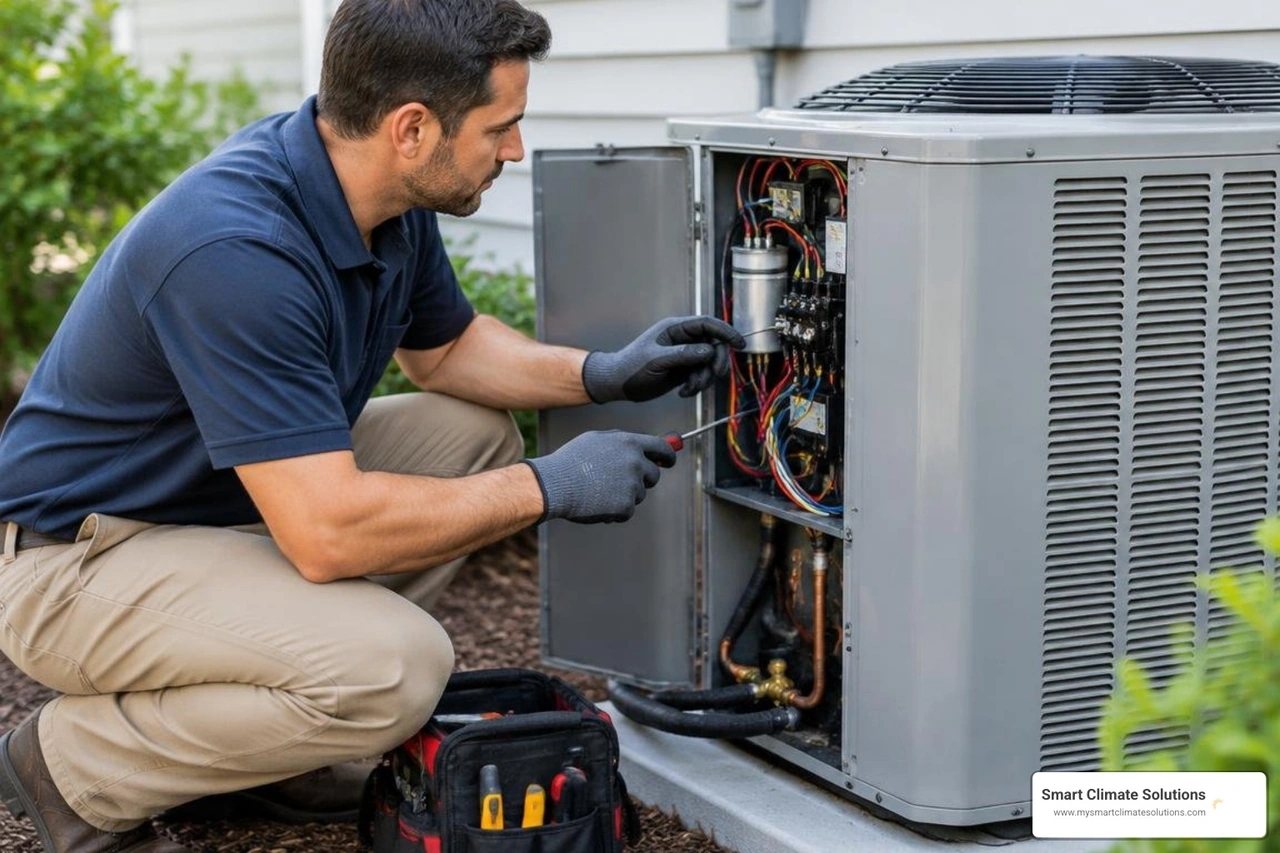
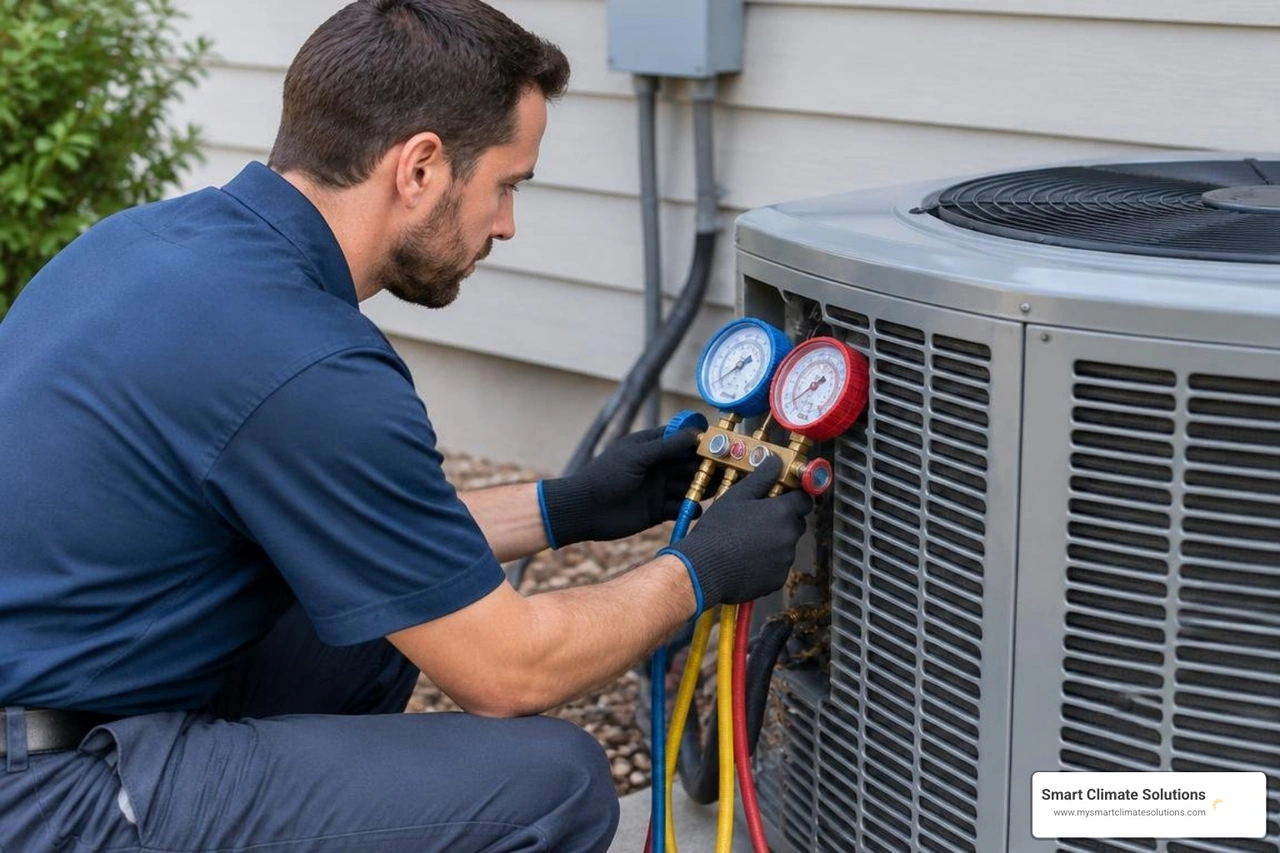
A straightforward outdoor condenser replacement typically takes 4 to 8 hours for a crew of two technicians. The process involves recovering the old refrigerant, removing the existing unit, setting and leveling the new composite pad, brazing the copper line sets, wiring the electrical disconnect, pulling a deep vacuum below 500 microns to eliminate moisture, charging the system, and commissioning proper airflow.
What size outdoor air conditioner do I need for my home?
While a general estimate suggests 1 ton of cooling capacity per 500 to 600 square feet of finished living space, an accurate size requires a professional Manual J load calculation. This calculation factors in your home's total square footage, ceiling heights, window orientation, insulation levels, ductwork efficiency, and regional climate conditions to determine the exact tonnage needed.
Conclusion
A new outside AC unit represents a significant investment in your home comfort and monthly energy efficiency. While unit-only equipment costs range from $1,200 to $5,000, total installed replacement pricing typically falls between $1,500 and $6,500 depending on tonnage, SEER2 efficiency, and installation scope. To see how these numbers apply to common residential footprints, check our guide on the average replacement cost for a 3-ton system.
At Smart Climate Solutions, we bring over 20 years of experience to homeowners across Pittsburgh, Bethel Park, Carnegie, Canonsburg, and surrounding areas. Our certified technicians provide fast, dependable service with upfront pricing and 24/7 emergency support. Contact our team today for a comprehensive cooling evaluation and a detailed, transparent quote on your outdoor AC unit replacement.