
Why Your Home's Hidden Highway System Matters

AC duct replacement is often the overlooked solution to persistent home comfort problems. If you're experiencing uneven temperatures, rising energy bills, or excessive dust, your ductwork might be the culprit. Here's what you need to know:
When to Consider AC Duct Replacement:
- Your ductwork is over 15 years old
- You notice uneven heating or cooling throughout your home
- Energy bills have increased by 20% or more without explanation
- You see visible damage like tears, rust, or disconnected sections
- There's mold growth or musty odors near vents
- Your home has excessive dust despite regular cleaning
Typical Cost Range: $1,400 to $5,600 for most homes, or $20-$60 per linear foot
Timeline: 1-3 days for most residential projects
Your home's ductwork is like a hidden highway system, quietly delivering conditioned air to every room. When it works properly, you don't think about it. But when ducts develop leaks, tears, or poor connections, you're literally throwing money into your attic or crawlspace.
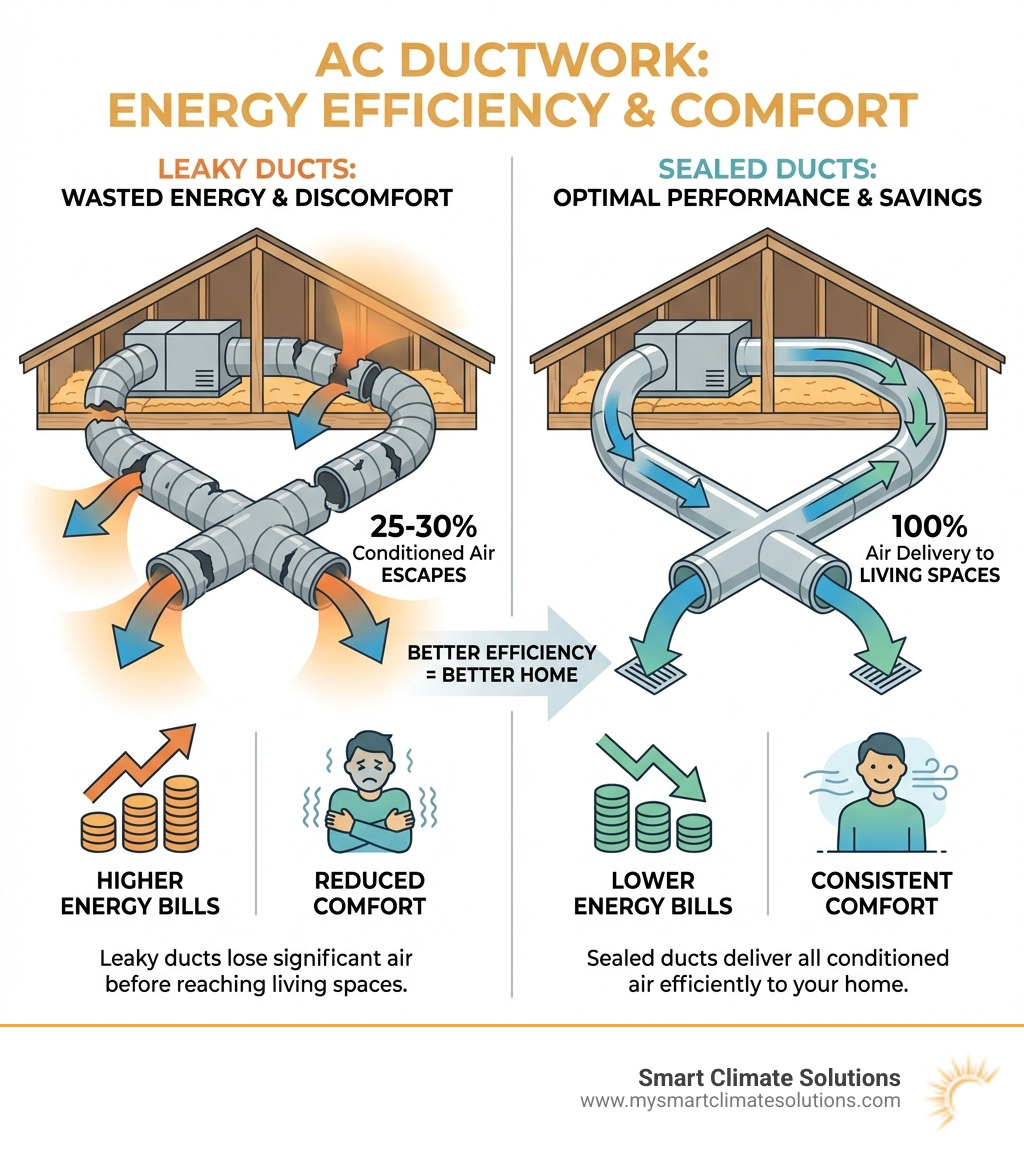
Research shows that approximately 25% of conditioned air is lost through leaky or poorly fitted ducts in the average home. That means one out of every four dollars you spend on heating and cooling simply disappears before reaching your living spaces.
Beyond wasted energy, failing ductwork creates hot and cold spots, pulls in dust and allergens from unconditioned spaces, and forces your HVAC system to work harder than it should. This puts extra strain on your equipment and shortens its lifespan.
The good news? Replacing old or damaged ductwork can dramatically improve your home's comfort, air quality, and energy efficiency. But knowing when to repair versus replace, understanding the costs involved, and finding the right contractor requires some guidance.
I'm Bill Scott, general manager at Smart Climate Solutions with over 20 years of HVAC experience, and I've helped thousands of Pittsburgh-area homeowners steer ac duct replacement decisions and improve their home comfort systems. This guide will walk you through everything you need to make an informed decision about your ductwork.
Telltale Signs: Is It Time for an AC Duct Replacement?
Your ductwork is often out of sight, out of mind, but its condition has a massive impact on your home's comfort, your family's health, and your wallet. Knowing the signs of failing ductwork is the first step toward making an informed decision about AC duct replacement.
Performance and Comfort Clues
Have you ever noticed that some rooms in your Pittsburgh home are always too hot in the summer or too cold in the winter, no matter how much you adjust the thermostat? These "hot and cold spots" or "uneven temperatures" are classic indicators that your ductwork isn't doing its job efficiently. If you're experiencing weak airflow from your vents, it means that conditioned air isn't reaching its intended destination.
Another major red flag is rising energy bills. We all want to save money, and if your heating and cooling costs are inexplicably climbing, damaged ductwork could be the culprit. Leaky or poorly designed ducts can waste up to 30% of your conditioned air. This means your HVAC system has to work much harder and run longer to maintain the desired temperature, leading to higher utility bills. In fact, when more than 20% of air escapes, you'll definitely see this reflected on your energy bill. So, if You turn the thermostat to a comfortable level, but your home never quite gets there, it's a strong sign of inefficiency.
Finally, pay attention to any noisy HVAC operation. While your system will always make some sound, persistent whistling, banging, or rattling noises could signal loose connections, damaged sections, or even debris trapped within your ducts. These sounds aren't just annoying; they're your ductwork crying for help.
Health and Safety Red Flags
Beyond comfort and cost, failing ductwork can pose serious health and safety risks. If you find yourself constantly battling excessive household dust, even after a thorough cleaning, your ducts might be pulling in contaminants from unconditioned spaces like attics or crawl spaces and distributing them throughout your home.
Persistent musty or moldy odors emanating from your vents are another critical sign. This indicates the presence of mold growth within your ductwork, often due to condensation from temperature differences between the ducts and the surrounding air. Breathing in mold spores can lead to or worsen respiratory problems and allergies, making your home an unhealthy environment. If family members are experiencing worsening allergies or unexplained respiratory issues, compromised ductwork could be a significant factor.
Pest infestations near vents are also a major concern. Rodents, insects, and other critters can find their way into your duct system through leaks and holes, creating unsanitary conditions, unpleasant smells, and potentially spreading bacteria.
Visibly damaged ductwork, such as tears, kinks, crushing, rust, or disconnected sections, is a clear indication that air is escaping or not flowing properly. And, if your ductwork is over 15 years old, it might be nearing the end of its lifespan. Older materials can degrade, become brittle, or even contain hazardous substances like asbestos insulation (common in homes built before the 1980s). If your system is this old, a professional inspection is crucial to assess its condition and ensure your family's safety.
The Financial Breakdown: Understanding Duct Replacement Costs
Understanding the financial implications of AC duct replacement is crucial for homeowners in the Pittsburgh area. The cost can vary significantly based on several factors, but we can provide you with a clear picture of what to expect.
Typical Cost Ranges
The cost to replace air ducts typically ranges from $1,400 to $5,600 for most residential properties. However, many homeowners find themselves paying an average of $3,670 for a complete system overhaul. When broken down, this can translate to about $20 to $60 per linear foot of ductwork. That replacing individual ducts can range from $270 to $500 per duct, depending on its size and complexity.
To give you a better idea, here's a general cost breakdown by home size:
| Home Size (Square Feet) | Estimated AC Duct Replacement Cost |
|---|---|
| 1,000-1,500 | $1,500-$3,000 |
| 1,500-3,000 | $2,000-$6,000 |
| 3,000-4,000+ | $3,500-$8,000+ |
For more detailed insights into general costs, you can explore our guide on Ductwork Installation Cost.
Key Factors That Influence the Final Price
Several elements play a significant role in determining the overall cost of your AC duct replacement:

- Home Size and Layout: Larger homes with more extensive and complex duct systems will naturally incur higher costs. The architectural layout, including multiple stories or hard-to-reach areas like crawl spaces or finished basements, can increase labor time and complexity.
- Duct Material Type: The choice of duct material (flexible, fiberboard, or sheet metal) impacts the price, with each having different material and installation costs. We'll dive deeper into these materials shortly.
- Accessibility of Ductwork: If your existing ducts are easily accessible in an attic or basement, installation will be less labor-intensive. However, if ducts are hidden within walls or ceilings, the project may require demolition and subsequent repairs, adding to the cost.
- Local Labor Rates: Labor costs vary by region. In the Pittsburgh, PA, South Hills, Burgettstown, Washington, Steubenville OH, St. Clairsville OH, and Weirton WV areas, our competitive rates reflect the expertise and quality craftsmanship we provide.
- Permit Requirements: Most major HVAC work, including duct replacement, requires permits to ensure compliance with local building codes. Your contractor should handle obtaining these permits, and their fees (which can range from under $100 to $500 or more) will be included in your overall project cost.
Potential Additional Costs to Budget For
While the core AC duct replacement is a significant investment, there are a few other costs you might need to budget for:
- Asbestos or Mold Remediation: If our inspection reveals asbestos in older duct insulation or widespread mold growth, specialized remediation will be necessary. Asbestos abatement or mold remediation can add upwards of $2,000 or more to your overall project cost, depending on the severity.
- Drywall or Ceiling Repairs: If your new ductwork requires opening up walls or ceilings for access, you'll need to account for the cost of repairing and repainting these areas afterward.
- HVAC System Adjustments or Upgrades: Sometimes, an old or improperly sized HVAC unit might not be compatible with new, more efficient ductwork. It's often a good time to consider upgrading your air conditioner, furnace, or heat pump along with your duct system, especially if your current unit is nearing the end of its lifespan. For more information on related costs, see our guide on Central AC Install Cost With No Existing Ductwork.
Repair, Replace, or Upgrade? Making the Right Choice
Deciding whether to repair your existing ductwork or opt for a full AC duct replacement is a critical choice that impacts your home's comfort, energy efficiency, and long-term costs. We'll help you weigh the options.
Repairing vs. Replacing Your AC Ductwork
The choice between repair and replacement hinges on the extent of the damage, the age of your system, and your long-term goals.
When to Repair:
- Isolated Leaks: If you have just a few small, accessible leaks or disconnected sections, these can often be sealed with mastic or foil-backed tape. Minor leak sealing typically costs $300-$800.
- Minor Damage: Small tears, kinks, or localized insulation damage can be repaired by patching or replacing a short section of ductwork. Patching damaged sections usually runs $200-$600.
- Newer Systems: If your ductwork is relatively new (less than 10-15 years old) and the issues are minor and localized, repair is generally the most cost-effective solution.
When to Replace:
- Widespread Damage: If more than 30-40% of your ductwork is extensively damaged, corroded, collapsed, or poorly connected, a full AC duct replacement becomes necessary. Trying to patch numerous problems is often a temporary fix that doesn't solve underlying issues.
- Old Age: Ducts are designed to last for about 10-15 years on average, though some materials last longer. If your ductwork is over 15 years old, it's likely deteriorating, becoming brittle, and less efficient. Replacing it ensures optimal performance and efficiency.
- Mold Growth: While cleaning can address surface mold, widespread or recurring mold growth within your ducts often indicates a deeper issue, such as persistent moisture problems or significant air leakage. In such cases, replacement is the best option to protect your indoor air quality.
- Poor Initial Design: If your home has always struggled with uneven heating or cooling, or if your HVAC system seems to work harder than it should, it could be due to improperly sized or poorly designed ductwork from the start. In these situations, replacement with a properly designed system is essential for true comfort and efficiency.
For a comprehensive look at the considerations, our Ductwork Installers Complete Guide offers more insights.
Exploring Ductwork Materials and Lifespans
The material of your ductwork plays a significant role in its durability, efficiency, and expected lifespan.
- Sheet Metal Ducts:
- Lifespan: Can last more than 20 years with proper maintenance.
- Pros: Highly durable, resistant to pests, excellent airflow, minimal air leakage when properly sealed.
- Cons: More expensive to install, requires professional fabrication, can be noisy without proper insulation. Often made of galvanized steel or aluminum.
- Fiberboard Ducts:
- Lifespan: Around 10-15 years.
- Pros: Good insulation properties (R-value), relatively lightweight, can reduce noise.
- Cons: Susceptible to moisture damage and mold if insulation or vapor barrier is compromised, less durable than sheet metal, can release fibers if damaged.
- Flexible Ducts:
- Lifespan: 10 years or less, though some can last 10-15 years.
- Pros: Very versatile, easy to install in tight spaces, generally the least expensive option.
- Cons: Prone to kinks, tears, and crushing (which restricts airflow), higher air leakage potential if not installed perfectly, less durable, harder to clean. Flexible ducts are typically made of a wire coil covered with a plastic (polyester or PVC) and insulation.
Each material has its place, and the right choice for your home depends on factors like budget, installation location, and desired performance. Our experts can help you select the best materials for your AC duct replacement project.
The Long-Term Payoff: Energy Efficiency and Savings
Investing in AC duct replacement offers substantial long-term benefits, particularly in terms of energy efficiency and cost savings on your utility bills.
As we mentioned, leaky or poorly designed ductwork can waste up to 30% of your conditioned air. This means a significant portion of the heated or cooled air your HVAC system produces never reaches your living spaces. The U.S. Department of Energy estimates that approximately 25% of the air in your HVAC ductwork is lost due to leaks and poorly fitted ducts. This translates into hundreds of dollars wasted each year.
By replacing old, leaky ducts with a new, properly sealed, and insulated system, you can:
- Lower Utility Bills: Dramatically reduce energy waste, leading to noticeable savings on your monthly heating and cooling costs. A ductwork system with air leakage issues can reduce the efficiency of your air conditioner and heating system by up to 20%. Fixing this can save you hundreds, if not thousands, of dollars over time.
- Improve HVAC System Performance: When ducts are sealed and properly sized, your HVAC system doesn't have to work as hard to maintain comfortable temperatures. This allows your system to operate at peak efficiency.
- Reduce Strain on Equipment: Less strain means less wear and tear on your furnace and air conditioner, potentially extending their lifespan and reducing the frequency and cost of repairs.
- Increase Home Value: An energy-efficient home with a modern, well-functioning HVAC system, including new ductwork, is a significant selling point and can increase your home's resale value.
While a full AC duct replacement is an upfront investment, it's one that consistently pays dividends through improved comfort, improved air quality, and substantial energy savings. For more ways to save energy, explore solutions like an Energy Efficient Ductless Heating and Cooling System.
The Replacement Process: From DIY Dangers to Professional Precision
When it comes to something as critical as your home's HVAC system, especially AC duct replacement, attempting a DIY approach can lead to more problems than solutions. This is a job best left to certified professionals.
Why Professional Installation is Non-Negotiable
While we appreciate the spirit of DIY, ductwork is incredibly complex and requires specialized knowledge and tools. Here's why professional installation is non-negotiable:
- DIY Risks: Attempting a DIY duct replacement can lead to injury, property damage, and significant financial penalties due to building code violations. Without the proper expertise, you risk creating more leaks, impeding airflow, or even damaging your HVAC unit.
- Poor Performance: Improperly sized or installed ductwork can severely hinder airflow, leading to the same uneven temperatures and high energy bills you were trying to fix. You might end up with a brand-new system that performs worse than your old one.
- Voided Warranties: Many HVAC manufacturers require professional installation for their equipment warranties to remain valid. A botched DIY job could void your warranty on your expensive HVAC components.
- Benefits of a Professional: Our certified HVAC technicians are trained in proper sizing techniques using industry standards like Manual J (for load calculations) and Manual D (for duct design). This ensures your new ductwork is perfectly matched to your home's needs and your HVAC system. We also ensure safety compliance, handle all necessary permits, and guarantee our results, giving you peace of mind.
For a deeper dive into professional services, check out our HVAC Ductwork Installation Services page.
What to Expect During a Professional AC Duct Replacement
When you choose Smart Climate Solutions for your AC duct replacement in the Pittsburgh area, you can expect a streamlined and professional process:
- Initial Inspection and Load Calculation: Our process begins with a thorough assessment of your existing ductwork and a detailed load calculation for your home. This helps us determine the optimal size and design for your new system, ensuring maximum efficiency and comfort.
- Removal of Old Ducts: Our team will carefully remove your old, damaged, or inefficient ductwork, disposing of it responsibly. This step can take 1-2 days, depending on the complexity and accessibility of your current system.
- Installation of New Ductwork: We will install your new, custom-designed ductwork, ensuring every connection is secure and every section is properly routed. We use high-quality materials and adhere to the highest industry standards.
- Sealing and Insulating: All joints and seams will be carefully sealed with mastic or foil-backed tape to prevent air leaks. Ducts in unconditioned spaces like attics or crawl spaces will be properly insulated (typically R-6 to R-8) to minimize heat loss or gain.
- System Testing and Balancing: Once installed, we perform comprehensive system testing, including airflow and pressure testing, and balance the system to ensure optimal air distribution to every room. This step is crucial for achieving consistent temperatures and peak efficiency.
The typical project timeline for a residential AC duct replacement ranges from 1 to 3 days, though larger or more complex systems might take up to four days or more. We pride ourselves on efficient, high-quality work with minimal disruption to your home.
Choosing the Right HVAC Contractor in Pittsburgh
Selecting the right HVAC professional for your AC duct replacement is paramount. Here's what to look for when choosing a contractor in the Pittsburgh, PA, South Hills, Burgettstown, Washington, Steubenville OH, St. Clairsville OH, or Weirton WV regions:
- Licensed and Insured: Always choose a contractor that is fully licensed and insured. This protects you from liability and ensures they meet professional standards. Our technicians are highly trained, certified, and insured.
- Verifiable Experience: Look for a company with a proven track record. Smart Climate Solutions brings over 20 years of HVAC experience to every project, ensuring expertise and reliability.
- Positive Customer Reviews: Check online reviews and testimonials. A reputable contractor will have a history of satisfied customers.
- Itemized Quotes: Demand a detailed, itemized proposal that clearly outlines all costs, materials, and labor involved. Avoid contractors who provide vague or low-ball estimates without proper assessment.
- Local Expertise: A local contractor understands the specific climate and building codes in the Pittsburgh area, ensuring your installation is compliant and optimized for regional conditions.
We invite you to learn more about our commitment to quality and service by visiting our Ductwork Installation Contractors page.
Frequently Asked Questions about AC Duct Replacement
How long does residential ductwork typically last?
The lifespan of residential ductwork varies significantly depending on the material and how well it's maintained. Flexible ducts typically last 10 years or less, though some can reach 10-15 years. Fiberboard ducts also have an average lifespan of 10-15 years. However, durable sheet metal ducts, when properly maintained, can last more than 20 years. Regardless of the material, the efficiency of any duct system may begin to decline after 15 years due to general wear and tear, even if visible damage isn't yet apparent.
Can new ductwork really improve my home's air quality?
Absolutely! New, properly sealed, and insulated ductwork can dramatically improve your home's indoor air quality. Old, leaky ducts can pull in dust, pollen, insulation fibers (especially fiberglass dust from attics), mold spores, and even chemicals from unconditioned spaces like attics, crawl spaces, or garages. These contaminants are then circulated throughout your home, contributing to allergies, asthma, and other respiratory issues. By replacing and sealing your ducts, you create a closed system that delivers cleaner, healthier conditioned air, preventing these unwanted pollutants from entering your living spaces.
Do I need a permit for duct replacement in Pennsylvania?
In most areas across Pennsylvania, including Pittsburgh, the South Hills, Burgettstown, and Washington, as well as Steubenville OH, St. Clairsville OH, and Weirton WV, a permit is usually required for significant HVAC work like AC duct replacement. This is especially true if the project involves altering the system's design, making electrical changes, or handling refrigerants. Permits ensure that the installation complies with local building codes and safety regulations. A qualified HVAC contractor, like us, will be familiar with all local requirements and will handle the entire permitting process for you, ensuring your project is compliant and worry-free.
Secure Your Home's Comfort and Efficiency
Your home's ductwork is a critical component of your HVAC system, silently working to keep your family comfortable. When it's compromised, you lose money, comfort, and potentially even impact your indoor air quality. Investing in AC duct replacement is an investment in energy savings, improved comfort, and healthier indoor air for years to come.
While the decision to replace your ductwork is significant, the benefits far outweigh the costs of ignoring the problem. From reducing those frustrating hot and cold spots to lowering your energy bills and ensuring your family breathes cleaner air, a professional AC duct replacement can transform your home environment.
For expert ductwork assessment and replacement services in the Pittsburgh, PA, South Hills, Burgettstown, Washington, Steubenville OH, St. Clairsville OH, and Weirton WV areas, trust the certified technicians at Smart Climate Solutions to get the job done right. With our over 20 years of experience, fast and reliable service, and commitment to customer satisfaction, we're here to ensure your home's hidden highway system is operating at its best.
Ready to secure your home's comfort and efficiency? Contact us for your HVAC installation needs today, and let us help you breathe easier and save more.

.png)
