
Repair vs. Replace: When Is a New AC System Necessary?
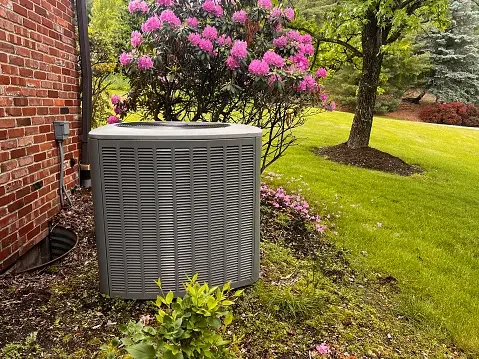
Deciding between repairing your current cooling unit and investing in a new central air installation service is one of the most critical home comfort decisions you will face. When the summer heat and high humidity settle over the greater Pittsburgh area, a dependable cooling system is essential for your family's daily comfort and indoor air quality. If your equipment is more than 10 to 15 years old, demands frequent service calls, operates on outdated R-22 refrigerant, or struggles to maintain consistent temperatures across every floor of your home, replacement is often the most cost-effective long-term choice. Upgrading to a modern, high-efficiency central air setup can lower monthly utility bills, provide balanced humidity management, and eliminate the frustration of unexpected breakdowns during peak summer weather.
The Math Behind the Decision: The $5,000 Rule and Equipment Age
To make an informed financial decision, start by comparing the cost of proposed repairs against the overall age and performance history of your equipment. A reliable industry formula is the "$5,000 Rule." To use this guideline, multiply the quoted repair cost by the age of your cooling system in years. If the resulting number exceeds $5,000, investing in a complete replacement is generally the smarter financial move.
For example, consider an older system that requires a major component replacement:
- A $600 repair on a 12-year-old system equals $7,200 ($600 x 12). Because this total exceeds $5,000, investing that money into a modern system with full warranty coverage is far more economical than repairing aging machinery.
- A $300 capacitor replacement on a 4-year-old system equals $1,200 ($300 x 4). In this case, repairing the unit makes complete financial sense because the system still has plenty of operational lifespan remaining.
In addition to the $5,000 rule, consider how often you have needed service over the past two or three summers. If you find yourself scheduling emergency repairs each cooling season, cumulative repair bills and diagnostic charges will quickly outpace the cost of installing a modern, reliable replacement unit.
Telltale Warning Signs That Replacement Is Imminent
Beyond simple age calculations, specific mechanical and performance symptoms indicate that an air conditioner is nearing the end of its functional life:
- Uneven Temperatures and Hot Zones: If your upstairs bedrooms remain sweltering while your main floor feels chilly, your compressor or blower motor may no longer have the capacity to circulate conditioned air effectively through your duct network.
- Climbing Energy Bills: As cooling equipment degrades, internal components work harder and run longer cycles to reach the setpoint on your thermostat. If your electric bills are rising steadily without a dramatic change in weather or household habits, declining system efficiency is often the root cause.
- Unusual Mechanical Noises: Grinding, banging, squealing, or persistent rattling sounds often point to failing motor bearings, a damaged blower assembly, or an overworked compressor approaching total mechanical failure.
- Persistent Indoor Humidity: Modern cooling systems do more than lower air temperatures; they also extract excess moisture from the air. If indoor air feels muggy or clammy even when the unit runs constantly, your system is failing to dehumidify effectively.
- Frequent Tripping of Electrical Breakers: An aging unit that draws excessive electrical current during startup can overload your electrical panel, indicating severe electrical or mechanical resistance inside the compressor.
The Phaseout of R-22 Refrigerant
If your current air conditioner was manufactured before 2010, there is a strong possibility it uses R-22 (Freon) refrigerant. Under the Clean Air Act, the production and importation of R-22 were completely phased out due to its ozone-depleting properties. As supplies have dwindled, the cost to recharge an R-22 system has skyrocketed. If an older R-22 unit develops a refrigerant leak, attempting to locate and patch the leak and recharge the system can cost several hundred to over a thousand dollars, with no guarantee that another leak will not appear shortly after. Modern central air conditioning systems utilize environmentally friendlier, non-ozone-depleting refrigerants such as R-410A and next-generation A2L refrigerants, which offer enhanced heat transfer characteristics and lower operating costs.
Understanding Modern SEER2 Efficiency Standards
When evaluating a new cooling system, energy efficiency ratings are a primary consideration. The Seasonal Energy Efficiency Ratio 2 (SEER2) measures how efficiently an air conditioner cools a home over a standard cooling season under updated, real-world testing conditions. Older installed systems often operate at efficiency levels of 8 to 10 SEER, whereas contemporary base-tier units begin at 13.4 to 14.3 SEER2, with high-performance units reaching 18 to 20+ SEER2. Upgrading from a legacy 10 SEER system to a 16 SEER2 unit can reduce cooling-related electricity consumption by 30 to 50 percent, delivering substantial monthly savings.
For additional consumer information regarding system types, minimum regional standards, and efficiency guidelines, the U.S. Department of Energy provides detailed resources on residential central cooling equipment.
A thorough on-site evaluation by a certified HVAC professional ensures you weigh every factor accurately, matching system specifications to your architecture, insulation levels, and budget. Smart Climate Solutions delivers comprehensive assessments across Pittsburgh, PA, South Hills, Burgettstown, Washington, Weirton, WV, and nearby communities to help homeowners select the ideal cooling setup.
Planning Your Central Air Installation Service
A smooth, dependable central air installation service requires careful preparation, thorough engineering calculations, and skilled execution. Installing a residential cooling system is not a simple plug-and-play appliance swap; it is a complex mechanical, electrical, and thermodynamic upgrade that directly influences your indoor comfort, air quality, and utility expenses for the next 15 to 20 years. Partnering with a dedicated local contractor guarantees that every stage of the installation meets local building codes and manufacturer specifications.
The Importance of a Professional Load Calculation (Manual J)
The foundation of any successful installation is an accurate heating and cooling load calculation performed in accordance with the Air Conditioning Contractors of America (ACCA) Manual J standards. Simply matching the tonnage of your old air conditioner is a risky approach because home additions, window replacements, upgraded insulation, and air sealing can significantly alter your home's thermal profile over time.
During a comprehensive load calculation, an experienced technician measures and assesses several factors:
- Total conditioned square footage and individual room volumes
- Ceiling heights, attic insulation levels, and wall construction types
- Window styles, frame materials, glazing, and sun exposure orientation
- Existing ductwork layout, static pressure, and insulation condition
- Local regional climate trends across Western Pennsylvania, Eastern Ohio, and the Northern Panhandle of West Virginia
- Heat generated by household appliances, lighting, and average occupancy
Accurate sizing is critical. An undersized system will run continuously on hot afternoons without reaching your target temperature, causing excessive component wear. Conversely, an oversized system will satisfy the thermostat too quickly (short cycling), failing to remove ambient moisture, resulting in cold, clammy rooms and frequent temperature swings.
Selecting the Right Equipment Architecture
During the design phase of your central air installation service, you will select the equipment configuration that best fits your household comfort goals and lifestyle:
- Single-Stage Systems: These units run at full capacity (100%) whenever cooling is required. They represent an affordable upfront investment and provide durable, straightforward cooling for budget-conscious homeowners.
- Two-Stage Systems: Operating at a low stage (around 65-70% capacity) during mild weather and switching to high stage on sweltering days, two-stage units run longer, gentler cycles that improve humidity removal and create quieter, more even indoor temperatures.
- Variable-Speed (Inverter-Driven) Systems: These premium systems automatically modulate compressor and fan speeds in tiny increments to match the exact cooling demand in real time. They offer whisper-quiet sound levels, optimal energy conservation, and superior humidity extraction during humid Pittsburgh summers.
Key Considerations Before Installation Day
Before work begins, your HVAC team should discuss and verify several essential installation details:
- Ductwork Integrity: Old ductwork may have disconnected joints, air leaks, or restrictive dimensions. Sealing or modifying supply and return plenums ensures optimal airflow and prevents conditioned air from escaping into unconditioned crawl spaces or attics.
- Thermostat and Control Systems: Whether you prefer a standard programmable model or an advanced smart thermostat with remote Wi-Fi control and zoning capabilities, your thermostat must properly communicate with your new unit's control board.
- Electrical Infrastructure: Modern units have specific amperage and breaker requirements. Technicians inspect your electrical service panel and disconnect switch to confirm safe, code-compliant power delivery.
- Condensate Drainage: Proper drain lines, gravity fall, and overflow safety switches prevent condensate backup from damaging floors or drywall.
What to Expect on Installation Day
A professional central air installation service generally takes between one and two full days, depending on system complexity and duct modifications. The installation process follows a structured sequence:
- Site Preparation and Protection: Technicians lay down drop cloths and protective floor coverings to keep work areas clean.
- Old Equipment Removal: Technicians safely recover existing refrigerant according to EPA guidelines and disconnect electrical circuits before removing the old condensing unit and evaporator coil.
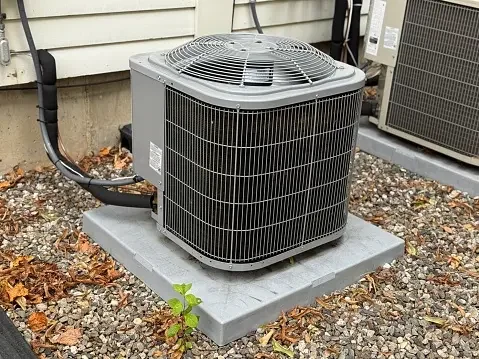
- Base Pad and Coil Placement: A level composite outdoor pad is positioned away from obstructions, and a matched indoor cased coil is installed securely on your furnace or air handler.
- Refrigerant Line Set Installation: New copper line sets are run, insulated, and brazed with dry nitrogen flowing through the lines to prevent internal oxidation.
- Electrical and Control Wiring: High-voltage disconnects, whip connections, and low-voltage thermostat wiring are connected and inspected.
- Pressure Testing and Deep Vacuum: The system is pressurized with nitrogen to verify tight connections, followed by a deep vacuum evacuation down to 500 microns or lower to remove moisture and non-condensables.
- System Charging and Commissioning: Technicians release or add the precise weight of refrigerant, measure superheat and subcooling values, test total external static pressure, and verify balanced airflow across all supply vents.
Post-Installation Walkthrough and Ongoing Maintenance
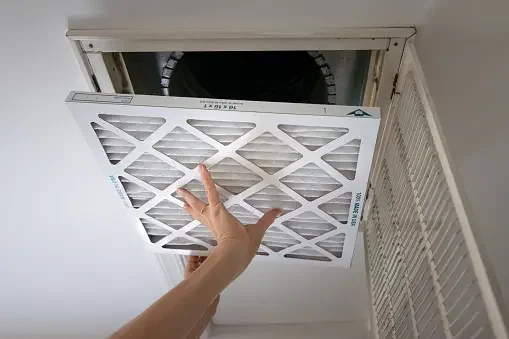
Once the system is operational, the technician should walk you through every aspect of your new equipment. This includes programming your thermostat, demonstrating how and when to replace air filters, and reviewing manufacturer warranty terms. Enrolling in a preventative maintenance plan preserves your warranty protection and keeps your central air system performing at peak efficiency year after year.
With more than 20 years of hands-on experience, certified technicians, and 24/7 emergency support, Smart Climate Solutions proudly provides dependable central air installation service throughout Pittsburgh, PA, South Hills, Burgettstown, Washington, Steubenville, OH, St. Clairsville, OH, and Weirton, WV. Contact our team today to schedule an in-home cooling evaluation and enjoy reliable home comfort all season long.

.png)
