
.avif)
Why Emergency Heating Solutions Matter to Pittsburgh Homeowners
Emergency heating solutions are backup methods to keep your home warm when your primary heating system fails during winter. When temperatures plummet and your furnace stops working, knowing your options can literally save lives and prevent thousands of dollars in property damage.
Quick Answer: Top Emergency Heating Solutions
- Call a Professional First - For furnace failures, contact a 24/7 HVAC service immediately
- Propane or Kerosene Heaters - Indoor-safe, portable options with proper ventilation
- Backup Generators - Power your existing furnace during outages
- Wood-Burning Stoves - Reliable heat without electricity (requires proper installation)
- Conserve Heat - Isolate one room, seal drafts, layer clothing and blankets
Critical Safety Rule: Never use gas ovens, outdoor grills, or unvented fuel-burning devices indoors - carbon monoxide poisoning kills.
Winter weather causes 23% of all power outages, and home heating is the second leading cause of house fires in the United States. When your heat goes out on a bitter Pittsburgh night with temperatures below zero, every minute counts. The risks are real: hypothermia, frozen and burst pipes, and dangerous attempts at alternative heating that lead to carbon monoxide poisoning or fires.
The financial burden is equally serious. Emergency furnace repairs can cost hundreds or thousands of dollars, often at the worst possible time. Many Pittsburgh-area families struggle to keep up with heating bills during our harsh winters, let alone cover unexpected breakdowns.
But here's the good news: you have options. From understanding what to check before calling for help, to knowing which backup heating methods are safe, to accessing financial assistance programs like HEAP (Home Energy Assistance Program) - being prepared makes all the difference.
As Bill Scott, general manager of Smart Climate Solutions with over 20 years in the HVAC industry, I've responded to countless heating emergencies across Pittsburgh and Southwestern PA. Through this guide, I'll share proven emergency heating solutions and resources that can keep your family safe and warm when your system fails. Whether you're facing an immediate crisis or want to prepare before the next cold snap hits, this information will help you steer your options with confidence.
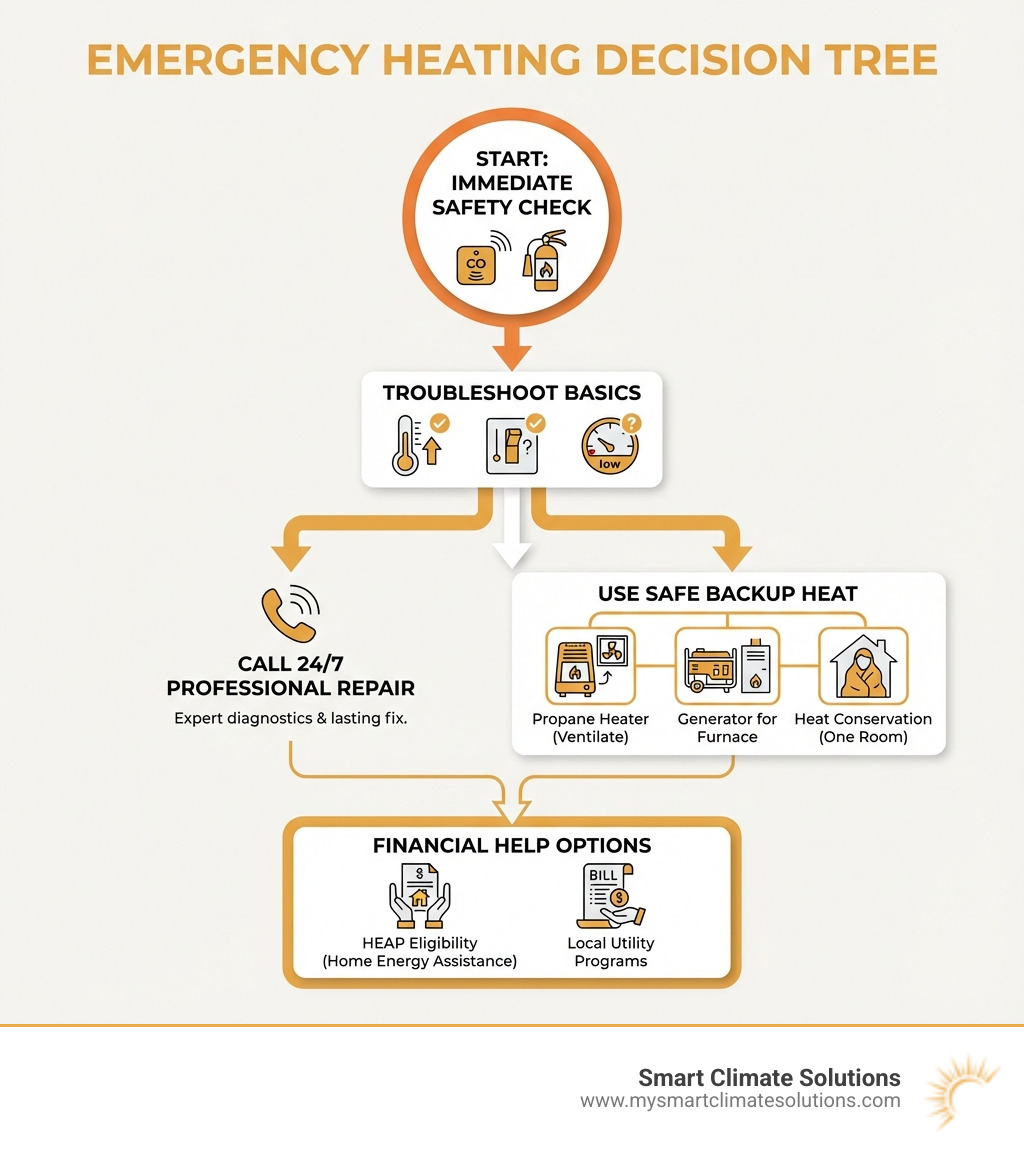
Quick look at emergency heating solutions:
When the Cold Bites Back: Your First Steps for a Heating Emergency
When the furnace unexpectedly goes silent, a cold dread often sets in, especially during a harsh winter in Pittsburgh or the surrounding areas like Steubenville, OH, and Weirton, WV. The stakes are high. Winter weather is a significant culprit, responsible for 23% of power outages between 2000-2023. When temperatures can plummet below zero with wind chills making it feel even colder, the primary risks associated with losing heat are severe:
- Hypothermia: Prolonged exposure to cold temperatures can lead to a dangerous drop in body temperature, affecting judgment and physical abilities. Vulnerable populations, including the elderly, infants, and those with pre-existing health conditions, are particularly at risk.
- Frozen and Burst Pipes: As temperatures inside your home drop, water in your pipes can freeze and expand, causing them to burst. This can lead to extensive water damage and costly repairs once the weather warms up.
- Dangerous DIY Heating Attempts: In desperation, homeowners might resort to unsafe heating methods, increasing the risk of carbon monoxide poisoning or house fires. Home heating is, in fact, the second leading cause of fires in the country.
Before panic sets in, we can take a few immediate steps to troubleshoot the problem. Sometimes, the solution is simpler than you think.
- Check Your Thermostat: Is it set to "heat" and at a temperature higher than the current room temperature? Ensure the batteries are fresh if it's a digital model.
- Inspect Your Circuit Breaker: Go to your electrical panel and look for tripped breakers. A furnace often has its own dedicated breaker. If it's tripped, flip it completely off and then back on.
- Verify Fuel Levels: If you have an oil or propane furnace, check your fuel tank. An empty tank is a common, albeit frustrating, reason for no heat. For natural gas, check if other gas appliances are working to rule out a wider service interruption.
If these initial checks don't resolve the issue, it's time to consider professional help. For guidance on next steps, especially for urgent situations, our 24/7 Furnace Repair guide offers comprehensive advice.
Is It a Simple Fix or Time to Call a Pro?
Sometimes, the issue might be a minor hiccup that we can address ourselves. Other times, it signals a more serious problem requiring expert intervention.
- Resetting the Furnace: Many modern furnaces have a reset button, often located on the blower motor housing. Pressing it once might restart the system. However, if it trips again quickly, there's an underlying problem that needs attention.
- Checking the Pilot Light: Older gas furnaces use a pilot light. If it's out, you might be able to relight it by following the manufacturer's instructions, usually found on a label inside the furnace door. Be cautious and follow instructions precisely.
- Listening for Unusual Noises: If your furnace is making strange banging, grinding, or squealing noises, it's a clear sign of mechanical trouble. These sounds often indicate failing components like a blower motor, a cracked heat exchanger, or a loose belt.
- Recognizing Signs of a Serious Problem: Beyond strange noises, if you smell gas, burning plastic, or a strong metallic odor, or if you see smoke or sparks, shut down your system immediately and call for professional help. These are not DIY situations.
Understanding What to do if your Furnace Stopped Working can empower you to handle minor issues. However, attempting complex repairs without proper training and tools can be dangerous and void warranties. Professional diagnosis is crucial not only for safety but also for efficiency. Our certified technicians can accurately identify the root cause of the problem, ensuring your system is repaired correctly and safely, preventing further damage or hazards.
A Guide to Non-Electric Emergency Heating Solutions
When the power goes out, our reliance on electricity becomes glaringly obvious. Most modern furnaces, even those fueled by natural gas, oil, or propane, require electricity to operate their fans, igniters, and control boards. That's why having non-electric emergency heating solutions is vital.

This section compares various heating methods for when your primary system is down, focusing on options that do not require electricity.
Comparing Fuel-Based Heaters
When electricity isn't an option, fuel-based heaters can provide much-needed warmth. Each type has its own set of advantages, disadvantages, and crucial safety considerations.
- Propane Heaters: Portable propane heaters are a popular choice for emergency heating. They are readily available and can provide localized warmth. Newer models boast efficiencies of over 90%. However, they consume oxygen and produce carbon monoxide, so proper ventilation is absolutely critical. This often means keeping a window slightly ajar. Always look for models with oxygen depletion sensors and automatic shut-off features. Refuel them outdoors, away from any ignition sources.
- Kerosene Heaters: Similar to propane, kerosene heaters are portable and can heat a space effectively. They typically use 1-K kerosene, which burns cleaner. Like propane heaters, they require excellent ventilation to prevent carbon monoxide buildup. Make sure the unit is rated for indoor use and never use gasoline in a kerosene heater.
- Wood-Burning Stoves: A classic and reliable option, a well-maintained wood-burning stove can heat a significant portion of your home without any electricity. They offer a comforting ambiance and can even be used for cooking. However, they require a professionally installed and regularly cleaned chimney to prevent creosote buildup and fires. You'll also need a steady supply of dry, seasoned firewood, which needs proper storage.
- Pellet Stoves: Pellet stoves burn compressed wood pellets, offering a more efficient and cleaner burn than traditional wood stoves. While most pellet stoves require electricity to operate their augers and fans, some models are designed with gravity-fed systems. These can function without power, making them viable emergency heating solutions. Like wood stoves, they need proper ventilation and regular cleaning.
Here's a quick comparison:
| Heater Type | Cost (Unit) | Safety Concerns | BTUs (Avg.) | Ventilation Needs |
|---|---|---|---|---|
| Portable Propane | Low-Medium | CO risk, fire if not handled properly | 10,000-30,000 | Critical (crack window), oxygen depletion sensor recommended |
| Portable Kerosene | Low-Medium | CO risk, fire if not handled properly | 10,000-23,000 | Critical (crack window), use 1-K kerosene only |
| Wood-Burning Stove | Medium-High | Fire risk (creosote), CO risk | 20,000-60,000 | Professional chimney installation & regular cleaning; proper flue required |
| Gravity-Fed Pellet | Medium-High | Fire risk (pellet dust), CO risk | 20,000-50,000 | Proper venting (often direct vent); regular cleaning of burn pot |
Leveraging Backup Generators
For many homeowners, the ideal emergency heating solution is to keep their existing furnace running. This is where backup generators come into play. A generator can power your furnace's blower motor, igniter, and control board, allowing your central heating system to function during a power outage.
- Portable Generators: These are typically gas or propane-fueled and can be moved to where they're needed. They offer flexibility and are a more budget-friendly option upfront. You'll need appropriate extension cords to connect them to your furnace (often through a transfer switch installed by an electrician) or directly to individual appliances.
- Standby Generators: Permanently installed outside your home, standby generators are usually fueled by natural gas or propane and automatically turn on when utility power is lost. They can power essential circuits, or even your entire home, without any manual intervention. While a larger upfront investment, they offer unparalleled convenience and reliability.
When choosing a generator, understanding wattage requirements for your HVAC system is crucial. A licensed electrician can help you determine the right size generator to safely power your furnace and other essential appliances.
Generator Safety is Non-Negotiable: Never run a generator inside your home, garage, basement, or any enclosed or partially enclosed space. Generators produce deadly carbon monoxide fumes. Always place them outdoors, far away from windows, doors, and vents to prevent fumes from entering your home. Use heavy-duty, outdoor-rated extension cords, and never plug a generator directly into a wall outlet (this can backfeed electricity into the grid, endangering utility workers). For more complex setups, consult with professionals for More info about HVAC installation services.
Simple DIY Methods to Conserve Warmth
Sometimes, the best emergency heating solution isn't a device at all, but smart strategies to retain the heat you have and generate a little extra.
- Creating a Designated "Warm Room": If you can't heat your entire home, pick one small, interior room with few windows. Close off vents and doors to other areas, and use blankets or towels to block drafts under doors. Concentrating warmth in one space makes it easier to keep that area comfortable.
- Using Passive Solar Heat: On sunny winter days, open curtains and blinds on south-facing windows to allow sunlight to stream in and warm your home. Close them again at dusk to trap the absorbed heat.
- Blocking Drafts: Air leaks are major culprits for heat loss. Use towels, blankets, or dedicated draft stoppers to seal gaps under doors and around windows. Applying temporary plastic film over windows can also create an insulating barrier.
- Layering Clothing and Using Blankets: This might seem obvious, but dressing in multiple layers of warm clothing (wool, fleece) and using plenty of blankets, sleeping bags, or even emergency heating blankets (which can be up to 90% heat-reflective) is an effective way to stay warm.
- The Importance of Home Insulation: Beyond immediate fixes, good insulation is your home's best defense against the cold. Properly insulated walls, attics, and crawl spaces, along with well-sealed windows and doors, significantly reduce heat loss, making any emergency heating method more effective. We can't stress enough how much a well-insulated home helps maintain warmth during a power outage.
Critical Safety Measures for Alternative Heating
When we resort to alternative methods for warmth, safety becomes our absolute top priority. As we mentioned, home heating is the second leading cause of home fires in the United States. Understanding the risks of alternative heat sources is paramount for keeping your family safe during an emergency.

Preventing Carbon Monoxide (CO) Poisoning
Carbon monoxide (CO) is often called the "silent killer" because it's an odorless, colorless gas produced by burning fuels such as wood, oil, natural gas, propane, gasoline, and kerosene. Without proper ventilation, it can build up to dangerous levels, leading to sickness, incapacitation, and even death.
- Symptoms of CO Poisoning: Headache, dizziness, nausea, fatigue, and confusion are common symptoms. These can be easily mistaken for the flu, making CO especially insidious. Drowsiness is a particularly concerning sign.
- The Absolute Necessity of CO Detectors: Every home should have working carbon monoxide detectors installed on every level, especially near sleeping areas. They are your first line of defense against this invisible threat. Ensure they have fresh batteries and test them monthly. If a CO alarm sounds, evacuate immediately and call 911.
- Never Use Unsafe Devices: We cannot emphasize this enough: never use gas ovens, outdoor grills, camp stoves, or propane heaters not rated for indoor use as indoor heating sources. These devices are not designed for indoor ventilation and will quickly fill your home with deadly carbon monoxide.
- Ensuring Proper Ventilation: For any fuel-burning appliance used indoors (like indoor-safe propane or kerosene heaters, or wood stoves), proper ventilation is critical. This might mean keeping a window slightly ajar or ensuring your chimney flue is clear and operating correctly. Our team at Smart Climate Solutions encourages you to Learn more about generator and heating safety to protect your household.
Fire Prevention Best Practices
Beyond CO poisoning, fire is another major risk with alternative heating. Simple precautions can significantly reduce the danger.
- The "3-Foot Rule": Keep children, pets, and anything that can burn (paper, matches, bedding, furniture, clothing, carpets, and rugs) at least three feet away from all heating equipment, including space heaters, fireplaces, and wood stoves.
- Placing Heaters Safely: Always place portable heaters on a level, hard, non-flammable surface. Never put them on rugs, carpets, or near bedding or drapes. Plug them directly into a wall outlet; avoid extension cords, which can overheat.
- Safe Fuel Storage: Store fuels like propane, kerosene, and firewood safely. Propane tanks should always be stored outdoors. Kerosene should be kept in approved containers in a cool, well-ventilated area away from living spaces and ignition sources. Firewood should be stacked away from your home to prevent pest infestations and reduce fire risk.
- Never Leave Heaters Unattended: Turn off portable heaters every time you leave the room or go to sleep. Never leave a fire in a fireplace unattended, and always use a sturdy screen to prevent sparks from escaping.
- Fire Extinguishers: Have a working fire extinguisher (Class B or C for electrical or flammable liquid fires, or a multi-purpose ABC extinguisher) readily accessible and know how to use it. Our friends at NFPA provide excellent resources, and we recommend you Read the NFPA's safe heating practices for more detailed guidance.
Finding Financial Help: HEAP and Other Pittsburgh-Area Programs
The cost of an unexpected furnace repair or high heating bills can be a major burden, especially for families in our service areas of Pittsburgh, South Hills, Burgettstown, Washington, Steubenville, St. Clairsville, and Weirton. Thankfully, several programs are available to help.
How LIHEAP (HEAP) Can Help
The Low Income Home Energy Assistance Program (LIHEAP), often referred to as HEAP, is a federally funded program designed to help low-income households with their energy bills.
- What it is: LIHEAP provides cash grants to help eligible households pay for their heating costs. It also offers crisis grants for households facing heating emergencies, such as a broken furnace or a shut-off notice.
- Who is Eligible in Pennsylvania: Eligibility is based on income and household size, generally for households at or below 60% of the State Median Income. The program aims to help those most vulnerable to cold weather.
- How the Program Provides Grants: LIHEAP grants typically pay directly to your utility company or fuel vendor. Crisis grants can cover emergency repairs or fuel deliveries. We encourage residents in our service areas to visit the Pennsylvania Department of Human Services website for specific information and application details.
- Application Process and Deadlines: Application periods typically open in the fall and run through winter. It's crucial to apply as soon as possible, as funds are limited.
Other Local and Utility-Based Assistance
Beyond LIHEAP, several other resources can provide financial relief for heating costs and unexpected repairs.
- Utility Company Programs: Many local utility companies offer their own assistance programs, payment plans, or discounted rates for qualifying low-income customers. For example, customers of Duquesne Light (electricity) or Peoples Gas (natural gas) in the Pittsburgh area should check their websites or call customer service for information on available aid.
- The Salvation Army's Good Neighbor Energy Fund: This program provides one-time grants to individuals and families who are struggling to pay their energy bills and do not qualify for other assistance programs. It's a valuable safety net for many.
- Local Charities and Community Action Agencies: Numerous local organizations and community action agencies throughout Allegheny, Washington, Beaver, and Westmoreland counties in PA, as well as in Eastern Ohio and Northern West Virginia, offer assistance with utility bills, emergency fuel, or even direct furnace repair aid. A quick search for "energy assistance Pittsburgh PA," "energy assistance Steubenville OH," or "energy assistance Weirton WV" can yield relevant local resources.
- Assistance with Repair Costs: Facing the Cost to fix furnace can be daunting. Some programs specifically target emergency repairs for homeowners who meet income guidelines, helping to ensure your primary heating system is restored safely.
Proactive Measures and Professional Emergency Heating Solutions
The best way to handle a heating emergency is to prevent it. Regular maintenance and home preparation are key to avoiding the stress and danger of a heating system failure.
Preparing Your Home Before Winter Hits
A little preparation goes a long way in ensuring your home stays warm and safe throughout the winter.
- The Critical Role of Insulation: We've mentioned it before, but it bears repeating: good insulation is paramount. Ensure your attic, walls, and crawl spaces are adequately insulated. This acts like a "winter coat" for your home, keeping the heat in and the cold out.
- Sealing Air Leaks: Even small cracks and gaps around windows, doors, and utility penetrations can lead to significant heat loss. Use caulk and weatherstripping to seal these leaks. This simple, inexpensive step can make a big difference in maintaining indoor temperatures.
- The Benefits of a Professional Furnace Tune-Up: Just like your car, your furnace needs regular maintenance. A professional Furnace tune up ensures your system is clean, efficient, and running safely before the cold weather hits. Our technicians will inspect, clean, and adjust components, catching small issues before they become major breakdowns.
- Why an HVAC Maintenance Plan Saves Money and Prevents Emergencies: An annual HVAC maintenance plan is a smart investment. It not only extends the life of your system and improves its efficiency, but it also significantly reduces the likelihood of unexpected breakdowns, saving you from costly emergency repairs and uncomfortable cold nights.
Finding Professional Emergency Heating Solutions in Pittsburgh
Despite our best efforts, heating emergencies can still happen. When they do, knowing who to call for reliable, fast service is crucial.
- When to Call for Expert Help: If your furnace is completely unresponsive, making alarming noises, emitting strange odors, or if you suspect a gas leak or carbon monoxide issue, it's time to call the experts. Our Emergency Furnace Repair Complete Guide provides more details on recognizing these critical situations.
- Signs You Need an Expert Immediately:
- No heat coming from vents.
- Furnace repeatedly cycling on and off.
- Blower continuously running but no heat.
- Thermostat issues (no display, inaccurate readings).
- Pilot light issues (flickering, going out, yellow flame).
- Any strange smells (burning, metallic, gas).
- The Value of Certified Technicians: At Smart Climate Solutions, we pride ourselves on our certified technicians who bring over 20 years of experience to every job. They are trained to safely diagnose and repair all types of heating systems, ensuring your home is warm and safe. Our commitment to fast, reliable service and 24/7 emergency support means we're here for you when you need us most.
- Pittsburgh Furnace Repair Services: We offer comprehensive Pittsburgh furnace repair services, extending to South Hills PA, Burgettstown PA, Washington PA, Steubenville OH, St. Clairsville OH, and Weirton WV. Our team is ready to respond to your heating emergency, ensuring minimal downtime and maximum comfort.
Conclusion
Navigating a winter heating emergency can be daunting, but with the right knowledge and preparation, you can keep your family safe and warm. Remember these key points: prioritize safety above all else, prepare in advance by maintaining your system and insulating your home, and know where to turn for help, both for repairs and financial assistance.
A heating emergency in a Pittsburgh winter is serious, but you can be ready. At Smart Climate Solutions, we understand the unique challenges our local climate presents. We are dedicated to providing expert, 24/7 emergency support with certified technicians to ensure your home stays warm and safe, no matter how cold it gets outside. From preventative maintenance to rapid emergency repairs, we're your trusted partner for all your heating needs.
For immediate help or to schedule a pre-season system check, contact our team for professional HVAC service and repair. We're here to ensure your comfort and satisfaction.

.png)
