
Why Is Your Furnace Drain Clogged?
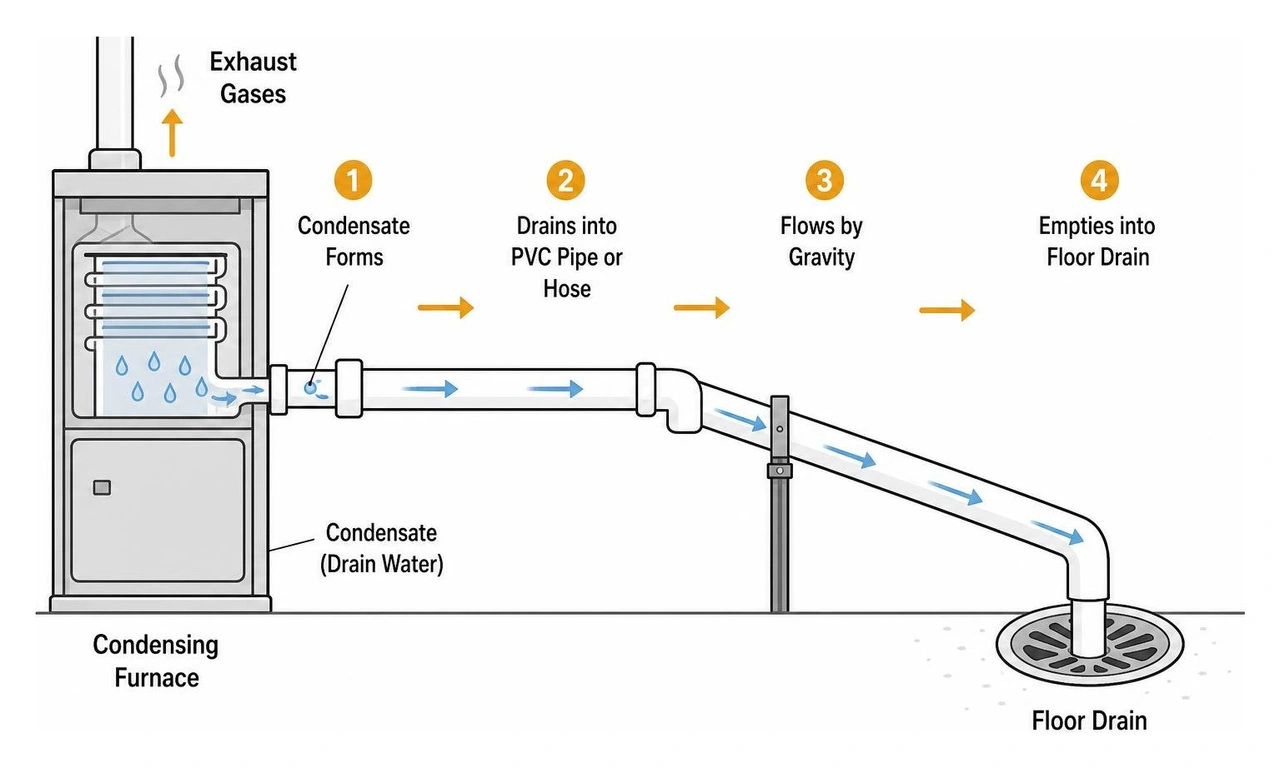
Understanding why a furnace drain clogged in your system requires knowing how modern heating equipment operates. High-efficiency condensing furnaces (rated at 90% AFUE or higher) extract heat from fuel combustion until the exhaust gases cool down. As these gases cool, moisture condenses out of the air. This mildly acidic water needs a clear escape route through a 3/4-inch to 1-inch PVC pipe or plastic hose into a floor drain or condensate pump.
During summer months, your central air conditioning evaporator coil sits directly above or near the furnace cabinet. Moisture pulled from your indoor air drains through a similar path. If debris enters this drainage system, water backs up quickly.
Several primary factors cause a furnace drain clogged scenario:
- Biological Growth: Slime, algae, and mold thrive in dark, moist environments like condensate lines.
- Dust and Lint: Fine dust particles bypass air filters, mix with moisture, and form thick sludge.
- Improper Pipe Pitch: Horizontal PVC drain runs require a minimum slope of 1/4 inch per foot. Without this downward pitch, standing water settles in the pipe, collecting debris and evaporating to leave behind mineral scale.
- Freezing Temperatures: Outdoor or unheated discharge pipes can easily freeze during harsh winters, creating an ice block.
For a detailed walkthrough on system mechanics, read How to Clean a Condensing Furnace Drain.
What Is White Slime and How Does It Form?
If you inspect your drain line and find a gel-like substance, you are dealing with "white slime." This is not simple household dirt. It is a biological colony composed of bacteria and fungi that feed on airborne organic matter, moisture, and minerals in the condensate water.
White slime grows in narrow PVC pipes, P-traps, and internal collection trays. As the colony grows, it creates a thick mass that traps small debris. Because it is flexible and sticky, standard gravity drainage cannot push it through, resulting in a completely blocked pipe.
Winter Freezing and Environmental Causes
In Western Pennsylvania, winter weather brings sub-zero temperatures that directly threaten HVAC drain systems. If your high-efficiency furnace vents condensate to an exterior wall or through an unheated crawlspace or garage, ice formation becomes a major hazard.
When water exits into frozen air, it slows down and freezes at the outlet. Ice builds backward into the house, completely closing off the drain line. Additionally, outdoor drain exits can become blocked by autumn leaves, mulch, or insect nests.
How to Tell If Your Condensate Line Is Blocked
Catching a drain line blockage early protects your basement or utility room from water damage. While a flooded floor is the most obvious sign, several subtle indicators appear first.
Look for these warning signs around your heating unit:
- Standing water pooling around the furnace base or inside the secondary drain pan.
- Gurgling or bubbling sounds coming from the unit as exhaust air tries to push past trapped water.
- A musty, damp, or sour odor in the basement or coming from supply vents.
- Increased humidity inside your home despite running the system.
- Water stains on surrounding drywall, subflooring, or exposed insulation.
Signs Your Furnace Drain Clogged and Caused a System Shutdown
Modern furnaces feature built-in safety mechanisms designed to prevent water damage. Overflow float switches monitor the water level in the drain pan or internal trap. If condensate rises too high, the switch trips, immediately cutting power to the system.
When this happens, you may see a blinking status light on the control board or a Furnace Red Light diagnostic code. The thermostat will continue calling for heat, but the system remains off in a safety lockout. If your home stays chilly and you find a Heating System Not Working, check the area around your furnace for standing water before resetting any controls.
Visual Inspection and Odor Signs
Perform a basic visual check by opening the lower door panel on your furnace. Inspect the white plastic condensate trap and connected vinyl tubing. If you see murky, yellowed, or brownish water sitting still inside transparent lines, a clog has formed downstream.
A sour smell near the unit often points to stagnant water held captive by biological slime. If left untreated, this stagnant condensate creates an environment for mold growth, which negatively impacts indoor air quality throughout your living space.
Immediate Emergency Steps to Take When Water Leaks
When you spot water accumulating near your furnace cabinet, acting quickly prevents severe water damage and electrical safety hazards.
Follow these immediate steps to secure the area:
- Shut Off Electrical Power: Flip the toggle switch on the side of the furnace or cut power directly at your main circuit breaker panel. Never touch standing water near an energized furnace.
- Turn Off the Thermostat: Switch the thermostat setting to "OFF" to ensure the heat or air conditioning does not trigger an automatic start cycle.
- Contain and Clear the Water: Use old towels, a mop, or a wet/dry vacuum to remove standing water from the floor, preventing damage to subfloors and nearby finished walls.
- Check Electrical Components: Inspect the base of the furnace. If water has reached the burner compartment, gas valve, or lower control board, keep the power off and request a professional inspection immediately.
How to DIY Fix a Clogged Furnace Drain Line
Clearing a soft clog caused by sludge or biological slime is a task many homeowners can complete with basic household tools.
Required Tools and Materials
- Wet/dry vacuum (shop vac)
- Microfiber cloths or old rags
- Painter's tape or duct tape
- Distilled white vinegar
- Warm (not boiling) water
- Flexible pipe cleaning brush or pipe cleaner
- Small bucket or catch basin
- Safety glasses and protective gloves
Step-by-Step Guide to Clearing a Furnace Drain Clogged with Slime
Using a suction-first approach is the safest way to clean PVC lines without risking cracked fittings or pushing debris further into hidden piping. For additional steps on floor drain connections, check How to Fix a Clogged Furnace Floor Drain.
Step 1: Disconnect Power and Access the Pipe
Verify that power to the system is off. Locate the exterior end of the PVC condensate line where it empties into a floor drain, utility sink, or condensate pump reservoir.
Step 2: Set Up the Wet/Dry Vacuum
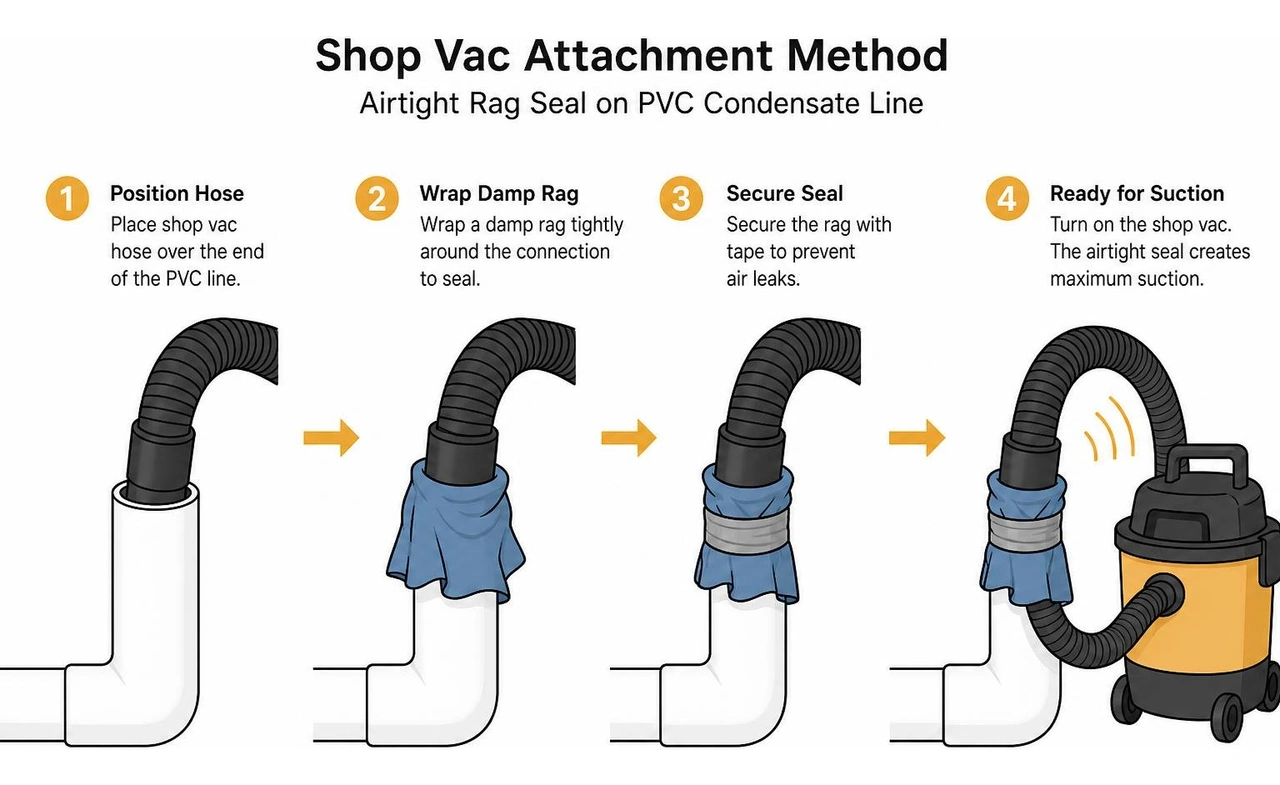
Place the wet/dry vacuum hose over the end of the PVC drain line. Wrap a damp rag tightly around the connection point to create an airtight seal. Secure it with tape if necessary to prevent air leaks.
Step 3: Run the Vacuum
Turn on the wet/dry vacuum and let it run for 30 to 60 seconds. You will hear the motor pitch change as it creates suction, followed by a sudden rush of water and sludge breaking free into the vacuum canister.
Step 4: Flush with Vinegar
Locate the T-shaped cleanout access port near the furnace cabinet (usually a capped vertical PVC pipe). Remove the cap and slowly pour 1 cup of distilled white vinegar down the pipe, followed by 2 cups of warm water. Let the vinegar sit in the drain line for 30 minutes to dissolve lingering bacterial slime.
Step 5: Re-Prime the Trap
Condensate systems use a liquid-filled trap to prevent flue gases or conditioned air from escaping. Before turning the unit back on, pour 1 to 2 cups of clean water into the cleanout port to ensure the trap is filled. Re-cap the access point, restore power, and test the furnace.
Can You Use Bleach or Vinegar to Clear Clogs?
Homeowners often ask whether household bleach can clear a stubborn HVAC drain clog. We strongly advise against using bleach in condensate drain lines.
| Feature | Distilled White Vinegar | Household Bleach |
|---|---|---|
| Material Safety | Safe on PVC, vinyl tubing, and plastic seals | Degrades rubber seals, gaskets, and plastic fittings over time |
| Fume Risk | Mild vinegar odor; harmless to system | Fumes can corrode internal copper coils and heat exchangers |
| Efficacy | Kills bacteria and breaks down biological slime | Kills surface mold but leaves harsh chemical residue |
| Environmental Hazard | Non-toxic and safe for floor drains | Potentially toxic when mixed with acidic condensate |
Stick with distilled white vinegar or approved HVAC condensate line cleaning tablets to clear sludge safely without damaging your system.
When to Call a Professional HVAC Technician
While clearing a basic PVC line is a straightforward DIY task, certain conditions require certified expertise. Attempting complex repairs yourself can void manufacturer warranties or create safety hazards.
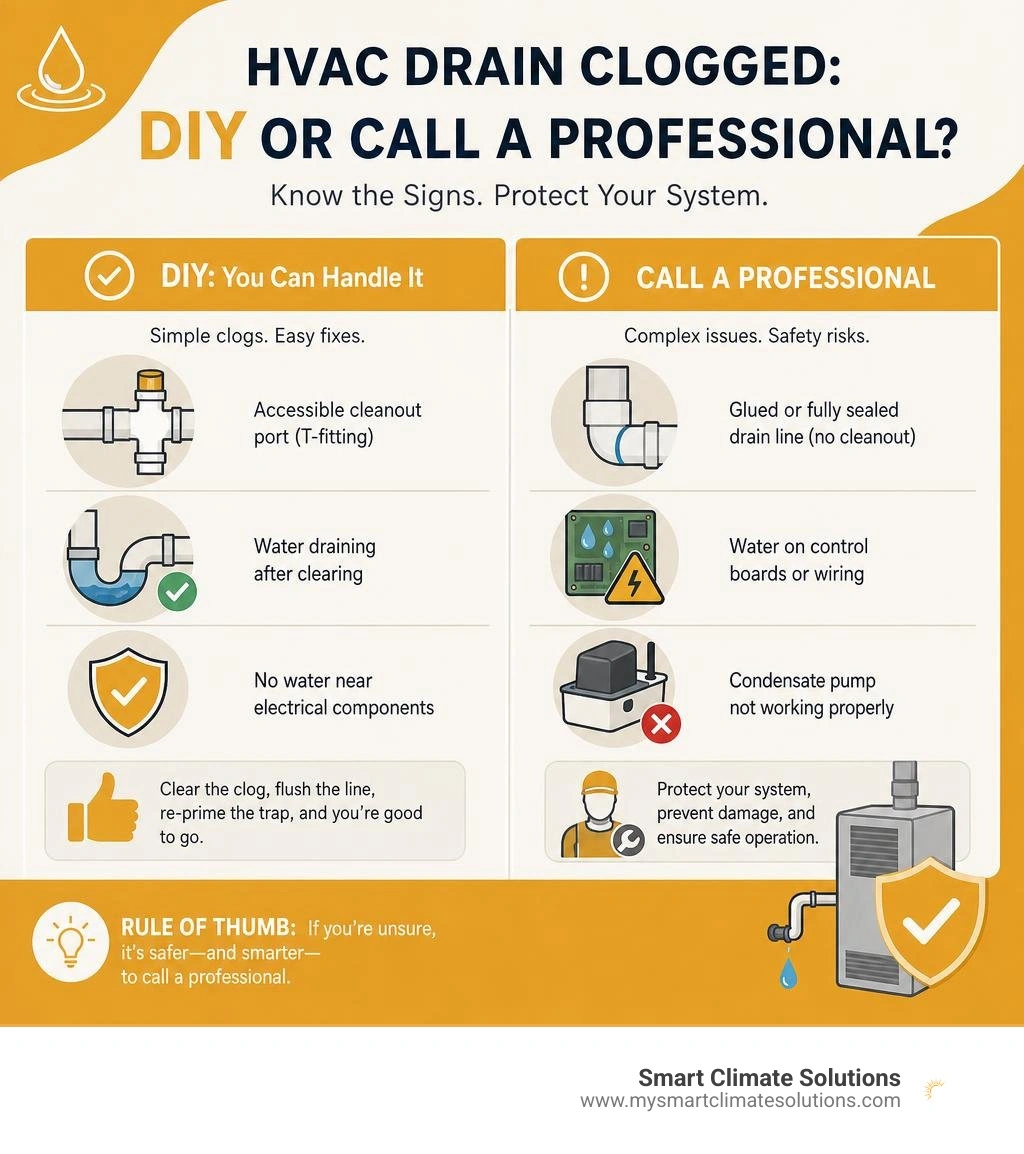
Contact a professional HVAC service provider in the following situations:
- Glued PVC Drain Assemblies: If your drain line lacks a cleanout tee and is glued completely shut, opening it requires cutting and re-plumbing the pipe.
- Water on Control Boards or Wiring: If standing water has contacted electrical components, internal components must be tested for safety before restarting.
- Failing Condensate Pumps: When gravity drainage is impossible, systems use a motorized pump. If the pump motor fails, check valves jam, or the internal switch breaks, the entire pump requires testing or replacement.
- Recurring Clogs: If your drain line backs up again within a few weeks, an underlying issue such as incorrect pipe pitch, a cracked primary pan, or an internal heat exchanger leak may be present.
- Furnace Lockouts: If clearing the line does not reset system error codes, read our Emergency Furnace Repair Complete Guide or schedule a service call.
Preventative Maintenance to Avoid Future Drain Clogs
Routine preventative care prevents unexpected heating failures on cold winter days.
Keep your furnace condensate system running smoothly with these ongoing maintenance tips:
- Schedule Seasonal Flushes: Pour 1 cup of distilled white vinegar down your condensate cleanout port every 3 to 6 months to prevent slime build-up.
- Use Pan Tablets: Place slow-dissolving condensate pan tablets in the primary drain pan to suppress biological growth.
- Insulate Exposed Lines: Wrap condensate pipes passing through unheated basements, crawlspaces, or exterior walls with closed-cell foam insulation sleeves to prevent winter freezing.
- Verify Line Pitch: Inspect horizontal pipe runs regularly to ensure support straps keep the line sloped downward at least 1/4 inch per foot.
- Replace Air Filters Monthly: Clean air filters prevent fine dust from reaching internal drainage components.
- Book Annual Tune-Ups: Professional maintenance includes inspecting drain traps, flushing lines, testing safety float switches, and evaluating system performance. Learn more about comprehensive system care through our Furnace Tune Up guide.
Frequently Asked Questions About Clogged Furnace Drains
Why is my furnace leaking water in the winter?
High-efficiency condensing furnaces produce water during normal winter heating. If the condensate drain line freezes outdoors, becomes blocked with white slime, or suffers from a cracked drain trap, water backs up and leaks onto the floor surrounding the unit.
Can I use Drano or chemical drain cleaners in my furnace drain?
No. Never use harsh caustic chemical drain cleaners like Drano in an HVAC drain line. These chemicals generate intense heat that can melt thin PVC pipes, destroy rubber seals, and release toxic fumes into your home's ductwork.
How often should I flush my furnace condensate drain?
Flush your condensate drain line at least twice a year - once before the winter heating season and once before the summer cooling season. Homes in humid climates with high system usage benefit from a quick vinegar flush every 3 months.
Conclusion
A furnace drain clogged with biological slime, dust, or ice can turn into an unwelcome surprise, but taking quick action resolves most minor blockages before severe property damage occurs. By turning off system power, removing standing water, and using a wet/dry vacuum combined with a safe vinegar flush, you can keep your heating system dry and functional.
When recurring leaks occur, frozen lines persist, or water approaches internal electrical panels, professional support ensures your equipment runs safely. The certified team at My Smart Climate Solutions provides prompt, reliable diagnostic and maintenance services across Pittsburgh, South Hills, Burgettstown, and Washington, PA, as well as nearby Ohio and West Virginia communities. Contact us today for expert HVAC service and repair to keep your home warm, efficient, and dry all year long.

.png)
