
Furnace Installation Pittsburgh: Start With the Right System and Installer
For reliable Furnace installation Pittsburgh homeowners should choose a properly sized furnace, confirm permits and safety requirements, and hire an insured local HVAC team that performs a full load calculation before recommending equipment. A professional installation should include safe removal of the old unit, gas and electrical checks, correct venting, thermostat setup, and final testing for safe, efficient operation.
Pittsburgh averages about 60 days below freezing each year, so an undersized, poorly vented, or incorrectly installed furnace can quickly become a comfort and safety problem. Many local homes also have older ductwork, basements, chimneys, and electrical systems that need a careful inspection before replacement.
A new furnace commonly costs about $2,500 to $6,000 in Pittsburgh, depending on size, efficiency, ductwork needs, and installation complexity. High-efficiency equipment may lower annual heating costs by up to 30%, but the best value depends on your home, not just the furnace's price tag.
I am Bill Scott, general manager of Smart Climate Solutions, with more than 20 years of HVAC experience serving Pittsburgh and Southwestern Pennsylvania homeowners. Our Furnace installation Pittsburgh work focuses on clean, professional installs, practical repair advice, and dependable comfort through every Western Pennsylvania winter.
Furnace installation Pittsburgh terms to remember:
Local Climate and Code Requirements for Western Pennsylvania Heating
Western Pennsylvania winters test every component of your home heating setup. Between damp river valley chills, rapid temperature drops, and freezing winds coming across the hills, your heating equipment runs under heavy demand for months at a time. In regions like Allegheny County, Washington County, and surrounding valleys, system reliability is a matter of home safety during deep January freezes.
Local building codes across Pittsburgh, Burgettstown, and nearby townships require strict adherence to international residential and mechanical codes. These guidelines mandate exact standards for combustion air supply, gas pipe sizing, and mechanical venting. Because older housing stock often features tight basements with limited natural airflow, proper ventilation design prevents dangerous backdrafting and hazardous carbon monoxide accumulation.
When upgrading your setup, working with a team well-versed in HVAC Services in Pittsburgh, PA ensures every safety switch, exhaust run, and shutoff valve complies fully with municipal safety ordinances.
Sizing and Code Compliance for Furnace Installation Pittsburgh
A furnace should never be selected based on guesswork or by simply matching the input rating of your old unit. Our team uses comprehensive Manual J load calculations to measure heat loss based on:
- Square footage and ceiling heights
- Window quality, orientation, and insulation levels
- Air infiltration rates through foundational masonry
- Basement wall exposure and duct location
Correct equipment sizing ensures the furnace runs balanced cycles, keeping humidity steady while avoiding premature heat exchanger wear. In 2026, minimum efficiency regulations require modern units to meet elevated Annual Fuel Utilization Efficiency (AFUE) benchmarks. The U.S. Department of Energy explains furnace efficiency and AFUE in its overview of furnaces and boilers. Standard units operate around 80% AFUE, while modern condensing systems reach 95% to 98% AFUE. Achieving code compliance also involves filing necessary municipal permits, which protects your property value and guarantees the work satisfies local safety standards.

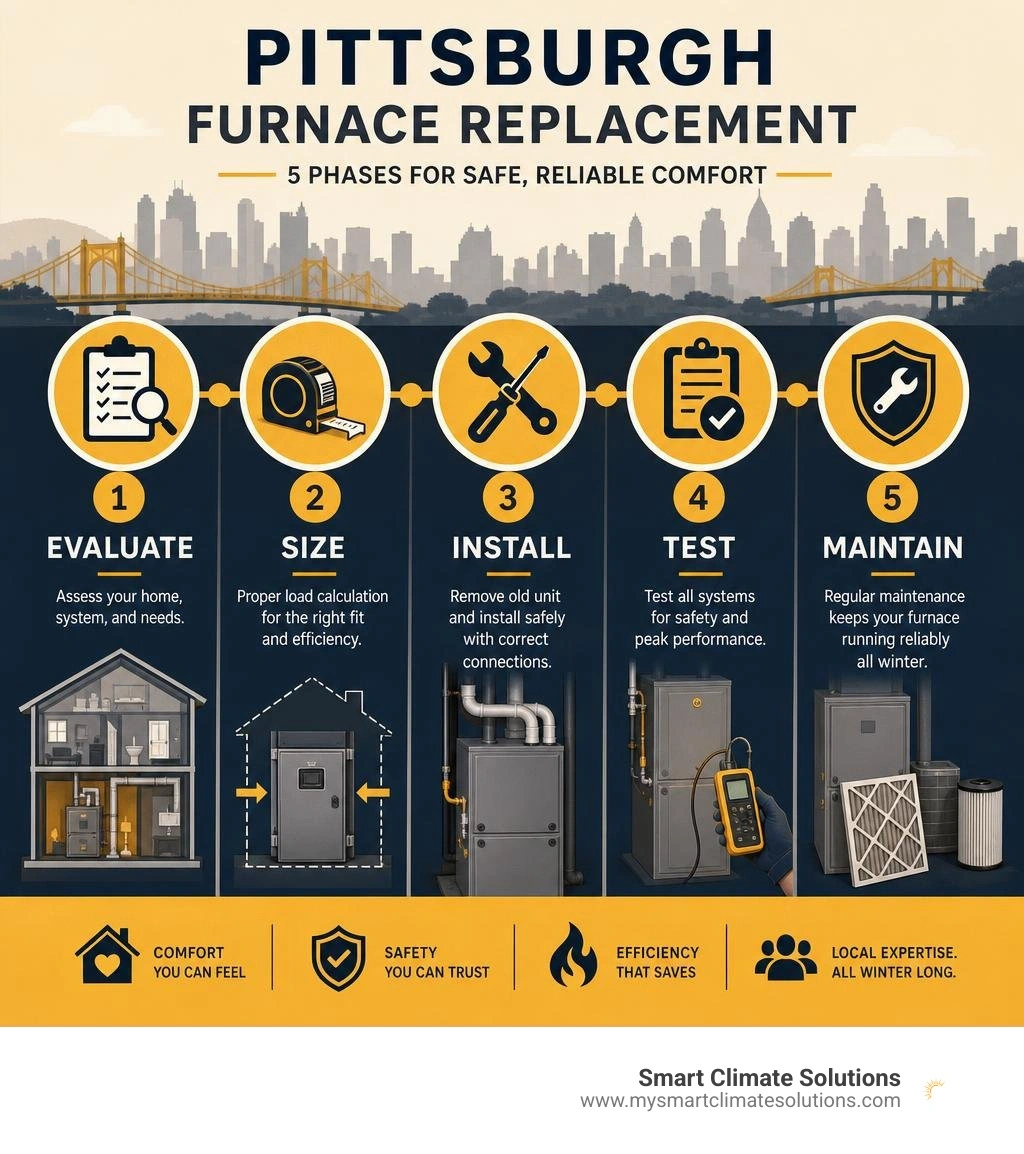
Professional Process for Furnace Installation Pittsburgh
Installing a modern gas furnace requires mechanical precision, electrical expertise, and certified gas handling. Our professional workflow ensures your property stays clean, safe, and up to code from start to finish. Whether you need service in Pittsburgh or surrounding communities like Burgettstown, utilizing proven installation protocols prevents unnecessary mid-winter service disruptions.
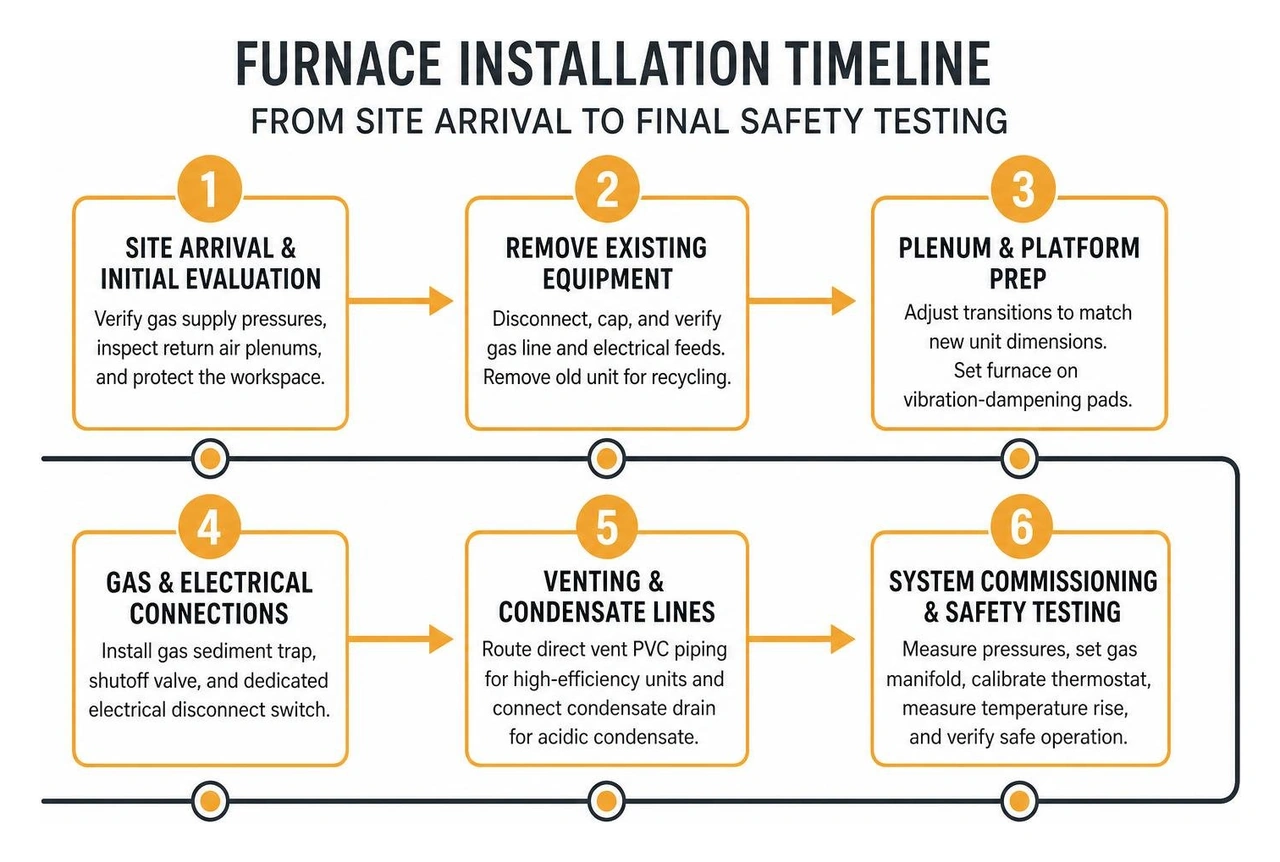
Here is what happens during a professional installation:
- Initial Site Evaluation: We verify gas supply pressures, inspect return air plenums, and ensure the workspace is protected with floor coverings.
- Safe Removal of Existing Equipment: The gas line and electrical feeds are disconnected, capped, and verified. The old unit is dismantled and removed for recycling.
- Plenum and Platform Prep: We adjust the transitions to match the new cabinet dimensions, setting the furnace on vibration-dampening pads.
- Precision Gas and Electrical Connections: We install a fresh gas sediment trap, shutoff valve, and dedicated electrical disconnect switch.
- Venting and Condensate Lines: Direct vent PVC piping is routed for high-efficiency condensing units, alongside dedicated drainage for acidic condensate.
- System Commissioning: We measure static duct pressures, set gas manifold pressures, calibrate your thermostat, and measure temperature rise across the heat exchanger.
You can learn more about our comprehensive equipment options through our HVAC Installation Services.
Installation Timelines and What to Expect
A standard residential heating replacement in our region typically takes between 4 and 8 hours. Straightforward replacements with accessible basements and compatible ductwork wrap up in a single afternoon. If your property requires custom sheet metal transitions, new electrical circuits, or side-wall PVC coring through stone foundations, the project may extend toward a full working day.
Our technicians perform continuous commissioning checks throughout the day. We do not leave until the burner flame profile is verified, carbon monoxide readings read zero in the ambient living space, and the system completes two full heating cycles without error codes. You can review the step-by-step technical requirements in our Furnace Installation Guide 2026.
Choosing the Right Contractor for Furnace Installation Pittsburgh
Selecting an HVAC contractor is the single most critical factor in system longevity. An improperly installed premium furnace will fail faster and cost more to run than an entry-level unit installed with care.
When evaluating installers in Pittsburgh, South Hills, Washington, Steubenville, or Weirton, verify these qualifications:
- Licensing and Insurance: Confirm active state registrations and comprehensive commercial liability insurance.
- NATE Certification: Technicians should hold recognized industry certifications in heating and gas combustion.
- Transparent Pricing: Quotes should detail equipment model numbers, labor warranties, permit fees, and disposal costs.
- 24/7 Emergency Support: Reliable companies stand behind their installations with round-the-clock emergency response teams.
- Warranties: Quality installations carry standard 10-year parts warranties alongside clear workmanship guarantees.
For a deeper look into selecting the right heating hardware, browse our guide on Furnace and Heating System Installation.
Avoiding Common Pitfalls in Older Pittsburgh Homes
Western Pennsylvania features historic housing styles ranging from brick rowhouses in Lawrenceville to century-old Victorians in the South Hills. While these homes have character, their utility basements often pose unique installation hurdles.
Over 60% of homes in Pittsburgh still utilize heating systems that are over 15 years old. These legacy setups are frequently 20% to 30% less efficient than modern systems. When replacing these units, common challenges include:
- Legacy Chimney Venting: Connecting a modern 80% furnace to an unlined, oversized brick chimney can cause condensation to rot the mortar joints. High-efficiency units solve this by venting directly through exterior walls with PVC piping.
- Undersized Electrical Panels: Upgrading older fuses or crowded panels may be required to power modern electronically commutated blower motors (ECM) and safety controls.
- Inadequate Combustion Air: Enclosing older basement spaces can starve natural-draft equipment of fresh oxygen, creating dangerous burner conditions.
Homeowners can avoid these pitfalls by reading our specialized Furnace Replacement Guide Pittsburgh 2026.
Addressing Ductwork Constraints and Retrofitting
Older gravity furnaces ("octopus" systems) used massive sheet metal runs that relied on natural convection. When modern forced-air units are placed on these legacy systems, static air pressure problems frequently emerge. Restrictive return air ducts choke the new blower motor, causing noisy operation, cold spots upstairs, and short-cycling.
Our installers fabricate custom sheet metal transitions on-site to maintain proper air velocities. Sealing supply trunk seams and balancing airflow helps lower static resistance, protecting the new motor and ensuring warm air reaches every room. If your existing setup has uneven heating or persistent airflow noises, review our Furnace Repair Pittsburgh Guide for common troubleshooting insights.
| Furnace Type | AFUE Rating | Estimated Installation Cost | Average Annual Fuel Savings |
|---|---|---|---|
| Older Legacy System | 60% - 70% | N/A (Existing) | Baseline |
| Standard Efficiency | 80% | $2,500 - $3,800 | 10% - 15% |
| High Efficiency (Single-Stage) | 92% - 95% | $3,800 - $4,800 | 20% - 25% |
| Premium Modulating (Variable-Speed) | 96% - 98% | $4,800 - $6,000+ | Up to 30% |
Investment Breakdown, Efficiency Gains, and Preparation Steps
The total investment for a furnace replacement in the Pittsburgh area ranges between $2,500 and $6,000. Equipment efficiency, cabinet size, gas line modifications, and venting complexity all influence final pricing.
Upgrading from an outdated unit to a modern condensing unit delivers noticeable utility relief. Because Pittsburgh endures freezing conditions for roughly two months each winter, an annual fuel reduction of up to 30% helps offset equipment costs over the life of the system. Additionally, many high-efficiency models qualify for federal tax incentives and utility rebates through local power and gas providers.
Approximately 85% of furnace replacements across the region take place during the autumn months between September and November. Scheduling your project during this window ensures you avoid sudden winter breakdown surges. Explore the mechanics of advanced condensing units through our guide on High Efficiency Furnace Installation.
Preparing Your Home for Installation Day
A smooth installation begins with straightforward home preparation. Taking a few simple steps before our installation crew arrives ensures the team works efficiently and safely:
- Clear the Pathway: Ensure basement stairs, exterior walkways, and driveways are clear of storage bins, tools, and clutter.
- Secure Family Pets: Keep pets comfortable in a separate, quiet room away from open exterior doors and tool traffic.
- Clear the Mechanical Space: Maintain a 4-foot perimeter around your furnace so technicians can safely maneuver sheet metal, dollies, and power tools.
- Provide Utility Access: Ensure clear paths to your main gas shutoff, water main, and main electrical breaker panel.
- Reserve Parking: Provide space in your driveway or directly in front of the home for our service vehicle and mobile sheet metal shop.
Frequently Asked Questions About Pittsburgh Heating Upgrades
How long does a standard furnace installation take in the Pittsburgh region?
A standard residential replacement takes between 4 and 8 hours. If your setup requires new PVC exhaust lines drilled through foundational walls, custom ductwork transitions, or electrical circuit updates, the installation may require a full work day.
What is the average cost of installing a new furnace in Pittsburgh?
Most standard furnace installations in the Pittsburgh area range between $2,500 and $6,000. The total cost depends on heating capacity (BTU output), efficiency ratings (80% vs. 96%+ AFUE), basement layout, and any necessary ductwork repairs. Flexible financing options can make high-efficiency upgrades manageable on a monthly budget.
When is the best time of year to replace a furnace in Pittsburgh?
The best time to install a new heating system is during early autumn, from September through November. Planning your upgrade ahead of the winter rush ensures flexible scheduling, prompt equipment availability, and peace of mind before freezing weather arrives.
Conclusion
Upgrading your home heating system is one of the most beneficial investments you can make for winter comfort, safety, and monthly utility control. By understanding local climate demands, ensuring accurate sizing calculations, and addressing the specific structural quirks of Western Pennsylvania homes, you can enjoy dependable heating for decades.
At Smart Climate Solutions, our certified technicians bring over 20 years of hands-on experience, 24/7 emergency support, and dedicated regional expertise to every project. Whether you reside in Pittsburgh, the South Hills, Washington, Burgettstown, Steubenville, St. Clairsville, or Weirton, we are ready to assist. Contact our team today for expert heating and cooling services tailored to your home.

.png)
