
.avif)
Why Your AC Compressor is the Heart of Home Comfort
New AC compressor installation involves replacing a failed compressor, which includes safely handling refrigerant, cleaning the system, and recharging it with the correct refrigerant type and amount.
Key Steps for New AC Compressor Installation:
- Turn off power and recover refrigerant safely using certified equipment
- Remove the old compressor and flush the entire system to remove contaminants
- Install the new compressor with correct oil type, new O-rings, and proper torque specs
- Evacuate the system with a vacuum pump for minimum 45 minutes
- Recharge with refrigerant per manufacturer specifications and test for leaks
- Verify performance by checking system pressures and temperature drop at vents
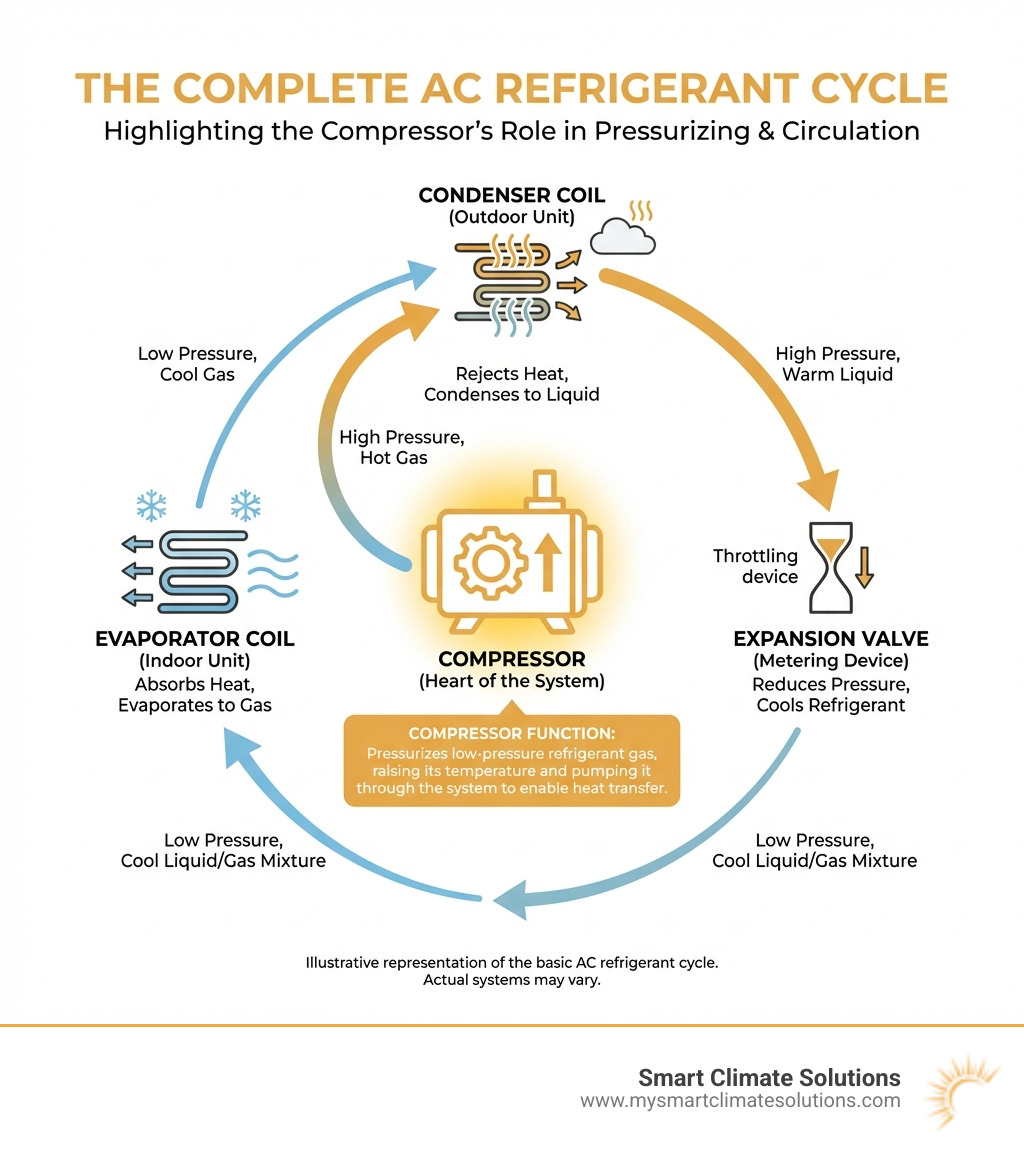
Your AC compressor is the heart of your cooling system, pressurizing and pumping refrigerant to make cool air possible. When it fails, especially on a hot Pittsburgh summer day, you're left with warm air from your vents.
The national average cost to replace an AC compressor is $800 to $2,300, with labor being a large part. This is complex work involving pressurized refrigerant, high-voltage electricity, and EPA-regulated substances. A poor installation can lead to failure in just three years, while a proper one can last 12-15 years or more.
I'm Bill Scott, general manager of Smart Climate Solutions. With over 20 years in the HVAC industry overseeing thousands of new AC compressor installations in Southwestern Pennsylvania, I know how critical proper installation is for system performance and longevity.
Is Your AC Compressor Failing? Key Signs and When to Act
On a hot Pittsburgh day, a struggling AC could mean a failing compressor. Recognizing the signs is key to restoring comfort and avoiding high energy bills from an overworked system.
Telltale Signs of a Dying Compressor
Several symptoms can indicate your AC compressor is failing. Ignoring these can lead to more damage to your HVAC system.
- Inadequate Cooling: Your AC blows warm air or doesn't cool effectively. The compressor's job is to pressurize refrigerant; if it fails, the cooling cycle stops.
- Strange Noises: Instead of a low hum, you hear loud grinding, squealing, or clanking from the outdoor unit. This indicates internal mechanical failure.
- Frequent Cycling: The AC unit turns on and off more than usual. This could be due to a struggling compressor, electrical issues, or overheating.
- Breaker Issues: A faulty compressor can draw too much power, repeatedly tripping your circuit breaker. This signals a serious electrical problem.
- Moisture or Fluid Leaks: Visible refrigerant or oil leaks near the outdoor unit are a red flag. Leaks harm performance and indicate a compromised system that can damage other parts. Learn more in our guide on AC Compressor Repair Cost.
Repair or Replace? Making the Smart Choice
If your compressor is failing, you must decide whether to repair it or replace the entire AC unit. This decision depends on several factors:
- System Age: If your AC is over 12 years old, a full replacement is often best. Putting a new part in an old system isn't cost-effective long-term. Units under 7 years, especially if under warranty, are better candidates for repair.
- Refrigerant Type: Older units using phased-out R-22 refrigerant make compressor replacement expensive. Upgrading to a modern unit with R-410A or R-32 is often a smarter investment.
- Repair Cost vs. New Unit Cost: If the compressor replacement costs more than 50% of a new, efficient AC system, a full replacement is usually the better choice.
- Multiple Past Breakdowns: Frequent repairs suggest the system is at the end of its life. A new compressor may only be a temporary fix.
- SEER Rating Improvements: New AC units have much higher SEER ratings, making them more energy-efficient. A new unit can lead to significant energy savings over time. For more on costs, see our Central AC Installation Cost guide.
Gearing Up: Tools, Safety, and System Prep for a New AC Compressor Installation
A new AC compressor installation is a complex job requiring precision, special tools, and strict safety protocols. The dangers of handling refrigerants and high-voltage systems are significant. Improper refrigerant handling is illegal and requires EPA certification, which is why our team is Section 608 Certified for safe, compliant service.

Critical Safety Precautions
Safety is our top priority. Before any work, take these precautions:
- Turn Off Power: This is non-negotiable. Turn off the power at both the main circuit breaker and the outdoor disconnect switch.
- Use a Voltage Tester: Always use a voltage tester to confirm the power is off before starting work.
- Wear Safety Glasses: Refrigerant and oil can cause severe eye injuries.
- Wear Protective Gloves: Refrigerant can cause frostbite, and the oil can irritate skin.
- Handle Refrigerant Legally: Releasing refrigerant is illegal and harmful to the environment. A certified recovery machine is required to safely reclaim it.
- Work in a Well-Ventilated Area: This helps dissipate any fumes.
Tools and Materials Checklist
Having the right tools is essential for a successful new AC compressor installation.
- Wrench and Socket Set
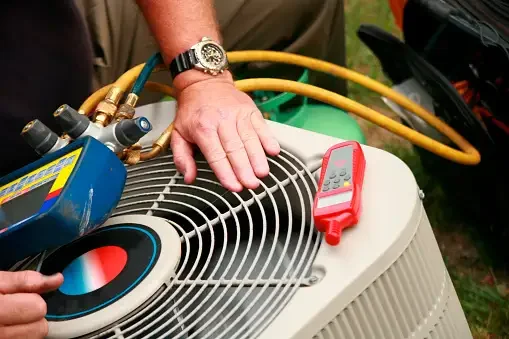
- AC Manifold Gauge Set
- Vacuum Pump
- Refrigerant Recovery Machine
- New AC Compressor (correct model)
- New Filter Drier/Accumulator (essential for warranty)
- Replacement O-rings and Seals
- Refrigerant Oil (correct type and amount)
- Torque Wrench
- Refrigerant (correct type and amount)
Preparing the System for the new AC compressor installation
Proper preparation is key to a long-lasting installation. Skipping these steps will likely cause premature failure.
- Refrigerant Recovery: Before disconnecting lines, the old refrigerant must be recovered with a certified machine to prevent illegal release and ensure compliance.
- System Flushing: This is a crucial step. A failed compressor spreads contaminants (metal particles, bad oil) throughout the system. These must be flushed out with approved agents to avoid damaging the new compressor. For major failures, condenser replacement may be necessary.
- Replacing the Filter Drier/Accumulator: This part filters debris and absorbs moisture. After a compressor failure, it's saturated with contaminants and must be replaced. This is often required to keep the new compressor's warranty valid.
- Inspecting Other Components: Check the orifice tube or expansion valve for contamination; replace if necessary. Ensure all related parts are clean and functional.
The Step-by-Step Installation Process
The process of a new AC compressor installation requires careful attention to detail. This is where professional expertise is crucial, as precision and following manufacturer specifications are paramount.
Removing the Old Compressor
With the system depressurized and power off, the old compressor can be removed:
- Disconnecting Refrigerant Lines: Carefully disconnect the suction and discharge lines. Cap them immediately to prevent contamination.
- Removing Wiring: Disconnect electrical connectors, taking photos if needed to remember the layout.
- Unbolting the Compressor: Remove the mounting bolts securing the compressor.
- Lifting Out the Old Compressor: Carefully lift the old, heavy compressor out of the unit.
The Core of the new AC compressor installation
Now for the main event:
- Positioning the New Compressor: Carefully place the new compressor into its mounting location.
- Adding Correct Type and Amount of Oil: New compressors have a factory oil charge, but it may need adjustment. Always use the exact type and amount of oil specified by the manufacturer.
- Replacing All O-rings and Seals: This is critical. Never reuse old ones. Lubricate new O-rings with refrigerant oil before installing.
- Bolting the New Unit Securely: Fasten mounting bolts to the manufacturer's specified torque. This prevents vibration and ensures proper alignment for a longer lifespan.
- Reconnecting Refrigerant Lines: Attach lines, ensuring new O-rings are seated. Tighten fittings to the manufacturer's torque specs to prevent leaks or damage.
- Rotating the Compressor Shaft: Before startup, manually rotate the compressor shaft about 10 times. This distributes lubricant and prevents damage.
Recharging and Testing the System
This phase is as critical as the installation itself.
- System Evacuation (Pulling a Vacuum): Connect a vacuum pump and evacuate the system for at least 45-60 minutes. This removes all air and moisture, which can cause corrosion and system failure.
- Checking for Leaks: After evacuation, let the system sit under vacuum for 15 minutes. If the gauge reading holds steady, there are no leaks. If it drops, a leak must be found and fixed.
- Recharging with Correct Refrigerant Type and Amount: Once leak-free, charge the system with the exact type and amount of refrigerant specified by the manufacturer. Incorrect charging damages the compressor.
- Monitoring System Pressures: As you recharge, monitor pressures with a manifold gauge set to ensure they are within the recommended range.
- Verifying Temperature Drop at Vents: With the system charged, turn on the AC. The air from the vents should be significantly cooler (around 20 degrees F or more) than the room air.
- Final Leak Check: Use an electronic leak detector to double-check all connection points.
- Performance Test: Allow the system to run to ensure consistent cooling, a key part of any AC Tune Up.
The Financial Breakdown: Costs, Challenges, and DIY vs. Pro
Understanding the costs and challenges of a new AC compressor installation helps you make an informed decision. While a DIY approach seems cheaper, the complexities often outweigh the benefits.
Understanding AC Compressor Replacement Costs
Costs vary based on the compressor type, unit size, and local labor rates.
- National Average Cost: The cost to replace an AC compressor ranges from $800 to $2,300, including parts and labor, with an average around $1,200.
- Compressor Part Cost: The part itself ranges from $200 to over $2,000, depending on the type (e.g., rotary, scroll, variable-speed).
- Labor Cost: Labor is a significant expense, with technicians charging hourly rates or a flat fee. For details, see our Labor Cost to Install AC Compressor article.
- Refrigerant Costs: The type and amount of refrigerant needed will add to the cost.
- Diagnostic Fees: Expect a diagnostic fee ($80-$150) to confirm the compressor has failed.
- Hidden Costs: Be aware of potential extra costs for replacing other failed components (like capacitors or filter-driers) or for units in hard-to-reach locations.
Common Pitfalls and How to Avoid Them
A new AC compressor installation can go wrong if procedures aren't followed.
- System Contamination from Debris: A failed compressor can spread debris through the system. Without a proper flush, this debris will destroy the new compressor.
- Improper Vacuum Leading to Moisture: Failing to pull a deep vacuum leaves moisture in the system, which forms corrosive acids and can freeze, causing rapid damage.
- Incorrect Oil or Refrigerant Charge: Using the wrong type or amount of oil or refrigerant harms performance and lifespan. Both overcharging and undercharging cause serious problems.
- Damaging New Seals During Installation: Rushing the installation can damage new O-rings, leading to leaks.
- Misalignment Causing Premature Failure: An improperly bolted compressor will vibrate excessively, shortening its life.
DIY vs. Hiring a Pittsburgh Professional
While saving on labor is tempting, a new AC compressor installation is a specialized job. We strongly advise against DIY due to the complexity, safety risks, and legal requirements.
| Feature | DIY Installation | Professional Installation (Smart Climate Solutions) |
|---|---|---|
| Total Cost | Lower upfront labor, higher risk of additional costs | Higher upfront, lower long-term risk |
| Required Tools | Expensive specialized tools (recovery machine, vacuum pump, gauges, torque wrench) required | All tools and equipment provided by technician |
| Time Commitment | Significant, especially for inexperienced individuals | Efficient, completed by experienced technicians |
| Risk of System Damage | High (contamination, improper charge, electrical issues) | Low (expert knowledge, proper procedures, warranty-backed work) |
| Legal EPA Compliance | Requires EPA Section 608 certification for refrigerant handling | All our technicians are fully certified and compliant (e.g., Section 608 Certified Technician Near Me) |
| Warranty | Often voided if not installed by a certified professional | Preserved and typically includes labor warranty from the contractor |
| Expertise | Relies on online guides, potential for critical errors | Decades of experience in HVAC systems, precise diagnosis and installation |
For homeowners in the Pittsburgh area, calling a professional from Smart Climate Solutions is the safest option. Our certified technicians have the expertise and equipment to do the job right. Our AC Repair Pittsburgh services are always available.
Frequently Asked Questions about AC Compressor Replacement
How long does a new AC compressor last?
A properly installed new AC compressor installation can last 10 to 15 years. Longevity depends on the installation quality, system cleanliness, and regular maintenance. A poor installation can lead to failure in as little as three years. A clean system with the correct charge is crucial.
When is it better to replace the whole AC unit instead of just the compressor?
It's often better to replace the entire AC unit instead of just the compressor in these situations:
- Age of the Unit: If your AC is over 12 years old, other parts are also aging. A new compressor might be a temporary fix before another part fails.
- R-22 Refrigerant: Systems using obsolete R-22 refrigerant are expensive to repair. A new unit uses modern, efficient, and more available refrigerant like R-410A.
- Frequent Breakdowns: A history of repairs suggests the system is failing. A full replacement is a more sensible long-term solution.
- Cost Comparison: If the compressor replacement costs more than 50% of a new system, it's usually smarter to replace the whole unit. New systems offer better efficiency and warranties.
What maintenance does a new AC compressor need to ensure its longevity?
To maximize your new compressor's lifespan, consistent maintenance is key:
- Annual Professional Tune-Ups: A yearly check-up by a certified HVAC technician can catch minor issues before they become major problems. They will inspect components, check refrigerant levels, and clean coils.
- Regularly Clean Outdoor Condenser Coils: Keep the outdoor unit's coils free of dirt and debris to prevent the compressor from overworking. A gentle rinse with a hose is often sufficient.
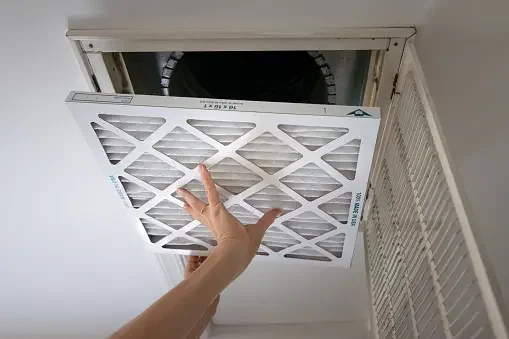
- Replace Indoor Air Filters on Schedule: A clogged filter makes your system work harder. Check filters monthly and replace them every 1-3 months.
- Keep the Area Around the Outdoor Unit Clear: Maintain at least two feet of clear space around the outdoor unit for proper airflow.
Implementing a maintenance plan, like those from Smart Climate Solutions, can significantly extend the life of your compressor. Explore our HVAC Maintenance Plan options to keep your unit running smoothly.
Conclusion: Ensuring Your Comfort for Years to Come
A new AC compressor installation is a significant investment. It's a complex process requiring specialized knowledge, tools, and adherence to safety and environmental rules. Every step, from diagnosis to testing, is critical for the longevity and efficiency of your AC.
A DIY replacement is risky. It can cause system damage, void warranties, and lead to legal issues with refrigerant handling. Cutting corners can cause the new compressor to fail in a few years instead of lasting its full 10-15 year lifespan.
For residents across Pittsburgh, South Hills, Burgettstown, Washington, Steubenville, St. Clairsville, and Weirton, trusting a certified professional for your new AC compressor installation is the surest way to restore comfort and protect your investment. Our team at Smart Climate Solutions brings over 20 years of certified experience to ensure your system operates at peak performance. A correct installation is key to efficiency and longevity. For expert diagnosis and professional installation services, contact our team. We're here to ensure your home stays cool and comfortable for years to come.

.png)
