
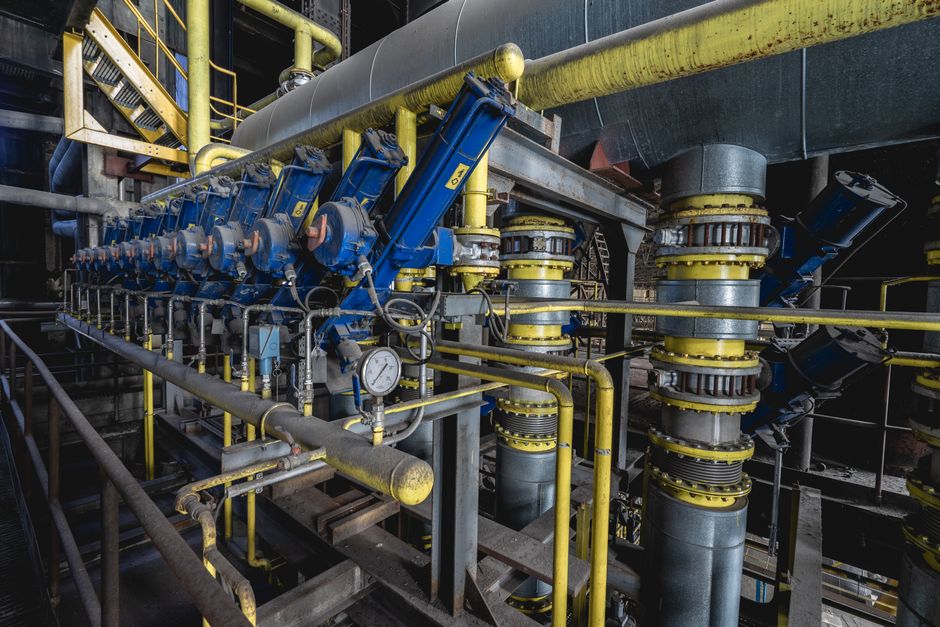
What is Process Piping and How Does It Differ from Utility Piping?
Process piping contractors are specialized mechanical contractors who design, fabricate, install, and maintain the piping systems that move fluids, gases, and solids through industrial facilities. If you need a quick answer, here is what you should know:
What process piping contractors do:
- Design piping systems using tools like AutoCAD, Revit, and 3D modeling
- Fabricate pipe spools, modular skids, and assemblies in a controlled shop environment
- Install systems on-site across industries like food and beverage, pharmaceutical, semiconductor, and chemical processing
- Handle materials ranging from carbon steel and stainless steel to high-alloy metals and specialty plastics
- Maintain and repair systems throughout their full service life
Key credentials to look for:
- ASME B31.3 code compliance
- ASME Section IX welding qualifications
- National Board R stamp and ASME PP stamp
- Certified Welding Inspectors (CWIs) on staff
- Experience with orbital and TIG welding for high-purity applications
Whether you are commissioning a new facility or upgrading an existing one, understanding what these contractors do - and how to evaluate them - can save you serious time and money.
I am Bill Scott, general manager of Smart Climate Solutions, with over 20 years of experience in mechanical systems including the industrial piping work that supports complex HVAC and process infrastructure. My background gives me a practical perspective on how process piping contractors fit into the broader picture of keeping commercial and industrial facilities running efficiently.
Process piping contractors vocab to learn:
- commercial air handler replacement
- hvac retrofit projects pittsburgh
- large scale mechanical contracting
To understand what process piping contractors do, we must first define what process piping actually is. In any industrial plant or manufacturing facility, you will find miles of pipe running overhead and along walls. However, not all pipes do the same job. Piping systems are generally divided into three distinct categories: process piping, utility piping, and plumbing.
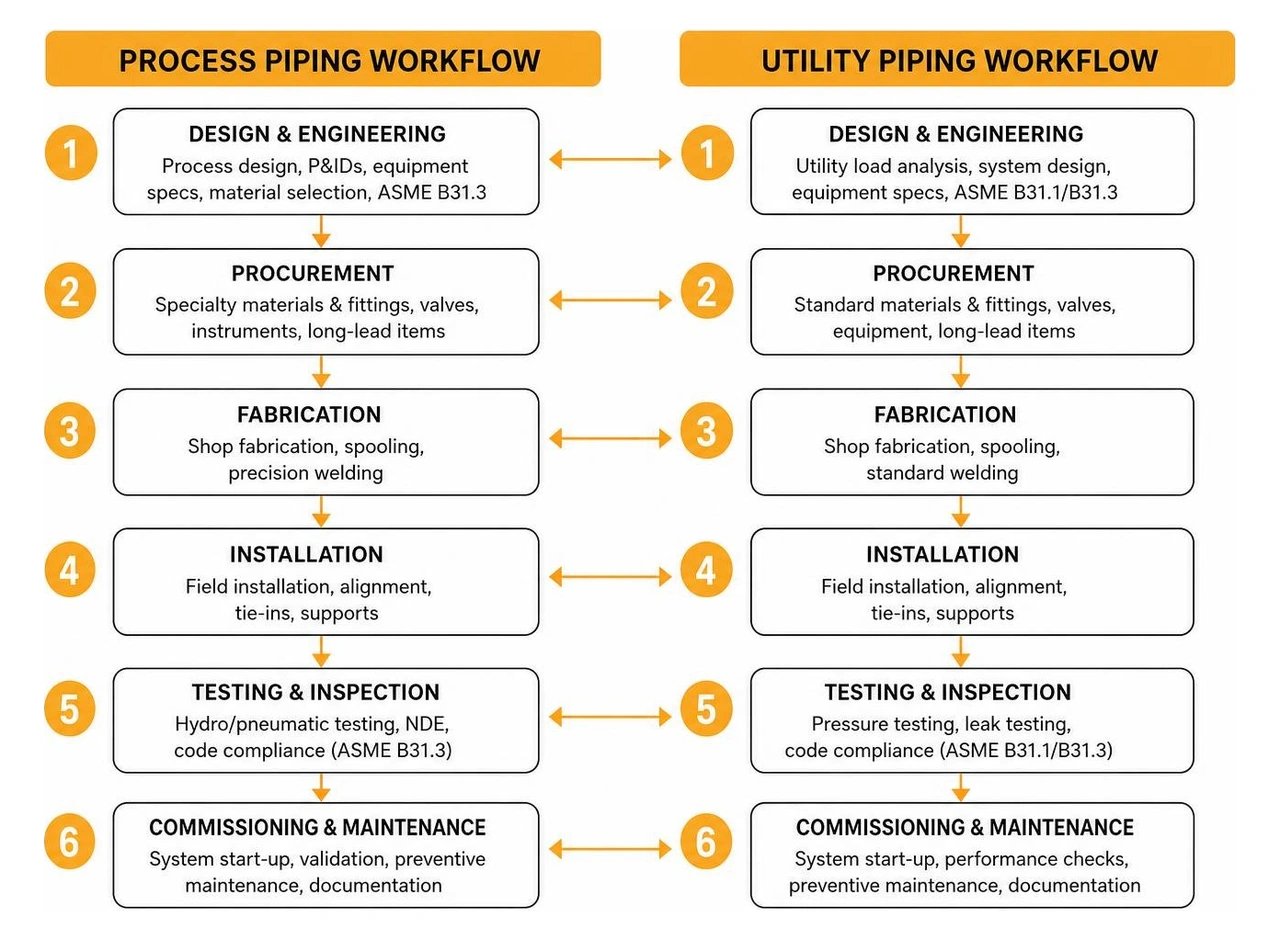
Process piping refers to the systems that transport raw materials, chemicals, gases, and fluids that are directly involved in the manufacturing or processing of a product. If the fluid or gas inside the pipe directly touches, mixes with, or chemically alters the product being made, it is process piping. Examples include raw chemical lines in a manufacturing plant, ingredient lines in a food production facility, or high-purity gases used in semiconductor manufacturing. These systems are governed by the strict ASME B31.3 code.
Utility piping, on the other hand, supports the facility's operations but does not directly interact with the manufactured product. This includes systems that carry compressed air, steam, chilled water, or hot water to keep the machinery and building running.
Plumbing is strictly for human use, carrying potable drinking water and sanitary waste throughout the building's restrooms and breakrooms.
| Feature | Process Piping | Utility Piping | Plumbing |
|---|---|---|---|
| Primary Function | Transports fluids/gases directly involved in production | Supports facility machinery and environment | Provides potable water and waste systems for occupants |
| Governing Code | ASME B31.3 (Process Piping) | ASME B31.1 (Power Piping) or B31.3 | Local Plumbing Codes & IPC |
| Common Materials | Stainless steel, Hastelloy, PVDF, Teflon-lined steel | Carbon steel, copper, PVC | Copper, PEX, PVC, cast iron |
| Typical Fluids | Acids, raw ingredients, high-purity gases, solvents | Steam, compressed air, chilled water, tower water | Drinking water, graywater, blackwater |
Understanding these differences is critical because the engineering, safety, and welding requirements for process piping are far more demanding than those for standard utility or plumbing lines. When you work with professional industrial piping specialists, you ensure your systems comply with the exact pressure, temperature, and chemical compatibility standards required for your specific industrial application.
Key Services Offered by Process Piping Contractors
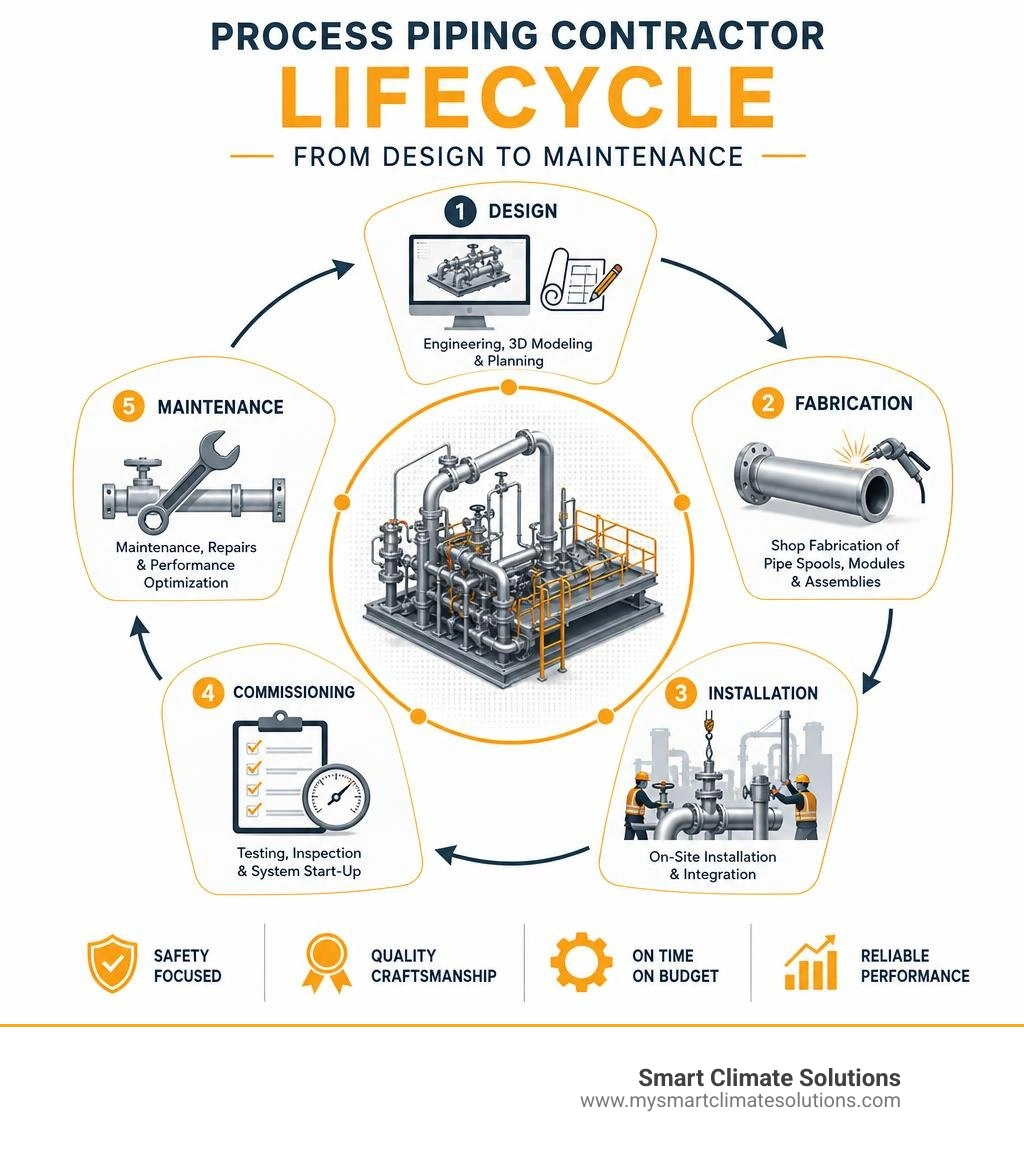
Experienced process piping contractors provide turnkey, full-lifecycle services to keep your plant running smoothly. This goes far beyond simply joining two pieces of pipe together in the field. A true partner handles everything from initial conceptual design to long-term preventive maintenance.
When we look at the scope of modern industrial projects, the services offered by top-tier contractors generally include:
- System Design and Engineering: Utilizing advanced 3D modeling, Revit, and stress analysis software to map out the piping layout before a single piece of metal is cut. This helps identify potential physical interferences (clash detection) and ensures the piping can handle the thermal expansion and pressure loads of daily operation.
- Material Selection: Guiding clients on the right materials for their specific fluid-flow needs, whether that means carbon steel, stainless steel, nickel alloys, copper, or specialty plastics like PVC, CPVC, and PVDF.
- Detailed Planning and Project Management: Coordinating material procurement, labor scheduling, and safety protocols to keep the project on schedule and within budget. This level of planning is highly integrated with Large Scale Mechanical Contracting to ensure the piping aligns perfectly with the facility's heavy mechanical equipment.
Custom Shop Fabrication and Modular Skid Assembly
One of the greatest advancements in modern industrial construction is the shift toward off-site prefabrication. Rather than fabricating every pipe spool and support on the active construction site, specialized contractors utilize a dedicated Piping Fabrication Shop Pittsburgh to build assemblies in a controlled environment.
This off-site approach offers massive advantages:
- Improved Quality Control: Welding in a clean, climate-controlled shop ensures highly consistent, code-compliant welds, free from the wind, dust, and temperature swings of an open construction site.
- Reduced Field Labor and Congestion: By fabricating pipe spools and modular skids off-site, contractors minimize the number of workers needed on-site, which dramatically improves safety and reduces scheduling conflicts with other trades.
- Modular Skid Construction: Contractors can build entire process systems - complete with pumps, valves, instruments, and piping - on a single structural steel frame (or skid) in the shop. Once completed, the skid is shipped to the site, set in place, and connected to the main utility lines.
For facilities looking to minimize downtime, choosing a partner with strong shop prefabrication capabilities is a game-changer. This off-site approach streamlines the entire construction timeline and ensures a higher level of quality control.
On-Site Installation by Process Piping Contractors
Once the prefabricated pipe spools and modular skids are ready, they are shipped to the job site for final installation. This phase requires extreme precision and strict adherence to safety protocols.
Field installation involves several complex steps:
- Rigging and Equipment Setting: Carefully moving heavy process equipment, tanks, and modular skids into place using cranes, gantry systems, and specialized rigging gear.
- System Integration: Connecting the prefabricated piping spools to the equipment, ensuring perfect alignment to prevent stress on the pump nozzles and vessel connections.
- Field Welding and Fitting: Employing highly trained, certified field welders to make the final connection welds (often called tie-in welds) under rigorous field conditions.
- Trenchless and Civil Coordination: For plants requiring underground process or utility lines, coordinating with civil teams for trenching or directional drilling.
Whether you are executing a project in Steubenville, OH, or looking for reliable mechanical support in West Virginia, working with qualified local professionals ensures your on-site team has the credentials and safety training required to work in high-risk industrial environments.
Critical Certifications and Welding Qualifications to Look For
You should never hire a contractor for a process piping project based on price alone. Because these systems often transport high-pressure steam, hazardous chemicals, or flammable gases, the quality of the workmanship is a direct safety concern for your entire facility.
When evaluating potential process piping contractors, always ask for proof of the following certifications and qualifications:
- ASME Section IX: This is the industry standard for welding and brazing qualifications. Any welder working on your process piping must be individually certified under ASME Section IX for the specific material, pipe thickness, and welding process being used.
- ASME PP Stamp: The Power Piping (PP) stamp indicates that the contractor is authorized by the American Society of Mechanical Engineers to fabricate and assemble pressure piping in accordance with ASME B31.1.
- National Board R Stamp: Issued by the National Board of Boiler and Pressure Vessel Inspectors, the R stamp is mandatory for any contractor performing metallic repairs or alterations on pressure-retaining items like boilers or pressure vessels.
- Certified Welding Inspectors (CWIs): Leading contractors employ in-house CWIs certified by the American Welding Society (AWS) to oversee all welding operations, perform visual inspections, and manage non-destructive examination (NDE) testing.
Working with a certified team that adheres to ASME standards gives you peace of mind that every weld on your system is documented, traceable, and fully compliant with national safety codes.
Handling High-Purity, Sanitary, and Hazardous Materials
Certain industries require specialized piping environments that go far beyond standard industrial standards. If you operate a food and beverage plant, a pharmaceutical laboratory, or a semiconductor manufacturing facility, your piping must meet high-purity or sanitary requirements.
Sanitary piping systems, which are common in the dairy, food, and beverage sectors, must be designed to prevent bacterial growth. This means using 3-A Sanitary Standards, which dictate the use of high-grade stainless steel (such as 316L) with an ultra-smooth internal surface finish. The piping must be fully drainable, with no dead legs where product can sit and stagnate, and must be compatible with Clean-in-Place (CIP) systems that flush the pipes with hot sanitizing chemicals.
High-purity systems, used in pharmaceutical and semiconductor manufacturing, require cleanroom fabrication. Any dust, moisture, or microscopic particles inside the piping can ruin an entire batch of medicine or destroy a run of microchips. Contractors handling these projects must weld the piping inside portable cleanrooms, using high-purity argon gas to purge the inside of the pipe and prevent oxidation during the welding process.
For hazardous materials like concentrated acids, toxic gases, or flammable solvents, contractors design and install double-containment piping systems. These consist of a primary inner pipe that carries the hazardous fluid, housed inside a secondary outer pipe. If the inner pipe leaks, the secondary pipe contains the spill, and integrated sensors trigger an alarm to alert facility operators.
Specialized Welding for Process Piping Contractors
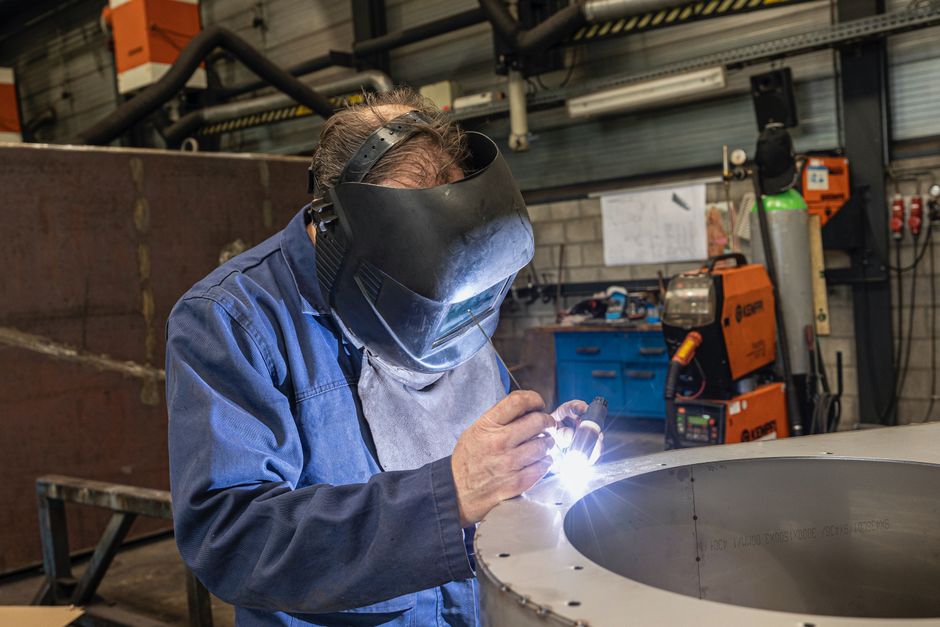
To achieve the ultra-smooth, crevice-free welds required for high-purity and sanitary piping, contractors rely on automatic orbital welding.
Unlike manual welding, where a human hand guides the torch, orbital welding uses a computerized system. The pipe is clamped into a welding head, and a mechanical arm rotates the electrode 360 degrees around the joint.
This process uses microprocessor-based power supplies to precisely control the electrical current, gas flow, and travel speed. The result is a highly consistent, perfectly penetrated weld that meets the stringent requirements of the pharmaceutical and semiconductor industries.
Frequently Asked Questions About Process Piping
Navigating industrial contracting can be complex. Here are answers to some of the most common questions facility managers ask when planning a process piping project.
What is the difference between process piping and power piping?
The primary difference lies in the governing codes and the function of the systems:
- Process Piping (ASME B31.3): Governs piping typically found in petroleum refineries, chemical plants, pharmaceutical facilities, textile mills, paper plants, and food processing facilities. It handles a massive range of fluids and gases under varying temperatures and pressures.
- Power Piping (ASME B31.1): Governs piping systems typically found in electric power generating stations, industrial steam plants, and high-pressure district heating systems. It focuses heavily on high-pressure steam and water systems associated with boilers.
Why is shop fabrication preferred over field fabrication?
Shop fabrication is highly preferred because it takes place in a controlled, indoor environment. This eliminates weather delays, provides welders with ergonomic workstations, and allows for the use of heavy, automated welding equipment that cannot be easily moved to a construction site.
Shop fabrication leads to higher weld quality, faster project timelines, and lower overall labor costs.
How do contractors ensure weld integrity in high-pressure systems?
Contractors use a combination of non-destructive examination (NDE) methods to verify that welds are free of defects before a system is put into service:
- Visual Testing (VT): A certified welding inspector visually examines every weld for surface defects.
- Radiographic Testing (RT/X-ray): Taking X-ray images of the welds to check for internal voids, cracks, or incomplete penetration.
- Hydrostatic Testing: Filling the completed piping system with water and pressurizing it to 1.5 times the design pressure to check for leaks.
- Pneumatic Testing: Using pressurized air or nitrogen for systems where water contamination is not allowed.
By utilizing these rigorous testing methods, professional contractors ensure near-perfect pass rates and long-term system reliability on complex industrial projects.
Conclusion
Industrial process piping is the lifeblood of your manufacturing or production facility. Because these systems operate under high pressures, extreme temperatures, and with hazardous materials, you need a contractor with the experience, certifications, and local presence to execute the job safely and efficiently.
At Smart Climate Solutions, we bring over 20 years of mechanical expertise to commercial and industrial clients throughout the region, including Pittsburgh PA, South Hills PA, Burgettstown PA, Washington PA, Steubenville OH, St. Clairsville OH, and Weirton WV. We understand how your process piping integrates with your broader mechanical infrastructure, and we help you keep those systems running at peak performance.
Whether you need to develop a comprehensive Commercial HVAC Maintenance Plan to protect your facility's climate controls, or you are looking for expert installation and emergency repair services, our certified technicians are ready to assist.
Explore our full range of capabilities on our Smart Climate Solutions Services page, and let us help you keep your facility safe, compliant, and highly productive.

.png)
