
What Size AC Unit Is Needed for a 1500 Sq Ft House?
A 1500 sq ft house typically needs a 2.5-ton to 3-ton AC unit, or about 30,000 to 36,000 BTU of cooling capacity. A well-insulated home with standard ceilings often fits 2.5 tons, while older, sunnier, or leakier homes may need 3 tons after a Manual J load calculation.
Finding the ideal cooling capacity for your home comes down to matching the space with the right output, measured in British Thermal Units (BTU) and tonnage. In the air conditioning trade, one ton equals 12,000 BTU per hour of heat removal.
For general planning, you can review this guide to AC sizing for 1500 sq ft to see standard tonnage benchmarks. However, residential sizing is never one-size-fits-all. Every home handles heat differently depending on architectural structure, construction era, and layout.
Baseline Tonnage for a 1500 Sq Ft House AC Unit
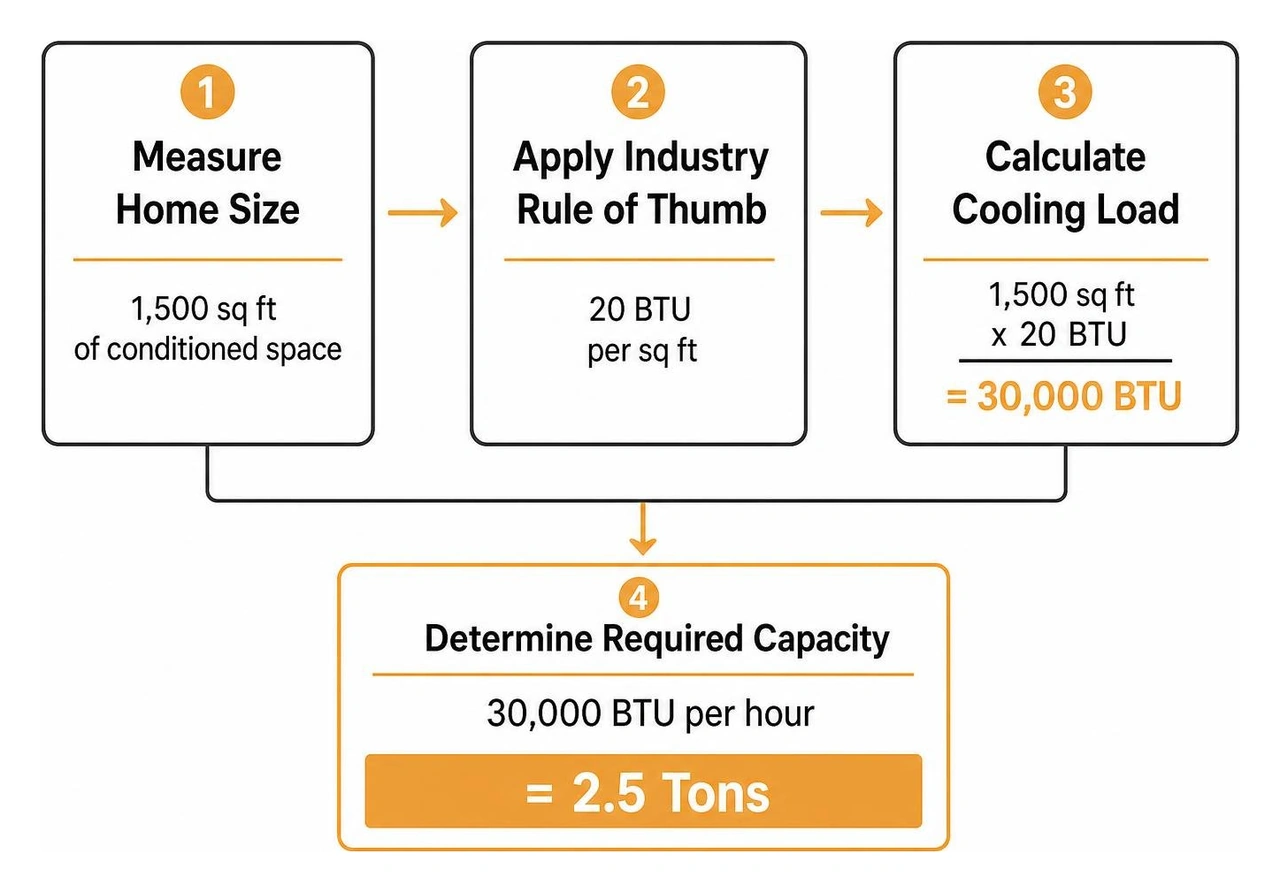
The basic rule of thumb across the HVAC industry uses roughly 20 BTU per square foot of conditioned space:
1,500 sq ft x 20 BTU = 30,000 BTU
Dividing 30,000 BTU by 12,000 BTU per ton gives you exactly 2.5 tons.
While 2.5 tons (30,000 BTU) serves as the standard baseline for medium-sized properties, homes frequently fall between 2.5 tons and 3 tons (36,000 BTU). In older communities throughout Pittsburgh PA, South Hills PA, and Washington PA, older framing and aging windows can push cooling needs toward the upper end of that spectrum.
Is 2.5 Ton or 3 Ton Better for 1500 Square Feet?
Choosing between 2.5 and 3 tons depends directly on your property envelope and local weather patterns:
- When 2.5 tons is better: If your 1500 sq ft house features modern double-pane low-E windows, standard 8-foot ceilings, solid attic insulation (R-38 or higher), and well-sealed ductwork, a 2.5-ton system provides steady, balanced cooling and excellent humidity extraction.
- When 3 tons is better: If your home has vaulted ceilings, significant direct afternoon sun exposure on west-facing glass, original 1950s wall insulation, or ducts routed through hot unconditioned attic spaces, a 3-ton unit prevents performance lag during July and August heatwaves.
If your home sits right on the edge of these two capacities, investing in a two-stage cooling system or an inverter-driven variable-speed compressor gives you the best of both worlds. These systems run at lower outputs during mild afternoons for superior dehumidification and ramp up to maximum output only on the hottest days. If you are weighing higher-capacity configurations, check out our guide on the Average Cost to Replace 3 Ton HVAC System.
The Critical Role of Manual J Load Calculations
Rule-of-thumb square footage estimates are helpful starting points, but they cannot replace a comprehensive Manual J load calculation. Standardized by the Air Conditioning Contractors of America (ACCA), a Manual J calculation evaluates dozens of physical factors:
- Exact wall, attic, and crawlspace insulation values
- Window surface area, frame types, and solar heat gain coefficients (SHGC)
- Compass orientation of the home and daily sun exposure patterns
- Air infiltration rates through door frames and building seams
- Internal heat loads generated by household appliances, lighting, and human occupants (each person generates 300 to 400 BTU per hour)
A licensed technician takes 45 to 90 minutes to measure your home for a proper Manual J assessment. This step ensures you never overpay for equipment capacity you do not need.
Key Factors That Impact 1500 Sq Ft House AC Unit Sizing
Beyond simple room dimensions, several physical characteristics dictate how much cooling energy your home demands. Exploring insulation efficiency guidance will show you how thermal barriers influence overall heat retention.
Ceiling Height and Room Air Volume
Square footage only accounts for floor space, but air conditioners cool three-dimensional volume.
A standard 1,500 sq ft home with 8-foot ceilings contains 12,000 cubic feet of air. If that same 1,500 sq ft home features open-concept 12-foot vaulted ceilings, the total air volume jumps to 18,000 cubic feet. That represents a 50% increase in air mass that must circulate across your cooling coil, which can quickly move your system requirement from 2.5 tons to 3 tons.
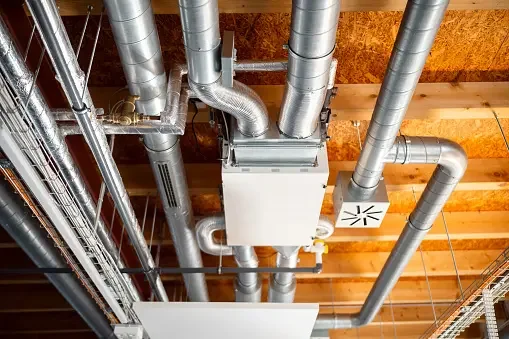
Ductwork Condition and Attic Heat Loss
Your duct network is just as vital as the cooling unit outside. In the HVAC industry, systems require approximately 400 cubic feet per minute (CFM) of airflow per ton of cooling:
- A 2.5-ton system requires roughly 1,000 CFM
- A 3-ton system requires roughly 1,200 CFM
If your existing duct lines are restricted, improperly sized, or unsealed, high static pressure will choke the system. Furthermore, uninsulated ductwork running through a 130-degree attic can lose 20% to 30% of your total cooling capacity before conditioned air ever reaches your registers. Sealing and insulating your ducts can reduce your required cooling load by up to 15%, often allowing you to choose a smaller, more economical unit.
System Types and Installation Costs
When upgrading a 1500 sq ft home, you have three primary equipment configurations to consider:
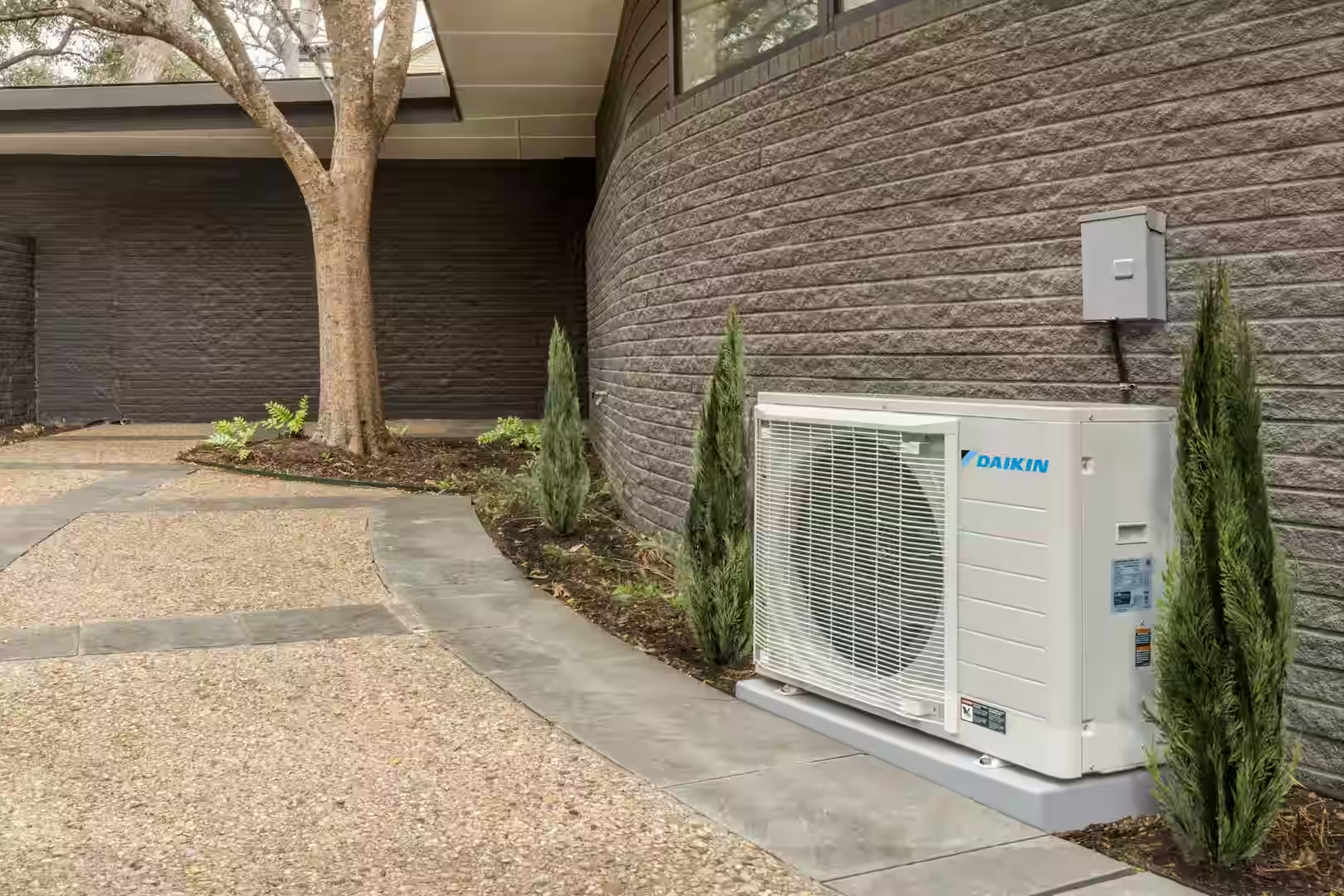
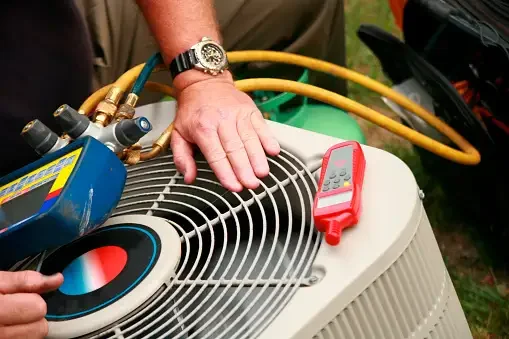
- Central Split Air Conditioner: The traditional pairing of an outdoor condenser with an indoor evaporator coil mounted to your furnace. Best for homes with healthy, existing duct networks.
- Central Air-Source Heat Pump: Looks identical to a central AC but features a reversing valve to deliver high-efficiency cooling in summer and electric heating in winter.
- Ductless Mini-Split System: Consists of an outdoor condenser connected by small refrigerant lines to individual, wall-mounted air handlers inside 3 to 4 distinct living zones. Ideal for older homes without ductwork.
| System Type | Typical Tonnage Range | Average Equipment Life | Best Fit For |
|---|---|---|---|
| Central Split AC | 2.5 - 3.0 Tons | 12 - 17 Years | Homes with sound ductwork and separate gas heating |
| Air-Source Heat Pump | 2.5 - 3.0 Tons | 12 - 15 Years | All-electric homes or dual-fuel systems |
| Multi-Zone Mini-Split | 2.5 - 3.0 Tons (Total) | 15 - 20 Years | Homes without ducts or with strict room zoning needs |
To explore overall equipment investments, read our breakdown on Central AC Replacement Cost.
Estimated Costs for a 1500 Sq Ft House AC Unit
Replacing an HVAC system in a 1,500 sq ft residence typically ranges from $3,300 to $9,500 installed. Most homeowners installing a standard-efficiency central split unit spend between $4,500 and $7,500 for equipment, labor, permits, and basic modifications.
Several factors influence the final price:
- Efficiency Level (SEER2): High-efficiency inverter systems (17 to 20+ SEER2) cost more upfront than baseline models (14.3 to 15.2 SEER2) but deliver lower monthly electrical bills. A 2.5-ton system running at SEER 14 averages $110 to $160 monthly during summer peaks, whereas higher SEER2 systems reduce operational costs significantly.
- Ductwork Modifications: Sealing, repairing, or adding returns to accommodate airflow adds to initial labor.
- Brand Tier and Sound Ratings: Units engineered with sound-dampening compressor blankets and variable-speed fan motors come at a premium.
For an extensive pricing overview, see our guides on How Much to Install Central Air and selecting the Most Efficient Home Air Conditioner.
Risks of Choosing the Wrong AC Size
Selecting an AC unit is a delicate balancing act. Installing either an oversized or undersized unit leads to comfort issues, elevated bills, and premature mechanical breakdowns.
Dangers of Oversized Air Conditioners
Many homeowners assume that buying a larger unit provides faster, better cooling. In reality, an oversized system runs into serious performance issues:
- Short-Cycling: A unit that is too large cools the air down quickly and shuts off after 5 to 8 minutes before running a full cycle.
- Poor Dehumidification: Removing moisture from indoor air requires sustained airflow across cold evaporator coils for 15 to 25 minutes per cycle. Short-cycling leaves high humidity trapped inside, creating a cold, clammy atmosphere that promotes mold growth in drywall and carpeting.
- Premature Equipment Wear: Repeatedly starting and stopping places severe stress on compressor windings and fan capacitors, shortening the system lifespan.
- Higher Utility Costs: Constant inrush current from frequent motor starts drives up electrical consumption.
Problems Caused by Undersized Units
An undersized unit creates the opposite set of problems:
- Nonstop Operation: During hot summer afternoons, an undersized compressor will run continuously for hours without reaching your thermostat setpoint.
- Hot and Cold Zones: Rooms furthest from the air handler or those with heavy sun exposure remain warm and uncomfortable.
- Overheating Components: Long runtimes without adequate rest cause compressor overheating and premature fan motor failure.
- Elevated Energy Bills: A unit running 24 hours a day consumes excessive electricity without ever making the home comfortable.
Frequently Asked Questions About 1500 Sq Ft AC Units
Can a 2-ton AC unit cool a 1500 sq ft house?
A 2-ton (24,000 BTU) system can only cool a 1,500 sq ft home in cooler northern climates (Climate Zones 5 and 6) if the home possesses superior air sealing, premium attic and wall insulation, shaded exposures, and tight ductwork. For average homes in Southwestern PA and the Upper Ohio Valley, a 2-ton system will struggle during humid summer peaks and run constantly.
How many BTUs are required to cool 1500 square feet?
Most 1,500 sq ft homes require between 30,000 and 36,000 BTU of total cooling output (2.5 to 3.0 tons). Exact requirements vary based on ceiling height, window quality, and sun exposure.
Does a higher SEER2 rating change the required tonnage?
No. SEER2 (Seasonal Energy Efficiency Ratio 2) measures electrical efficiency - how much cooling the system produces per watt of electricity consumed. Tonnage measures total heat-removal capacity. A 2.5-ton 14 SEER2 system and a 2.5-ton 20 SEER2 system provide the exact same cooling output; the 20 SEER2 model simply uses less electricity to do the job.
Conclusion
Finding the right cooling system for your 1,500 sq ft home ensures quiet operation, balanced indoor humidity, and lower monthly utility bills for years to come. While a 2.5-ton system is the most common industry baseline, verifying your home's unique layout with a Manual J load calculation guarantees you get the right equipment fit without overspending.
If your home currently uses baseboard heat, radiators, or lacks ducting, learn more about installing central air without existing ductwork to review your options.
At Smart Climate Solutions, our certified technicians bring more than 20 years of hands-on experience serving homeowners across Pittsburgh PA, South Hills PA, Burgettstown PA, Washington PA, Steubenville OH, St. Clairsville OH, and Weirton WV. Whether you need a precision sizing consultation, an equipment replacement, or 24/7 emergency support, our team is ready to help. Contact us today to schedule your home cooling evaluation!

.png)
