

AC Not Cooling but Not Frozen? Start With These Checks
If your AC is not cooling but not frozen, start with the simple checks: confirm the thermostat is set to Cool and the fan is set to Auto, replace a clogged filter, open blocked vents, and make sure the outdoor unit has clear airflow. If the indoor blower runs but the air stays warm, likely causes include a dirty condenser coil, a tripped breaker, a failed capacitor or contactor, low refrigerant from a leak, or a compressor problem.
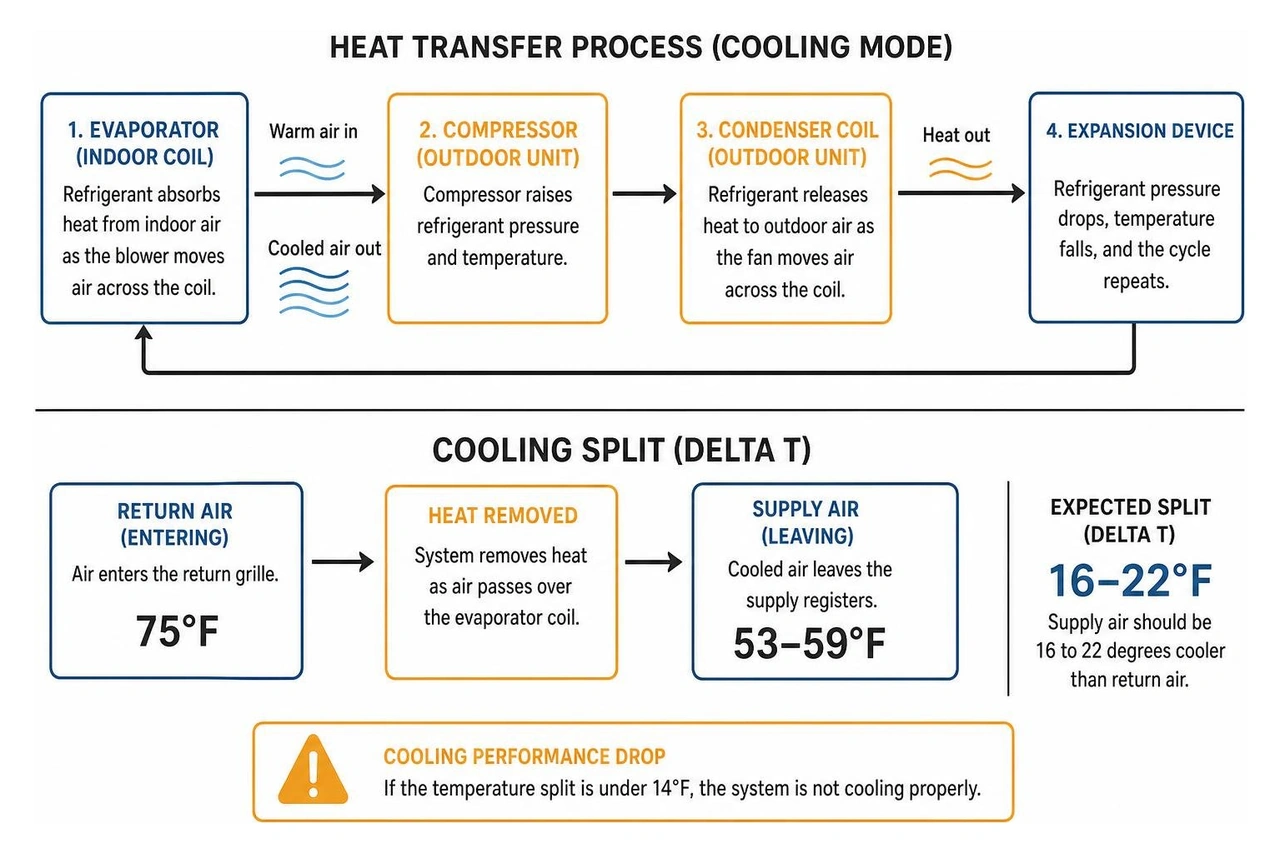
No ice does not mean the system is healthy. Ice usually points to severe airflow loss or low refrigerant pressure, but many cooling failures happen before a coil gets cold enough to freeze. A healthy central AC should generally deliver supply air about 16 to 22 degrees cooler than the air entering the return grille.
For Pittsburgh, PA homeowners, a sudden warm-air problem is often worth addressing quickly. Letting an AC run without actually cooling can waste power and may put extra strain on the compressor.
I am Bill Scott, General Manager of Smart Climate Solutions, with more than 20 years of HVAC experience serving homeowners across Pittsburgh and Southwestern PA. I have diagnosed countless cases of AC not cooling but not frozen, from simple filter restrictions to electrical and refrigerant failures, and the steps below will help you narrow down the cause safely.

Primary Reasons for an AC Not Cooling but Not Frozen
When an air conditioner runs continuously without building ice on the copper lines or indoor coil, homeowners often assume the refrigerant system is operating normally. That is a common misconception. Ice develops only under specific low-temperature thresholds, typically when restricted airflow or moderate pressure drops push the evaporator coil below the 32 degree Fahrenheit mark.
A functioning cooling system produces a supply-to-return temperature split, also known as Delta T, between 16 and 22 degrees. If the air entering your return grille is 75 degrees, the air blowing out of your supply registers should measure between 53 and 59 degrees. When that temperature split drops under 14 degrees, cooling performance degrades dramatically, leaving your system blowing lukewarm air while consuming full electricity.
If you notice your hvac blowing warm air on cool, the problem stems from a breakdown in the refrigeration cycle or an electrical disconnection preventing proper heat exchange.
Identifying Mechanical Failures in an AC Not Cooling but Not Frozen
The most frequent mechanical failure behind a running system that fails to cool involves the outdoor dual run capacitor. This component supplies the continuous electrical phase shift required to power both the outdoor fan motor and the hermetic compressor.
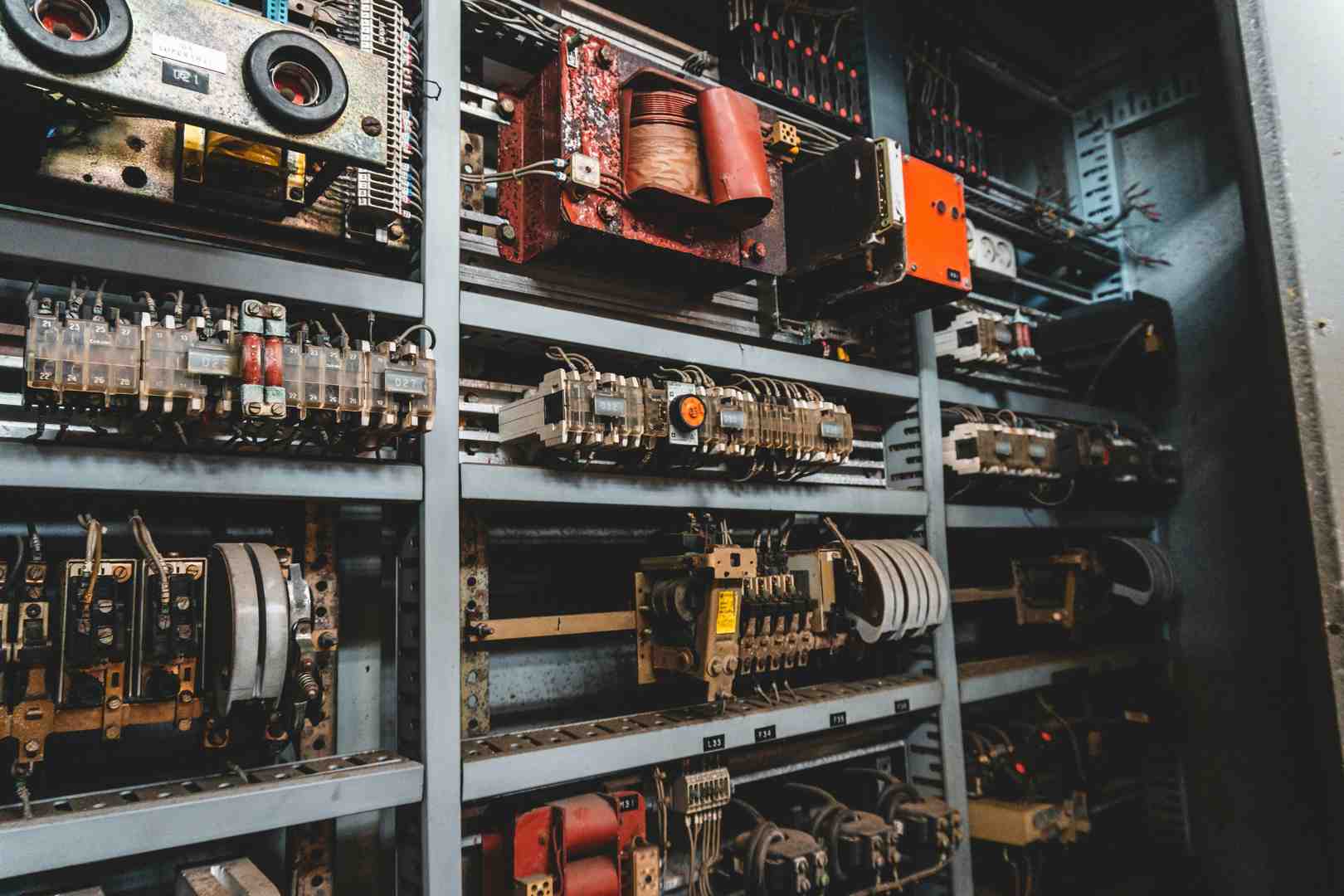
When a dual run capacitor weakens, its microfarad rating drops. If it degrades more than 10 percent below its rated specification, it can fail to start the compressor motor entirely while still supplying enough power to spin the top fan. As a result, the outdoor unit appears to be running, but without the compressor pumping refrigerant, zero heat absorption occurs.
Other common electrical and mechanical culprits include:
- Pitted or Burnt Contactor Points: The contactor acts as a high-voltage switch controlled by your 24-volt thermostat. Arcing over time builds black carbon deposits on the contact points, preventing line voltage from reaching the compressor.
- Compressor Thermal Overload: If the compressor overheats due to electrical resistance or internal mechanical wear, an internal safety switch disconnects power to protect the motor windings. This results in an ac compressor not starting even while the outdoor fan spins freely.
- Failed Fan Motor Bearings: A failing fan motor running below rated RPM prevents proper heat rejection, raising system temperatures and forcing safety lockouts.
Thermostat and Electrical Glitches with an AC Not Cooling but Not Frozen
Thermostat misconfigurations account for many non-frozen cooling issues. The first setting to check is the fan mode switch:
- Fan Set to "ON": Forces the indoor blower to circulate air 24 hours a day, regardless of whether the outdoor compressor is running. During off-cycles, room-temperature air blows continuously through your supply vents.
- Fan Set to "AUTO": Ensures the blower operates exclusively when the system is actively cooling.
Weak or dead batteries in digital thermostats can disrupt control signals sent through the low-voltage wiring, preventing the outdoor contactor from pulling in.
Additionally, central split systems operate on two distinct 240-volt electrical circuits. A tripped breaker in your main electrical panel can shut off power to the outdoor condenser while leaving the indoor air handler running. This circulates unconditioned air throughout your home without triggering an ice buildup on the indoor coil.
Safe DIY Troubleshooting and System Reset Steps
Before scheduling a service call, you can perform several safe, practical checks to isolate common causes. If your system requires deeper diagnostics, reviewing an ac not cooling properly complete guide can help you understand how each component interacts.

Safe Homeowner Reset Sequence
Modern HVAC equipment incorporates internal safety timers and high-pressure lockouts that can prevent restart after brief power fluctuations. To perform a safe system reset:
- Switch the Thermostat Off: Move the system mode switch to the "OFF" position.
- Locate the Electrical Breaker: Open your main electrical panel and switch the 240-volt double-pole breaker labeled "AC" or "Air Conditioner" to the full OFF position.
- Wait 5 Full Minutes: Allowing the system to rest for at least 5 minutes discharges residual control board power and lets the refrigerant pressures equalize across the system.
- Restore Electrical Power: Flip the circuit breaker back to the ON position.
- Reactivate Cooling Mode: Return your thermostat to "COOL" and set the desired temperature at least 3 to 5 degrees below the current room temperature.
- Observe the Startup Cycle: Most modern thermostats incorporate a 3 to 5-minute compressor lockout delay to protect against short cycling. Wait for this delay period to end, then verify if cold air begins flowing from the registers.
Physical Airflow and Line Set Checks
Proper airflow is vital for cooling efficiency. Even if the evaporator coil has not frozen, restricted airflow limits heat absorption and strains your blower motor.
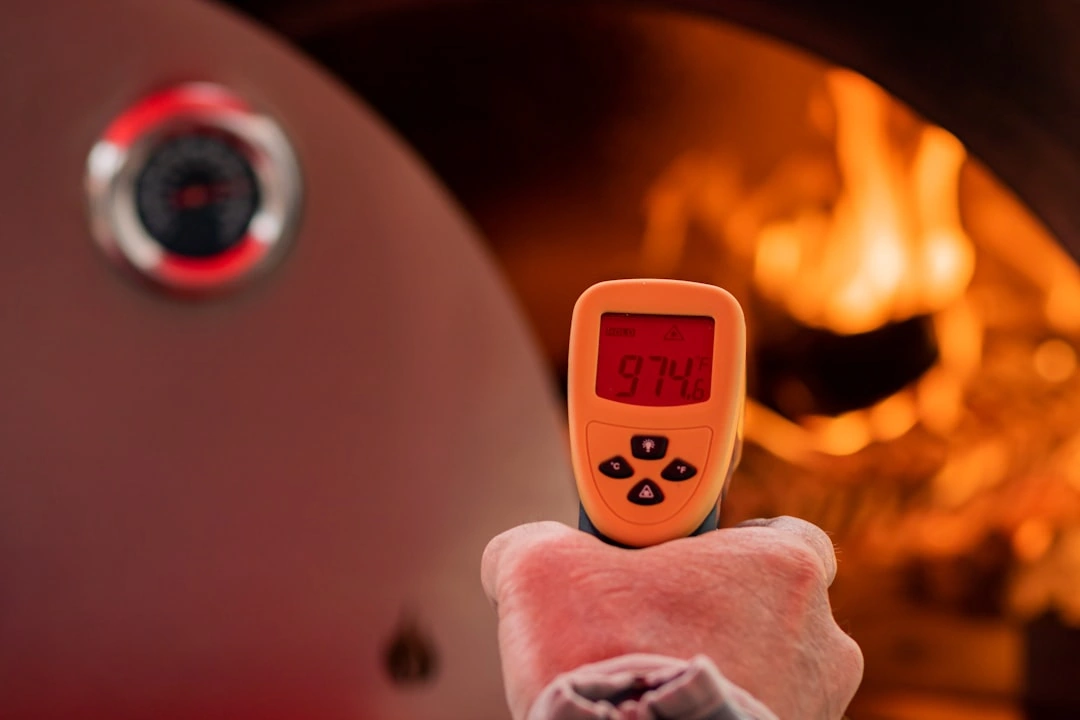
- Inspect the Air Filter: Hold your filter up to a bright light source. If light does not pass through easily, replace it immediately. In dusty summer conditions, standard 1-inch pleated filters can reach capacity within 30 days.
- Check Supply and Return Registers: Ensure furniture, drapes, or area rugs are not obstructing return grilles. Avoid closing more than 20 percent of supply registers, as closing dampers increases internal duct static pressure and degrades airflow.
- Feel the Copper Line Set: Locate the pair of copper pipes connecting your indoor air handler to the outdoor unit. The larger, insulated pipe (suction line) should feel cold and sweat slightly during normal operation. The smaller, uninsulated copper pipe (liquid line) should feel warm to the touch. If both lines remain at ambient room temperature, the compressor is not operating or refrigerant is severely depleted.
- Check Ductwork in Unconditioned Spaces: In homes across Pittsburgh, PA, South Hills PA, and Washington PA, disconnected flex ducting in hot attics or basements can pull 120-degree attic air directly into the supply stream, overwhelming the air conditioner's cooling capacity without causing coil icing.
Outdoor Unit and Refrigerant Problems Without Ice
The outdoor condensing unit is responsible for rejecting heat absorbed from inside your home. If heat transfer is restricted outdoors, the entire refrigeration cycle stalls.
Dirty Condenser Coils and Heat Rejection
Over months of operation, the outdoor condenser pulls in grass clippings, dirt, pollen, and airborne debris. This buildup cakes onto the thin aluminum fins, trapping heat inside the condenser coil.
When heat cannot escape, the compressor operates under elevated head pressure. This raises operating temperatures, lowers overall cooling capacity, and can trip the internal thermal limit switch.
Homeowners can maintain proper heat rejection by ensuring a two-foot clear perimeter around the outdoor cabinet. Trimming overgrown shrubs and washing the exterior coils restores proper airflow. For caked-on dirt, professional condenser coil cleaning ensures deep contaminants are cleared safely without bending delicate fins.
If the outdoor fan motor fails to spin while the cabinet runs hot, you may be dealing with a broken ac fan motor, which prevents outdoor heat exchange entirely.
Recognizing Refrigerant Leaks Without Coil Freezing
Air conditioners operate as closed-loop systems. They do not consume or burn off refrigerant during normal operation. A low charge always indicates an active leak.
While moderate refrigerant loss often causes an evaporator coil to drop below 32 degrees and freeze, an early-stage or severe leak may bypass freezing entirely:
- Early-Stage Leaks: When the refrigerant charge drops slightly, the coil runs warmer than designed, producing lukewarm air without ever reaching freezing temperatures.
- Severe Refrigerant Loss: If most of the refrigerant has leaked out, system pressure drops too low to produce any cooling effect at all, leaving the coil at room temperature.
Common signs of a non-frozen refrigerant leak include:
- Hissing or bubbling noises near the indoor coil or outdoor service valves.
- Oily residue or dark dust accumulation around copper fittings, which indicates escaping oil mixed with refrigerant.
- Continuous runtime where the indoor temperature drops less than 1 degree every 15 to 20 minutes under normal outdoor conditions.
- A temperature split well below the standard 14 to 20 degree baseline.
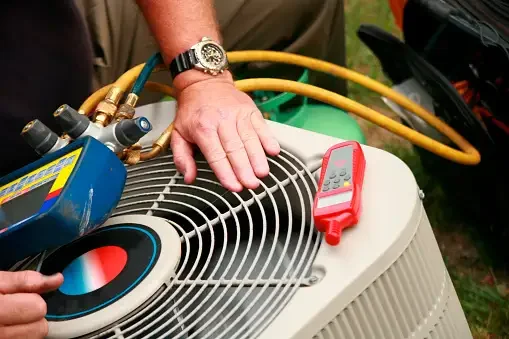
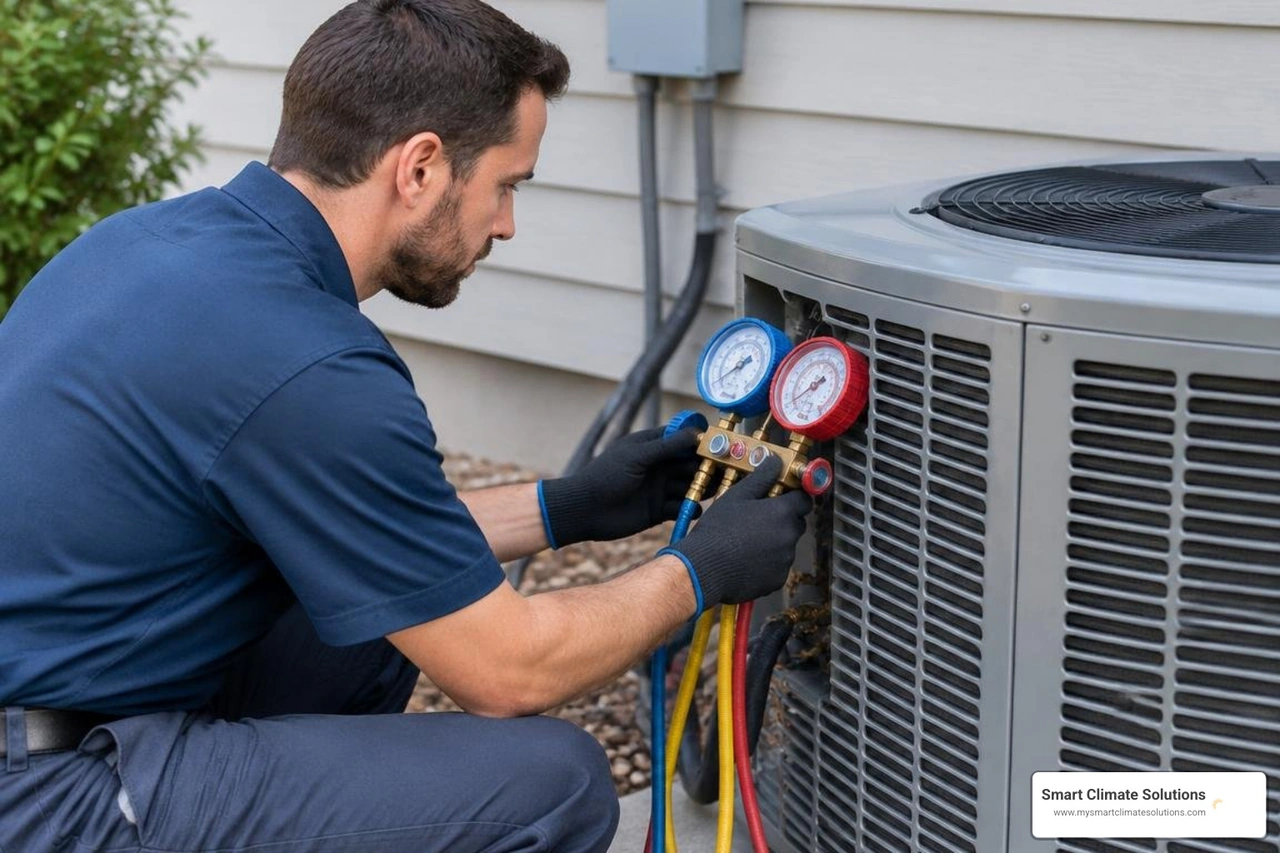
Under federal EPA Section 608 regulations, handling, recovering, and charging refrigerants requires certified technicians using calibrated manifold gauges and electronic leak detectors.
Repair Costs and When to Shut Down the System
If your air conditioner continues blowing warm air, shut the system off at the thermostat immediately. Running an overloaded or undercharged system starves the compressor of proper lubrication and cooling, turning a minor electrical or airflow issue into an expensive compressor replacement.
| Symptom / Fault | Typical Root Cause | Estimated Professional Cost (Parts & Labor) |
|---|---|---|
| Outdoor fan spins, compressor humming / silent | Failed dual run capacitor | $180 - $320 |
| Outdoor unit completely unresponsive | Pitted contactor or tripped breaker | $150 - $350 |
| Airflow weak, supply air lukewarm, coil clean | Severely clogged air filter | $15 - $50 (DIY replacement) |
| Outdoor unit blowing cool air, compressor hot | Clogged condenser coil fins | $100 - $300 (Professional wash) |
| Line set neutral temp, hissing sounds | Refrigerant leak repair & recharge | $350 - $900+ (Varies by leak site) |
| Compressor drawing locked-rotor amps | Internal mechanical compressor failure | $1,800 - $3,500+ |
Routine preventive maintenance, including a seasonal ac tune up, ensures capacitors, contactors, and operating pressures are tested before summer heat waves arrive.
Frequently Asked Questions About AC Cooling Failures
How do I reset my central AC if it is not blowing cold air?
To reset your central AC, switch your thermostat to the "OFF" position. Go to your home's main electrical panel and turn off the double-pole 240-volt circuit breaker assigned to the air conditioner. Leave the breaker off for a minimum of 5 minutes to discharge residual voltage from the internal control board and allow system refrigerant pressures to equalize. Turn the breaker back on, set your thermostat to "COOL", and lower the temperature setpoint 3 to 5 degrees below the room temperature. Allow up to 5 minutes for the thermostat lockout delay to engage the outdoor compressor.
What does it mean if my AC is blowing warm air but the outdoor unit is running?
When the outdoor unit appears to run while vents blow warm air, the outdoor fan is spinning while the compressor remains unpowered or disengaged. This most commonly points to a blown compressor run capacitor, a burnt contactor switch, or a tripped internal thermal overload protector. Without the compressor pumping and compressing refrigerant through the lines, the indoor blower simply circulates ambient air through your home.
Can a dirty condenser coil cause an AC to not cool without freezing?
Yes. A dirty outdoor condenser coil prevents heat absorbed from your home from releasing into the outdoor air. This causes internal head pressure and refrigerant temperatures to rise. Instead of freezing, the system runs hot, degrading cooling capacity and often causing the compressor to cycle off prematurely on thermal overload while the indoor blower continues running.
Conclusion
A central cooling system that runs without lowering indoor temperatures requires prompt attention, even when no ice is present on the lines. While checking thermostat settings, resetting breakers, and replacing dirty filters are safe steps for homeowners, underlying electrical defects and refrigerant leaks require professional tools and certified expertise.
At Smart Climate Solutions, we bring over 20 years of dedicated HVAC experience to homeowners throughout Pittsburgh PA, South Hills PA, Burgettstown PA, Washington PA, Steubenville OH, St. Clairsville OH, and Weirton WV. Our certified technicians provide fast, reliable diagnostics and 24/7 emergency repair support.
If your system is running warm or you are experiencing a new air conditioner not cooling, contact our team today to restore your home's comfort and keep your cooling system running efficiently all summer long.


.png)
