
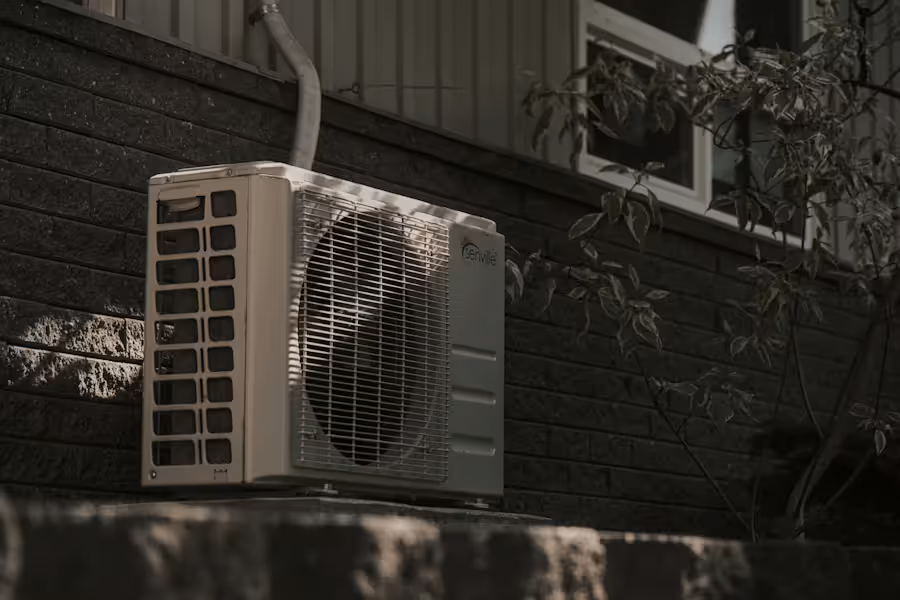
Why Your AC Fan Motor Matters More Than You Think
A Broken AC fan motor can quickly turn your comfortable home into a sweatbox, especially during Pittsburgh's humid summers. If you're noticing issues with your air conditioner, here are the most common signs of a failing fan motor:
Key Signs of a Failing AC Fan Motor:
- Fan blades won't start - The outdoor fan sits completely still when the AC is running
- Slow-moving blades - The fan spins sluggishly or stutters
- Strange noises - Rattling, humming, squealing, or grinding sounds from the outdoor unit
- Intermittent operation - The fan turns on and off randomly or won't shut off when it should
- Burning smell - A hot or burning odor coming from the condenser unit
- Frequent breaker trips - Your circuit breaker keeps shutting off the AC
- No cold air - The AC runs but doesn't cool your home effectively
The outdoor fan motor is critical to your AC system's operation. It cools the refrigerant that flows through your condenser coils and prevents your compressor from overheating. When it fails, the entire cooling process breaks down.
Most AC condenser fans last 10-15 years with proper maintenance, but neglecting routine service can reduce their lifespan to just four years. The replacement cost typically ranges from $250 to $1,800, while ignoring the problem can lead to compressor failure costing $2,500 to $6,500.
I'm Bill Scott, and over my 15 years in the HVAC industry serving Pittsburgh and Southwestern PA, I've seen countless cases where a Broken AC fan motor went undiagnosed until it caused catastrophic compressor damage. Understanding these warning signs can save you thousands of dollars and keep your family comfortable when temperatures soar.

7 Telltale Signs Your AC Fan Motor is Failing
When Pittsburgh summers hit, a working air conditioner is not a luxury; it is essential for keeping your family comfortable. Recognizing the warning signs of a Broken AC fan motor early can save you from sweltering heat and costly repairs. Let's walk through the seven most common symptoms that tell you your AC fan motor needs attention.

1. The Fan Blades Won't Start or Spin Slowly
You step outside and notice your AC unit humming, but something is wrong. The big fan on top of your outdoor unit is not spinning, or it is barely moving and seems sluggish. This is one of the clearest red flags that your AC fan motor is failing.
When fan blades will not start, the motor is not getting the power it needs. Often, the culprit is a failed capacitor, which gives the motor the electrical boost to start up. Without that initial push, your motor sits idle even though the rest of your system is trying to work.
Slow-spinning fan blades tell a different story. Your motor is working, but it is struggling. The motor is straining, using more energy but delivering far less cooling power. This reduced airflow means your condenser coils cannot release heat properly, and your whole system suffers.
If your HVAC Running But Not Blowing Air effectively, especially from the outdoor unit, a failing fan motor is a likely reason. The unit works harder and your energy bills climb, but your home stays warm.
2. You Hear Rattling, Humming, or Squealing Noises
Your AC should run with a steady, quiet hum. When you start hearing unusual sounds like rattling, buzzing, squealing, or grinding, your outdoor unit is trying to tell you something.
Rattling noises usually mean something has come loose inside the fan assembly. A bolt may have vibrated free, or the fan blades are hitting the housing. Either way, those loose parts can cause serious damage if they are not secured.
Humming or buzzing sounds, especially when the fan is not spinning, often point to electrical problems. The motor is getting power and trying to start, but something is preventing it from turning. This could be a bad capacitor, seized bearings, or debris blocking the fan blades.
Squealing or grinding sounds are the most concerning. These harsh noises signal worn-out bearings inside the motor. Bearings allow the fan to spin smoothly, and when they fail, metal grinds against metal. One homeowner described their experience with a hot, non-spinning motor that would not turn, a situation that often starts with these warning sounds.
Do not ignore these noises. They are your motor's way of crying out for help before it fails completely.
3. The Fan Runs Intermittently or Won't Shut Off
A properly functioning AC fan turns on when your system needs to cool, then shuts off when the job is done. When that pattern gets disrupted, you have a problem.
Intermittent operation, where the fan randomly turns on and off, often happens when the motor is overheating. Many motors have built-in thermal protection that shuts them down when they get too hot, then allows them to restart once they cool. This on-again, off-again cycle means your motor is struggling.
Faulty wiring can also cause this erratic behavior, sending inconsistent power to the motor and creating unpredictable operation.
On the flip side, a fan that will not shut off even when the cooling cycle ends typically points to failing motor bearings or electrical issues. This continuous operation wastes energy, drives up your electric bill, and accelerates wear on an already compromised motor.
If your AC Not Cooling properly and the fan seems to have a mind of its own, the motor is likely the culprit. Your system cannot maintain the right temperatures when the fan is not operating on schedule.
4. Your Circuit Breaker Frequently Trips
When your AC unit keeps tripping the circuit breaker, it is a serious warning sign. Your electrical system is designed to shut off power when something draws too much current, and a failing Broken AC fan motor is a common cause.
As motors wear out, they often require more power to operate. Internal electrical problems, like short circuits or damaged windings, can cause the motor to draw excessive current. Your circuit breaker trips to protect your home's electrical system from damage or fire.
Some homeowners repeatedly reset the breaker without investigating the cause. This is not just inconvenient; it is dangerous. An overloaded electrical circuit can overheat wiring in your walls and create a fire hazard.
If your AC is constantly tripping the breaker, do not ignore it. This is an electrical problem that needs immediate professional attention. That is exactly why we offer 24 Hour Emergency AC Repair service, because some problems cannot wait until Monday morning.
The bottom line: These four warning signs, along with burning smells, no airflow, and visible damage, are your early warning system. Catching a Broken AC fan motor before it fails completely can save you from a much bigger repair bill and keep your Pittsburgh home comfortable all summer long.
Understanding the Cause and Effect of a Failing Fan Motor
When your AC isn't cooling properly, it's easy to get frustrated. But understanding what the AC fan motor does and why it fails can help you appreciate its importance and the urgency of addressing issues.
What Does the AC Fan Motor Do?
The AC fan motor plays a crucial, unsung role in your air conditioning system, particularly in the outdoor condenser unit. Its primary function is to power the large fan blades that circulate air over the condenser coils. This process is vital for heat dissipation. As the superheated refrigerant flows through these coils, the fan blows air across them, releasing the heat into the atmosphere. Without this heat exchange, the refrigerant cannot cool down and condense back into a liquid, which is essential for the cooling cycle to continue inside your home.
The fan motor keeps the compressor from overheating. The compressor is the heart of your AC system, responsible for circulating the refrigerant. If the fan isn't doing its job, the compressor has to work harder in an increasingly hot environment, leading to a significant risk of overheating and eventual failure. So, while you might not think about it often, the AC fan motor is directly responsible for both cooling your home and protecting the most expensive component of your entire system. It's the unsung hero that ensures overall system efficiency and longevity.
Common Causes of a Broken AC Fan Motor
Like any mechanical component, AC fan motors are susceptible to wear and tear over time. However, several factors can accelerate their demise:
- Wear and Tear: This is the most common culprit. Bearings wear out, electrical connections degrade, and the motor simply reaches the end of its operational life. Most AC condenser fans are designed to last 10 to 15 years, but this is highly dependent on how well they are maintained.
- Lack of Maintenance: This is perhaps the biggest avoidable cause. Without regular AC tune-ups, dirt and debris can accumulate, components aren't lubricated, and minor issues go unnoticed. A lack of routine maintenance can drastically shorten the lifespan of a fan motor, sometimes reducing it to as little as four years.
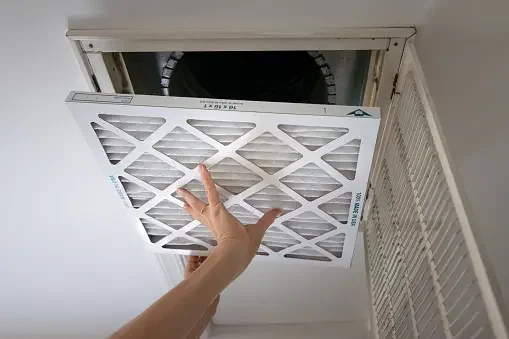
- Dirt and Debris: The outdoor unit is constantly exposed to the elements. Leaves, twigs, dust, and other airborne particles can get sucked into the unit, obstructing the fan blades or coating the motor, causing it to overheat and work harder. Clean filters are also crucial; dirty indoor air filters can indirectly cause the outdoor fan motor to work harder as the entire system struggles.
- Electrical Issues: Problems like a faulty start capacitor or a bad centrifugal switch are common. The capacitor provides the initial electrical boost to get the motor spinning. If it fails, the motor might hum but not turn, leading to significant heat buildup. Faulty wiring or voltage fluctuations can also damage the motor.
- Corrosion: Exposure to moisture and harsh weather conditions, especially during our Pittsburgh winters, can lead to corrosion and rust on the fan blades and motor components. This weakens the parts and can cause imbalances or structural failure.
- Overheating: When a motor struggles due to any of the above reasons, it generates excessive heat. Prolonged overheating can damage the motor windings and other internal components, leading to complete failure.
Risks & Costs of a Broken AC Fan Motor
Ignoring a broken AC fan motor isn't just about sweating through a Pittsburgh summer. It's about watching a small problem snowball into a financial nightmare that could have been easily prevented.
When that fan stops spinning, your entire AC system enters a danger zone. What starts as a simple motor issue quickly becomes a threat to every component in your outdoor unit.
The Domino Effect: How a Bad Fan Motor Damages Your AC
Think of your AC fan motor as the cooling system for your cooling system. When it fails, your compressor loses its only defense against overheating. The refrigerant that should be releasing heat into the air just sits there, getting hotter and hotter. Your compressor keeps working, but now it's operating in what's essentially an oven.
The overheating compressor is where things get expensive fast. This vital component, already one of the hardest-working parts of your AC, starts running at dangerous temperatures. The refrigerant pressure builds beyond safe levels. Internal components begin to wear at an accelerated rate. Eventually, the compressor seizes up completely.
But the damage doesn't stop there. A non-functional outdoor fan can cause your indoor evaporator coils to freeze. When the outdoor unit can't reject heat properly, the indoor unit compensates by getting too cold. Moisture freezes on the coil, blocking airflow and potentially cracking the coil itself. Now you're looking at damage on both sides of your system.
This is the true cost of a broken AC fan motor. What could have been a straightforward repair becomes catastrophic system failure. A $500 fix turns into a $5,000 disaster. Understanding how your Air Conditioning Compressor relies on that outdoor fan makes it clear why acting quickly matters so much.
How Much Does an AC Fan Motor Replacement Cost?
Here's the good news: replacing an AC fan motor is one of the more affordable major repairs your system might need. Most homeowners in the Pittsburgh area pay between $250 and $800 for a complete fan motor replacement, including professional installation. Some situations, depending on the motor type, brand, or warranty coverage, might range up to $900 to $1,800.
Several factors influence where your repair falls in that range. The type of motor your unit uses matters. A standard PSC motor costs less than a high-efficiency ECM motor. Your AC brand and model plays a role too, since some manufacturers use proprietary motors that cost more to source. Local labor rates in Pittsburgh, Weirton, and Steubenville vary slightly, and your warranty status can dramatically reduce your out-of-pocket costs if coverage still applies.
Compare that motor replacement cost to what happens if you wait too long. A new compressor runs $2,500 to $6,500 installed. A complete AC unit replacement starts around $3,500 and can easily exceed $7,500 for a quality central air system. Suddenly, that $500 motor repair looks like the bargain of the century.
The math is simple. Address the broken AC fan motor now, and you're looking at a few hundred dollars. Ignore it and risk compressor failure, and you're facing bills that are five to ten times higher. For detailed pricing information specific to your situation, check out our guide on the Cost to Replace HVAC Fan Motor.
Every day you run your AC with a failing fan motor, you're gambling with thousands of dollars. That's a bet no homeowner should take.
Your Next Steps: Maintenance, Repair, or Replacement?
Finding that your AC fan motor is failing can feel overwhelming, especially during a hot Pittsburgh summer. The good news? You have options, and understanding them will help you make the best decision for your home and budget. Let's walk through what comes next.
The Power of Prevention: How Regular Maintenance Helps
Here's the truth: most AC fan motor failures are preventable. I've seen it time and again over my two decades in the HVAC industry. The difference between a motor that lasts four years and one that runs strong for fifteen years almost always comes down to maintenance.
Think of it like changing the oil in your car. Skip it a few times, and you might get away with it. Keep skipping it, and you're heading for expensive engine trouble. Your AC fan motor works the same way.
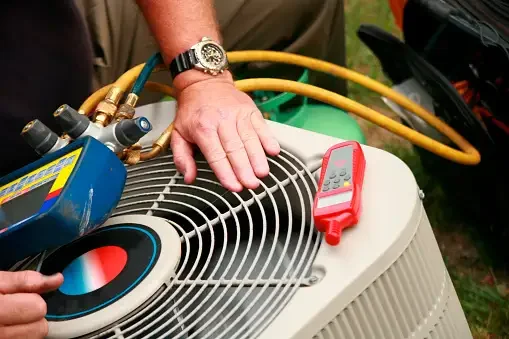
During our annual tune-ups, we focus on the things that keep your fan motor healthy. We clean the condenser coils so your motor doesn't have to work overtime pushing air through a dirty barrier. We lubricate the bearings and moving parts to reduce friction that wears components down. We check all the electrical connections, test the capacitor, and spot small issues before they turn into big problems.
The homeowners I work with who invest in regular Air Conditioner Maintenance rarely face surprise breakdowns. They save money on their energy bills because their systems run efficiently. And when it's 90 degrees outside, they're not sweating inside waiting for an emergency repair. If you're wondering Are HVAC Maintenance Plans Worth It, consider this: a $150 tune-up can prevent a $1,500 repair.
Prevention isn't glamorous, but it's powerful. And in the Pittsburgh area, where we put our AC systems through the wringer every summer, it's essential.
Repair vs. Replacement for a Broken AC Fan Motor
When you're facing a broken AC fan motor, the repair-or-replace question depends on a few key factors.
The age of your unit matters most. If your AC is under ten years old and has been well-maintained, repairing the fan motor is usually a no-brainer. You're looking at a few hundred to maybe a thousand dollars to get everything running again, and you'll likely get several more good years out of the system.
But if your unit is pushing fifteen years or older, we need to have a different conversation. That fan motor repair might get you through this summer, but what about next summer? Or the one after that? Older systems tend to develop multiple issues, and you could find yourself paying for repair after repair.
Cost-benefit analysis is crucial. If the motor replacement costs $600 and a new unit would be $5,000, repair makes sense. But if you've already spent $800 on a compressor issue last year, another $700 on refrigerant, and now you need a new motor, you're throwing good money after bad.
Sometimes the decision is made for you. Older or uncommon AC models can have motors that are hard to find or prohibitively expensive. In severe cases where the motor is completely burned out, repair simply isn't viable.
Our team at AC Repair Pittsburgh will always give you an honest assessment. We'll look at your specific situation, explain your options clearly, and help you make a decision that makes sense for your home and budget. We're not here to sell you something you don't need.
When to Consider Replacing the Entire AC Unit
Sometimes, a broken AC fan motor is the symptom that reveals a bigger truth: your AC unit has reached the end of its useful life.
Age is the biggest factor. If your system is over 10-15 years old, modern units are so much more efficient that replacement often pays for itself through lower energy bills. Today's systems have much higher SEER ratings, which means they use less electricity to produce the same cooling.
Frequent repairs are a red flag. If you're calling us every summer for a different problem, your AC is telling you something. When repair costs start adding up to half the price of a new unit, it's time to seriously consider replacement.
R-22 refrigerant is another consideration. If your older unit still uses R-22 (Freon), you're working with an outdated technology. R-22 has been phased out, making it expensive and increasingly difficult to obtain. Any repair involving refrigerant will cost significantly more than it should.
Compressor damage changes everything. If your failing fan motor caused your compressor to overheat and fail, you're looking at a repair bill that could run $2,500 to $6,500. At that point, investing in a new, efficient system makes more financial sense.
I've helped hundreds of homeowners in the South Hills, Steubenville, and Weirton areas make this decision. The right choice depends on your specific circumstances, but we'll walk you through it honestly. For a detailed look at what a new system costs, check out our guide on Central AC Replacement Cost.
The bottom line? Whether you need maintenance, repair, or replacement, we're here to help you stay comfortable without breaking the bank.
Frequently Asked Questions about AC Fan Motors
Over my two decades serving Pittsburgh homeowners, I've fielded hundreds of questions about AC fan motors. Let me address the most common concerns I hear when families are facing cooling issues.
How long should an AC fan motor last?
Here's the good news: a well-maintained AC fan motor is built to last. Under proper care, you can expect your motor to serve you reliably for 10 to 15 years, sometimes even longer. I've seen some motors in carefully maintained systems push past 20 years.
But here's the sobering reality I need to share with you. When homeowners skip those annual tune-ups and neglect routine care, that same motor might only give you about four years of service. That's a staggering difference, isn't it? The lesson is clear: those regular inspections and cleanings aren't just recommendations; they're essential investments in your system's longevity.
Can I run my AC if the fan is broken?
I get asked this question a lot, usually from homeowners hoping to squeeze out just a few more days of cooling. My answer is always an emphatic no. Running your AC with a broken AC fan motor is like driving your car without coolant; you're asking for catastrophic failure.
Without that fan doing its job, your compressor has no way to shed the intense heat it generates. It'll keep running, working harder and harder, getting hotter and hotter, until something gives. And when the compressor fails, you're looking at a repair bill between $2,500 and $6,500. That's five to ten times what a simple fan motor replacement would have cost. The moment you notice your fan isn't working, turn off your system at the thermostat and give us a call. It's not worth the risk.
Is it safe to inspect the AC fan motor myself?
I appreciate homeowners who want to understand their systems, and a careful visual check from the outside is perfectly fine. Look for obvious problems like debris blocking the fan or visible damage to the blades. But that's where your DIY efforts should stop.
AC units contain high-voltage capacitors that can hold a lethal electrical charge even hours after you've shut off the power. I've seen these capacitors deliver a shock that can stop your heart. Always turn off all power to the AC unit at the breaker box before you even think about getting close to the unit. But honestly, given the complexity of electrical components and the very real safety hazards involved, it's best to leave diagnosis and repairs to professionals.
Our technicians are Section 608 Certified, which means they have the training, tools, and experience to safely work on these systems. Your safety is worth far more than the service call, and we're here to help keep both you and your AC running safely.
Stay Cool with Professional HVAC Service
When your broken AC fan motor starts showing warning signs during a sweltering Pittsburgh summer, time isn't on your side. Whether you're in South Hills, Burgettstown, Washington, Steubenville, St. Clairsville, or Weirton, the last thing you want is to be caught without reliable cooling when temperatures climb. But here's the thing: ignoring those rattling sounds, sluggish fan blades, or tripped breakers doesn't just mean a few uncomfortable nights. It sets off a domino effect that can destroy your compressor and turn a manageable repair into a budget-breaking replacement.
We've seen it happen too many times. A homeowner notices their outdoor fan running slowly or making odd noises, thinks "I'll deal with it later," and then a few weeks later they're facing a $5,000 compressor replacement instead of a $600 motor repair. That's why we're so passionate about proactive maintenance and prompt professional service at Smart Climate Solutions.
Our certified technicians bring over 15 years of hands-on experience to every service call. We don't just fix the immediate problem - we look at your entire system to make sure a broken AC fan motor hasn't already started damaging other components. We check your compressor, inspect your electrical connections, clean your coils, and give you straight answers about whether repair or replacement makes the most sense for your situation and budget.
We know that AC emergencies don't wait for business hours. That's why we offer 24/7 emergency support when you need it most. Your comfort and safety are our top priorities, and we're committed to protecting your investment while keeping your home cool and comfortable.
Don't wait until a failing fan motor becomes a catastrophic system failure. For expert diagnosis and repair, contact our certified technicians for HVAC service and repair. We'll get your system running right and help you avoid those expensive surprises down the road.

.png)
