
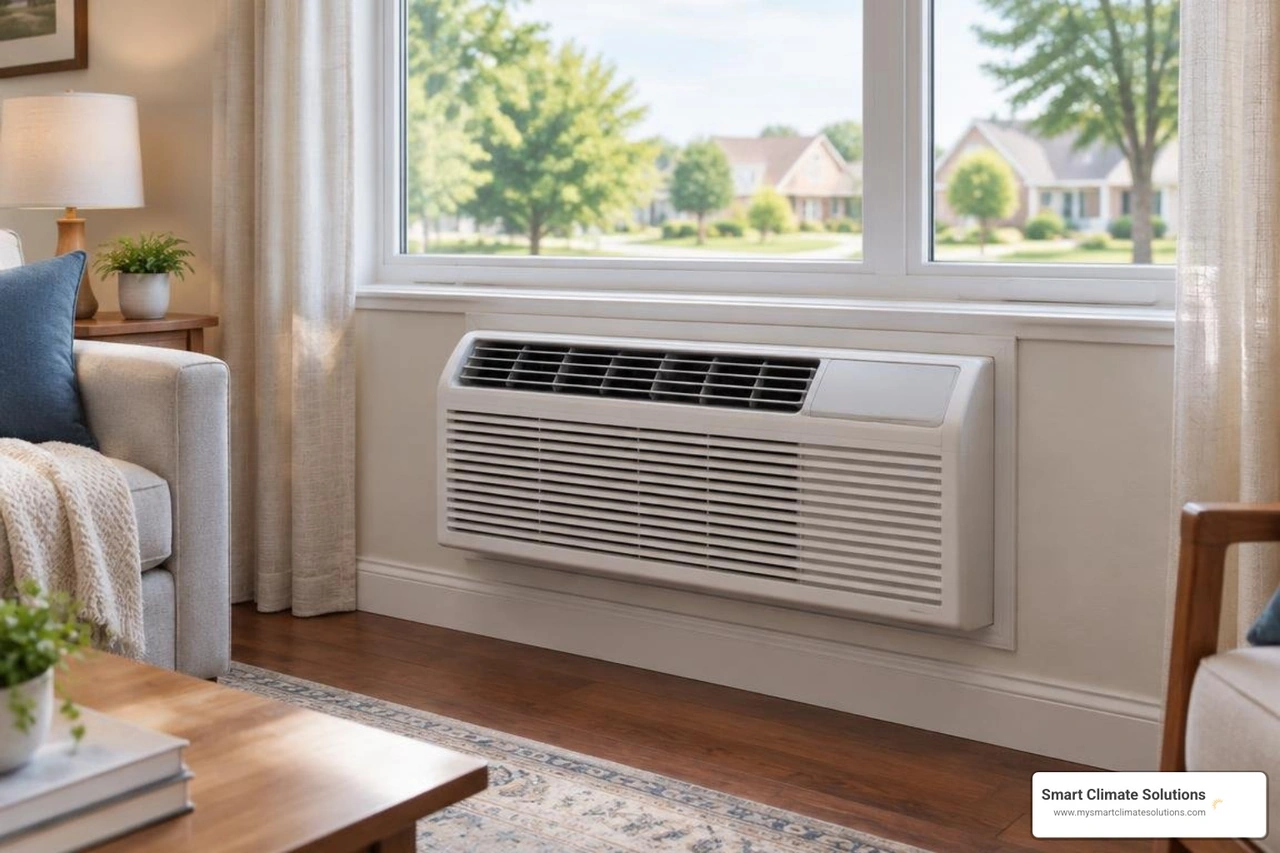
A Space-Saving Way to Cool and Add Heat
An air and heater window unit is a practical choice for a small room when you need summer cooling and mild-weather heat without giving up floor space. Choose a unit by matching its BTU rating to the room, confirming your window opening and electrical outlet fit, and treating its heat mode as supplemental rather than a replacement for a whole-home furnace in a Pittsburgh winter.
For example, a 7,500 BTU 115V model can suit a room around 300 square feet, while high-capacity 230V units can cool much larger areas but need a dedicated outlet and a wider, taller window. Features such as a high CEER rating, washable filter, timer, Eco mode, and Wi-Fi controls can help reduce waste and make daily comfort easier.
For apartments, home offices, bedrooms, garages, and finished basements, this all-in-one setup can be a simple way to control the temperature where you spend the most time. Homeowners exploring alternatives might also consider an ac and heat mini split, research the best mini split ac and heat options for zoned comfort, or compare it against a standard ac unit hvac setup.
I am Bill Scott, general manager of Smart Climate Solutions, with more than 20 years of HVAC experience serving homeowners across Pittsburgh and Southwestern Pennsylvania. I have helped thousands of customers choose, install, maintain, and troubleshoot air and heater window unit options for reliable room-by-room comfort.
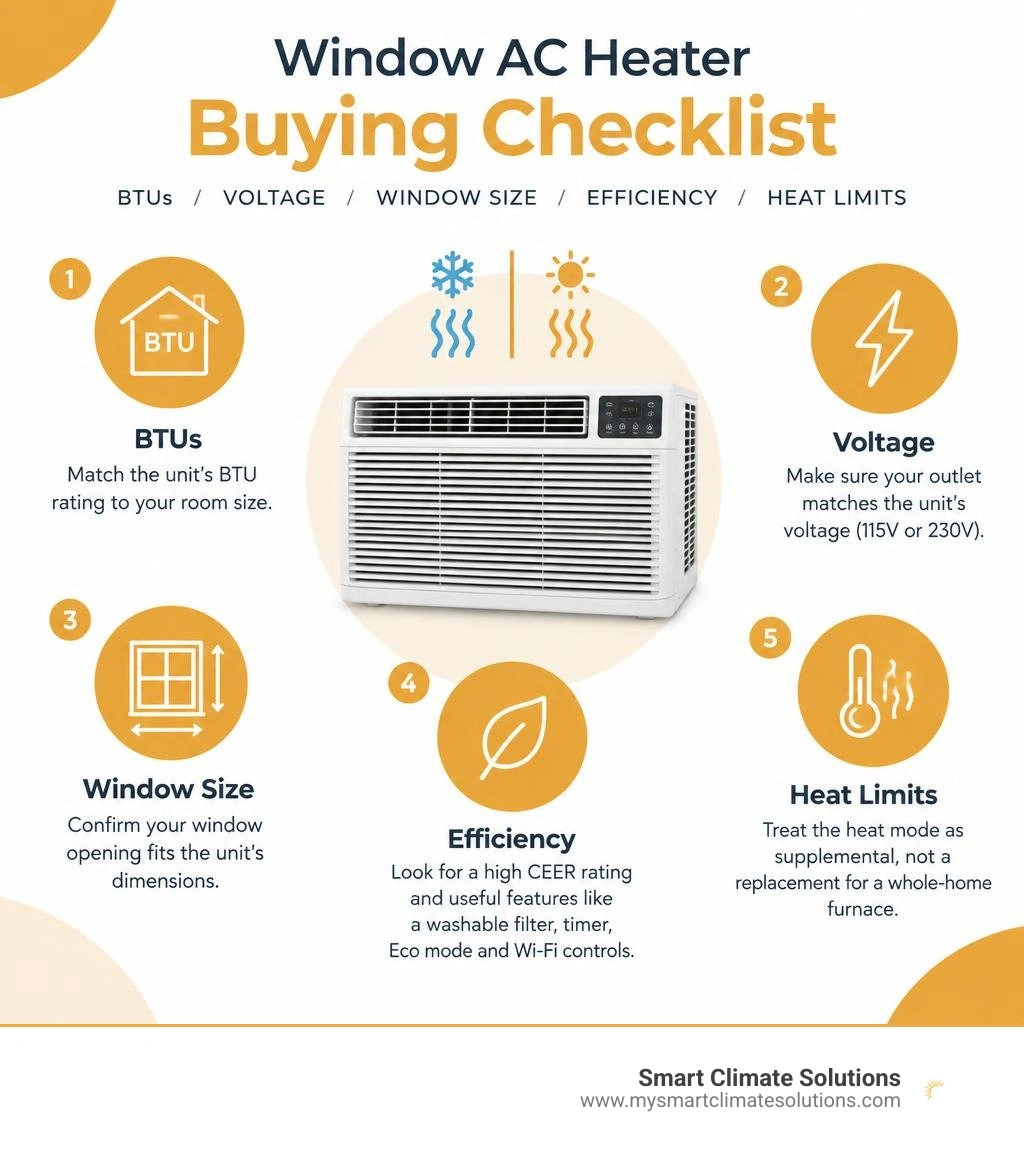
Understanding 115V vs 230V Electrical Requirements
When you start shopping for a dual-function climate system, one of the first technical forks in the road is voltage. Window heating and cooling appliances fall into two distinct electrical categories: standard 115-volt residential units and heavy-duty 230-volt models. Getting this right before you purchase is essential because you cannot simply plug a high-voltage appliance into a standard wall receptacle without specialized wiring.
Standard 115V models plug into the everyday three-prong grounded outlets found in living rooms and bedrooms across Pittsburgh and South Hills. These units generally draw between 8 and 12 amps, making them plug-and-play for most rooms as long as the circuit is not overloaded with hair dryers, gaming computers, or space heaters.
High-output models require a 230V (or 208/230V) connection. These heavy-duty units need a dedicated branch circuit connected straight to your main electrical panel, terminating in a specific high-amperage outlet such as a NEMA 6-20P or NEMA 6-30P receptacle.
Choosing Between 115-Volt and 230-Volt Systems
To pick the right voltage, evaluate the size of your space and your current wiring. If you are heating and cooling a compact bedroom, home office, or guest room up to 300 or 400 square feet, a 115V unit rated at 7,500 BTU cooling and 3,850 BTU heating is ideal. It pulls around 670 watts on cooling mode and runs safely on a standard 15-amp household circuit.
When tackling larger areas, open-concept floor plans, or drafty additions up to 1,500 square feet, 115 volts cannot supply enough electrical current to run large compressors and heating coils safely. In these situations, stepping up to a 230V unit rated at 23,200 BTU cooling and 16,000 BTU supplemental heat gives you the robust output needed to maintain steady indoor conditions.
Evaluating your home setup helps you compare traditional units against modern residential heating and cooling options so you never overload your electrical panel.
How Supplemental Heating Works in Combination Units
Most combination window units deliver heating through electric resistance coils, similar to the elements in a toaster or an electric space heater. When you switch the unit to heat mode, air is drawn across these energized electric heating elements and blown back into the room. Some advanced designs utilize reverse-cycle heat pumps for milder temperatures, but electric strip heat remains the industry standard for window chassis.
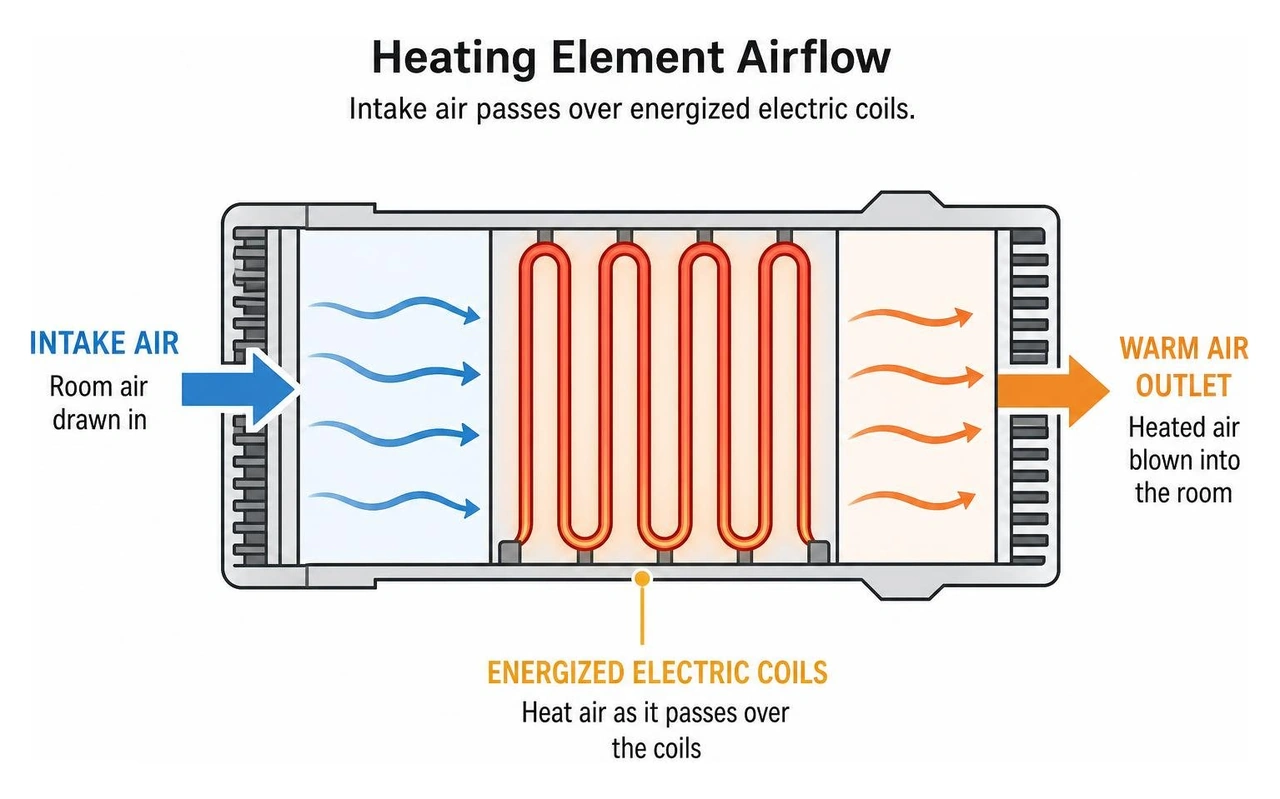
It is critical to understand that window unit heaters provide supplemental heating rather than primary heating. For example, a high-capacity 230V model can deliver 16,000 BTUs of electric heat, but its operation is rated for outdoor temperatures above 23 degrees Fahrenheit. When outdoor temperatures drop into the teens during a freezing Western Pennsylvania winter, window heating elements lose efficiency and cannot replace a central boiler, furnace, or dedicated heat pump.
These units are built to take the chill off during crisp autumn mornings in Washington, PA, or provide a burst of warmth in early spring before you switch on whole-home systems.
Maximizing Space and Efficiency with a Window Unit
One major advantage of a window-mounted combo unit over a portable floor unit is space conservation. Portable air conditioners occupy 2 to 4 square feet of valuable floor area and require bulky exhaust hoses. A window unit stays suspended within your window opening, preserving square footage in tight bedrooms and small offices.
Furthermore, dual-stage window systems offer direct condensate drainage to the outdoors, reducing the risk of water spilling onto indoor flooring.
| Model / Feature | Cooling Capacity | Heating Capacity | Voltage | Max Coverage | Noise Level |
|---|---|---|---|---|---|
| 7,500 BTU 115V Combo | 7,500 BTU | 3,850 BTU | 115V | ~300 sq. ft. | 50 dBA |
| 23,200 BTU 230V Combo | 23,200 BTU | 16,000 BTU | 230V | ~1,500 sq. ft. | 56.3 - 59.5 dBA |
| 23,200 BTU High-Efficiency Combo | 23,200 BTU | 10,600 BTU | 230V | ~1,500 sq. ft. | 42 dBA |
| 23,000 BTU Supplemental Heat Combo | 23,000 BTU | Supplemental | 230V | ~1,600 sq. ft. | Standard |
| Portable Combo | 8,600 BTU (DOE) | 10,000 BTU | 115V | ~525 sq. ft. | 57 dBA |
Key Features to Look for in an Air and Heater Window Unit
When shopping for an air and heater window unit, look past the initial price tag and check the technical performance ratings:
- CEER and EER Ratings: Combined Energy Efficiency Ratio (CEER) reflects real-world energy consumption across standby and operational modes. For instance, a 7,500 BTU 115V model can deliver a solid 11.0 CEER and 11.2 EER, while a 23,200 BTU unit may offer a 9.4 CEER. Higher numbers equal lower electric bills.
- Sound Levels (dBA): If you are installing the unit in a bedroom, noise matters. Sound levels range from ultra-quiet 42 dB models up to 59.5 dBA on high fan modes.
- Eco-Friendly Refrigerants: Modern window air conditioners use R32 refrigerant, which has a Global Warming Potential (GWP) of 675, significantly lower than older R410A refrigerants.
- Air Deflection Louvers: Units with 4-way manual or motorized swing louvers circulate warm air down toward the floor in winter and direct cool air upward in summer.
Understanding these features will help you identify the most efficient way to heat and cool a home without driving up seasonal utility costs.
Sizing an Air and Heater Window Unit by Room Square Footage
Installing an incorrectly sized unit leads to short-cycling, high humidity, and poor temperature control. Use these general sizing baselines:
- 100 to 250 sq. ft. (Small bedroom, home office): 5,000 to 6,000 BTU cooling
- 250 to 350 sq. ft. (Master bedroom, studio): 7,000 to 8,000 BTU cooling
- 350 to 550 sq. ft. (Large bedroom, finished basement): 9,000 to 12,000 BTU cooling
- 1,000 to 1,600 sq. ft. (Open living area, commercial space): 22,000 to 24,000 BTU cooling
Pro HVAC Tip: If the room has high ceilings over 9 feet, uninsulated exterior walls, or large south-facing windows with heavy afternoon sun, increase your capacity by 10% to 20%.
Smart Controls, Timers, and Energy Modes
Convenience features make a noticeable difference in daily energy consumption:
- Wi-Fi and App Integration: Many modern smart models allow you to adjust temperatures, change modes, or set schedules from your smartphone, even syncing with Alexa or Google Assistant.
- 24-Hour Programmable Timers: Set the unit to start warming the room 30 minutes before your morning alarm or shut off automatically after you leave for work.
- Energy Saver (Eco) Mode: Runs the fan only when the compressor is active, cycling on and off periodically to sample the room air without running continuously.
- Auto-Restart: Automatically restores your previous settings after a power outage, protecting your comfort during stormy weather.
Installation and Long-Term Maintenance Best Practices
Proper mechanical installation prevents drafts, water damage, and safety hazards. Heavy window units (especially 230V models weighing over 100 pounds) require sturdy exterior support brackets anchored to your window sill and exterior siding to prevent sagging and window frame damage.
Always use high-density weatherproofing foam to seal gaps between the sliding sash and the unit chassis. If your model features a slide-out chassis, you can install the lightweight cabinet into the window opening first, secure the frame, and slide the heavy mechanical core into place.
Regular care keeps your system running at peak capacity. Practicing consistent AC maintenance extends compressor life and preserves airflow.
Installation Requirements for an Air and Heater Window Unit
Double-check your window frame measurements before ordering:
- Small/Medium Units (6,000 to 8,000 BTU): Typically fit standard double-hung windows measuring 22 to 36 inches wide, requiring a minimum vertical opening height of 14 inches.
- Large Units (18,000 to 24,000 BTU): Require wider double-hung windows between 30 and 42 inches wide, with a minimum vertical clearance of 19.5 inches.
- Leveling Angle: Ensure the chassis is installed with a slight downward tilt (around 1/4 inch to 1/2 inch) toward the outdoor side so summer condensate drains outside rather than into your drywall.
Essential Seasonal Maintenance Tasks
Keep your dual-action window unit clean and operating efficiently with these steps:
- Clean the Mesh Filter Every 250 to 500 Hours: Wash the front-access filter under warm running water to remove dust, pet dander, and debris. Respond promptly to check-filter reminder lights.
- Inspect the Outdoor Condenser Coils: Clear out autumn leaves, cottonwood seeds, and dirt with a soft coil brush each spring.
- Clear Condensate Drain Paths: Verify that the outdoor base pan drain holes remain unblocked to prevent standing water and rust.
- Winterize or Remove: If you leave the unit in the window year-round for supplemental heat, install an insulated, heavy-duty exterior cover that leaves the ventilation and heating intake areas clear as directed by the manufacturer.
Frequently Asked Questions About Window AC and Heater Combos
Can a window unit heater serve as the primary heating source in winter?
No. Window unit heaters are designed for supplemental warmth during mild transition seasons (spring and fall). Because most rely on electric resistance elements rated for outdoor temperatures above 23 degrees Fahrenheit, they cannot heat an entire home during freezing winter cold snaps in Weirton, WV, Steubenville, OH, or Pittsburgh, PA.
What size electrical outlet do I need for high BTU window units?
Units with cooling capacities of 18,000 BTU and above almost always require a dedicated 230V circuit with a 20-amp or 30-amp NEMA receptacle (such as NEMA 6-20P or 6-30P). Never use standard household extension cords with high-voltage window units, as undersized cords pose a severe fire hazard.
How does a combo window unit support small-space climate control?
An air and heater window unit provides independent, room-by-room heating and cooling without occupying floor space. This makes it an affordable, versatile choice for zoning comfort in attics, converted garages, sunrooms, and home offices.
Conclusion
An air and heater window unit provides balanced temperature control, saves floor space, and delivers localized comfort across every season. By selecting the correct BTU capacity, matching your home's electrical voltage, and keeping up with seasonal filter cleanings, you can maintain dependable indoor comfort year-round.
When you need long-term heating and cooling upgrades, professional system replacements, or seasonal tune-ups, our certified technicians are here to help throughout Pittsburgh, South Hills, Burgettstown, Washington, and the surrounding areas. Reach out to Smart Climate Solutions today for all your professional HVAC services.


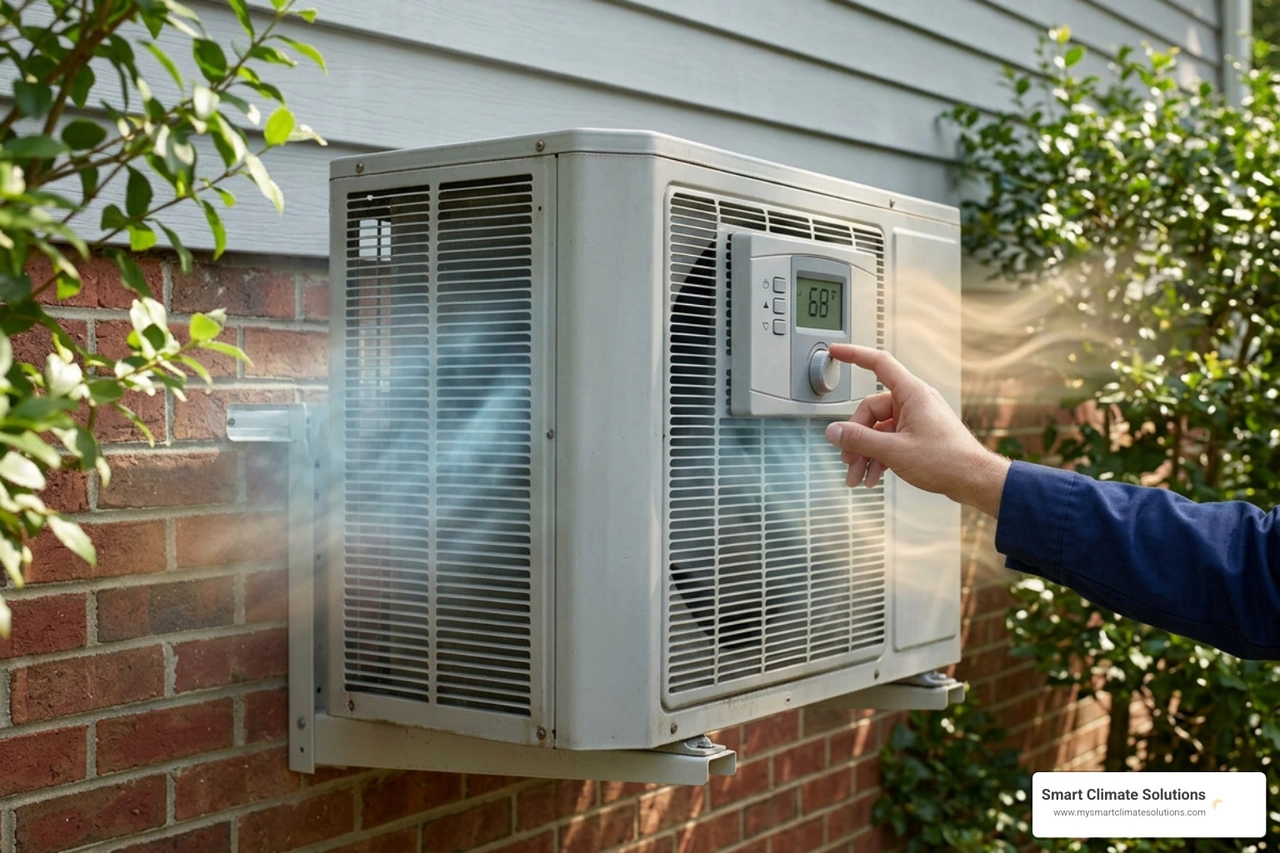
.png)
