

Why Knowing Your Capacitor Replacement Costs Matters

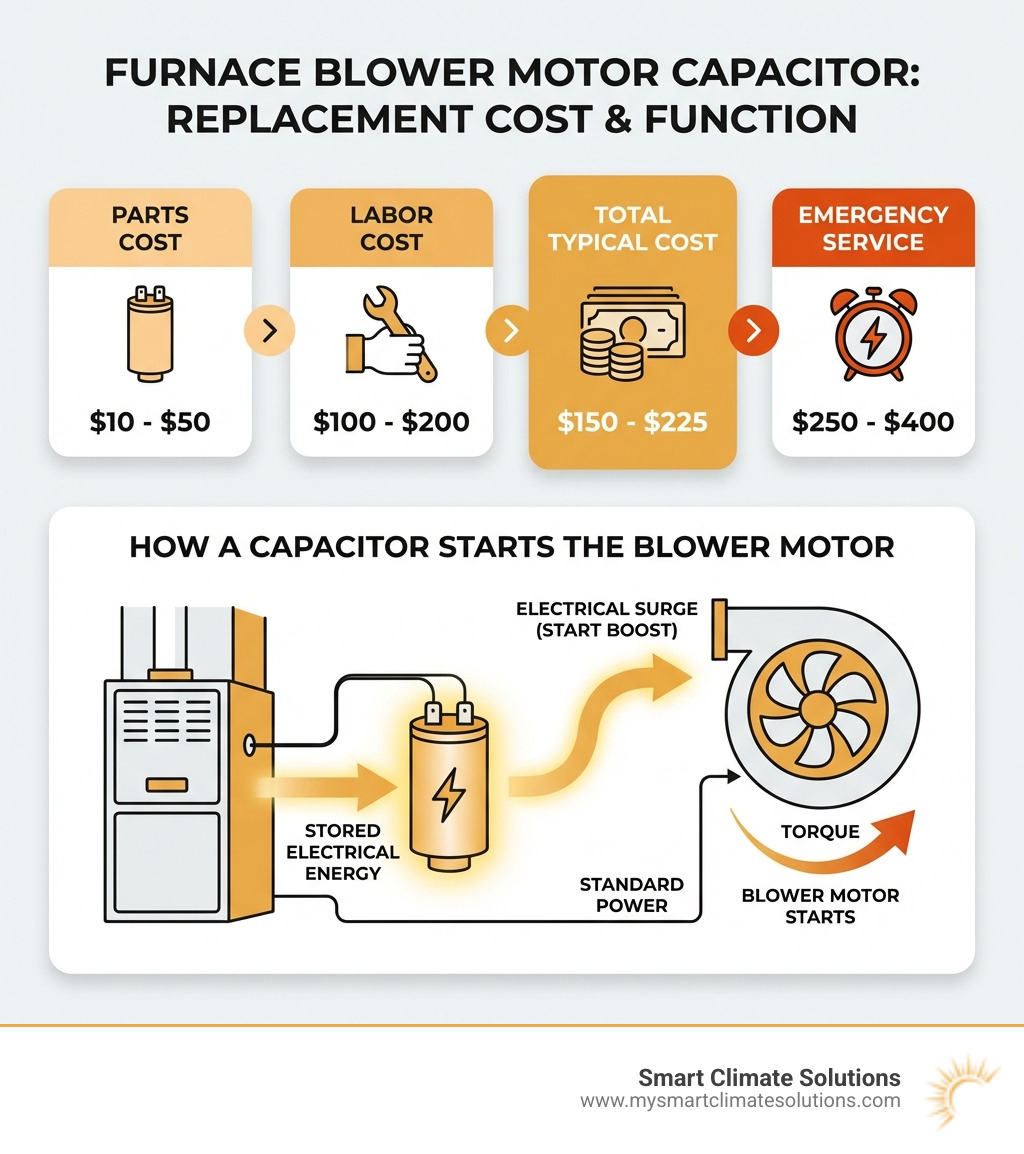
Furnace blower motor capacitor replacement cost typically ranges from $100 to $250 for professional service in the Pittsburgh area, with most homeowners paying around $150 to $200 total. This includes the capacitor part ($10-$50) plus labor ($100-$200). Emergency or after-hours service may add $100-$200 to the total.
Quick Cost Breakdown:
- Capacitor part only: $10-$50
- Professional labor: $100-$200
- Total typical cost: $150-$225
- Emergency service: $250-$400
- DIY cost: $10-$50 (parts only, not recommended)
When your furnace starts humming but won't blow air, or when the blower takes forever to start on a cold Pittsburgh morning, a failing capacitor is often the culprit. This small but critical component stores electrical energy and provides the surge needed to start your blower motor. Without it, your furnace can't circulate warm air through your home—no matter how cold it gets outside.
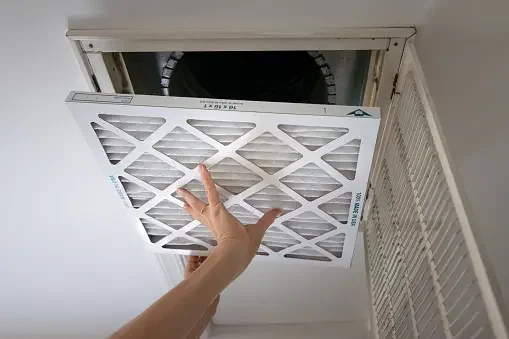
The capacitor fails more often than most other furnace parts because it endures constant electrical stress, heat cycles, and voltage fluctuations. Most capacitors last 5 to 10 years, but power surges from lightning strikes or grid issues can cause sudden failure. A clogged air filter that forces your blower to work harder can also shorten capacitor life.
Is $225 reasonable for this repair? Based on current market data and typical labor rates in southwestern Pennsylvania, yes—this falls within the normal range for professional replacement. However, several factors influence the final price, including the type of capacitor your furnace needs, accessibility of your unit, and whether you need service during business hours or in an emergency.
I'm Bill Scott, general manager of Smart Climate Solutions, and over the past 20 years I've overseen thousands of furnace blower motor capacitor replacement cost estimates and repairs across the Pittsburgh region. Understanding what drives these costs helps homeowners make informed decisions and avoid overpaying for a straightforward repair.
What Is a Furnace Blower Motor Capacitor and Why Does It Fail?
Think of your furnace blower motor capacitor as a high-powered battery that provides a "kickstart" to the fan motor. Most blower motors in older or standard furnaces are Permanent Split Capacitor (PSC) motors. These motors are not strong enough to start spinning from a dead stop using just the standard 120-volt current from your house. They need an extra boost of torque.
The capacitor stores electrical energy and releases it in a concentrated burst to get the motor up to speed. Once the motor is running, a "run capacitor" stays in the circuit to help the motor run efficiently and maintain the correct phase of electricity. Some systems use a "start capacitor" for the initial jolt and a separate run capacitor for ongoing operation, while others use a single dual-run capacitor.
Why do these parts fail so often? In our service area, from Pittsburgh down to Steubenville, OH, furnaces work overtime during the long winter months. This creates several points of failure:
- Heat Stress: Capacitors are sensitive to heat. If your furnace area is poorly ventilated or if a broken ac fan motor or clogged filter causes the internal temperature to rise, the chemicals inside the capacitor can expand.
- Electrical Surges: Lightning strikes during a summer storm or fluctuations in the local power grid can fry the delicate internal foil of the capacitor.
- Age: Over time, the electrolyte inside the capacitor simply dries out. Most capacitors are rated for about 60,000 hours of use, which usually translates to 10 to 20 years, though many fail much sooner due to heavy use.
- Physical Damage: A failing capacitor often gives a visual warning. We often see capacitors that are swollen, bulging at the top, or leaking a generic oil-like substance.

Breaking Down the Furnace Blower Motor Capacitor Replacement Cost
When we provide a furnace blower motor capacitor replacement cost estimate, it is rarely just the price of the part. If you were to look up the part online, you would see that the hardware itself is quite affordable. However, professional service includes the expertise to diagnose the issue correctly so you don't end up paying for a furnace-blower-motor-replacement when you only needed a $15 part.
Here is how the costs generally break down:
| Component | DIY Cost | Professional Cost |
|---|---|---|
| Capacitor Part | $10 - $50 | $20 - $60 |
| Diagnostic/Service Fee | $0 | $75 - $200 |
| Labor | $0 (Your time) | $100 - $200 |
| Total Estimated Cost | $10 - $50 | $150 - $225 |
Most reputable HVAC companies in the Pittsburgh and Washington, PA areas charge a diagnostic fee to send a technician to your home. This fee covers the travel time, the technician's specialized tools, and the time spent testing the system with a multimeter to confirm the capacitor is truly the problem. Many companies, including ours, may waive or discount this diagnostic fee if you choose to move forward with the repair.
Average Labor Cost for Furnace Blower Motor Capacitor Replacement
Labor rates in the Pittsburgh market typically range from $90 to $200 per hour. While replacing a capacitor is usually a 30-to-60-minute job, most companies have a "minimum service call" rate. This ensures the company can cover the overhead of the vehicle, insurance, and certified technician's wages.
If you live in outlying areas like Burgettstown, PA or Weirton, WV, travel fees might slightly increase the labor portion of your bill. Additionally, if your furnace quits at 2:00 AM on a Saturday, you will likely face emergency service rates, which can double the labor cost.
Warranty coverage is another big factor. If your furnace is less than 10 years old, the capacitor part might be covered by the manufacturer's warranty. However, be aware that most warranties do not cover the cost of labor or the diagnostic fee. In these cases, your out-of-pocket furnace blower motor capacitor replacement cost might still be around $150.
Factors Influencing Your Furnace Blower Motor Capacitor Replacement Cost
Not all capacitors are created equal. The specific requirements of your furnace will dictate the price:
- Single-Run vs. Dual-Run: A single-run capacitor only serves the blower motor. A dual-run capacitor serves both the fan and the compressor (more common in outdoor AC units but sometimes found in integrated air handlers). Dual-run capacitors are generally more expensive.
- Microfarad (uF) Rating: Capacitors are rated by their storage capacity, measured in microfarads. A standard blower motor might need a 5uF, 7.5uF, or 10uF capacitor. Higher ratings sometimes carry a slightly higher price tag.
- Voltage Requirements: Most furnace capacitors are rated for 370V or 440V. While you can use a 440V capacitor to replace a 370V one, you can never go lower.
- Accessibility: If your furnace is in a tight crawlspace in South Hills or a difficult-to-reach attic in St. Clairsville, OH, the technician may charge more for the extra time required to access the blower assembly.
DIY vs. Professional Replacement: Is It Safe?
We get asked this a lot: "Can't I just swap the part myself?" While the physical act of unplugging two wires and unscrewing a bracket seems easy, we strongly advise against DIY capacitor replacement for several reasons.
The "Death Zap" Risk: Capacitors are designed to store a massive amount of electricity. Even if you turn off the power at the circuit breaker, the capacitor holds a charge that can be lethal or cause severe electrical burns. A professional knows how to safely discharge the capacitor using a grounded tool before touching it.
The Misdiagnosis Trap: Many homeowners assume the capacitor is bad, buy a replacement, install it, and find the motor still won't turn. They might have actually needed a cost-to-replace-hvac-fan-motor. By the time they call us, they've spent money on parts they didn't need and hours in a cold house.
Correct Specifications: Using the wrong uF rating can cause your motor to run too hot, leading to a premature cost-to-replace-furnace-fan situation. A professional ensures the voltage and microfarad ratings are a perfect match for your specific motor.
Signs You Need a New Capacitor and How to Choose One
How do you know if your furnace blower motor capacitor replacement cost is an upcoming expense? Watch for these red flags:
- The Humming Sound: If you hear the furnace click on and a steady "mmm" sound starts, but no air comes out of the vents, the motor is trying to start but doesn't have the "kick" from the capacitor.
- The "Stick" Test: Sometimes a weak capacitor can't start the fan, but if the fan is manually nudged (don't try this!), it will keep spinning. This is a classic sign of a dead start capacitor.
- Slow-Starting Fan: If it takes several minutes for the air to start blowing after the furnace turns on, the capacitor is likely weak and failing.
- Acrid Burning Smell: This often happens when the capacitor overheats and the internal components begin to melt.
If you are looking for affordable replacement parts, here are some common specifications and their retail prices:
- Genteq 10 uF MFD 370V: Approx. $12.01 (A high-quality industry standard).
- VEXUNGA 7.5uF 370/440VAC: Approx. $9.69.
- BOJACK 7.5 uF 370V/440V: Approx. $9.90.
While these parts are cheap, using a low-quality or incorrect part can lead to much more expensive repairs later. We always use high-quality, tested capacitors that match your furnace's OEM (Original Equipment Manufacturer) specs.
Frequently Asked Questions
How long do furnace capacitors typically last?
On average, you can expect a furnace capacitor to last between 5 and 10 years. While some can last up to 20 years, the heavy heating cycles we experience in Pittsburgh and Steubenville often wear them out faster. Regular preventative maintenance, like checking the capacitor's "strength" during an annual tune-up, can help you replace it before it leaves you without heat on a sub-zero night.
Can a bad capacitor damage the blower motor?
Yes, absolutely. When a capacitor is weak, the blower motor has to work much harder to start and stay running. This creates excessive heat within the motor windings. If left unaddressed, a $150 capacitor repair can quickly turn into a $600 to $1,000 central-air-fan-motor-cost-guide or full blower motor replacement. If your furnace is humming, turn it off immediately and call a pro.
Will a new capacitor improve furnace efficiency?
A new capacitor won't necessarily make your furnace "high-efficiency," but it will ensure the motor runs at its intended speed and consumes the correct amount of electricity. A failing capacitor causes the motor to draw more "amps," which can increase your energy bills and put unnecessary strain on your electrical system. Replacing a weak capacitor restores the system to its peak operational performance.
Conclusion
When you're facing a cold night in Pittsburgh or Washington, PA, knowing that a furnace blower motor capacitor replacement cost is relatively low can be a huge relief. While $225 might seem like a lot for a small part, that price covers the safety, diagnostic accuracy, and speed of a certified professional who can get your heat back on in under an hour.
At My Smart Climate Solutions, we pride ourselves on being the fast, reliable choice for homeowners across southwestern Pennsylvania and the Ohio Valley. With over 20 years of experience and 24/7 emergency support, we ensure your family stays comfortable regardless of the weather outside. Whether you need a simple ac-fan-motor-replacement or a complex heat-pump-fan-motor-replacement-guide, our NATE-certified technicians are ready to help.
If your furnace is acting up, don't wait for the motor to burn out. Contact us today for a professional diagnosis and transparent pricing.
Click here to schedule your furnace repair with My Smart Climate Solutions.

.png)
