
Repair vs. Replace: When is it Time for a New System?
Installing a new furnace is one of the biggest home improvement decisions you will make. Get it right, and you will have reliable, efficient heat for the next 15 to 20 years. Get it wrong, and you could face higher energy bills, cold spots, and costly repairs from day one.
Here is a quick overview of the furnace installation process:
- Assessment - A technician evaluates your home, calculates the correct furnace size, and checks your ductwork, gas lines, and venting.
- Removal - The old furnace is safely disconnected and removed, including gas lines, electrical wiring, and ductwork connections.
- Installation - The new unit is positioned, leveled, and connected to the gas supply, electrical system, and duct system.
- Commissioning - The technician tests static pressure, temperature rise, and airflow to confirm the system runs safely and efficiently.
- Walkthrough - You receive a full orientation on your new thermostat, filter schedule, and maintenance plan.
Most standard installations are completed in a single day. Complex jobs involving new ductwork or venting changes can take longer.
Furnace installation is not a plug-it-in-and-go job. It involves natural gas connections, high-voltage electrical wiring, and exhaust venting -- all of which require specialized training and must meet local building codes. Skipping steps or cutting corners during installation is one of the leading causes of inefficient systems, uncomfortable homes, and premature equipment failure.
I'm Bill Scott, General Manager of Smart Climate Solutions, and with over 20 years of experience installing new furnaces across Pittsburgh, PA and Southwestern PA, I have seen what separates a great installation from a costly one. In this guide, I will walk you through everything you need to know -- from deciding whether to repair or replace, to what happens on installation day and beyond.

Relevant articles related to Installing a new furnace:

Every homeowner faces the classic dilemma: should you patch up your current heating system one more time, or is it finally time to invest in installing a new furnace? In cold climates like Pittsburgh, PA, South Hills, PA, or Steubenville, OH, a failing furnace in the dead of winter is more than an inconvenience -- it is a safety hazard.
Most modern furnaces have an expected lifespan of 15 to 20 years. If your heating system is creeping past the 15-year mark, its internal components are likely reaching the end of their reliable service. Even if the unit is still running, older systems suffer from degraded efficiency. A furnace that started its life with an 80% efficiency rating might only be delivering 65% to 70% efficiency today due to wear and tear on the heat exchanger and blower motor.
Several warning signs indicate your system is on its last legs:
- Rising Energy Bills: If your gas or electric bills are climbing but your heating habits have not changed, your furnace is working harder to produce the same amount of heat.
- Frequent Repairs: Calling for service multiple times a season is a clear sign of systemic failure. If you are regularly replacing parts like the blower motor or igniter, those costs add up quickly.
- Uneven Heating: If some rooms are freezing while others are stiflingly hot, your furnace can no longer distribute air effectively.
- Strange Noises: Squealing, rattling, popping, or banging noises point to mechanical issues, loose belts, or a damaged blower.
- Yellow Pilot Light: On a gas furnace, the burner flame should always be a crisp, steady blue. A yellow or flickering flame indicates incomplete combustion, which can produce dangerous carbon monoxide.
If your system is constantly breaking down or leaving you in the cold, it is time to consult the Furnace Repair Experts to diagnose the root cause. If you find your Furnace Not Heating at all, a complete system evaluation will help you determine if a simple fix is possible or if a replacement is the most cost-effective path forward.
The 5000 Rule for Furnace Decisions
To take the guesswork out of the repair-versus-replace debate, HVAC professionals use a simple mathematical formula known as the $5,000 Rule.
To use this rule, multiply the age of your furnace by the cost of the recommended repair:
- The Formula: Age of Furnace (in years) x Cost of Repair = Decision Factor
- The Threshold: If the result is under $5,000, repair the unit. If the result is over $5,000, you should invest that money into installing a new furnace.
For example, if you have a 12-year-old furnace that needs a $500 repair, your decision factor is $6,000 (12 x 500). Because this exceeds the $5,000 threshold, replacing the unit is the smarter financial move. Conversely, if an 8-year-old furnace needs a $300 repair, the factor is $2,400, making a repair the clear choice.
That some failures, such as a cracked heat exchanger, are automatic grounds for replacement regardless of the formula. A cracked heat exchanger can leak deadly carbon monoxide into your home's air supply. For a deeper dive into managing sudden heating failures, check out our Emergency Furnace Repair Complete Guide.
Planning and Preparing for Installing a New Furnace

The success of installing a new furnace is determined long before the installation crew arrives at your home. Proper planning ensures you select a system that fits your home's unique footprint, matches your local climate, and delivers maximum energy savings.
For residents in our service areas -- including Burgettstown, PA, Washington, PA, Weirton, WV, and St. Clairsville, OH -- winters can be harsh and unforgiving. Your furnace must be robust enough to handle sub-freezing temperatures for weeks at a time.
The planning phase always begins with a comprehensive home assessment. A professional contractor must perform a Manual J load calculation. This scientific calculation determines the exact BTU (British Thermal Unit) capacity your home requires. It takes into account:
- Total square footage and layout of the home
- Local climate data and design temperatures
- Insulation levels in the walls, attic, and crawl spaces
- The quantity, size, and efficiency of your windows and doors
- The orientation of your home relative to the sun
If you live in Washington, PA, you can consult a local certified professional through the Furnace Installation Guide to ensure your home's heat loss is calculated accurately.
Key Considerations Before Installing a New Furnace
Before selecting a specific furnace model, you must evaluate several infrastructure requirements in your home. Upgrading your heating system often means modifying the supporting systems that keep it running safely.
- Venting Requirements: This is one of the most frequently overlooked aspects of a furnace upgrade. Older, standard-efficiency furnaces (80% AFUE) vent their hot exhaust gases through a metal chimney or flue. High-efficiency condensing furnaces (90% AFUE and above) extract so much heat from the combustion process that the exhaust gases cool down and condense into liquid. Because this exhaust is cool and highly acidic, it cannot go up a standard chimney. Instead, it must be vented through solid PVC pipes that run horizontally through an exterior wall. If you are upgrading to a high-efficiency system, our team must plan a new venting route and install a condensate drain line to handle the acidic runoff. You can learn more about these specialized requirements in our guide on High Efficiency Furnace Install.
- Electrical Upgrades: Modern furnaces feature advanced, variable-speed blower motors that require stable, dedicated electrical circuits. During the planning phase, we inspect your electrical panel to ensure it can handle the load and that the wiring matches modern safety standards.
- Local Permits and Codes: Installing a new furnace requires mechanical, electrical, and gas permits in most municipalities across Pennsylvania, Ohio, and West Virginia. Pulling these permits ensures your installation is inspected by local officials and complies with all safety codes.
Sizing, Ductwork, and Efficiency Ratings
Getting the right size furnace is critical. Some homeowners assume that buying a larger furnace is always better because it will heat the home faster. In reality, an oversized furnace is a recipe for discomfort. It will heat the home too quickly, shut off, and then turn back on a few minutes later. This rapid cycling wastes energy, places immense stress on the heat exchanger, and leads to dramatic temperature swings and clammy rooms. Conversely, an undersized furnace will run constantly without ever reaching your thermostat's set temperature, driving your utility bills through the roof.
Furthermore, a furnace is only as good as the ductwork connected to it. The furnace blower motor is responsible for moving air throughout your entire HVAC system, including your central air conditioning. If your ductwork is undersized, leaky, or poorly designed, it creates high static pressure. This restricts airflow, makes the system noisy, and can cause the blower motor to burn out prematurely. During our pre-installation inspection, we evaluate your ductwork and seal any visible gaps, as unsealed ducts can leak up to 30% of your conditioned air into unheated spaces.
When choosing your efficiency level, you will look at the Annual Fuel Utilization Efficiency (AFUE) rating. This rating tells you what percentage of the fuel consumed is converted directly into usable heat for your home.
| Furnace Type | AFUE Rating | Venting Style | Average Lifespan | Energy Bill Impact |
|---|---|---|---|---|
| Standard Efficiency | 80% AFUE | Metal Chimney Flue | 15-20 Years | Baseline Operating Costs |
| High Efficiency | 90% - 95% AFUE | PVC Pipe Venting | 15-20 Years | 15% - 20% Savings |
| Ultra-High Efficiency | 96% - 98% AFUE | PVC Pipe & Condensate Drain | 15-20 Years | 20% - 30% Savings |
The Professional Installation Process
When installation day arrives, our priority is to protect your home and execute the replacement with technical precision. A proper installation requires specialized tools -- such as combustion analyzers, digital manometers, and gas leak detectors -- that are not found in a standard homeowner's toolbox.
To ensure safety and quality, we follow strict protocols aligned with manufacturer specifications, such as the 92-24161-111 Rev. 02 R95PA Single Stage 95% 4 Position Gas Furnace Installation Instructions.
Before any work begins, our team lays down protective floor coverings along the path to your mechanical room. We then perform a safety sweep, shutting off the main gas valve and disconnecting the electrical power supply to the heating system.
Step-by-Step Guide to Installing a New Furnace
Once the workspace is prepared and safe, the physical installation process unfolds in several distinct stages:
- Removing the Old Equipment: We carefully disconnect the old furnace from the plenums (the main air ducts), gas line, electrical supply, and venting system. The old unit is slid out of place, and we thoroughly clean the floor and entry points of the ductwork. If your old system utilized galvanized gas piping that is no longer up to modern code, we remove it at this stage.
- Positioning and Leveling the New Unit: The new furnace is positioned in place. To prevent vibration noise and protect the unit from ground moisture, we separate it from the floor using a specialized rubber pad or base. For high-efficiency condensing furnaces, we must install the unit with a slight forward slope (typically 1/4 inch to 1/2 inch toward the front, depending on manufacturer specifications) to ensure the acidic condensate drains properly and does not pool inside the heat exchanger.
- Reconnecting and Sealing the Ductwork: We align the furnace with the return and supply plenums. Because new furnaces are often more compact than older models, we custom-fabricate metal transition pieces to bridge any gaps. Every connection is sealed using professional-grade HVAC mastic or foil tape to prevent air leaks.
- Connecting the Gas Supply: We run new black iron pipe or certified flexible gas lines to the furnace gas valve. A manual shutoff valve and a sediment trap (drip leg) are installed directly before the gas entrance. The sediment trap prevents rust flakes or moisture in the gas line from entering and damaging the delicate furnace gas valve.
- Electrical and Control Wiring: We connect the high-voltage electrical power to the furnace junction box, ensuring proper grounding. Next, we run the low-voltage thermostat wires to the furnace control board. If you are upgrading to a smart, programmable thermostat, we may run an extra wire (the "C-wire" or common wire) to provide continuous power to the device.
- Installing Venting and Condensate Lines: For high-efficiency models, we run PVC pipes through the exterior wall for combustion air intake and exhaust. We also install a condensate trap and route the drain line to a floor drain or condensate pump.
Safety Checks and System Commissioning
The physical installation of the equipment is only half the battle. The most critical step -- and the one most frequently skipped by cut-rate contractors -- is system commissioning. Commissioning is the process of testing and calibrating the new furnace to verify it is operating safely and performing to the manufacturer's exact specifications.
Our technicians spend up to an hour performing the following tests:
- Gas Leak Detection: We pressurize the new gas lines and spray every joint with a specialized soapy solution or use an electronic gas detector to confirm there are absolutely zero leaks.
- Static Pressure Testing: We measure the resistance to airflow within your duct system using a digital manometer. If the static pressure is too high, we adjust the blower motor speed to prevent premature motor failure.
- Temperature Rise Calculation: We measure the temperature of the air entering the return duct and compare it to the temperature of the air leaving the supply duct. The difference must fall within the manufacturer's specified range (typically 30 to 60 degrees Fahrenheit) to prevent the heat exchanger from overheating or short-cycling.
- Carbon Monoxide and Combustion Analysis: We insert a combustion analyzer probe into the exhaust vent to measure carbon monoxide levels and oxygen levels in the flue gas. This confirms the fuel is burning cleanly and safely.
Cost Breakdown and Financial Incentives in 2026
In 2026, the national average cost to replace a gas furnace ranges between $4,000 and $8,000, with basic single-stage systems starting around $3,800 and high-efficiency variable-speed models reaching up to $12,000.
Your final investment is influenced by several key factors:
- Fuel Type: Gas furnaces typically range from $3,800 to $10,000, while electric furnaces cost between $2,000 and $7,000 to install.
- System Efficiency: Upgrading from an 80% AFUE system to a 96%+ AFUE system increases the equipment cost and requires new PVC venting infrastructure, which typically adds $300 to $800 to the labor total.
- Installation Complexity: Difficult access (such as tight crawl spaces or attics), ductwork modifications, or local permitting fees can extend the installation time and increase labor costs. Labor typically ranges from $1,000 to $3,000 of the total project cost.
Fortunately, there are substantial financial incentives available in 2026 to help offset the cost of installing a new furnace:
- Federal Tax Credits: Under the Energy Efficient Home Improvement Credit (Section 25C), homeowners can claim a tax credit of up to $600 for installing an ENERGY STAR certified gas furnace with an AFUE of 97% or higher.
- Utility Rebates: Many local natural gas and electric utility companies in Pennsylvania and Ohio offer cash-back rebates ranging from $100 to $500 for upgrading to high-efficiency heating equipment.
- Manufacturer Promotions: Leading HVAC manufacturers offer seasonal rebates and promotional financing options, such as low-interest or zero-interest payment plans, during the spring and fall shoulder seasons.
To get a precise, itemized breakdown tailored to your home's layout and your budget, you can request a New Furnace Cost Estimate from our team.
Frequently Asked Questions about Furnace Installation
Can I install a furnace myself?
No, homeowners should not attempt to install a furnace themselves. While DIY projects are great for painting or tiling, installing a new furnace involves high-voltage electricity, highly flammable natural gas or propane, and toxic combustion byproducts like carbon monoxide.
An improper connection can lead to gas leaks, electrical fires, or carbon monoxide poisoning. Furthermore, almost all major HVAC manufacturers explicitly state that their equipment warranties are void unless the system is installed by a licensed, certified HVAC professional. Additionally, local building departments require permits and inspections that can only be pulled by registered contractors.
How long does a standard furnace installation take?
A standard, straightforward furnace replacement typically takes 4 to 8 hours to complete. This means our team can usually arrive in the morning and have your heating system up and running before you sit down for dinner.
However, the timeline can extend to 1 to 2 days if the project requires extensive ductwork modifications, a transition from a different fuel source (such as switching from oil to gas), or the installation of complex zoning systems and accessories like whole-home humidifiers and air purifiers.
What maintenance is required after installation?
To protect your investment, maintain peak operating efficiency, and keep your manufacturer warranty valid, you must perform regular post-installation maintenance:
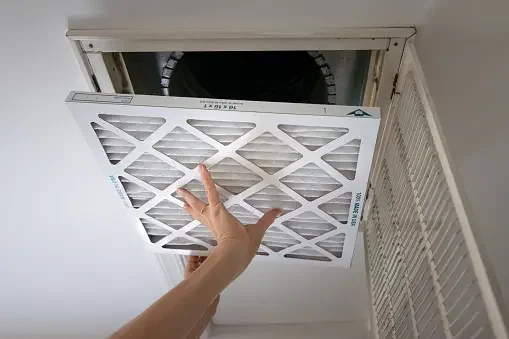
- Replace the Air Filter: This is the single most important task for a homeowner. Check your filter monthly and replace it every 60 to 90 days for standard 1-inch filters, or every 6 to 12 months for thicker media filters. A clogged filter restricts airflow, driving up utility bills and placing immense strain on the blower motor.
- Keep Vents Clear: Ensure your supply and return registers are not blocked by furniture, rugs, or drapes. Also, check the exterior PVC exhaust and intake vents regularly to ensure they are free of snow, ice, leaves, or bird nests.
- Schedule Annual Professional Maintenance: Just like a new car, a new furnace requires regular tune-ups. Schedule a professional Furnace Tune Up once a year, ideally in the autumn before the heavy heating season begins. To automate this process and enjoy priority service, consider enrolling in one of our comprehensive Heating Maintenance Plans.
Conclusion
Installing a new furnace is a significant investment in your home's long-term comfort, safety, and energy efficiency. By choosing the right system size, selecting an appropriate efficiency rating, and partnering with certified professionals who do not cut corners during the installation and commissioning phases, you can look forward to years of worry-free warmth.
At Smart Climate Solutions, we bring over 20 years of local experience to every job, serving homeowners across Pittsburgh, PA, South Hills, PA, Burgettstown, PA, Washington, PA, Steubenville, OH, St. Clairsville, OH, and Weirton, WV. Our NATE-certified technicians are available 24/7 to ensure your family stays comfortable no matter how low the winter temperatures drop.
If you are ready to explore your options for a high-efficiency heating system, contact us today to schedule your professional home assessment and receive a transparent, competitive quote. Visit our Smart Climate Solutions HVAC Installation Services page to get started on your path to reliable, energy-efficient home comfort.

.png)
