
What a New Furnace Cost Estimate Looks Like in 2026
Getting a new furnace cost estimate is the smartest first step before replacing your heating system -- and the numbers vary more than most homeowners expect.
Here is a quick snapshot of what you can expect to pay in 2026:
| Furnace Type | Typical Installed Cost Range | Most Homeowners Pay |
|---|---|---|
| Gas (natural gas) | $3,800 - $10,000 | $4,500 - $6,300 |
| Electric | $2,000 - $7,000 | $3,500 - $5,500 |
| Oil | $4,500 - $10,500 | $6,750 - $10,000 |
| All types (average) | $2,500 - $11,200 | $4,500 - $6,300 |
These prices include both the equipment and standard installation labor. Your final number depends on your home size, fuel type, efficiency rating, and whether any ductwork or venting upgrades are needed.
That sinking feeling when your furnace stops working on a cold Pittsburgh night is one many homeowners know all too well. Whether your system is making strange noises, driving up your energy bills, or simply aging out after 15-20 years, knowing what a replacement actually costs puts you back in control.
I'm Bill Scott, general manager of Smart Climate Solutions, and with over 20 years of HVAC experience serving Pittsburgh and Southwestern PA, I've helped thousands of homeowners get accurate new furnace cost estimates and make confident decisions about their heating systems. In this guide, I'll walk you through everything that shapes the final price -- so you know exactly what to expect before anyone shows up at your door.
Key New furnace cost estimate vocabulary:
Average Cost of a New Furnace Installation in 2026
When you begin researching your replacement options, you will quickly find that there is no single flat rate for heating equipment. In 2026, the national average cost to replace a standard furnace typically runs between $4,000 and $12,000, with most homeowners paying between $4,500 and $7,500 for a mid-range system with professional installation.
However, local factors play a massive role in what you will actually see on your final invoice. For homeowners in Pittsburgh, PA, and surrounding areas like the South Hills, Washington PA, and Weirton, WV, our winters are cold, damp, and demanding. A cheap, undersized unit simply will not keep your family comfortable when January temperatures plummet. Because of this, local installation costs often lean toward the mid-to-high end of the national spectrum, as we require robust systems with reliable heating capacities.
Your total investment is split into two primary categories: equipment pricing and professional labor. The physical furnace unit typically accounts for 50% to 75% of the total project cost. The remaining portion covers labor, permits, old equipment disposal, and the specialized materials needed to connect the new system to your home. For a detailed breakdown of these regional price differences, you can check out our comprehensive furnace replacement cost guide.
To put these numbers into a broader national context, the This Old House furnace cost analysis notes that while a basic unit itself might seem affordable online, the specialized trade labor required to handle high-voltage electricity, natural gas lines, and venting safely is what guarantees a reliable, code-compliant setup.
Getting a New Furnace Cost Estimate by Fuel Type
The fuel source your home uses is one of the most significant factors in your upfront and long-term heating budget. Whether you utilize natural gas, electricity, heating oil, or liquid propane, each system comes with its own unique equipment costs and monthly operating expenses.
Here is a side-by-side comparison of the standard costs and long-term financial impacts of each fuel type:
| Fuel Type | Average Equipment & Install Cost | Average Lifespan | Monthly Operating Cost | Best Suited For |
|---|---|---|---|---|
| Natural Gas | $3,800 - $10,000 | 15 - 20 Years | Low to Moderate | Homes with existing gas lines in cold climates |
| Electric | $2,000 - $7,000 | 20 - 30 Years | High | Smaller homes, mild climates, or areas without gas |
| Heating Oil | $4,500 - $10,500 | 15 - 25 Years | High to Variable | Older homes in rural areas without gas infrastructure |
| Propane | $3,700 - $14,200 | 15 - 20 Years | Moderate to High | Rural homes preferring gas heating via storage tanks |
Natural Gas Furnaces
Natural gas remains the most popular heating choice in Western Pennsylvania and Eastern Ohio. Gas units provide rapid, high-heat output that easily handles freezing winter nights. While the upfront installation cost ranges from $3,800 to $10,000, natural gas is highly efficient and relatively inexpensive, leading to much lower monthly utility bills compared to electric or oil alternatives.
Electric Furnaces
Electric units are highly appealing upfront because they are simpler to manufacture and do not require exhaust venting or gas lines. An electric unit appropriate for a 1,500-square-foot home can cost as little as $2,000 to $5,500 installed. They also boast impressive lifespans of 20 to 30 years because they do not experience the corrosive effects of fuel combustion. However, electricity is a costly way to heat a home in cold northern climates. If you experience freezing winters, your monthly utility bills can easily dwarf what you would have spent on gas. For more details on this option, read our electric furnace installation details.
Heating Oil Furnaces
Heating oil systems are still common in older rural areas, including parts of Burgettstown, PA, and St. Clairsville, OH. These systems are highly durable and produce incredibly hot air, but they require a dedicated oil storage tank and regular fuel deliveries. With average installation prices running between $4,500 and $10,500, they are more expensive to put in. Additionally, fluctuating heating oil prices make monthly operating costs hard to predict. If you are considering this type of system, you can learn more about local pricing trends by reviewing Pittsburgh oil furnace installation costs.
Key Factors That Affect Your Furnace Replacement Pricing
If you ask three different HVAC contractors for a new furnace cost estimate, you will likely receive three different numbers. This is because every home is a unique thermal envelope, and several distinct variables dictate the complexity of the job.
The most important factors that influence your final estimate include:
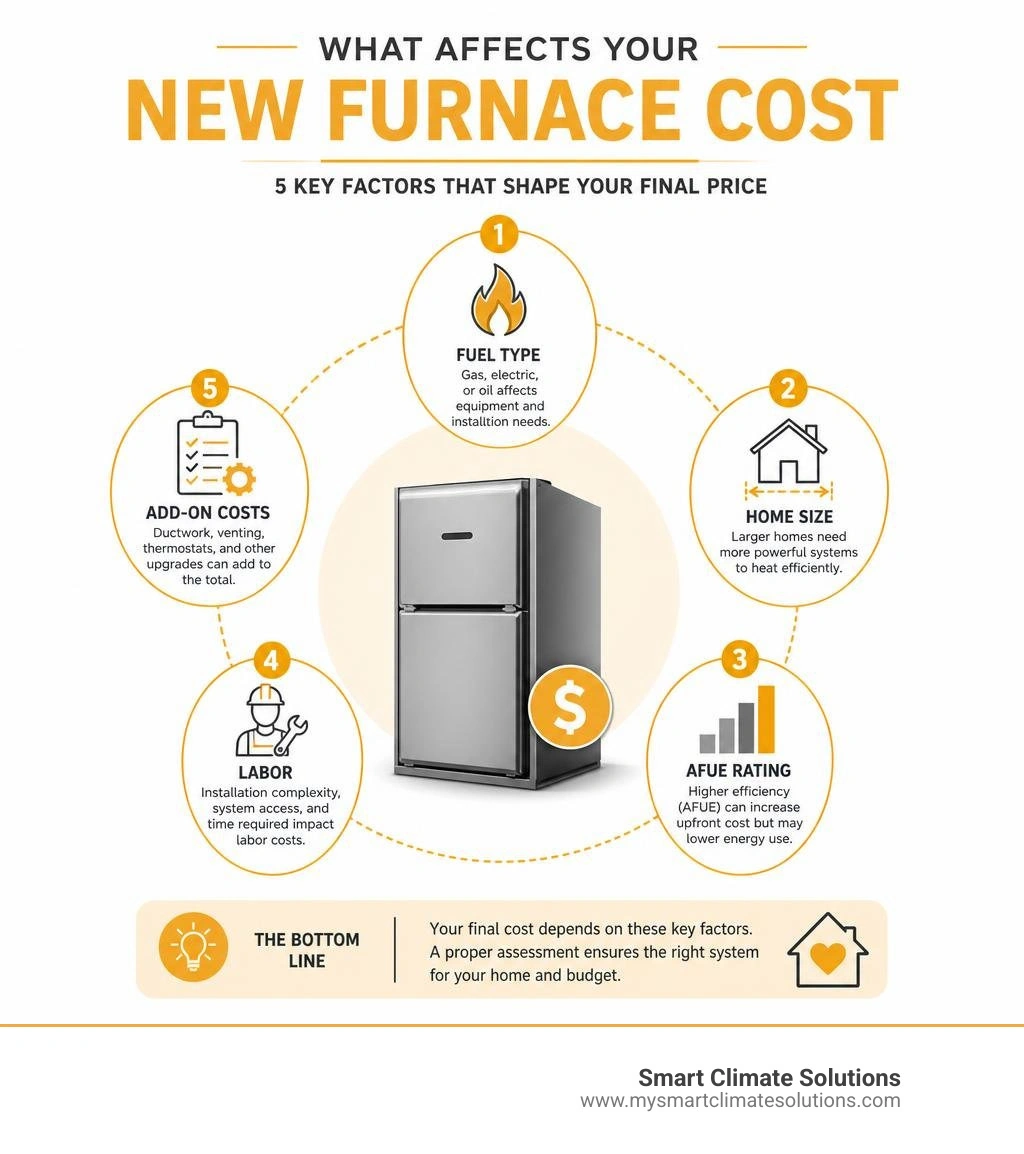
- Home Size and Heating Capacity: The physical size of your home determines how much heating power you need, which is measured in British Thermal Units (BTUs). A small home might only require a 40,000 BTU unit, while a large, drafty house in Washington, PA, might need 100,000 BTUs or more.
- The Manual J Load Calculation: A reputable HVAC contractor will never guess what size furnace you need based on square footage alone. We perform a detailed Manual J load calculation, which analyzes your home's insulation levels, window quality, local climate, and layout. Sizing a furnace correctly is critical; an oversized unit will turn on and off constantly (short-cycling), wearing out the parts prematurely, while an undersized unit will run constantly and fail to keep you warm.
- Installation Complexity: If your old furnace is located in a spacious, well-lit basement, installation is straightforward. If it is tucked away in a tight crawlspace, an attic, or a historical home in South Hills, PA, with narrow doorways, the extra labor will increase your overall price.
- Ductwork Condition: Your new furnace is only as good as the ductwork distributing the air. If your existing ducts are leaky, undersized, or disconnected, you may need modifications or repairs to ensure proper airflow.
For a deeper dive into how these structural and environmental elements impact your budget, check out our guide on new heating system cost factors.
How AFUE Efficiency Ratings Impact Upfront and Long-Term Costs
When reviewing a new furnace cost estimate, you will see a percentage rating known as AFUE, which stands for Annual Fuel Utilization Efficiency. This rating measures how efficiently the furnace converts fuel into usable heat for your home.
For example, an 80% AFUE furnace converts 80% of the fuel it burns into warmth, while the other 20% is lost as exhaust through your chimney. A high-efficiency 96% AFUE unit only wastes 4% of the fuel, directing almost all of your energy dollars directly into your living space.
- Standard Efficiency (80% AFUE): These units are the most affordable upfront, typically costing between $3,500 and $5,500 installed. They are ideal for milder climates or for homeowners who plan to move within a few years.
- High Efficiency (90% to 95% AFUE): These mid-tier units offer a great balance of upfront cost and monthly savings, usually running between $4,500 and $7,500.
- Ultra-High Efficiency (96% to 98%+ AFUE): These premium systems feature advanced variable-speed blowers and modulating gas valves. They cost between $6,000 and $12,000+ installed but offer the lowest monthly operating costs.
While high-efficiency models cost more upfront, they can save you hundreds of dollars per year on utility bills. In cold northern climates like Pittsburgh and Steubenville, OH, upgrading to a high-efficiency unit typically pays for itself in energy savings within 5 to 8 years. To learn more about how these modern systems work, read about the high-efficiency furnace installation benefits.
For a detailed look at how top-tier manufacturers design and price these systems, you can also consult the Carrier furnace cost and efficiency guide.
Hidden and Additional Costs Excluded from Base Quotes
When you receive a basic quote for a furnace replacement, it often covers only the standard equipment and basic swap-out labor. However, real-world retrofits often require additional work to meet safety codes and ensure the new system operates correctly.

Some of the most common additional expenses that can affect your final price include:
- Local Permits and Inspections ($50 - $300): Most municipalities in Pennsylvania, Ohio, and West Virginia require a mechanical permit to install a new combustion heating system. This ensures a local inspector verifies that the gas lines and flue pipes are safely installed.
- PVC Venting Upgrades ($300 - $800): If you are upgrading from an older 80% AFUE furnace to a high-efficiency 90%+ unit, you cannot reuse your old metal chimney flue. High-efficiency furnaces produce cool, acidic condensation, which requires specialized plastic PVC pipes vented directly through an exterior wall.
- Ductwork Modifications ($500 - $2,500): If your old furnace was mismatched or if your home has uneven heating, minor ductwork modifications may be required to match the airflow requirements of your new variable-speed blower.
- Electrical Upgrades ($200 - $700): Modern furnaces feature advanced electronic control boards that may require a dedicated 120V circuit or an upgraded breaker panel to operate safely.
- Old Unit Disposal and Environmental Fees ($100 - $300): Safely hauling away and recycling your old heavy steel furnace and any related debris requires specialized equipment and disposal fees.
To make sure you do not get caught off guard by these hidden fees, take a look at our average HVAC install cost guide.
When to Repair vs. Replace Your Heating System
One of the hardest decisions a homeowner has to make is deciding whether to fix a broken furnace or replace it entirely. To make this choice easier, we recommend using the $5,000 Rule.
To apply this rule, multiply the age of your furnace by the cost of the proposed repair. If the total is more than $5,000, it is usually smarter to replace the unit. If the total is less than $5,000, a repair is often the more practical choice.
- Example A: Your furnace is 12 years old and needs a $500 blower motor repair. (12 x $500 = $6,000). Because this exceeds the $5,000 threshold, you should seriously consider replacement.
- Example B: Your furnace is 6 years old and needs a $300 ignitor replacement. (6 x $300 = $1,800). Repairing the unit is the clear, cost-effective choice.
Beyond the math, there are other signs that point toward replacement. If your furnace is over 15 years old, requires frequent service calls, struggles to heat your home evenly, or has a cracked heat exchanger (which is a serious safety hazard that can leak carbon monoxide), it is time to shop for a new system. If you are facing a breakdown and need an honest, professional assessment, our furnace repair experts are here to help you weigh your options.
How to Get an Accurate Quote and Avoid Overpaying
The best way to protect your budget is to be proactive. If you wait until your furnace dies in the middle of a freezing January blizzard, you will be forced to make a rushed decision under stressful conditions.
To get the best value on your new furnace cost estimate, follow these steps:
- Get Three Written Bids: Always request detailed, itemized quotes from at least three licensed HVAC contractors. This allows you to compare equipment models, labor rates, and warranty terms side-by-side.
- Avoid High-Pressure Sales: Beware of sales representatives who offer massive discounts only if you sign a contract on the spot. A reputable contractor will give you time to review your options.
- Shop During the Shoulder Seasons: If possible, schedule your replacement during the spring or early fall. HVAC contractors are less busy during these mild months, and many offer off-season discounts or promotional financing options.
For a step-by-step walkthrough on how to navigate this process smoothly, check out our install HVAC furnace guide.
Preparing for Your New Furnace Cost Estimate
Before a technician arrives to evaluate your home, take a few minutes to prepare. Note down any rooms that are consistently too hot or too cold, locate your existing ductwork vents, and gather your utility bills from the past year.
Understanding your home's unique heating challenges helps us design a system tailored to your comfort. To learn more about what to expect during this initial consultation, read our guide on furnace and heating system installation.
Comparing Quotes for a New Furnace Cost Estimate
When you are comparing bids, look closely at what is included. Does the estimate cover the cost of permits and old unit disposal? What are the warranty terms? Most premium manufacturers offer a 10-year parts warranty, but you should also ask about the contractor's labor guarantee.
For homeowners in Southwestern PA, our furnace repair Pittsburgh guide offers practical tips on how to verify contractor licensing and ensure you are working with a trusted local professional.
Frequently Asked Questions About Furnace Costs
How long does a typical furnace replacement take?
A standard furnace replacement typically takes a two-person professional crew between 4 to 8 hours to complete. However, if your project requires extensive ductwork modifications, a fuel-type conversion (such as switching from oil to gas), or the installation of new PVC venting, the process can take 10 to 18 hours and may be split over two days.
Are there tax credits or rebates available for new furnaces in 2026?
While the federal Section 25C tax credit expired at the end of 2025, there are still excellent ways to save. Many state-level programs, local utility companies, and manufacturers offer rebates ranging from $100 to $500 for qualifying high-efficiency systems (usually 95% AFUE or higher). We recommend checking the Database of State Incentives for Renewables & Efficiency (DSIRE) or asking your installer about current utility promotions before signing a contract.
Can I install a new furnace myself to save on labor?
No. Furnace installation is highly complex and requires specialized knowledge of high-voltage electricity, natural gas plumbing, and carbon monoxide venting. In Pennsylvania, Ohio, and West Virginia, local building codes require licensed professionals to perform these installations. Attempting a DIY installation can lead to severe safety hazards, code violations, and will instantly void your manufacturer's warranty.
Conclusion
Investing in a new furnace is a major decision, but it is also an opportunity to improve your home's comfort, lower your monthly utility bills, and enjoy peace of mind for the next two decades. By understanding the key factors that shape a new furnace cost estimate, you can confidently choose the right system for your budget and your family's needs.
At Smart Climate Solutions, we have over 20 years of experience keeping families warm across Pittsburgh, the South Hills, Washington PA, Steubenville, and Weirton. We pride ourselves on providing fast, reliable service, transparent pricing, and expert installations backed by certified technicians.
Do not wait for the next winter freeze to leave you in the cold. Schedule your professional HVAC installation today and let our team help you find the perfect heating solution for your home.


.png)
