
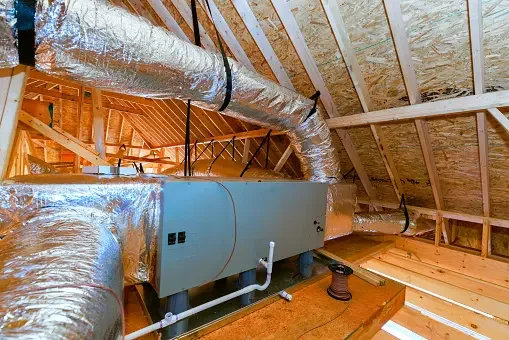
Why Pittsburgh Homeowners Are Prioritizing Furnace Replacement Right Now
Furnace replacement in Pittsburgh is one of the most important home investments you can make before another brutal Western PA winter arrives. If your furnace is struggling to keep up, here is a quick summary of what you need to know:
Quick Answer: Furnace Replacement in Pittsburgh
| Topic | Key Facts |
|---|---|
| Average cost | $1,471 - $1,786 (typical range) |
| Best fuel type | Gas (most common and cost-effective in PA) |
| When to replace | Furnace over 15 years old, frequent repairs, rising bills |
| Installation time | 1 to 2 days |
| Permit required | Yes, through Pittsburgh's PLI department |
| Top rebate available | Peoples Natural Gas: up to $225 for 97%+ AFUE units |
| Efficiency range | 80% to 98.5% AFUE; 90-95% recommended for Pittsburgh |
Pittsburgh sits in ASHRAE Climate Zone 5A, a cold-humid zone where January lows average 21 degrees Fahrenheit. A failing furnace is not just an inconvenience here -- it is a safety risk. Older systems can lose up to 30% of their energy to waste, driving up your bills every single month they keep running.
The good news? Modern furnaces last 15 to 25 years and deliver dramatically better efficiency and comfort than units installed even a decade ago.
I'm Bill Scott, general manager of Smart Climate Solutions and a 20-year HVAC veteran who has helped thousands of Pittsburgh-area homeowners navigate furnace replacement in Pittsburgh -- from sizing the right system to pulling permits and getting the job done right. In this guide, I'll walk you through everything you need to make a confident, informed decision.
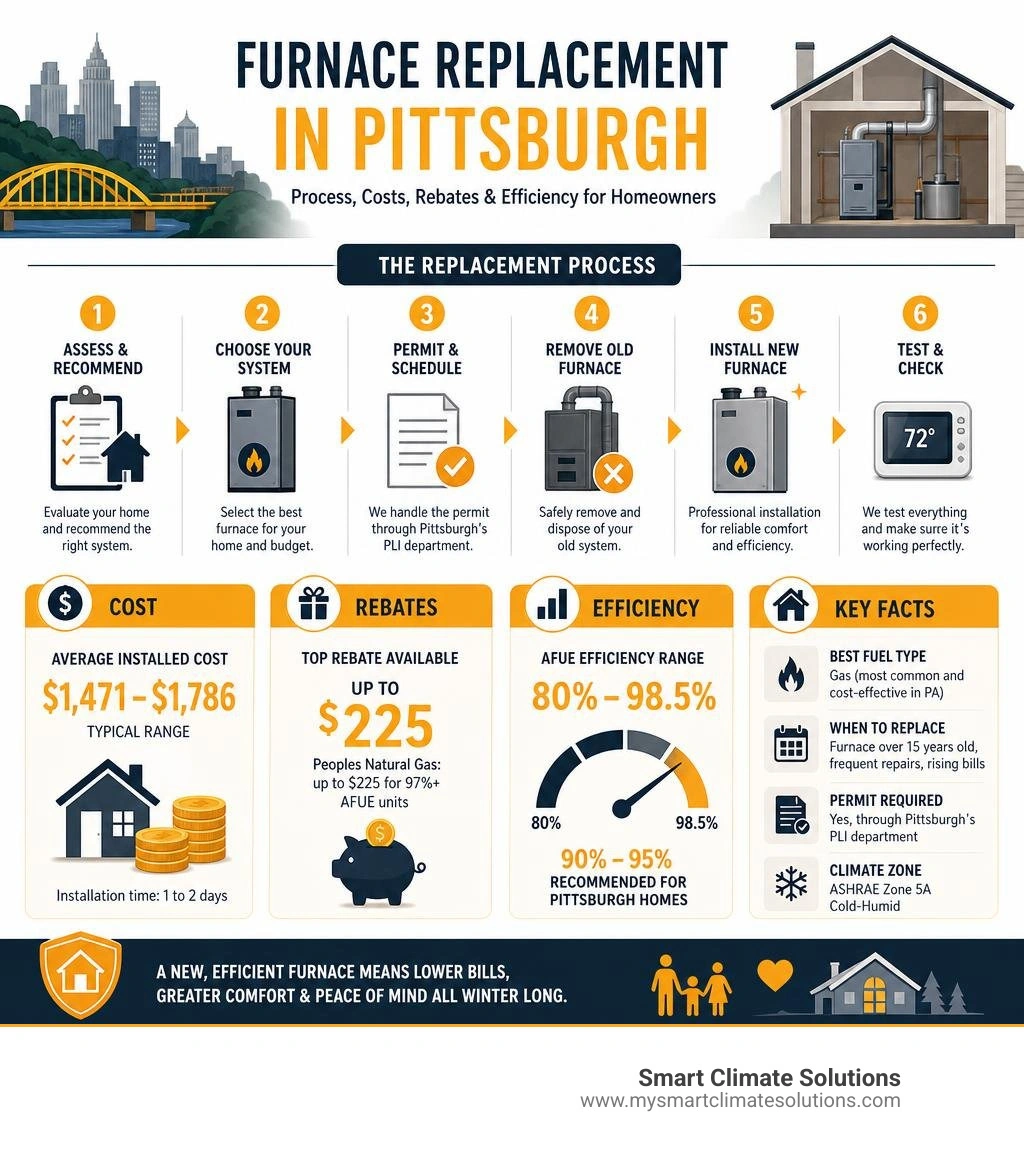
Furnace replacement Pittsburgh basics:
Key Factors in a Furnace replacement Pittsburgh Project

When you start planning a furnace replacement in Pittsburgh, it is easy to get overwhelmed by the options, numbers, and technical jargon. However, understanding the core elements of a replacement project can help you make a smart, stress-free decision.
The first step is evaluating your current system's overall health. While regular maintenance and timely repairs can keep a system running for years, there comes a point where investing more money into an old unit is simply throwing cash away. We always recommend looking at three primary factors: system age, energy bill trends, and safety.
A furnace that is over 15 years old is already living on borrowed time. Even if it seems to be working, its internal components are wearing down, and its overall efficiency is significantly lower than modern standards. Rising energy bills are a clear indicator that your system has to work twice as hard to produce the same amount of heat.
More importantly, older gas-fired furnaces pose a real risk of carbon monoxide leaks if the heat exchanger cracks. Regular safety inspections are vital, but once a heat exchanger fails, a complete system replacement is almost always the safest and most cost-effective path forward. For more details on how to care for your system before making the jump to a new one, check out our Furnace Repair Pittsburgh Guide.
Signs You Need Furnace replacement Pittsburgh
How do you know when it is officially time to stop repairing and start planning a furnace replacement in Pittsburgh? Here are the most common warning signs that your heating system is reaching the end of the line:
- Frequent and Costly Repairs: If you have your HVAC contractor on speed dial and are spending hundreds of dollars every winter just to keep the heat on, it is time to upgrade.
- Inconsistent Heating and Cold Spots: Do you find yourself freezing in the living room while the upstairs bedrooms feel like a sauna? This is a sign that your furnace can no longer distribute heat evenly.
- Strange Noises: Squealing, rattling, banging, or humming noises point to structural issues, failing blowers, or cracked components.
- Yellow Burner Flame: A healthy gas furnace should always burn a steady blue. A yellow or flickering flame indicates incomplete combustion, which can produce dangerous carbon monoxide.
- Rising Utility Bills: If your gas or electric bills are climbing but your heating habits haven't changed, your furnace's efficiency is plummeting.
If you wake up in the middle of a freezing January night to find your Furnace Stopped Working or notice your Furnace Not Heating properly, don't panic. While emergency repairs are always an option, we can help you assess whether a quick fix or a complete replacement is the best long-term investment. If you are trying to weigh your options, our guide on Pittsburgh Furnace Repair can help you decide.
Cost Factors for Furnace replacement Pittsburgh
Budgeting for a new heating system is a major step. In Pittsburgh, the average cost for a basic furnace replacement typically ranges from $1,471 to $1,786, with some complete high-efficiency installations running higher depending on the complexity of the project. When looking at a full HVAC overhaul (such as adding a central air conditioner or modifying extensive ductwork), homeowners in our region typically pay between $6,500 and $14,500 in 2026.
Several factors will directly influence your final estimate:
- Equipment Sizing and Efficiency: Larger homes require higher BTU output, and high-efficiency models (90% AFUE and above) cost more upfront than standard 80% AFUE units.
- Fuel Type: Gas furnaces are generally more expensive to purchase than electric models, but they are much cheaper to run in Western PA.
- Labor and Complexity: Labor rates in the Pittsburgh area average $50 to $75 per hour, plus approximately $50 per hour for each crew helper. If your home has tight access spaces, steep stairs, or requires custom ductwork modifications, the labor hours will increase.
- Permits and Local Codes: Replacing a furnace in the city of Pittsburgh requires a mechanical permit through the Permits, Licenses, and Inspections (PLI) department, which carries a minimum fee of $125.
To get a clearer picture of how these prices break down for different home sizes, take a look at our comprehensive guide on Furnace Replacement Cost.
Comparing Heating Systems for Western PA Homes
Choosing the right type of heating system is crucial for staying comfortable during our freezing winters. Western PA homes have unique architectural styles, ranging from historic brick rowhouses in the South Hills to modern builds in Burgettstown and Washington, PA.
| Furnace Type | Average Lifespan | Fuel Cost in PA | Pros | Cons |
|---|---|---|---|---|
| Natural Gas | 15 - 20 Years | Low | Highly efficient, rapid heating, very common in PA | Requires gas line and venting |
| Electric | 20 - 30 Years | High | Long lifespan, lower upfront cost, no carbon monoxide risk | Expensive monthly operating costs |
| Heating Oil | 15 - 20 Years | High / Variable | High heat output for older homes | Requires fuel delivery and storage tank |
For most local homeowners, gas is the gold standard. To explore how different systems fit into local homes, you can consult with our experienced team. If you live in the southern suburbs, working with a specialized local contractor ensures your system is configured for the specific housing styles found in neighborhoods like Bethel Park, Mt. Lebanon, and Upper St. Clair. Additionally, proper installation is key to meeting localized requirements across county lines.
High-Efficiency Systems and AFUE Ratings
If you want to keep your monthly energy bills as low as possible, you need to understand Annual Fuel Utilization Efficiency (AFUE) ratings. Think of AFUE as a percentage that tells you how much of the fuel your furnace consumes is converted directly into heat for your home, versus how much is wasted.
- Standard Efficiency (80% AFUE): For every dollar you spend on gas, 80 cents heats your home, and 20 cents escapes through the chimney. These systems use standard metal venting.
- High Efficiency (92% to 98% AFUE): These systems convert up to 98% of the fuel into heat. They utilize a secondary heat exchanger to capture extra warmth, which produces acidic condensate water. Because of this, high-efficiency systems require specialized PVC venting and a dedicated drain line.
Upgrading to a high-efficiency system is one of the best ways to combat rising utility rates. To learn more about how these units are installed and whether they are right for your property, read our guide on High Efficiency Furnace Install.
Sizing and Climate Zone 5A Requirements
A common mistake homeowners make is assuming that "bigger is always better" when it comes to heating. In reality, an oversized furnace will constantly turn on and off (a process called short-cycling), which wears out the components quickly and leads to uneven temperatures. An undersized furnace, on the other hand, will run continuously without ever getting your home warm enough.
Because Pittsburgh is in Climate Zone 5A, our systems must be designed to maintain a comfortable indoor temperature of 70 degrees Fahrenheit even when outdoor temperatures drop to the local design standard of 5 degrees.
To determine the perfect size for your home, our certified technicians perform a professional Manual J Load Calculation. This calculation takes into account:
- Total square footage
- Wall and attic insulation quality
- Number and age of windows and doors
- Home layout and orientation
Whether you are looking at a New Residential Furnace for a historic home or planning a Furnace Replacement Steubenville OH across the state line, proper sizing is the key to comfort. If you are in eastern Ohio, our team can help you compare localized installation requirements and find the best system for your needs.
Local Regulations, Permits, and Rebates
Replacing a furnace is not a simple plug-and-play job. Because it involves high-voltage electricity, natural gas lines, and carbon monoxide exhaust, local municipalities strictly regulate these installations to protect public safety.
Navigating these regulations, securing the right permits, and applying for utility rebates can seem complicated, but a professional contractor will handle the heavy lifting for you. To get an idea of how these local requirements impact your overall budget, you can review our New Furnace Cost Estimate resource. If you are located in Ohio, working with a certified professional can help you understand local guidelines across the river.
Pittsburgh Permit and Inspection Requirements
If you live within the city limits of Pittsburgh, the Department of Permits, Licenses, and Inspections (PLI) requires a mechanical permit for all furnace replacements. This ensures that a third-party inspector reviews the completed work to confirm it meets the current international residential and fuel gas codes.
Key code requirements include:
- Proper Venting: High-efficiency furnaces must be vented with approved PVC piping routed directly to the outdoors, away from windows and fresh air intakes.
- Gas Line Safety: Installers must use approved gas flex lines, sediment traps, and dedicated shutoff valves.
- Electrical Disconnects: A dedicated electrical switch must be installed within arm's reach of the furnace for emergency shutoffs.
Working with licensed, insured contractors who pull permits is the only way to ensure your home remains safe and your manufacturer warranty stays valid. If you are located in Washington County, working with an experienced specialist in Burgettstown will ensure your project meets all local township and borough codes.
Available Rebates and Financial Incentives
The upfront cost of a high-efficiency furnace can be offset significantly by taking advantage of federal tax credits and local utility rebate programs.
Here are the top incentives available for Western PA and Tri-State area homeowners in 2026:
- Peoples Natural Gas Rebate: Offers up to $225 for homeowners who install high-efficiency furnaces with an AFUE rating of 97% or higher.
- Federal Section 25C Tax Credit: Allows you to claim up to 30% of the installation cost (up to $1,200) for qualifying high-efficiency gas furnaces.
- Flexible Financing: Many homeowners utilize low-interest financing plans to spread the cost of installation over manageable monthly payments.
If you are located in West Virginia, you can find localized support and regional rebate guidance by reaching out to our team for expert assistance in the Weirton area.
What to Expect During Professional Installation
Once you have selected your new system and finalized the paperwork, it is time for installation day. A standard furnace replacement is a highly coordinated process that typically takes between one and two days.
To make sure you are fully prepared, you can read through our detailed Furnace Installation Guide 2026. Here is a breakdown of what our team will do when we arrive at your home.
The Step-by-Step Installation Process
- Property Protection: Our crew will lay down drop cloths and wear protective booties to keep your floors clean.
- System Decommissioning: We safely shut off the gas and electrical supplies before carefully disconnecting and removing your old furnace.
- Plenum and Ductwork Adjustments: Because new furnaces are often more compact than older models, we customize the metal transitions (plenums) to connect the new unit to your existing ductwork perfectly.
- Venting and Drain Lines: For high-efficiency models, we run PVC exhaust and intake pipes to the exterior of your home and install a condensate drain line.
- Thermostat and Electrical Wiring: We connect the control wiring and, if requested, integrate a smart thermostat to help you manage your heating schedules easily.
- System Testing: We run the furnace through a complete heating cycle, testing gas pressure, airflow, and safety controls to ensure flawless operation.
Post-Installation Maintenance and Warranties
After your new furnace is up and running, protecting your investment is our top priority. Modern systems come with robust manufacturer warranties, typically covering parts for 5 to 10 years and the heat exchanger for up to 20 years (or even a lifetime on premium models).
However, manufacturers require proof of regular professional maintenance to keep these warranties valid. We recommend signing up for an annual maintenance plan. Regular tune-ups keep your system running at peak efficiency, prevent unexpected breakdowns, and ensure your family stays warm and safe for up to 25 years.
Frequently Asked Questions about Western PA Heating
We answer questions from local homeowners every day. Here are some of the most common things people ask when considering a new heating system.
How long does a typical furnace installation take?
A straightforward furnace swap usually takes about 4 to 8 hours and can easily be completed in a single day. However, if we need to modify extensive ductwork, run new gas lines, or install complex PVC venting for a high-efficiency conversion, the project can take up to two days. We will always give you a clear timeline before we begin.
Can I replace my own furnace to save money?
We strongly advise against DIY furnace installations. Working with natural gas, high-voltage electricity, and carbon monoxide venting requires specialized training, diagnostic tools, and licensing. A minor mistake can lead to gas leaks, electrical fires, or carbon monoxide poisoning. Furthermore, major manufacturers will immediately void their equipment warranties if the system is not installed by a certified professional.
What is the best time of year to replace a furnace?
The ideal times to schedule a replacement are during the "shoulder seasons" of spring (April to May) and autumn (September to October). During these months, temperatures are mild, meaning you won't mind having your heating system off for a few hours. Additionally, HVAC contractors have more flexible schedules during these times, allowing you to secure better pricing and booking availability compared to the peak emergency season of mid-winter.
Conclusion
Investing in a furnace replacement in Pittsburgh is the best way to guarantee your family's safety, comfort, and financial peace of mind before the cold weather sets in. By upgrading to a modern, high-efficiency system, you will enjoy lower utility bills, consistent heating, and reliable performance for decades to come.
At Smart Climate Solutions, we bring over 20 years of local experience, certified technicians, and 24/7 emergency support to every job. Whether you live in Pittsburgh, the South Hills, Burgettstown, Washington, Steubenville, St. Clairsville, or Weirton, we are here to make your home comfort upgrade simple and affordable.
Ready to get started? Schedule your professional HVAC installation today and let us help you find the perfect heating solution for your home!

.png)
