
Understanding Average HVAC System Install Cost in 2026
When budgeting for home heating and cooling upgrades in 2026, understanding national averages helps establish realistic expectations. System replacement benchmarks fluctuate based on equipment capability, efficiency tier, and site-specific labor requirements. Homeowners can explore our detailed average hvac install cost breakdown to see how these benchmarks apply to standard residential layouts.
The overall investment typically spans three main categories: baseline budget systems, mid-range standard efficiency units, and premium variable-capacity options. For additional context on national pricing data, review this CostWhale HVAC Installation Overview.
| System Category | Typical Equipment Cost | Estimated Labor & Materials | Total Installed Range |
|---|---|---|---|
| Basic Split System (Single-Stage) | $2,500 - $4,500 | $2,500 - $4,500 | $5,000 - $9,000 |
| Mid-Tier System (Two-Stage / Standard Heat Pump) | $4,500 - $7,500 | $3,500 - $6,500 | $8,000 - $14,000 |
| High-Efficiency Variable-Speed System | $7,500 - $14,000 | $4,500 - $9,000 | $12,000 - $23,000 |
| Geothermal Heat Pump Configuration | $10,000 - $22,000 | $10,000 - $23,000 | $20,000 - $45,000 |
Equipment Types and HVAC System Install Cost
The physical setup of your home directly dictates which equipment type provides optimal comfort. Standard split systems, which pair an indoor gas or electric furnace with an outdoor condenser, remain popular across Western Pennsylvania, Eastern Ohio, and Northern West Virginia. These traditional systems offer reliable performance through freezing winters and humid summer afternoons.
Air-source heat pumps provide both heating and cooling from a single exterior unit, using electricity to move heat rather than burning fossil fuel. Ductless mini-split heat pumps offer targeted zone control, making them ideal for older brick homes in Pittsburgh PA, South Hills PA, or historic properties in Washington PA that lack existing ductwork. While geothermal units carry the highest initial price tag due to deep excavation for ground loops, their superior thermal efficiency yields lower operational costs over decades of use. Learn more about matching configurations in our comprehensive guide on residential hvac installation cost.
Central AC vs Furnace vs Complete System Costs
Replacing only a cooling or heating component differs significantly from replacing an entire HVAC setup simultaneously.
- Central Air Conditioning Only: A standalone cooling upgrade typically costs between $3,000 and $15,000, depending on tonnage, condenser stages, and refrigerant line accessibility. Homeowners evaluating air conditioning upgrades can check our guide on central ac replacement cost for exact sizing details.
- Furnace Only: A replacement gas or oil furnace ranges from $3,800 to $12,000 installed. Factors influencing price include venting requirements, electrical connections, and fuel source transitions. Detailed equipment figures are available in our breakdown of furnace replacement cost.
- Complete System Replacement: Replacing both the heating unit and air conditioner simultaneously usually costs between $7,000 and $15,000 for standard systems, and up to $28,000 for high-end variable configurations. Installing both units together minimizes overall labor fees, ensures factory-matched coil efficiency, and avoids having an aging furnace blower compromise a brand-new AC condenser.
Primary Cost Drivers in HVAC Replacement
Two identical houses in the same neighborhood can receive completely different quotes because installation demands vary widely. Sizing, electrical safety standards, structural access, and refrigerant management all affect the final investment.
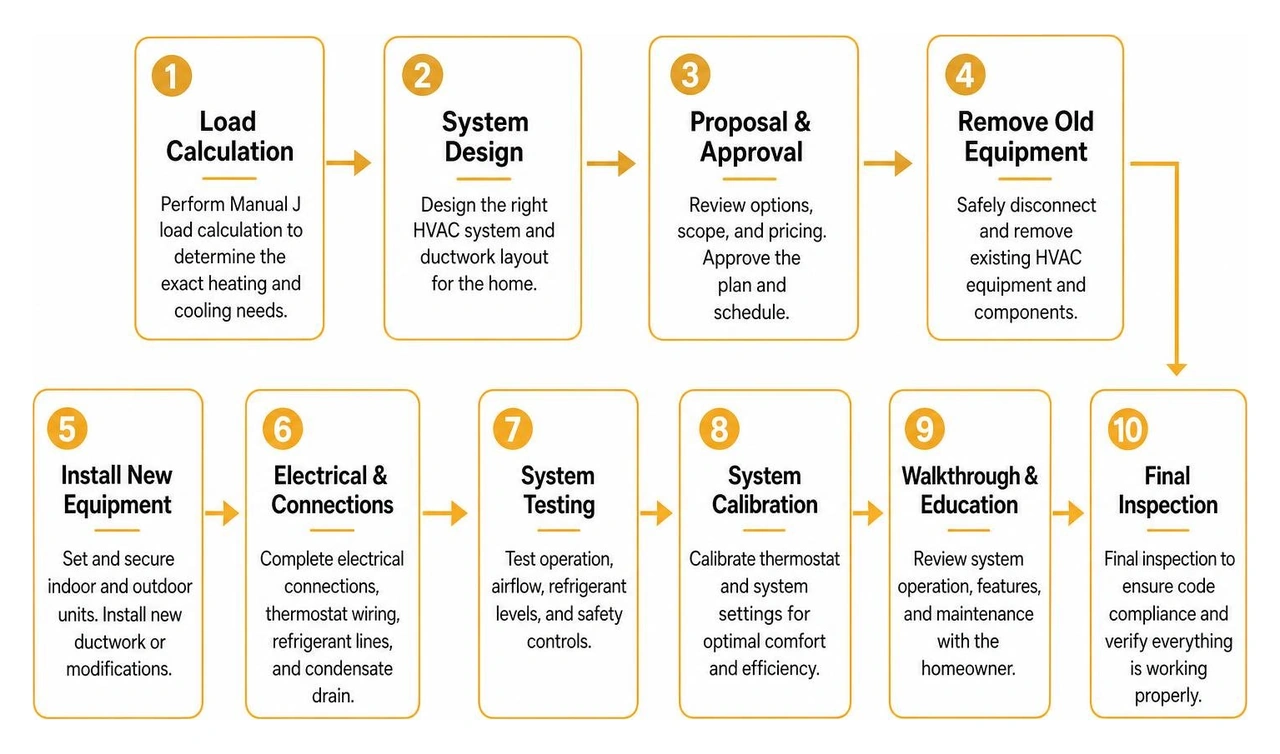
Key Factors Driving HVAC System Install Cost Variations
Proper sizing is the single most important technical step in any HVAC installation project. Rather than using outdated rules of thumb based solely on square footage, certified technicians conduct an ACCA Manual J load calculation. This calculation factors in wall insulation levels, window orientation, ceiling height, and regional climate conditions to determine the exact heating and cooling load required. For additional insights on what shapes these estimates across different home styles, explore the ConsumerAffairs HVAC Cost Guide.
Multi-zone home layouts require additional motorized dampers, dedicated zone control boards, and multi-stage equipment, which adds to the total labor and hardware expense. Labor rates also vary depending on the local cost of living and specific municipal code requirements. In areas like Pittsburgh PA, Steubenville OH, or Weirton WV, working around historic construction, tight basement entries, and stone foundations requires seasoned trade expertise.
Ductwork Condition and Additional Project Expenses
Ductwork serves as the respiratory system of any forced-air heating and cooling setup. If air ducts are improperly sized, disconnected, or leaking conditioned air into uninsulated crawlspaces, a brand-new high-efficiency unit will not perform as designed.
- Existing Ductwork: If existing metal runs are clean, sealed, and properly sized, equipment installation remains straightforward. You can compare standard pricing structures by reviewing our article on central air install cost with existing ductwork.
- No Existing Ductwork: Installing ducts in a finished home requires opening walls, building soffits, and routing returns, which typically adds $3,000 to $8,000 or more to the baseline equipment price. Homeowners facing this scenario can review our guide on central air install cost with no existing ductwork.
- Modifications and Sealing: Modifying transitions, adding return air drops, and resealing joints helps prevent air loss. To estimate these specialized sheet metal services, check our overview on ductwork installation cost.
- Permits and Disposal Fees: Local building permits protect homeowner safety by requiring third-party inspections for gas piping, electrical panels, and structural venting. Most municipal permits range from $200 to $800, while safe refrigerant recovery and old equipment disposal typically add $50 to $150.
Energy Efficiency Ratings and Long-Term Savings
Modern heating and cooling systems are rated using standardized energy efficiency metrics that directly correlate with seasonal utility expenses:
- SEER2 (Seasonal Energy Efficiency Ratio 2): Measures cooling efficiency over a standard operating season under updated external static pressure conditions. Higher ratings mean less electrical consumption during peak summer heat waves.
- HSPF2 (Heating Seasonal Performance Factor 2): Measures heat pump efficiency during winter heating cycles.
- AFUE (Annual Fuel Utilization Efficiency): Measures the percentage of fossil fuel converted into usable household heat by a furnace or boiler. Modern standard furnaces start at 80% AFUE, while high-efficiency condensing units achieve 95% to 98% AFUE.
Upgrading from an older 10 SEER system to a modern 16+ SEER2 unit can lower annual cooling electricity usage by 20% to 40%. Over a 15-year operational lifecycle, those monthly utility savings often offset the higher initial price of premium equipment.
Maximizing Rebates and Tax Incentives in 2026
Taking advantage of efficiency incentives is an effective way to lower project expenses. In 2026, homeowners can benefit from multiple rebate programs:
- Federal Efficiency Tax Credits: High-efficiency heat pump systems meeting designated ENERGY STAR benchmarks can qualify for federal tax credits of up to $2,000, lowering your net tax liability.
- Local Electric and Gas Utility Rebates: Regional energy providers across Southwestern Pennsylvania, Eastern Ohio, and West Virginia offer cash-back incentives ranging from $250 to $1,500 for qualifying high-efficiency furnaces, heat pumps, and smart thermostats.
- Manufacturer Instant Rebates: Equipment manufacturers regularly offer seasonal promotional discounts during targeted spring and fall sales campaigns.
- Rebate Stacking: Combining utility incentives, federal credits, and manufacturer promotions can reduce the total out-of-pocket investment by $2,500 to $4,500 on qualifying high-performance systems.
Repair vs Replace: How to Make the Right Choice
Deciding between fixing an existing unit and purchasing a brand-new system comes down to age, reliability, and ongoing operating expenses.
The $5,000 Rule provides a helpful guideline: multiply the age of your equipment (in years) by the total estimated repair cost. If the result exceeds $5,000, investing in a replacement is generally the more sensible financial path.
Other key indicators that point toward replacement include:
- Phased-Out R-22 Refrigerant: Older air conditioning systems manufactured prior to 2010 rely on R-22 Freon. Sourcing this obsolete refrigerant for leak repairs is expensive and often impractical.
- Major Component Failures: A cracked furnace heat exchanger or a seized compressor carries high repair costs that are better put toward a new system with full factory warranty protection.
- Declining Reliability: Requiring multiple service calls within two consecutive seasons signals that primary components are wearing out.
Timing Your Installation for Maximum Savings
HVAC installation demand peaks during the hottest weeks of July and the sub-zero snaps of January. When equipment fails during these extreme periods, contractors experience heavy scheduling volume, and emergency turnaround requirements leave little time for planning.
Planning your installation during the spring (March to May) or fall (September to November) offers several advantages:
- Flexible Scheduling: Installation teams have open availability, allowing you to select installation dates that suit your calendar.
- Off-Season Promotions: Manufacturers and local contractors often offer equipment discounts, extended labor warranties, and competitive financing packages to balance seasonal demand.
- Proactive Comfort: Upgrading before severe weather arrives protects your home from sudden heating or cooling outages. Scheduling routine service also extends equipment life; review our guide on annual hvac maintenance cost to keep your existing system running smoothly.
Frequently Asked Questions about HVAC Installation
How long does a typical HVAC installation take?
A standard, like-for-like system changeout where equipment connects directly to functional existing ductwork takes 1 to 2 days (approximately 12 to 20 total labor hours for a two-person crew). Projects that require custom sheet metal transitions, electrical service panel upgrades, or running new refrigerant line sets may take 2 to 3 days. Full home retrofits with complete ductwork installations generally require 3 to 6 working days. When properly installed and maintained with seasonal tune-ups, a new furnace or central AC system typically delivers a lifespan of 15 to 20 years, while air-source heat pumps provide 12 to 15 years of reliable service.
What should be included in a professional HVAC quote?
A comprehensive quote should be clear, detailed, and completely itemized. Every legitimate contractor proposal must include:
- Specific manufacturer brand, model numbers, and nominal tonnages for both indoor and outdoor equipment.
- Efficiency ratings (SEER2, HSPF2, AFUE).
- Confirmation of an ACCA Manual J load calculation to verify proper sizing.
- Full scope of labor, including line set flushes, electrical disconnect boxes, emergency drain pans, and digital thermostat installation.
- Local municipal permit fees and required safety inspections.
- Factory parts warranty terms alongside the contractor's written labor warranty coverage.
- Safe recovery, transport, and disposal of the old furnace, condenser, or refrigerant.
Is a heat pump cheaper to install than an AC and furnace combo?
The initial purchase price of an air-source heat pump system is often comparable to or slightly higher than a traditional entry-level air conditioner and 80% gas furnace package. However, heat pumps deliver both heating and cooling from a single outdoor system, eliminating the need for complex gas flues or dedicated fuel lines. In regions with moderate winter temperatures, a heat pump paired with cold-climate inverter technology delivers high seasonal efficiency, qualifies for federal tax credits up to $2,000, and yields lower annual operating costs than burning propane, heating oil, or using electric resistance heat.
Conclusion
Upfront budget planning, proper equipment sizing, and hiring certified technicians are the most important steps in ensuring long-term indoor comfort and system efficiency. Whether you are replacing a furnace in Burgettstown PA, upgrading central air in St. Clairsville OH, or planning a full system replacement across greater Pittsburgh, working with experienced professionals ensures your project is completed safely and correctly.
With over 20 years of experience, 24/7 emergency support, and certified local technicians, Smart Climate Solutions helps homeowners select efficient, cost-effective heating and cooling equipment tailored to their homes. Contact our team today to schedule an in-home assessment and receive a detailed, transparent estimate from our professional HVAC installation services.



.png)
