

Understanding the Heart of Your LG Air Conditioner

An LG AC evaporator coil is the indoor part of your air conditioner that absorbs heat from your home's air. It's a critical component for cooling.
- What it is: A network of tubes filled with refrigerant inside your indoor AC unit.
- What it does: Absorbs heat from indoor air, causing refrigerant to evaporate.
- Why it matters: Your AC cannot cool your home without a working evaporator coil.
- Common issues: Dirt buildup, freezing, refrigerant leaks, and corrosion.
- Maintenance: Annual professional cleaning is recommended.
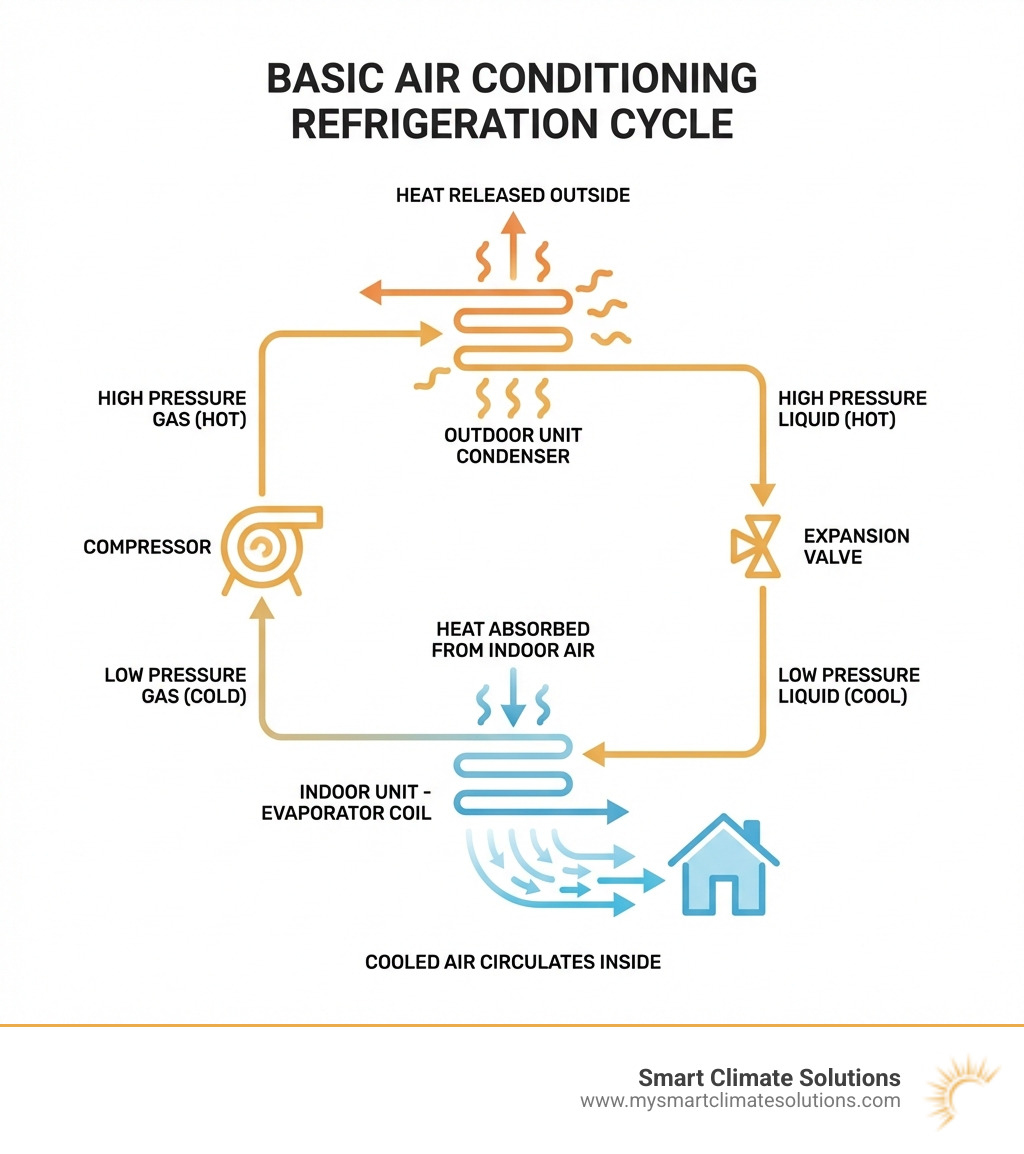
The LG AC evaporator coil acts like a heat sponge. As your system's fan blows warm air across the cold coil, heat transfers from the air to the refrigerant inside. This cooled air then circulates through your home, while the refrigerant carries the heat to the outdoor unit to be released.
Without proper maintenance, your evaporator coil can become clogged with dust, dramatically reducing efficiency and increasing your energy bills.
As Bill Scott, general manager of Smart Climate Solutions with over 20 years in the HVAC industry, I've seen countless LG AC evaporator coil issues in Pittsburgh homes, from simple dirt buildup to complete coil failure. Understanding how this component works helps homeowners catch problems early and avoid costly emergency repairs.
How the Evaporator Coil Works in Your LG AC
The LG AC evaporator coil is a vital component that removes heat from your indoor air. Without it, your home simply wouldn't cool down. The coil is a key part of your LG AC's refrigeration cycle.
Here is how it works:
- Refrigerant Entry and Expansion: Cold, low-pressure liquid refrigerant enters the evaporator coil. Before it gets there, it passes through an expansion valve that drops its pressure and temperature, making it extremely cold.
- Heat Absorption (Evaporation): Your AC's blower fan pulls warm air from your home across the cold coil. The refrigerant inside absorbs this heat, causing it to boil and transform into a gas (a process called evaporation).
- Cooling and Dehumidification: As the air gives up its heat, it cools down. This cool air is then blown back into your living spaces. As a bonus, moisture in the warm air condenses on the coil's surface and drips into a drain pan, dehumidifying your home.
- Refrigerant Exit: Now a gas, the refrigerant leaves the evaporator coil and travels to the outdoor unit's compressor to release the heat and begin the cycle again.
The efficiency of this process depends on airflow and coil condition. Modern LG systems are designed for high efficiency, some using R32 refrigerant, which has a lower environmental impact than older refrigerants like R410A.
For more detailed information on how your entire system works, check out our guide on More info about your Air Conditioning System.
Understanding Your LG AC Evaporator Coil and Condenser Coil
The evaporator coil and the condenser coil are both essential, but they perform opposite functions in different locations. Think of them as a team working to move heat out of your home.
Here's a breakdown of the key differences:
| Feature | LG AC Evaporator Coil | LG AC Condenser Coil |
|---|---|---|
| Location | Inside your home (indoor unit or air handler) | Outside your home (outdoor unit) |
| Function | Absorbs heat from indoor air, causing refrigerant to evaporate into a gas. Also dehumidifies the air. | Releases heat to the outdoor air, causing refrigerant to condense back into a liquid. |
| Appearance | Typically cold and wet (due to condensation) | Typically warm or hot to the touch |
| Refrigerant State | Low-pressure, cold liquid changing to low-pressure, cold gas | High-pressure, hot gas changing to high-pressure, warm liquid |
| Role in Cycle | Where cooling happens inside your home | Where heat is expelled from your home |
The LG AC evaporator coil is your home's heat absorber, while the condenser coil is its heat releaser. Both are made of thin metal tubes arranged to maximize surface area for heat exchange. Understanding their roles helps explain the efficiency of your LG air conditioning system.
Common Problems with Your LG AC Evaporator Coil
When your LG AC evaporator coil isn't working correctly, it can cause issues with comfort, energy bills, and indoor air quality.

One of the most common problems is dirt buildup. If air filters are not changed regularly, dust and debris can coat the coil, acting as an insulator and hindering its ability to absorb heat.
The consequences of a dirty coil include:
- Reduced Cooling: A dirty coil can't absorb heat well, so your AC runs longer and struggles to cool your home.
- Higher Energy Bills: The harder your AC works, the more electricity it uses, increasing your utility costs.
- System Strain: Overworking can cause premature wear on expensive parts like the compressor.
- Poor Indoor Air Quality: A dirty, moist coil is a breeding ground for mold and bacteria, which can be circulated through your home, affecting your Indoor Air Quality.
- Water Leaks: A clogged or frozen coil can cause the drain pan to overflow, leading to water damage.
- HVAC Blowing Warm Air: In severe cases, the system may stop cooling altogether and you'll find your HVAC Blowing Warm Air On Cool.
Signs of a Frozen Evaporator Coil
A frozen coil is a serious problem. When the coil gets too cold, moisture freezes on its surface, creating a layer of ice that blocks airflow and heat absorption.
Look for these signs:
- Visible Ice or Frost: The most obvious sign is a layer of ice on the coil itself.
- Restricted Airflow: You'll notice very little air coming from your vents.
- Water Leaks: As the ice melts, it can overwhelm the drain pan and cause leaks.
- AC Not Cooling: The system will run but won't cool your home effectively. This is a key sign your AC Not Cooling.
Common causes of a frozen LG AC evaporator coil include dirty air filters (the leading cause), a dirty coil, low refrigerant from a leak, or blower motor problems.
If you suspect a frozen coil, turn off your AC immediately to let it thaw. Then, call a professional for diagnosis and repair to prevent serious damage to your compressor.
Symptoms of a Refrigerant Leak
A refrigerant leak is a serious issue requiring immediate professional attention. Refrigerant is essential for cooling, and low levels can damage your system.
Symptoms of a leak include:
- Hissing or Bubbling Sounds: Unusual noises from the indoor unit can indicate escaping refrigerant.
- Oily Residue: Refrigerant contains oil that can leave a greasy film on or near the coil if it leaks.
- Inconsistent Cooling: Your AC struggles to maintain temperature, or some rooms are warmer than others.
- Localized Freezing: Ice forming on only one part of the coil is a strong sign of a leak at that spot.
- Increased Energy Bills: The system works harder to compensate for low refrigerant, using more power.
- AC Blowing Warm Air: With a significant leak, the AC may blow warm air instead of cool.
Refrigerant leaks are not a DIY fix. Handling refrigerants requires special certification and tools, as mandated by the EPA for safety and environmental protection.
If you suspect a refrigerant leak in your LG AC system in the Pittsburgh, PA, or surrounding areas, call a licensed professional immediately. Our certified technicians at Smart Climate Solutions can safely find and repair leaks. You can Find a Section 608 Certified Technician through our services. Ignoring a leak can lead to costly compressor failure.
Maintenance and Cleaning: A Homeowner's Guide
Regular maintenance is crucial for the performance and longevity of your LG AC evaporator coil. Routine care leads to better efficiency, a longer system lifespan, improved air quality, and fewer breakdowns.
We recommend a two-part approach to maintenance:
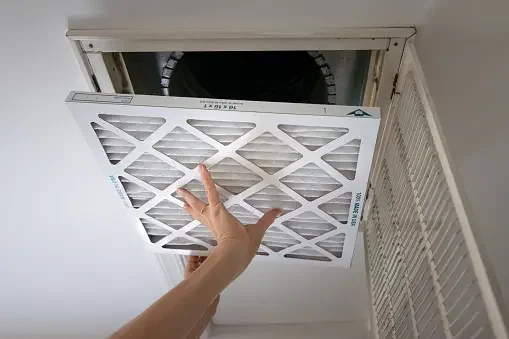
- Monthly: Check and replace your air filter. This is the most effective DIY task to prevent coil problems.
- Annually: Schedule a professional Air Conditioner Maintenance tune-up. Our technicians will thoroughly inspect and clean your evaporator coil and other critical components.
DIY vs. Professional Cleaning for an LG AC Evaporator Coil
While homeowners can perform some basic cleaning, the delicate nature of the LG AC evaporator coil often requires professional service.
DIY Cleaning (Basic):
For light dust, homeowners can perform some preventative cleaning.
- Safety First: Always turn off power to the AC unit at the circuit breaker.
- Access the Coil: Following your owner's manual, carefully open the indoor unit's access panel.
- Gentle Cleaning: Use a soft brush or a vacuum with a brush attachment to gently remove surface dust. Be careful not to bend the delicate metal fins.
- Clean the Drain Pan: If accessible, clean the condensate drain pan with a mixture of one part bleach to one part water to remove any slime or mold.
- Replace Air Filter: This is the most important step. A clean filter protects the coil from dirt.
When to Call a Professional:
For anything more than light dusting, professional service is necessary. Call us if you see:
- Heavy Grime: Professionals use special cleaners for deep-seated dirt and mold.
- Suspected Leaks: A certified technician is legally required to handle refrigerant.
- Frozen Coil: Turn off the unit and call for a diagnosis to find the root cause.
- Electrical Issues: Any strange odors or electrical problems need an expert.
Safety Precautions: Always disconnect power before working. Wear gloves to protect from sharp fins and be careful with any cleaning chemicals. Never handle refrigerant yourself.
For technical specifications, it's best to consult For technical specifications, consult LG's official resources, though these are often intended for licensed professionals.
The Professional Cleaning Process
When you schedule a professional cleaning with Smart Climate Solutions, our certified technicians follow a thorough process to restore your coil's performance.
Our process includes:
- Safety and Inspection: We disconnect power and inspect the coil for damage or leaks.
- Deep Cleaning: We apply a specialized, EPA-approved coil cleaner to dissolve dirt and mold.
- Rinsing: The coil is carefully rinsed, flushing the grime into the drain pan.
- Drain Line Clearing: We inspect and flush the condensate drain line to prevent clogs and water damage.
- System Check: After reassembly, we test the system to ensure proper airflow and cooling performance.
This detailed service is a key part of our AC Tune Up Complete Guide and ensures your system runs efficiently all season.
LG Evaporator Coil Replacement: Costs and Considerations
Sometimes, an LG AC evaporator coil is beyond repair and must be replaced. This is a significant investment, so it's important to know when it's necessary.
Signs you might need a replacement include:
- Multiple Refrigerant Leaks: The cost of repeatedly repairing leaks can add up to more than a new coil.
- Heavy Corrosion or Damage: Severe rust or physical damage can compromise the coil's integrity and lead to failure.
- System Age: If your AC is over 10-15 years old, it's often more cost-effective to replace the coil and outdoor unit together for better efficiency.
- Persistent Freezing: If your coil keeps freezing after other causes have been fixed, the coil itself may be faulty.
Typical Replacement Costs:
The cost to replace an evaporator coil varies. Based on our experience in the Pittsburgh, PA region, costs typically range from $600 to $2,000, but can be higher.
Factors affecting the cost include:
- LG AC Model: More complex systems have more expensive coils.
- Coil Specifications: The size, material, and compatibility affect the price.
- Labor Rates: Costs vary by region and installation complexity.
- Refrigerant Type: Older, phased-out refrigerants can increase the cost.
- Warranty: The part may be covered under warranty, but labor costs usually are not.
- Accessibility: Difficult-to-access coils increase labor time and cost.
Repair vs. Replace Decision:
When your LG AC evaporator coil fails, you must decide whether to repair or replace it.
- Repair: Consider repairing if the leak is small, the system is under 10 years old, and it's otherwise in good shape.
- Replace: Replacement is often the better long-term choice if there are multiple leaks, heavy corrosion, or the system is old. If a repair costs more than 50% of a new unit, replacement is generally recommended.
For more on system replacement, see our Central AC Replacement Cost guide. Our experts at Smart Climate Solutions can help Pittsburgh-area homeowners make the best choice for their budget.
Conclusion: Trust Your Pittsburgh Experts for LG AC Needs
The LG AC evaporator coil is the hero of your home's cooling system, working to absorb heat and humidity from your indoor air. Its health is critical for an efficient, well-functioning LG AC system, directly impacting your energy bills and air quality.
Neglecting the coil can lead to problems like poor cooling, high energy costs, and system breakdowns. While changing air filters is a great DIY task, most evaporator coil issues require professional expertise for safe and effective service. This is especially true for refrigerant leaks, which legally require a Section 608 certified technician.
For homeowners in Pittsburgh, South Hills, Burgettstown, Washington, PA, and nearby areas in OH and WV, Smart Climate Solutions offers fast, reliable service. With over 20 years of experience, our certified technicians understand the local climate challenges and are dedicated to your comfort.
Don't let a faulty LG AC evaporator coil ruin your comfort or drive up your energy bills. Whether you need maintenance, a repair, or a replacement, our team is ready to help.
Contact us today for expert HVAC service and repair and let us keep your LG AC running smoothly.

.png)
