
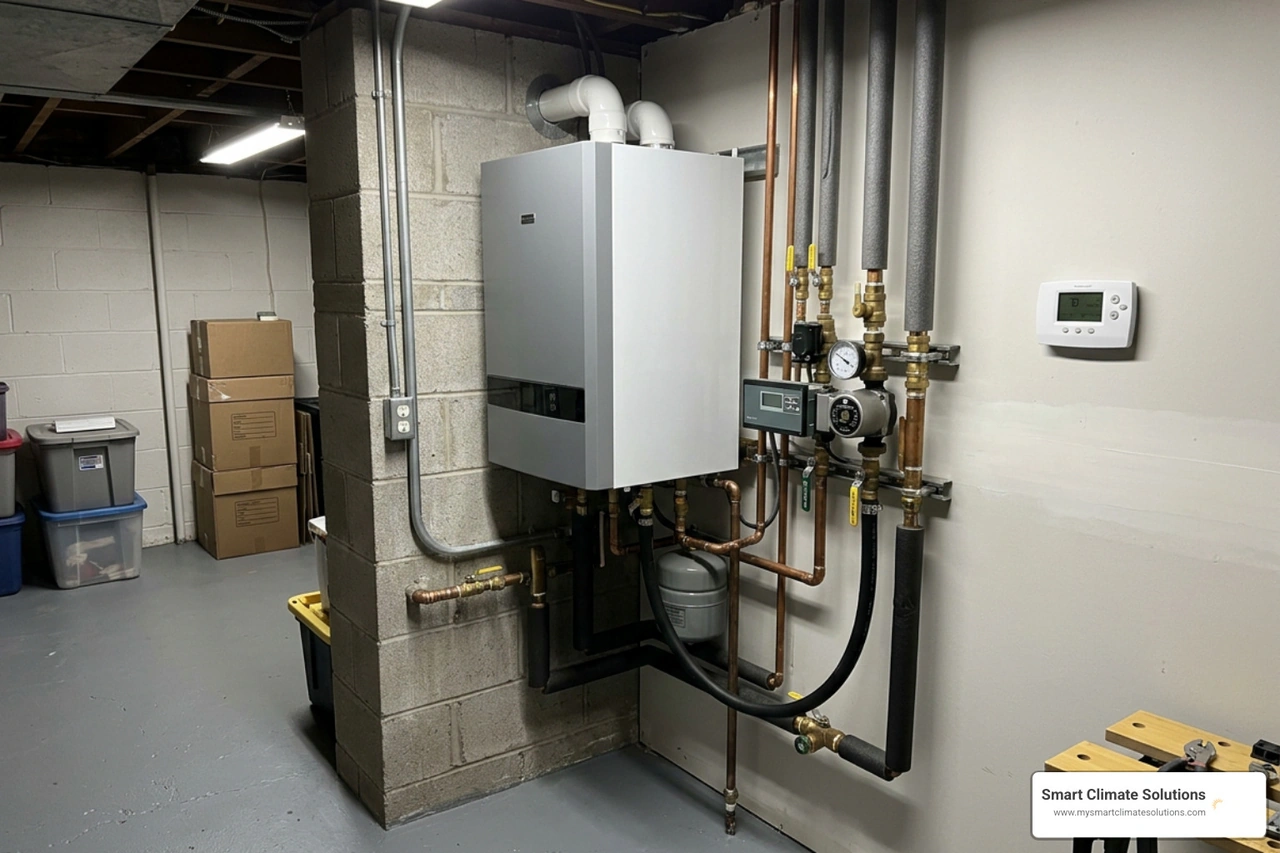
Why a Boiler Heater for House Can Deliver Steady Comfort
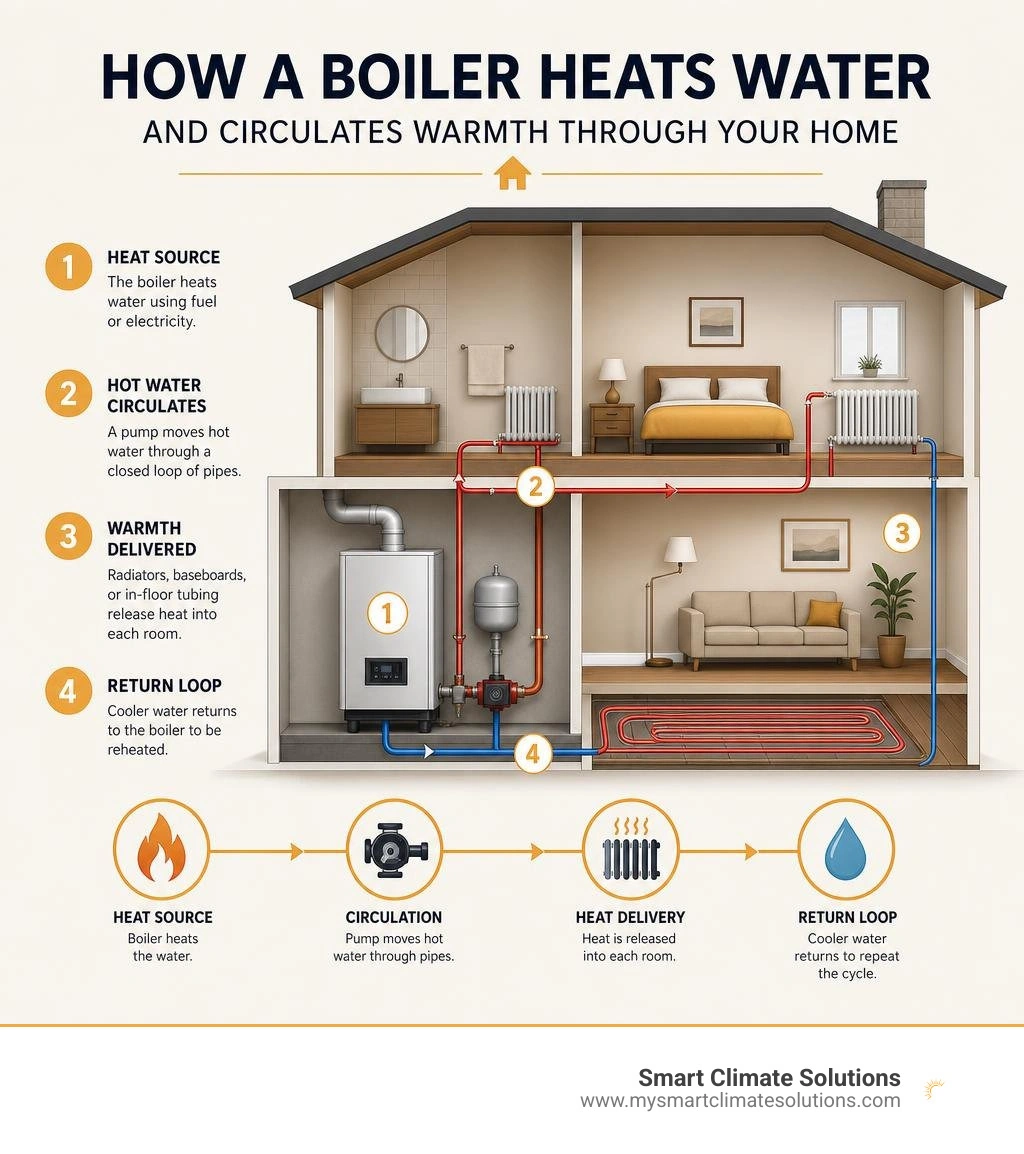
A boiler heater for house use heats water and circulates it through pipes to radiators, baseboards, or radiant floors, warming rooms without the blower and ductwork used by a furnace. It can provide quiet, even heat throughout a home and, in some setups, also supply domestic hot water.
- Heat source: The boiler burns fuel or uses electricity to heat water.
- Heat delivery: A pump moves hot water through a closed loop of pipes.
- Home comfort: Radiators, baseboards, or in-floor tubing release that heat into each room.
- Return loop: Cooler water returns to the boiler to be reheated.
For Pittsburgh-area homes with long, cold winters, boiler heat can be especially appealing because it provides consistent warmth, supports room-by-room zoning, and works well with existing radiators or hydronic baseboards. Modern high-efficiency models can also capture more heat from their fuel, helping reduce waste compared with older equipment.
I am Bill Scott, General Manager of Smart Climate Solutions, and I have spent more than 20 years helping Southwestern Pennsylvania homeowners repair, maintain, and replace heating equipment, including the right boiler heater for house applications. In this guide, I will break down how these systems work and what to consider before making a decision.
Boiler heater for house definitions:
Understanding Hydronic Heating and How a Boiler Heater for House Operates

Hydronic heating is any system that uses liquid (water or a water-glycol solution) to transfer thermal energy through a building. Unlike forced-air heating systems that push hot air through sheet metal ducts, a hydronic boiler heater for house heating warms liquid inside a central heat exchanger and circulates it through a sealed piping loop.
Because water is roughly 3,500 times more dense than air per unit volume, it has an exceptional thermal capacity. Water absorbs heat quickly, retains that heat for a prolonged duration, and transfers warmth into building materials with minimal energy loss. When we perform a comprehensive heating system check across Western Pennsylvania, we often highlight how this liquid thermal mass translates into steady, draft-free room temperatures.
When your thermostat calls for heat, the boiler ignites its burner (or activates electric heating elements) to raise the temperature of the water inside the vessel. An electronically controlled circulator pump then pushes this heated liquid through distribution loops. As the warm water travels through terminal units, such as cast iron radiators or baseboard convectors, heat naturally migrates into the living space. The cooled water flows back into the boiler inlet to begin the cycle again.
Comparing a Boiler Heater for House vs a Forced Air Furnace
Choosing between hydronic heat and forced-air heat is one of the most critical decisions homeowners face during a major HVAC upgrade. While both systems keep your family warm during bitter winter freezes in Pittsburgh, South Hills, and Washington, PA, their operational characteristics differ dramatically.
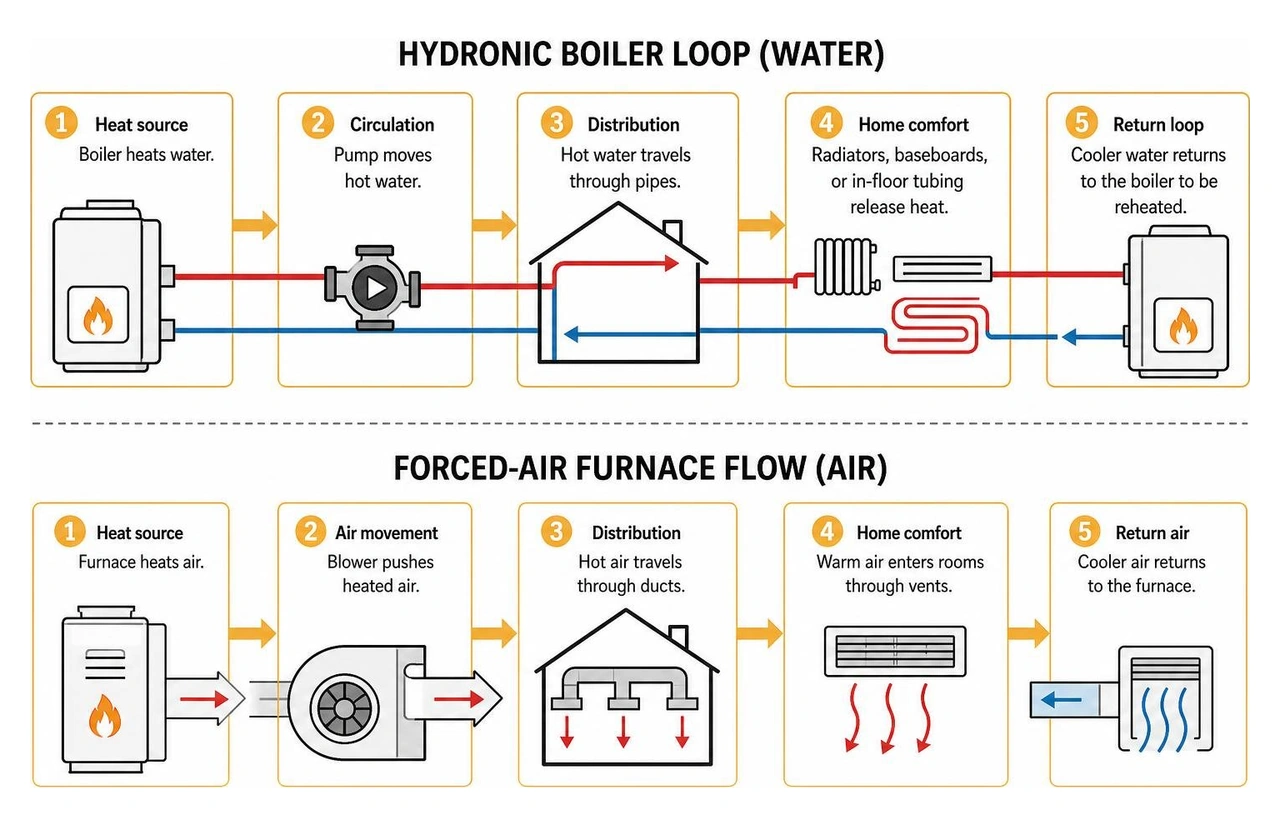
Here is how a boiler heater for house compares to a standard forced-air furnace:
- Thermal Mass and Energy Retention: Water holds thermal energy far longer than air. Once a radiator warms up, it continues radiating ambient heat into the room even after the boiler cycles off. Furnaces heat room air quickly, but as soon as the fan stops blowing, room temperatures begin to drop fast.
- Indoor Air Quality: Furnaces rely on powerful blowers that pull air through ductwork and blow it back out through registers. This movement continuously recirculates dust, pet dander, and airborne particulates. Boilers radiate heat passively without forced drafts, preserving clean air for family members with respiratory sensitivities.
- Noise Levels: High-velocity forced-air fans produce noticeable noise when kicking on. A modern hydronic system operates in near-total silence, with only a whisper from the circulator pump.
- Equipment Lifespan: Residential boilers typically last between 15 and 30 years when properly maintained. Standard forced-air furnaces generally have an expected operating lifespan of 15 to 20 years.
- Ductwork Requirements: If you are upgrading a home without existing air ducts, installing a furnace requires cutting opening vents and running bulk ducts through walls and ceilings. Boilers use narrow copper or PEX tubing that fits easily between floor joists.
If your home already has structural ductwork installed for central cooling, reviewing options for a furnace and heating system installation may present lower upfront installation costs. However, for sheer winter comfort and long-term durability, hydronic boilers remain tough to beat.
How Water Transfers Heat Across Living Spaces
Once water leaves the heat exchanger, it delivers thermal comfort into your home through one of three primary distribution methods:
- Cast Iron and Panel Radiators: Traditional cast iron radiators heat rooms through a combination of radiation and natural air convection. Modern aluminum and steel panel radiators offer a slimmer wall-mounted profile while delivering rapid heat transfer.
- Hydronic Baseboard Convectors: Baseboard units installed along exterior walls contain copper pipes fitted with aluminum fins. Cold air near the floor enters the bottom of the baseboard, warms up as it passes over the heated fins, and rises naturally into the room.
- In-Floor Radiant Heating: Flexible PEX tubing is installed beneath floorboards or embedded directly inside concrete slabs. Hot water circulating through the tubing warms the entire floor surface, creating perfectly uniform heat from the floor up to the ceiling.
In addition to indoor living spaces, modern residential boilers can power auxiliary hydronic equipment. For example, outdoor unit heaters in detached workshops or garages generate space heating by passing boiler water through a coil while an internal fan projects warm air into large open spaces. A 50,000 BTU unit heater can heat roughly 1,250 square feet, while a 100,000 BTU unit handles up to 2,500 square feet. High-capacity residential boilers can even power underground driveway snowmelt systems to eliminate shoveling during harsh winter storms.
Main Types of Residential Boiler Systems
Selecting the right boiler configuration depends on your existing home infrastructure, household hot water demand, and fuel availability.
| Boiler Type | Primary Fuel | Typical AFUE Efficiency | Domestic Hot Water Capability | Mounting Style |
|---|---|---|---|---|
| Standard Condensing Boiler | Natural Gas / Propane | 95% - 98% AFUE | Requires Indirect Water Tank | Wall-Hung or Floor-Standing |
| Combi (Combination) Boiler | Natural Gas / Propane | 95% AFUE | Tankless On-Demand Integrated | Compact Wall-Hung |
| Non-Condensing Cast Iron | Natural Gas / Heating Oil | 80% - 85% AFUE | External Tank or Coil | Floor-Standing Only |
When reviewing your property's fuel options, consulting a comprehensive gas heating system installation guide ensures you select an appliance compatible with local utility connections in Burgettstown or Weirton.
High Efficiency Condensing Boilers and Combi Systems
Traditional non-condensing boilers vent hot exhaust gases directly out through a chimney, losing 15% to 20% of their heat potential to the atmosphere. Modern high-efficiency condensing boilers capture this lost energy through advanced flue gas heat recovery.
When natural gas burns, it creates water vapor as a byproduct. Condensing boilers route these hot exhaust gases through a secondary heat exchanger. As the vapor cools and condenses back into liquid water, it releases latent heat, transferring that extra energy directly into your home's heating loop.
Leading manufacturers engineer exceptional condensing systems that maximize annual efficiency:
- The Vitodens 100-W, B1HE/B1KE Gas Boiler | Viessmann US achieves a 95% AFUE rating across all models and features a 10:1 turndown ratio to prevent fuel-wasting short cycling.
- The Vitodens 200-W, B2HE Gas Condensing Boiler | Viessmann US achieves up to 98% efficiency under full modulation with intelligent self-adjusting combustion technology.
- The Evergreen Pro Gas Boiler - Weil-McLain provides 95% AFUE for sizes 110 to 299 MBH and up to 96.5% combustion efficiency on 399 MBH models, featuring advanced multi-zone controls.
- The KNIGHT Fire Tube Floor Mount Boiler | Model KHB199N | Lochinvar, along with its companion models such as the KNIGHT Fire Tube Floor Mount Boiler | Model KHB055N | Lochinvar and KNIGHT Fire Tube Floor Mount Boiler | Model KHB155L | Lochinvar, delivers 95% AFUE rating backed by a 15-Year Heat Exchanger Warranty and a 5-Year Parts Warranty.
For homes looking to streamline mechanical space, combination (combi) boilers supply both space heating and instant domestic hot water from a single compact appliance. Combi units heat tap water directly on demand through a flat-plate heat exchanger, eliminating the need for a separate water heater tank.
Mounting Options and Space Considerations for a Boiler Heater for House
Modern engineering allows residential boilers to fit comfortably into almost any home floor plan:
- Wall-Mounted Boilers: Wall-hung condensing boilers take up zero floor footprint, freeing up space in utility rooms or basements. Their compact cabinet design and quiet operation allow installation in laundry rooms or service closets.
- Floor-Standing Boilers: Floor-mount units are ideal for high-capacity heating demands or retrofits where existing heavy piping aligns best with floor connections.
Whether wall-hung or floor-standing, high-efficiency condensing boilers use direct venting through PVC, CPVC, or polypropylene piping routed straight out an exterior sidewall, eliminating the need for traditional masonry chimneys.
Key Factors to Consider When Selecting a Boiler Unit
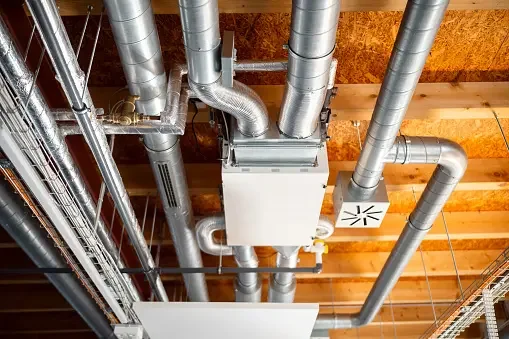
Investing in a new boiler heater for house installations requires matching system capabilities with your property layout, family size, and regional climate conditions.
To evaluate top-performing equipment options, check out our guide on the most efficient residential heating system technologies available today.
Understanding AFUE Ratings and Long Term Savings
Annual Fuel Utilization Efficiency (AFUE) is the standard metric used to measure heating appliance efficiency over a full season. An AFUE score tells you what percentage of fuel burned is converted into usable indoor heat versus what is lost up the exhaust pipe.
- Standard Efficiency (80% AFUE): 80 cents of every fuel dollar warms your living spaces; 20 cents escapes in flue gas.
- High Efficiency (95%+ AFUE): 95 cents or more of every fuel dollar becomes heat, yielding significant utility cost savings every winter.
Upgrading an older, 70% AFUE cast iron boiler to a modern 95% AFUE condensing model can reduce annual fuel consumption by over 25%, resulting in thousands of dollars in utility savings over the equipment's lifetime.
Sizing Your System with Heat Load Calculations
Selecting the correct heating capacity (measured in BTUs or MBH) is essential for energy efficiency and system durability. Installing an oversized boiler leads to short cycling, where the burner turns on and off rapidly. Short cycling wastes fuel, causes room temperature swings, and increases mechanical wear on ignition components.
Our certified technicians perform a comprehensive Manual J Heat Load Calculation before recommending a boiler size. We evaluate:
- Total square footage and ceiling height across living zones.
- Insulation depth in attics, crawlspaces, and exterior walls.
- Window glass surface area, framing, and orientation.
- Regional climate extremes in Pittsburgh and surrounding communities.
Modern modulating boilers with high turndown ratios (such as 10:1 or 14:1) automatically throttle their heat output down to match mild spring or autumn weather, saving energy while maintaining consistent indoor comfort.
Maintenance, Lifespan, and Costs for Home Heating Systems
A hydronic system is a long-term investment in your home. Protecting that investment requires understanding maintenance requirements and long-term cost structures.
Essential Routine Care to Extend Equipment Lifespan
While furnaces require monthly air filter replacements, hydronic boilers rely on annual professional maintenance to maintain maximum efficiency and peak safety.
Key annual servicing steps include:
- System Pressure Inspection: Checking expansion tanks and pressure relief valves to ensure the water loop remains properly pressurized.
- Safety Testing: Conducting routine safety valve tests and inspecting high-limit controls. You can learn more about this process in our guide to boiler safety valve testing.
- Flue and Burner Cleaning: Cleaning burner surfaces, spark igniters, and stainless steel heat exchangers to remove combustion residue.
- Water Chemistry Check: Monitoring pH levels and treating loop water with inhibitors to prevent internal corrosion and mineral scale buildup.
Joining organized heating maintenance plans ensures your boiler receives scheduled autumn maintenance before winter weather arrives. Review our complete heating system tune up complete guide for a full breakdown of maintenance procedures.
Evaluating Upfront Costs Versus Long Term Efficiency Savings
The upfront cost of a new boiler installation depends on unit capacity, efficiency ratings, fuel lines, and distribution piping complexity.
- Initial Investment: High-efficiency condensing boilers and combi units carry higher initial equipment and installation costs than basic forced-air furnaces.
- Long-Term Utility Savings: Higher AFUE ratings and lower electrical consumption from variable-speed circulator pumps significantly reduce monthly energy bills.
- Lifespan Value: Because boilers typically last 15 to 30 years compared to 15 to 20 years for furnaces, the initial investment is amortized over a longer operating life.
Homeowners can often offset upfront installation expenses through local utility energy efficiency rebates and federal tax incentives. To review current market installation pricing, visit our breakdown on new heating system cost expectations.
Frequently Asked Questions About Home Boiler Heating
How long does a home boiler system typically last?
A high-quality residential boiler lasts between 15 and 30 years with proper annual maintenance. Hydronic boilers feature heavy-duty cast iron or stainless steel heat exchangers that withstand thermal stress far better than thin sheet-metal heat exchangers found in furnaces. Keeping loop water clean and scheduling annual tune-ups are key to achieving a 25-plus year lifespan.
Can a single boiler handle both space heating and domestic hot water?
Yes. You can achieve this using either a combination (combi) boiler or a heat-only boiler paired with an indirect hot water storage tank. Combi boilers heat tap water on demand without an external tank, making them perfect for small to medium-sized homes. For larger families with high simultaneous hot water demand (such as running multiple showers at once), pairing a boiler with an indirect storage tank provides high recovery rates and abundant hot water volume.
What is the difference in efficiency between a standard and condensing boiler?
Standard non-condensing boilers achieve between 80% and 85% AFUE because significant heat escapes through high-temperature exhaust gases venting up a chimney. Condensing boilers extract heat from those exhaust gases, cooling water vapor into liquid condensate and capturing latent energy. This process boosts efficiency ratings to 95% AFUE or higher, significantly cutting annual fuel bills.
Upgrading Your Home Heating Comfort with Expert Service
Choosing the right boiler heater for house applications ensures quiet, reliable, and energy-efficient heat for decades to come. Whether retrofitting an existing radiator system or planning custom radiant in-floor heating, proper sizing and expert installation make all the difference.
At Smart Climate Solutions, our certified technicians have delivered fast, dependable HVAC service across Southwestern Pennsylvania and neighboring communities for over 20 years. We proudly serve homeowners in Pittsburgh PA, South Hills PA, Burgettstown PA, Washington PA, Steubenville OH, St. Clairsville OH, and Weirton WV with 24/7 emergency support.
Ready to upgrade your home heating system? Explore Smart Climate Solutions heating services or schedule a comprehensive home heat load calculation with our friendly local experts today!

.png)
