
Why Commercial Heating Installation Is a Critical Business Decision
Commercial heating installation is the process of designing, sizing, and fitting a heating system in a business facility - such as an office, warehouse, retail space, or restaurant - to keep occupants comfortable and operations running smoothly, especially through Pittsburgh's cold winters.
If you need a quick overview before diving in, here is what you need to know:
| Topic | Key Takeaway |
|---|---|
| System types | Gas furnaces, rooftop units, heat pumps, VRF systems, HTHV |
| Installation timeline | Most projects take a few days to a few weeks |
| System lifespan | 15-20 years with proper maintenance |
| Cost drivers | Building size, system type, zoning, electrical upgrades |
| Energy savings | High-efficiency systems can cut energy use by 20-70% |
| Rebates available | Yes - utility and federal incentives often apply |
| Signs you need replacement | System over 15 years old, rising bills, frequent breakdowns |
Commercial buildings face heating demands that are far more complex than a typical home. Larger square footage, multiple occupancy zones, stricter ventilation codes, and the pressure to keep business running during installation all make the stakes higher. In Pittsburgh, where winters are long and temperatures regularly dip well below freezing, a reliable and efficient commercial heating system is not a luxury; it is a necessity.
My name is Bill Scott, General Manager of Smart Climate Solutions, and I have spent over 20 years helping businesses across Pittsburgh and Southwestern PA navigate commercial heating installation projects of every size and complexity. I will walk you through everything you need to know to make a confident, informed decision.
Simple guide to Commercial heating installation terms:
Understanding Commercial Heating Systems and Equipment Types
When embarking on a commercial heating installation, selecting the right equipment architecture is the single most important choice you will make. Commercial facilities vary wildly in scale, structural layout, ceiling height, and airflow requirements. A retail shop in South Hills, PA has completely different heating needs than a logistics distribution warehouse in Washington, PA or an industrial shop in Weirton, WV.
Modern commercial heating options encompass several distinct technologies, each engineered for specific building envelopes:
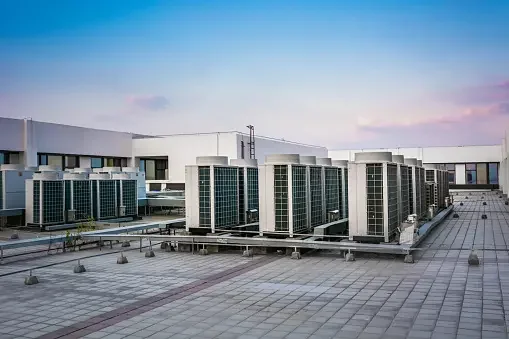
- Rooftop Packaged Units (RTUs): These self-contained units house heating and cooling equipment inside a single weatherproof cabinet installed on the roof. They save valuable floor space inside mechanical rooms and offer modular flexibility for growing businesses.
- Commercial Heat Pumps: Electric heat pumps move existing heat from outside air into the facility. Cold-climate heat pumps maintain efficiency even when outdoor temperatures fall well below zero, providing reliable heating and summer cooling from one central system.
- Gas Furnaces & Ductless Split Systems: Gas furnaces offer powerful thermal output for traditional ducted setups, while multi-split system configurations allow individualized climate control across separate offices or retail units.
- Variable Refrigerant Flow (VRF) Systems: VRF systems offer supreme zoning control, allowing simultaneous heating in perimeter offices and cooling in interior computer server rooms.
- High-Temperature Heating and Ventilation (HTHV): Direct-fired gas units designed specifically for high-bay facilities like warehouses and manufacturing plants.
To learn more about baseline system configurations, explore our guide on selecting a Commercial Heating System.
Comparing Commercial Heating Systems for Large Facilities
To make an informed decision for your commercial heating installation, it helps to compare the core characteristics of each primary heating type side by side:
| System Type | Best Suited For | Fuel Source | Key Efficiency Metric | Key Advantage |
|---|---|---|---|---|
| Rooftop Packaged Units (RTU) | Retail stores, offices, strip malls | Natural Gas / Electric | IEER / AFUE | Saves interior floor space; simple roof maintenance access |
| Commercial Heat Pumps | Offices, mixed-use commercial properties | Electricity | COP / HSPF2 | Provides high-efficiency heating and cooling in one system |
| Commercial Gas Furnaces | Standard office complexes, small commercial units | Natural Gas / Propane | AFUE (up to 98%) | Rapid heat recovery during extreme sub-zero weather |
| VRF / VRV Systems | Multi-story offices, hotels, healthcare centers | Electricity | IEER / SCHE | Simultaneous heat and cool delivery across custom zones |
| HTHV Space Heaters | High-bay warehouses, distribution facilities | Natural Gas | Direct Thermal Efficiency | Eliminates thermal stratification in open bays |
For facilities considering heat pump upgrades, reviewing standard commercial heat pump options reveals how single-zone and multi-zone VRF setups compare across project sizes. Standard unit heaters account for nearly 18 percent of primary space heating energy use in commercial structures, making fuel source selection and unit efficiency ratings critical factor for long-term utility costs.
Direct-Fired HTHV and High-Bay Space Heating
Industrial facilities, logistics centers, and assembly buildings present a unique thermodynamic challenge. High ceilings cause heat to naturally rise to the roof line, creating extreme thermal stratification where the ceiling sits at 80 degrees Fahrenheit while floor-level workers freeze at 55 degrees Fahrenheit.
Direct-fired High-Temperature Heating and Ventilation (HTHV) technology solves this issue. Capable of discharge air temperatures of 150 degrees Fahrenheit or higher with a temperature rise exceeding 140 degrees Fahrenheit, HTHV systems draw in 100 percent fresh outdoor air. They mix air at a 10:1 ratio at high discharge velocities between 1,500 and 2,000 feet per minute.
This rapid airflow destratifies floor-to-ceiling air columns without requiring separate ceiling fans. According to energy studies, direct-fired HTHV heating systems can reduce energy consumption by 20 to 70 percent compared to conventional unit heaters depending on facility location and design. Furthermore, units operating under ANSI Z83.4 standards deliver continuous fresh ventilation air, dramatically improving indoor air quality in facilities where forklift exhaust or machinery fumes accumulate.
Key Factors in Commercial Heating Installation Project Planning
Planning a successful commercial heating installation requires a detailed engineering assessment long before equipment is lifted onto a roof or connected to gas lines. Commercial heating project design must consider structural integrity, fuel availability, electrical service capacity, duct network conditions, and local municipal codes across Western Pennsylvania, Eastern Ohio, and the Northern Panhandle of West Virginia.
A proper installation plan balances upfront capital expenditures against total cost of ownership over a 20-year operational life cycle. Selecting high-efficiency equipment with low operational costs pays dividends every winter when utility rates peak. For localized insights into commercial heating layout strategy, check our guide on Commercial Climate Control Pittsburgh.

Selecting the Right Commercial Heating Installation System
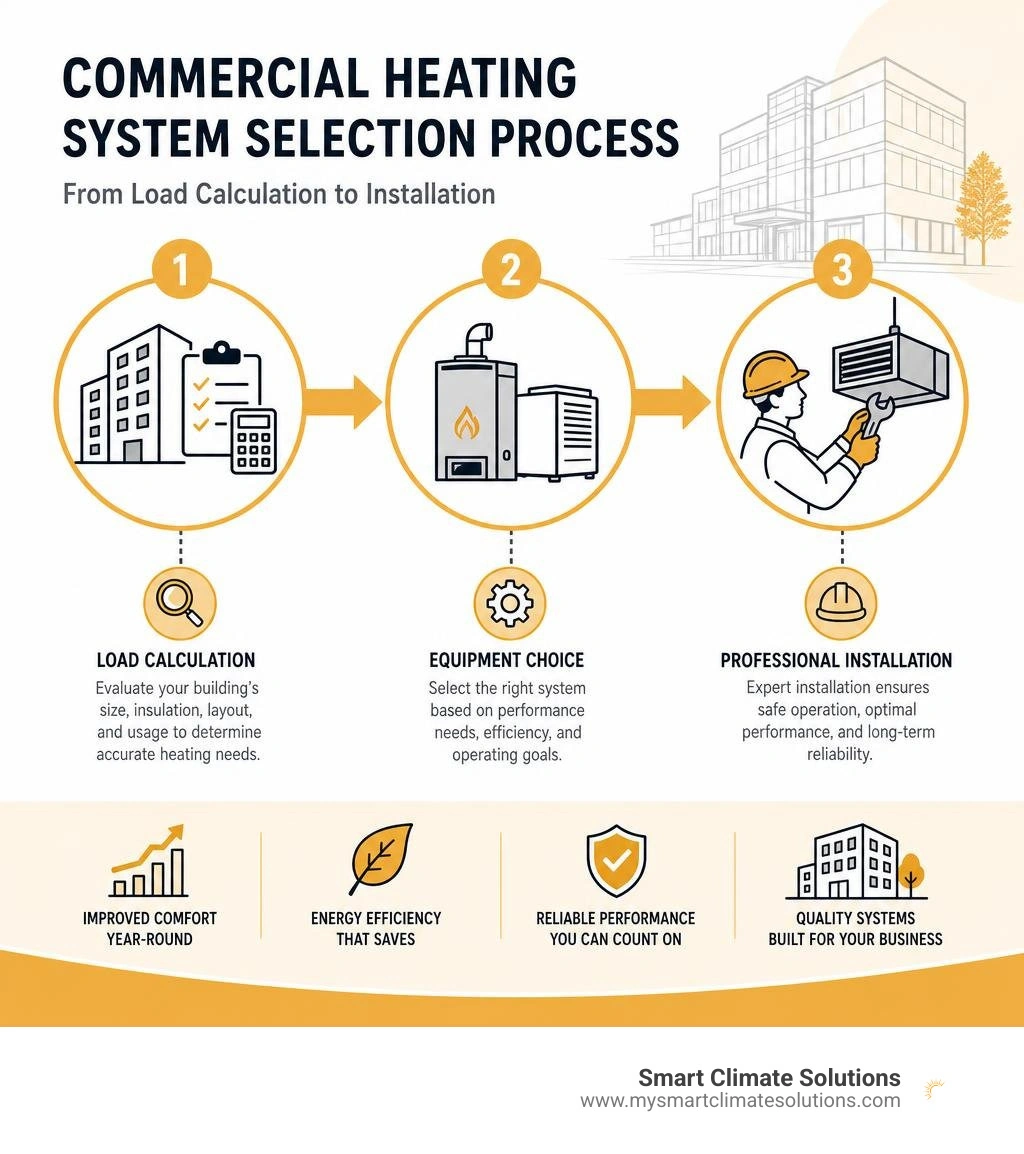
Never choose commercial equipment using simple rules of thumb like square footage alone. Proper equipment sizing requires a formal load calculation, such as ACCA Manual N standards for commercial buildings.
When our certified engineers perform a load calculation, we analyze multiple variables:
- Total Facility Square Footage and Ceiling Heights: Cubical volume dictates total air volume requirements.
- Building Envelope Insulation: R-values of exterior walls, roof decks, and foundation slabs.
- Glazing and Solar Heat Gain: Window square footage, frame construction, and orientation.
- Internal Heat Gains: Heat generated by lighting, manufacturing equipment, servers, and human occupants.
- Ventilation and Air Exchange Rates: Local building code requirements for fresh air exchange, such as ASHRAE Standard 62.1.
Installing an oversized heating system leads to short-cycling, where the unit turns on and off rapidly. This creates uncomfortable temperature swings, causes premature component wear, and inflates monthly fuel bills. Conversely, an undersized system will run constantly on freezing winter days in Steubenville, OH or St. Clairsville, OH without reaching desired setpoints.
Minimizing Business Disruption During Retrofits
Business owners often worry that a major commercial heating installation will interrupt operations, forcing temporary closures or creating noise that disrupts employees and customers. Professional mechanical contractors prevent operational downtime through detailed project scheduling and off-hours execution.
To maintain continuity during a heating installation project:
- Phased Installation Work: Replacing multi-zone rooftop units one by one so the remainder of the building maintains heating.
- Off-Hours and Weekend Work: Executing heavy crane lifts, duct drop fabrication, and noisy structural alterations during evenings or weekends when the facility is unoccupied.
- Temporary Heating Solutions: Deploying portable high-capacity heaters to maintain safe indoor temperatures during equipment changeouts.
- Pre-Fabrication: Assembling curb adapters and ductwork sections off-site in advance to minimize installation time on project day.
Many regional businesses reference standard industry HVAC installation workflows to understand how turnkey retrofits are scheduled around normal daily operating hours.
The Commercial Heating Installation Timeline and Process
Understanding what happens during a commercial heating installation helps project managers and facility engineers prepare their staff and facilities. A clear timeline ensures all building permits, crane permits, and utility inspections occur on schedule.
Upgrading complex commercial mechanical systems often requires modifications to utility distribution systems. If your facility requires custom air distribution work alongside your heating upgrade, review our specialized services for Commercial Ductwork Installation.
The Step-by-Step Commercial Heating Installation Process
A professional commercial heating installation follows a strict, step-by-step technical process to guarantee safety, efficiency, and code compliance:

- Pre-Installation Engineering Review: Site survey to review gas line supply pressures, electrical panel amperage, structural roof curb loads, and access points.
- Permitting and Code Filings: Securing necessary municipal mechanical, electrical, and plumbing permits in local jurisdictions such as Burgettstown, PA or Pittsburgh, PA.
- Site Preparation and Protection: Covering interior workspace, sealing open duct drops, and staging safety rigging or cranes.
- Decommissioning and Removal: Safely capturing refrigerant in accordance with EPA Section 608 guidelines, disconnecting gas and electrical lines, and crane-lifting old equipment off the roof or pad.
- Structural Adaptation and Curb Installation: Fitting heavy-gauge transition curb adapters to adapt new equipment frames to existing roof openings seamlessly.
- Equipment Placement and Mechanical Hookup: Setting new equipment, aligning duct transitions, connecting gas piping, and wiring electrical circuits.
- Flue Venting and Condensate Management: Installing code-compliant flue gas venting and heat-traced condensate drainage.
- Commissioning and System Startup: Performing high-voltage checks, verifying burner flame signals, measuring static duct pressures, adjusting refrigerant charge, and balancing airflow across zones.
Commercial Heating Installation Timelines and Lifespan Expectancy
How long does a commercial heating installation take? Most commercial installations require anywhere from 1 to 3 days for straightforward RTU or furnace swaps, while extensive VRF or multi-zone commercial retrofits can take 1 to 3 weeks.
| Installation Scope | Typical Project Timeline |
|---|---|
| Single Rooftop Unit (RTU) Replacement | 1 - 2 Days |
| Multi-Unit RTU Changeout (3-5 units) | 2 - 4 Days |
| Commercial Gas Furnace & Split System | 2 - 3 Days |
| Large Multi-Zone VRF System Retrofit | 1 - 3 Weeks |
| High-Bay HTHV Space Heating Project | 3 - 7 Days |
Once installed, standard commercial heating systems last an average of 15 to 20 years. Maintaining heating equipment through routine service keeps systems operating at peak seasonal efficiency throughout their lifecycle. When major system overhauls become necessary, facility managers often evaluate Commercial Air Handler Replacement to restore total facility airflow efficiency. You can also consult expert industry guidelines to learn more about engineered system lifecycle planning.
Benefits, Rebates, and Signs It Is Time to Replace
Upgrading an aging commercial heating system provides substantial financial and operational benefits. Today's commercial units deliver superior thermal efficiency, lower utility bills, reduced maintenance costs, and pinpoint zone control.
Modern commercial heating upgrades deliver:
- Reduced Operational Expenditures: High-efficiency units reduce natural gas and electricity usage by 20 to 50 percent.
- Improved Workplace Comfort: Balanced air distribution eliminates cold spots, keeping employees productive and retail customers comfortable.
- Enhanced Indoor Air Quality: Advanced filtration (MERV 13+) and managed fresh air ventilation remove airborne pollutants and excess humidity.
- Reliability and System Uptime: New equipment drastically lowers the risk of catastrophic mid-winter failures that disrupt business operations.
Signs Your System Needs Replacement

Knowing when to replace a commercial heater rather than paying for repeated repairs protects your bottom line. Continuing to repair an unreliable unit often costs more than investing in a high-efficiency replacement.
Consider replacement if you notice these common red flags:
- System Age Over 15 Years: Commercial heating equipment past the 15-year mark suffers from declining efficiency and accelerated component degradation.
- Surging Monthly Utility Bills: Unexplained increases in gas or electric bills signal that internal heat exchangers, compressors, or blowers are losing performance.
- Frequent and Costly Repairs: If annual repair bills exceed 30 to 50 percent of the cost of new equipment, immediate replacement is the smarter investment.
- Inconsistent Heating and Cold Drafts: Inability to maintain target setpoints across multiple zones indicates worn heat exchangers or failing system blowers.
- Cracked Heat Exchanger: A cracked heat exchanger poses severe safety hazards, including potential carbon monoxide leaks, requiring immediate unit shutdown and replacement.
Rebates, Financial Incentives, and Post-Install Support
Upgrades to high-efficiency commercial heating installation systems often qualify for substantial financial incentives. Local electric and gas utility programs in Southwestern PA and neighboring areas offer prescriptive and custom rebates for high-SEER/IEER packaged heat pumps, high-AFUE gas furnaces, and smart building management controls.
Additionally, federal tax incentives under Inflation Reduction Act provisions and accelerated depreciation rules (such as Section 179 tax deductions) allow business owners to write off qualifying mechanical equipment capital costs rapidly.
To protect your investment and preserve utility rebate compliance long term, establish a structured maintenance agreement immediately after startup. Learn how proactive maintenance safeguards your system with a Commercial HVAC Maintenance Plan, or review customizable HVAC Service Plans designed for local facilities.
Frequently Asked Questions About Commercial Heating
What is the typical timeline for installing a commercial heater?
For a single rooftop unit or standard commercial furnace replacement, installation takes between 1 and 3 days. Larger projects involving multi-zone VRF systems, structural roof work, or complete duct redesign can take anywhere from a few days to several weeks. Working with experienced commercial contractors allows work to be completed during off-hours, weekends, or phased shifts to eliminate business downtime.
How do commercial heating needs differ from residential systems?
Commercial heating systems are significantly larger in tonnage and physical scale, ranging from 5 tons up to 50+ tons per unit compared to 2 to 5 tons for home systems. Commercial equipment must handle complex zoning, higher ventilation air change standards (such as ASHRAE 62.1), heavy occupancy loads, continuous duty cycles, and integration with Building Management Systems (BMS).
Are there energy-saving incentives or rebates for new installations?
Yes, numerous regional utility companies offer financial rebates for commercial facilities installing high-efficiency gas furnaces, commercial heat pumps, VRF systems, and programmable commercial controls. Furthermore, federal energy efficiency tax incentives and accelerated Section 179 depreciation can offset a significant portion of total equipment and installation costs.
Conclusion
Investing in a high-efficiency commercial heating installation is one of the most effective ways to lower operational overhead, protect indoor air quality, and keep your employees and customers comfortable all winter long.
At Smart Climate Solutions, we bring over 20 years of experience serving commercial properties across Pittsburgh, South Hills, Burgettstown, and Washington, PA, as well as Steubenville and St. Clairsville, OH, and Weirton, WV. Our certified technicians provide 24/7 emergency support, turnkey mechanical installation, and custom system design engineered specifically for our tri-state climate.
Whether you need a full mechanical system design or want to explore long-term maintenance options, examine our comprehensive Commercial Climate Control Contracts, review our Commercial HVAC PM programs, or learn more about our Large Scale Mechanical Contracting expertise.
Ready to upgrade your commercial heating system before winter weather sets in? Visit our Commercial HVAC Installation Services page today or call Smart Climate Solutions to schedule your expert building assessment and custom project estimate!

.png)
