
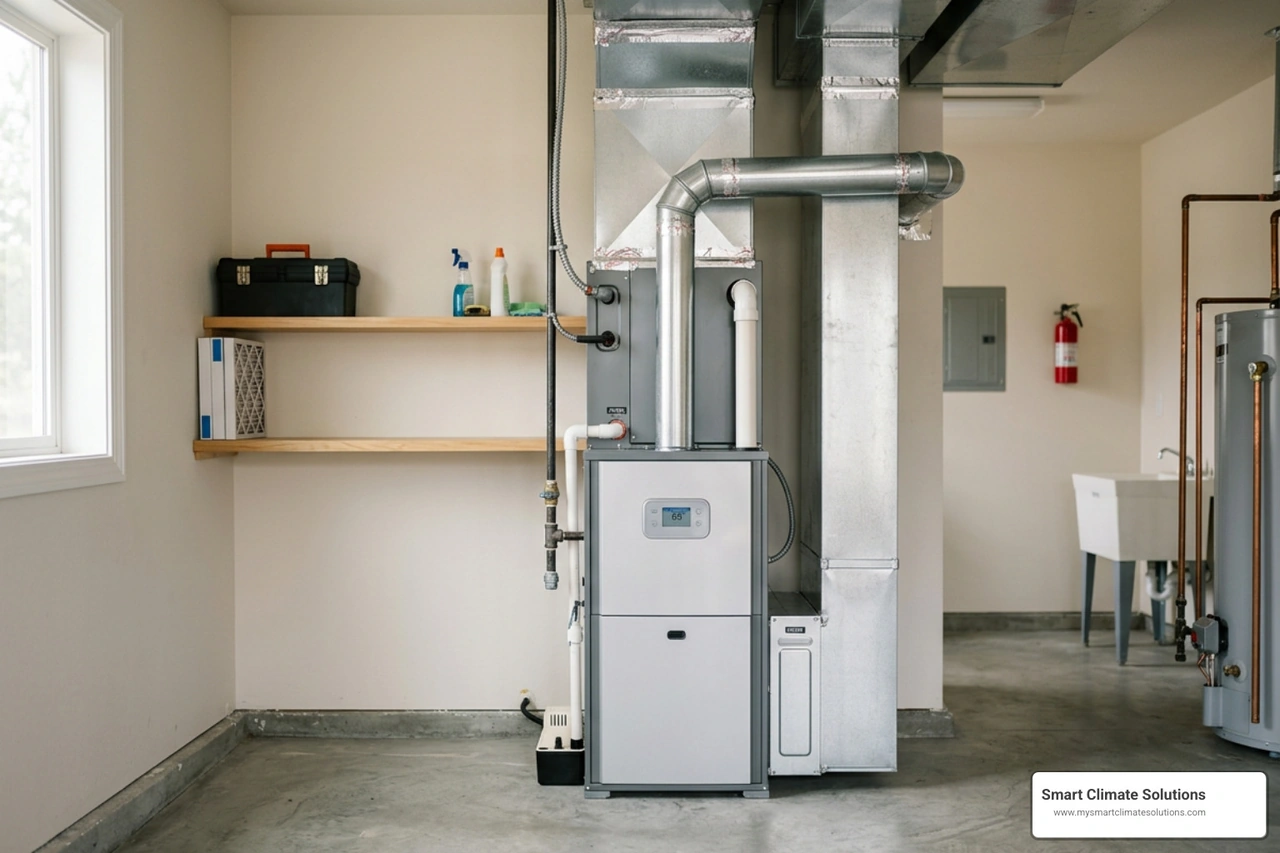
The Best New Residential Furnaces for 2026: What Pittsburgh Homeowners Need to Know
Choosing a new residential furnace is one of the biggest home comfort decisions you will make. With so many models, fuel types, and efficiency ratings available in 2026, it can feel overwhelming fast.
Here is a quick look at the top options to help you compare:
| Furnace Model | Fuel Type | AFUE | Best For |
|---|---|---|---|
| Carrier Performance 97 | Natural Gas | Up to 97% | Smart home integration |
| Carrier Infinity 96 | Natural Gas | Up to 96.7% | Premium two-stage comfort |
| Navien NPF Hydro-Furnace | Natural Gas | 97% | Variable capacity, ultra-quiet |
| Lennox EL180NE | Natural Gas | Up to 80% | Ultra-low NOx emissions |
| Rheem Endeavor K-Series (FR98MV) | Natural Gas | Up to 98.7% | Highest efficiency modulating |
Key things to know before you buy:
- AFUE ratings range from 80% to nearly 99% -- higher means lower monthly gas bills
- Most homes need between 60,000 and 100,000 BTUs of heating capacity
- Total installed cost typically runs between $3,800 and $12,000
- Furnaces last 15 to 20 years with proper annual maintenance
- High-efficiency models may qualify for federal tax credits and utility rebates
Pittsburgh winters are no joke. A furnace that underperforms in January is not just uncomfortable -- it is expensive. Whether your old unit is making strange noises, driving up your energy bills, or simply past its prime, this guide breaks down the best models on the market right now and what to look for before you buy.
I'm Bill Scott, General Manager of Smart Climate Solutions, and with over 20 years of hands-on HVAC experience helping Pittsburgh-area homeowners select and install the right new residential furnace, I have seen what works and what does not. In the sections below, I will walk you through everything you need to make a confident, informed decision.
Easy New residential furnace glossary:
Key Factors to Consider When Buying a New Residential Furnace
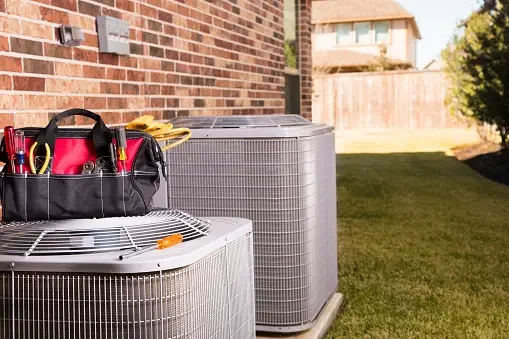
When the freezing winds blow off the Ohio River, you want to know your home heating system is up to the task. Buying a new furnace is not a one-size-fits-all purchase. Your home climate needs, monthly energy bills, and overall system performance depend on several highly technical factors. If you live in Pittsburgh PA, South Hills PA, Burgettstown PA, Washington PA, Steubenville OH, St. Clairsville OH, or Weirton WV, you need a system designed to handle freezing mid-winter temperatures without breaking the bank.
To get the most out of your investment, you must evaluate how a furnace manages fuel, how much heating capacity it possesses, and how its internal motor delivers air throughout your living space.
Understanding AFUE Ratings for Your New Residential Furnace
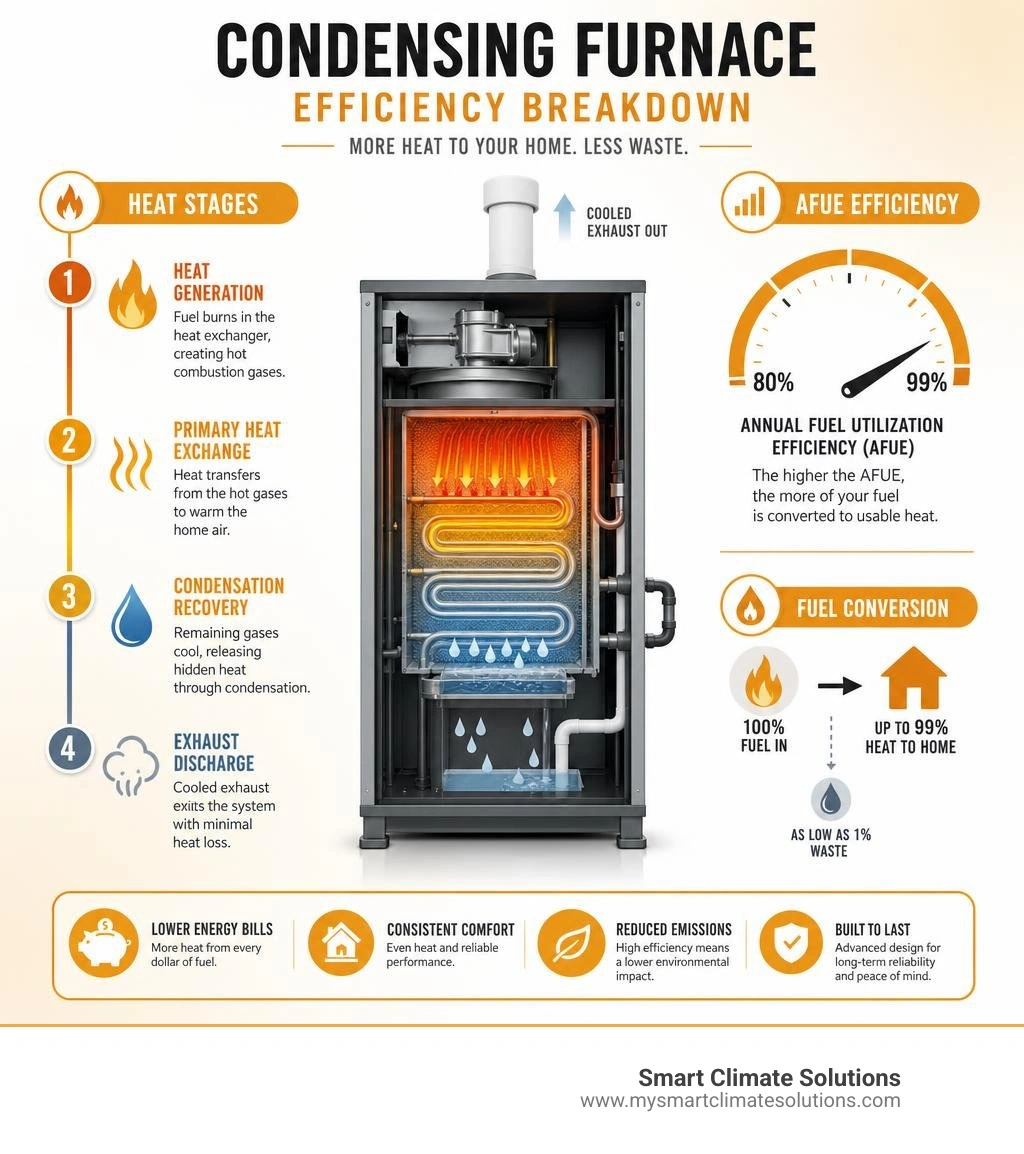
AFUE stands for Annual Fuel Utilization Efficiency. Think of it as your furnace's gas mileage. Measured as a percentage, it tells you how much of the fuel your furnace consumes is converted directly into usable heat for your home, and how much is lost up the chimney. For example, an 80% AFUE furnace converts 80 cents of every dollar spent on gas into heat, while the remaining 20 cents escapes as exhaust.
When planning a High Efficiency Furnace Install, you will typically choose between two main categories:
- Standard Efficiency (80% AFUE): These units are less expensive upfront. They utilize standard metal flue venting to carry combustion gases out of your home. They are best suited for milder climates or homes where the furnace is rarely used, though they are still common in older homes across western Pennsylvania and eastern Ohio.
- High Efficiency (90% to 98.7% AFUE): These are condensing furnaces. They feature a secondary heat exchanger that captures extra heat from exhaust gases before they leave the system. Because the exhaust is much cooler, it condenses into acidic water, requiring special PVC venting and a dedicated drain line.
While high-efficiency models carry a higher initial price tag, they dramatically lower your monthly operating costs, making them highly desirable for the long, cold winters in our region.
Sizing and BTU Requirements
Getting the size of your furnace right is a classic Goldilocks scenario: a system that is too small will run constantly, struggling to keep you warm and wearing out its components prematurely. A system that is too large will heat your home too quickly and shut off, a process called short-cycling, which causes massive temperature swings, high energy bills, and unnecessary wear and tear.
Furnace heating capacity is measured in BTUs (British Thermal Units). To find the perfect size, reputable HVAC professionals do not just look at your home square footage. We perform a comprehensive Manual J load calculation, which takes into account:
- Total square footage of the living space
- Ceiling height (homes with vaulted ceilings require roughly 25% more BTUs to heat effectively)
- Local climate zones (our tri-state area requires more heating BTUs per square foot than southern states)
- Insulation levels in your walls, attic, and crawl spaces
- The number, age, and orientation of your windows
To get a better idea of how sizing impacts your budget, you can request a New Furnace Cost Estimate tailored to your specific home layout.
Single-Stage vs. Two-Stage vs. Modulating Systems
The way your furnace delivers heat is determined by its heating stages and blower motor technology. There are three main configurations available today:
- Single-Stage Furnaces: These are the traditional, basic models. They operate like a light switch: they are either 100% on or completely off. When your thermostat calls for heat, the furnace blasts hot air at full capacity until the target temperature is reached, then shuts down. This leads to noticeable temperature swings and noisier operation.
- Two-Stage Furnaces: These systems have a high and a low setting. They typically run on their low stage (around 65% capacity) up to 90% of the time. This provides longer, gentler heating cycles that distribute warmth more evenly and run much quieter. When a severe cold snap hits, the furnace automatically steps up to 100% capacity to keep your home comfortable.
- Modulating Systems: These represent the pinnacle of modern comfort. Featuring a modulating gas burner and a variable-speed blower motor, these furnaces can adjust their heating output in tiny increments (often between 15% and 100% capacity) to match the exact heating demand of your home. They maintain a incredibly consistent temperature, eliminate drafts, and offer unmatched energy efficiency.
Top New Residential Furnace Models for 2026
Now that you understand the core technology, let us look at the standout furnace models available in 2026. Manufacturers have made incredible leaps in quiet operation, smart home integration, and advanced diagnostic capabilities, making this an excellent year to upgrade your home heating.
Carrier Performance 97 and Infinity 96
Carrier remains an industry leader in engineering reliable, smart heating systems. For homeowners seeking a balance of high-end performance and intelligent controls, the Carrier lineup has outstanding options.
The Performance 97 Gas Furnace | 59TP7 | Carrier is a premium two-stage gas furnace featuring a variable 25-speed blower motor. This allows the system to adjust airflow with extreme precision, providing consistent comfort and excellent humidity control. It also comes equipped with InteliSense technology. When paired with an ecobee for Carrier smart thermostat, it shares critical system data with your dealer, allowing for remote diagnostics and faster, more accurate maintenance.
If you are looking for slightly different efficiency levels or configurations, you can also consider the Infinity 96 Gas Furnace | 59TN6 | Carrier or the Performance 96 Gas Furnace | 59TP6 | Carrier . Both models offer exceptional quiet performance, fully insulated cabinets, and the same robust build quality that keeps western Pennsylvania homes warm year after year.
Navien NPF Condensing Hydronic Furnace
If you want to step away from traditional forced-air designs, the NPF Series Condensing Hydronic Furnace represents a shift in home heating.
Instead of heating air directly over a standard gas flame, the Navien NPF uses a stainless steel hydronic heat exchanger. It heats water first, then circulates that hot water through a specialized coil to warm the air blown into your home. This design offers several key benefits:
- Stainless Steel Durability: The stainless steel heat exchanger is highly resistant to corrosion and thermal stress, ensuring a long operational lifespan.
- True Variable Capacity: With a fully modulating gas burner and a constant CFM blower motor, the system operates seamlessly between 15% and 100% capacity.
- Whisper-Quiet Comfort: By isolating combustion outside the main airstream, the NPF delivers ultra-quiet heating.
- Advanced Diagnostics: Built-in supply and return air sensors constantly monitor temperature differentials to optimize system performance in real-time.
Lennox EL180NE and Endeavor K-Series
For homeowners prioritizing ultra-low emissions or maximum traditional efficiency, Lennox and Rheem offer incredible engineering in their 2026 lines.
The Lennox EL180NE Furnace is a first-of-its-class ultra-low emissions gas furnace. It is designed to meet strict environmental standards, producing 65% lower nitrogen oxide (NOx) emissions than standard low-NOx models. Operating at an 80% AFUE rating, it features a Power Saver constant-torque motor that automatically adjusts fan speed to balance comfort and electrical consumption.
On the high-efficiency end, the Endeavor Line K-Series Gas Furnaces (built on Rheem's advanced modulating platform) boasts up to a 98.7% AFUE rating. This EcoNet-enabled system communicates directly with smart thermostats for seamless home automation. It also includes a patented block drain sensor that automatically shuts down the furnace if the condensate drain becomes clogged, preventing water damage to your basement or utility closet.
Comparing Fuel Types and Hybrid Heating Options
Depending on where you live in our service area, your access to different fuel sources will vary. Let us compare the most common options to find the best fit for your home.
| Fuel Type | Average AFUE Range | Upfront Equipment Cost | Operating Cost (Pittsburgh Region) | Best Suited For |
|---|---|---|---|---|
| Natural Gas | 80% - 98.7% | Moderate to High | Low | Homes with existing gas lines |
| Electricity | 100% | Low to Moderate | High | Small spaces or mild climates |
| Heating Oil | 80% - 90% | High | High | Rural areas without gas lines |
| Propane | 90% - 97% | Moderate (plus tank) | Moderate to High | Rural areas seeking gas-like heat |
Gas, Electric, and Oil Systems
Natural gas is by far the most popular heating fuel in our region, utilized by roughly 60% of U.S. households. It offers an excellent balance of high heat output and relatively low operating costs.
For homes without natural gas access, an Electric Furnace Installation is a highly reliable alternative. Electric furnaces are 100% efficient (since no heat is lost as exhaust) and require no venting or chimney. However, because electricity is generally more expensive than natural gas per unit of energy, monthly operating costs can be quite high during freezing winter months.
While heating oil was once the standard in older homes, only about 4% of households rely on it today. Oil furnaces produce very hot air but require regular fuel deliveries and storage tank maintenance. If you have an older home with an oil setup, you might also consider a Wood Oil Combo Furnace to offset fuel costs with cordwood heating.
Dual-Fuel Systems with Heat Pumps
A dual-fuel or hybrid heating system pairs an electric air-source heat pump with a high-efficiency gas furnace.
During mild autumn and spring days, the electric heat pump heats your home with incredible efficiency. When temperatures drop below freezing, the system automatically switches over to the gas furnace, which is better equipped to handle extreme cold. This automatic switching optimizes your energy usage, lowers your carbon footprint, and saves you money on utility bills year-round.
Cost, Lifespan, and Maintenance of a New Residential Furnace
A new residential furnace is a significant long-term investment. Understanding the upfront costs, expected lifespan, and necessary maintenance will help you maximize your budget and keep your system running smoothly.
Installation and Replacement Costs
The average gas furnace cost typically ranges between $3,800 and $12,000, including the unit and professional installation. Several factors influence where your project will fall within this range:
- Labor Rates: Licensed technicians typically charge $75 to $100 per hour. A standard replacement takes 8 to 10 hours, while a complex installation can take 10 to 15 hours.
- Venting Upgrades: Upgrading from an older 80% furnace to a 90%+ condensing model requires installing new PVC intake and exhaust pipes through an exterior wall.
- Ductwork Modifications: If your existing ductwork is leaky, undersized, or poorly designed, modifying or sealing it can add $500 to $3,000 to the total cost.
To budget accurately, check out our guides on Furnace Replacement Cost and New Heating System Cost.
Maximizing the Lifespan of Your New Residential Furnace
With proper care, a high-quality residential furnace will last between 15 and 20 years. To ensure your system reaches its maximum lifespan, we recommend the following maintenance routine:
- Change Filters Regularly: Check your air filter monthly and replace it every 1 to 3 months. A clogged filter restricts airflow, forcing the blower motor to work harder and overheat.
- Schedule Annual Tune-Ups: Always book a professional inspection before the winter heating season begins.
- Keep Vents Clear: Ensure your supply and return registers are not blocked by furniture, rugs, or drapes.
If you want to keep your system in peak condition, explore our Furnace Tune Up services. For emergency repairs or expert advice, consult our Furnace Repair Experts or read our comprehensive Furnace Repair Pittsburgh Guide.
Rebates, Tax Credits, and Incentives
Upgrading to a high-efficiency furnace in 2026 can qualify you for substantial financial incentives:
- Federal Tax Credits (Section 25C): Homeowners can claim up to 30% of the cost of qualifying high-efficiency heating equipment, up to $600 for gas furnaces and up to $2,000 for heat pumps.
- Utility Rebates: Many local gas and electric utility companies in Pennsylvania, Ohio, and West Virginia offer cash-back rebates for installing ENERGY STAR certified equipment.
- Manufacturer Rebates: Major brands often run seasonal promotions offering direct savings or promotional financing options.
Frequently Asked Questions About Residential Heating
How do I know if my furnace needs to be replaced?
If your furnace is over 15 years old and you are facing frequent, expensive repairs, replacement is usually the smarter financial decision. Other warning signs include rapidly rising heating bills, loud banging or squealing noises, and inconsistent temperatures throughout your home. If you are currently dealing with a Furnace Not Heating or find that your Furnace Stopped Working entirely, it is time to have a certified technician assess whether a repair or replacement is more cost-effective.
What is an ultra-low NOx furnace and do I need one?
An ultra-low NOx furnace utilizes advanced burner technology to reduce nitrogen oxide emissions to 14 nanograms per Joule or less. While these units are legally required in certain parts of California and the Southwest, they are not currently mandated by law in Pennsylvania or West Virginia. However, if you are looking for a cleaner, more environmentally friendly heating option for your home, or if you are planning a Furnace Replacement Steubenville OH, choosing an ultra-low NOx model is a great way to future-proof your home against changing emissions standards.
Can I install a new furnace myself?
No. Furnace installation is highly complex and carries significant safety risks, including carbon monoxide leaks, gas line explosions, and electrical fires. Additionally, installing a furnace yourself will void the manufacturer warranty and violate local building codes. To ensure your system is safe, efficient, and fully compliant with local regulations, always hire a licensed professional. You can learn more about what to expect during the process in our Furnace Installation Guide 2026 and our guide to Furnace and Heating System Installation.
Conclusion
Investing in a new residential furnace is the best way to guarantee a cozy, worry-free winter for your family. At Smart Climate Solutions, we bring over 20 years of HVAC experience, certified technicians, and 24/7 emergency support to homeowners throughout Pittsburgh PA, South Hills PA, Burgettstown PA, Washington PA, Steubenville OH, St. Clairsville OH, and Weirton WV. We are dedicated to helping you select the perfect system for your budget and home layout.
Schedule your professional furnace installation today and let us keep your home warm all winter long.

.png)
